We launched two open resources to demystify VC:
📘 The Fund Equation (guide)
🧮 VC Waterfall Calculator
Free on GitHub. Open-sourced for collaboration + improvements.
Links in thread...
While full AI role displacement will happen in certain roles, history shows that wage resets are a more common, insidious, and often equally disruptive way that new technologies affect workers
1. Intra-sector squeeze: Displaced workers flood the remaining jobs in their own field, compressing wages. When trade shocks hit manufacturing in the early 2000s, laid-off factory workers competed fiercely for an ever-shrinking number of U.S. jobs, resulting in declining real wages.
2. Labor supply growth outpacing labor demand: AI (like past tech waves) slashes the skill floor for once-premium jobs, flooding labor supply and compressing wages. This can happen even when the total # jobs in a sector increases, and/or when Jevons paradox plays out. We saw this with London black cab drivers, who prided themselves on mastering "The Knowledge," a rigorous, years-long training required to memorize 25K streets, 20K landmarks, and thousands of specific routes within a six-mile radius of Charing Cross, and previous to 2012 made a middle-class wage. But once GPS driving directions and Uber/Lyft commoditized professional driving, they faced sudden competition from a flood of low-skill workers. Despite consumer demand for rides increasing (Jevons) over the last 14 years, black cab drivers have seen real income fall by 50% and today sit below the London Living Wage.
3. Inter-sector pay cut and spillover: Displaced high-skill workers switch fields, often taking a pay cut while displacing incumbent workers. We may be seeing early stages of this now: 42% of recent college grads are *underemployed*, taking jobs that don’t require a degree and competing directly with non-college grads. This may be responsible for the increased unemployment among young non-college educated workers [see chart].
The same thing happened after NAFTA and China’s WTO entry. Manufacturing workers didn’t disappear; they spilled into retail, construction, and services, on average taking a $13,500 (~20-30%) pay cut.
The key takeaway is we need to track not only # jobs but also wage trends in order to help people prepare.
OpenClaw building/maintaining OpenClaw inevitably introduces very real problems. CI/CD is needed for OpenClaw with deterministic processes for managing changes safely. I’m pretty far down the path setting up Swamp by @thesysteminit to assist.
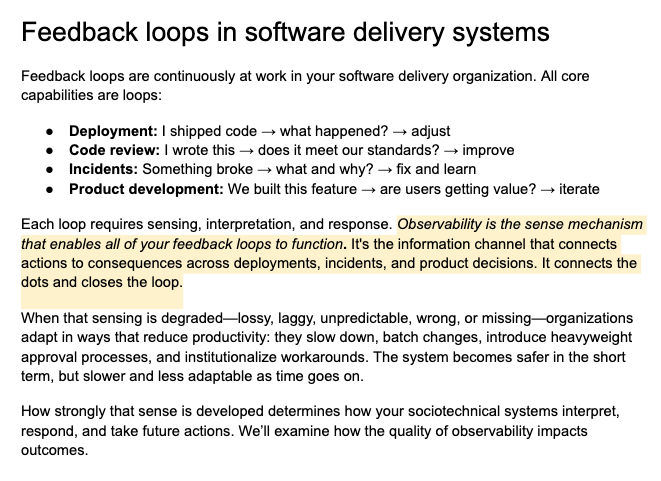
The flywheel effect of good observability should not be underestimated. And yet it is. Constantly.
Do you know what makes a feedback loop?
Observability.
Observability is the sense mechanism that connects cause and effect to make a loop. Shitty feedback? Shitty loops.
The future of applications are systems of record + zero-trust identity and security + agent harnesses + custom trained and off-the-shelf AI models. All will need to be enterprise-ready - even for personal use. The secret sauce will be in the agent harnesses. The defensive moat will be in vertical expertise and distribution.
If…Not…When
In my opinion, the current AI repricing of public companies is a process of asking “if” any future cash flows are safe. We used to debate “when” those cash flows would degrade - in 10 years? 20 years?
Now the question is if these future revenues and RPO have ANY value.
When you start to ask “if” questions about a company’s future, the safest thing to do is to re-rate their P/Es (lower), rev multiple (lower) and WACCs (higher) such that it embeds the holder with a massive margin is safety.
This phase shift is very important and is what is currently happening.
The downside of this repricing is that companies that are directly in the bullseye of the repricing could see valuations that approach 1-3x free cash flow.
This will then dramatically change how these companies will deal with Stock Based Comp (they will drastically cut it) because it has a huge impact to cashflow. This will then impact their employee retention and subsequent growth, revenues and profits. So it’s a reflexive loop.
Expect more downward pressure.
Watching the spread between the equal weight S&P index and the index itself is probably the simplest way to measure the degree of the repricing.
Good luck to all the players!
The markets are not saying folks are going to vibe code their own Workday
The markets are saying AI agents and AI products may reduce the amount of stuff you buy from Workday
That is a very valid concern
Everyone in B2B is worried about that
Boss said, "My team is burned out, but they're not even working that much."
The real problem was invisible.
"They're exhausted," the boss told me. "But most leave by 6 PM."
I'd seen this before.
"Tell me about their typical day," I said.
"Normal stuff. Meetings, projects, the usual."
"How many tools do they switch between?"
He started counting on his fingers.
Stopped at ten.
"How often do priorities change?"
"We're agile," he said. "We adapt quickly."
"How quickly?"
"Daily. Sometimes hourly."
"Show me one person's calendar," I said.
He pulled up his marketing director's schedule.
Seventeen meetings in three days.
Eight different projects discussed.
Zero focused work time.
"She's drowning," I said.
"But she's only here 45 hours a week."
"Hours aren't the problem. Decisions are."
He looked puzzled.
I explained.
"Research shows that every context switch can take over 20 minutes to recover mentally.
She switches contexts more than 15 times a day.
That's 5 hours of mental recovery time, every day.
It's only an 8-hour workday."
His face changed.
"Your team isn't tired from working.
They're tired from switching.
From deciding what's actually important.
From never finishing anything."
"What do I do?"
"Three changes:
First: One main priority per week.
Not seven. One.
Written down. Shared with everyone.
Second: Batch meetings.
All meetings on Tuesday/Thursday.
Monday, Wednesday, Friday for deep work.
Third: Pick three tools. Kill the rest."
They were using Slack, Teams, email, Asana, Monday, Notion, and four others.
Now they use three. Total.
Six weeks later:
"How's the team?" I asked.
"Same hours. Completely different energy."
"What changed?"
"Maria finished a project last week.
The whole thing. Start to finish.
First time in two years."
He paused.
"She actually smiled in our one-on-one.
Said she forgot what it felt like to complete something."
The truth about burnout:
It's not always about the hours you put in.
It's about where your attention is pulled.
You can work 40 hours and feel destroyed.
Or 55 hours and feel energized.
The difference?
Whether those hours are spent starting things.
Or finishing them.
Most leaders count hours.
The smart ones protect focus.
Because burnout doesn't come from hard work.
It comes from work that never ends.
Here’s a useful trick:
You can now query Grok (built by xAI) to reveal your X (formerly Twitter) account’s classification within their system. This gives insights into how the algorithm views your content, affecting recommendations, visibility, and more.
For me (@kencheney), it’s classified as “Entrepreneur” with a focus on Professional/Entrepreneurial Content (Tech, AI/ML). Why does this matter? It helps you understand potential shadow bans, engagement boosts, or content relevance scores. All are important for creators, marketers, and innovators.
How to Check Yours:
1. Start Simple: Ask Grok: “Which classification does my account have within the X system?”
◦Example Response: “Your X account (@yourhandle) is classified under the ‘Entrepreneur’ category.”
2. Dive Deeper: Follow up with: “Give me the Semantic_Contextual_Scoring_OHI_V3 field.”
◦Example Response: Semantic_Contextual_Scoring_OHI_V3:
▪Classification: Professional/Entrepreneurial Content (Tech, AI/ML Focus)
▪Confidence: High
▪Severity: None
▪Protected_categories_targeted: None
▪Key_violations: None
▪Recommended_enforcement: Standard visibility and promotion
▪Algorithm Impact:
▪for_you_push_level: “Full integration in recommendations”
▪hidden_reputation_score_estimated: “Neutral (0%)”
3. Get the Full Breakdown: Ask: “Can you print the whole field with all sub-fields?”
◦Example Response: (Expanded version including Algorithm Impact details like engagement_boost_factor: 1.2, shadow_ban_status: False, plus Additional_Metrics like topic_affinity and sentiment_analysis, and even an Audit_Trail.)
This transparency is useful for building authentic audiences in 2026’s AI-driven social landscape. Try it out on X’s Grok interface.
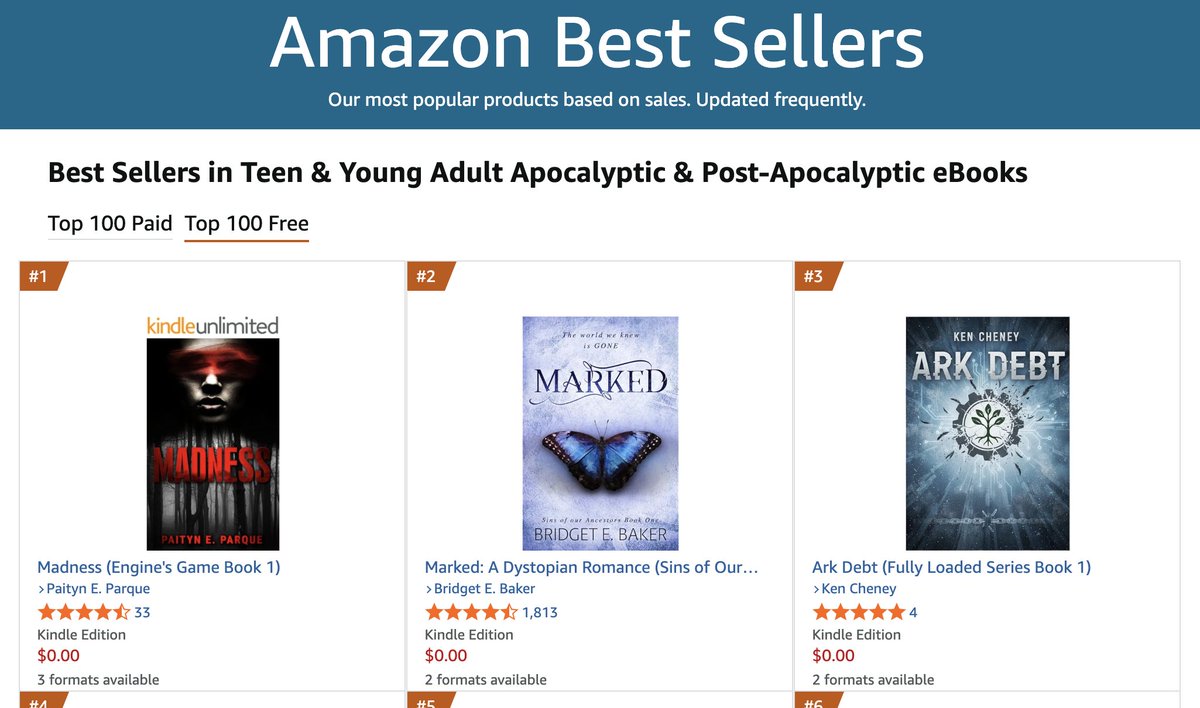
My book, Ark Debt, continues to gain momentum, surpassing a few thousand Amazon downloads and beginning to receive positive reviews. A top Goodreads reviewer stated today that Ark Debt is a "genre-defining masterpiece." (Reviewer is the #10 best reviewer, #8 top reader, and #4 top reviewer on Goodreads)
Reviews are needed, so please share the link to the free Kindle version while the promotion is still running at: https://t.co/JmtZmOvTWh
Here is the recent Goodreads review:
"The revival of dystopian genre!!! This book has it all! Drama, intrigue, romance, fast-action filled to the brim, twists and turns, emotional roller coaster. There are echoes of some of best dystopia pioneers: matched, silos, divergent, maze runner, annihilation. Writer took well known pieces and combined them into new genre defining masterpiece: modern dystopia ruled by all-encompasing AI threats, that should be read as cautionary tale.
I can't believe this one is not more known and talked about since it's basically an instant YA dystopian classic.
I’m glad I read it and will definitely keep an eye on the next sequel when it comes out."
Thanks for the repost, @MrBeast 🙌 In Ark Debt I explore how climate-driven disruptions like the collapse of the AMOC could reshape society- making luxury bunkers seem less like sci-fi and more like a survival strategy.
For anyone curious, here’s the book:
https://t.co/ffFIEe7Vfn
My book, Ark Debt, continues to gain momentum, surpassing a few thousand Amazon downloads and beginning to receive positive reviews. A top Goodreads reviewer stated today that Ark Debt is a "genre-defining masterpiece." (Reviewer is the #10 best reviewer, #8 top reader, and #4 top reviewer on Goodreads)
Reviews are needed, so please share the link to the free Kindle version while the promotion is still running at: https://t.co/JmtZmOvTWh
Here is the recent Goodreads review:
"The revival of dystopian genre!!! This book has it all! Drama, intrigue, romance, fast-action filled to the brim, twists and turns, emotional roller coaster. There are echoes of some of best dystopia pioneers: matched, silos, divergent, maze runner, annihilation. Writer took well known pieces and combined them into new genre defining masterpiece: modern dystopia ruled by all-encompasing AI threats, that should be read as cautionary tale.
I can't believe this one is not more known and talked about since it's basically an instant YA dystopian classic.
I’m glad I read it and will definitely keep an eye on the next sequel when it comes out."
Thanks for highlighting the oceans' essential role in our world. My book Ark Debt explores a future shaped by environmental tipping points like those, through a story of resilience and change. Grab the ebook free on Kindle (https://t.co/eKU3eNBEba).
More at https://t.co/IT5pdcjiUq.
Fascinating update on those tipping points—echoes the frozen world born from unchecked climate shifts in my novel Ark Debt. Follow Maya and Liam as they navigate inherited ecological debts and spark change in a post-collapse Earth. Grab the ebook free on Amazon Kindle, Google Play, Barnes & Noble, and more: https://t.co/eKU3eNBEba | https://t.co/IT5pdcjiUq
Interesting take on AI-driven contingencies. My book Ark Debt dives into a similar near-future: AI-ruled underground arks as humanity's last stand in a frozen world. Grab the ebook free on Amazon Kindle, Google Play, B&N, and other retailers: https://t.co/eKU3eNBEba | https://t.co/IT5pdcjiUq
Fascinating glimpse into those high-end bunkers. It echoes the underground Ark in my YA dystopian thriller Ark Debt, where an AI enforces resource rationing in a frozen post-climate collapse world. If that sparks your interest, download the ebook free on Kindle: https://t.co/4lIUK0Bjwy free on Google Play, Barnes & Noble, and other retailers via https://t.co/IT5pdcjiUq
Fascinating glimpse into high-stakes planning for an apocalyptic event. In my novel Ark Debt, elites oversee a frozen Earth from afar, leaving survivors to grapple with inherited debt and AI-controlled refuges. If dystopian survival stories intrigue you, grab the ebook free on Amazon Kindle, Google Play, Barnes & Noble, and other retailers: https://t.co/eKU3eNBEba | https://t.co/IT5pdcjiUq
Fascinating parallel to the survival stakes in my novel Ark Debt, where a frozen Earth forces tough choices under elite oversight from afar. Download the ebook free on Kindle, Google Play, Barnes & Noble, and other retailers: https://t.co/JmtZmOvTWh
Details at https://t.co/IT5pdcjiUq





![clarashih's tweet photo. While full AI role displacement will happen in certain roles, history shows that wage resets are a more common, insidious, and often equally disruptive way that new technologies affect workers
1. Intra-sector squeeze: Displaced workers flood the remaining jobs in their own field, compressing wages. When trade shocks hit manufacturing in the early 2000s, laid-off factory workers competed fiercely for an ever-shrinking number of U.S. jobs, resulting in declining real wages.
2. Labor supply growth outpacing labor demand: AI (like past tech waves) slashes the skill floor for once-premium jobs, flooding labor supply and compressing wages. This can happen even when the total # jobs in a sector increases, and/or when Jevons paradox plays out. We saw this with London black cab drivers, who prided themselves on mastering "The Knowledge," a rigorous, years-long training required to memorize 25K streets, 20K landmarks, and thousands of specific routes within a six-mile radius of Charing Cross, and previous to 2012 made a middle-class wage. But once GPS driving directions and Uber/Lyft commoditized professional driving, they faced sudden competition from a flood of low-skill workers. Despite consumer demand for rides increasing (Jevons) over the last 14 years, black cab drivers have seen real income fall by 50% and today sit below the London Living Wage.
3. Inter-sector pay cut and spillover: Displaced high-skill workers switch fields, often taking a pay cut while displacing incumbent workers. We may be seeing early stages of this now: 42% of recent college grads are *underemployed*, taking jobs that don’t require a degree and competing directly with non-college grads. This may be responsible for the increased unemployment among young non-college educated workers [see chart].
The same thing happened after NAFTA and China’s WTO entry. Manufacturing workers didn’t disappear; they spilled into retail, construction, and services, on average taking a $13,500 (~20-30%) pay cut.
The key takeaway is we need to track not only # jobs but also wage trends in order to help people prepare.](https://pbs.twimg.com/media/HDfVNXFbgAAn1HI.jpg)