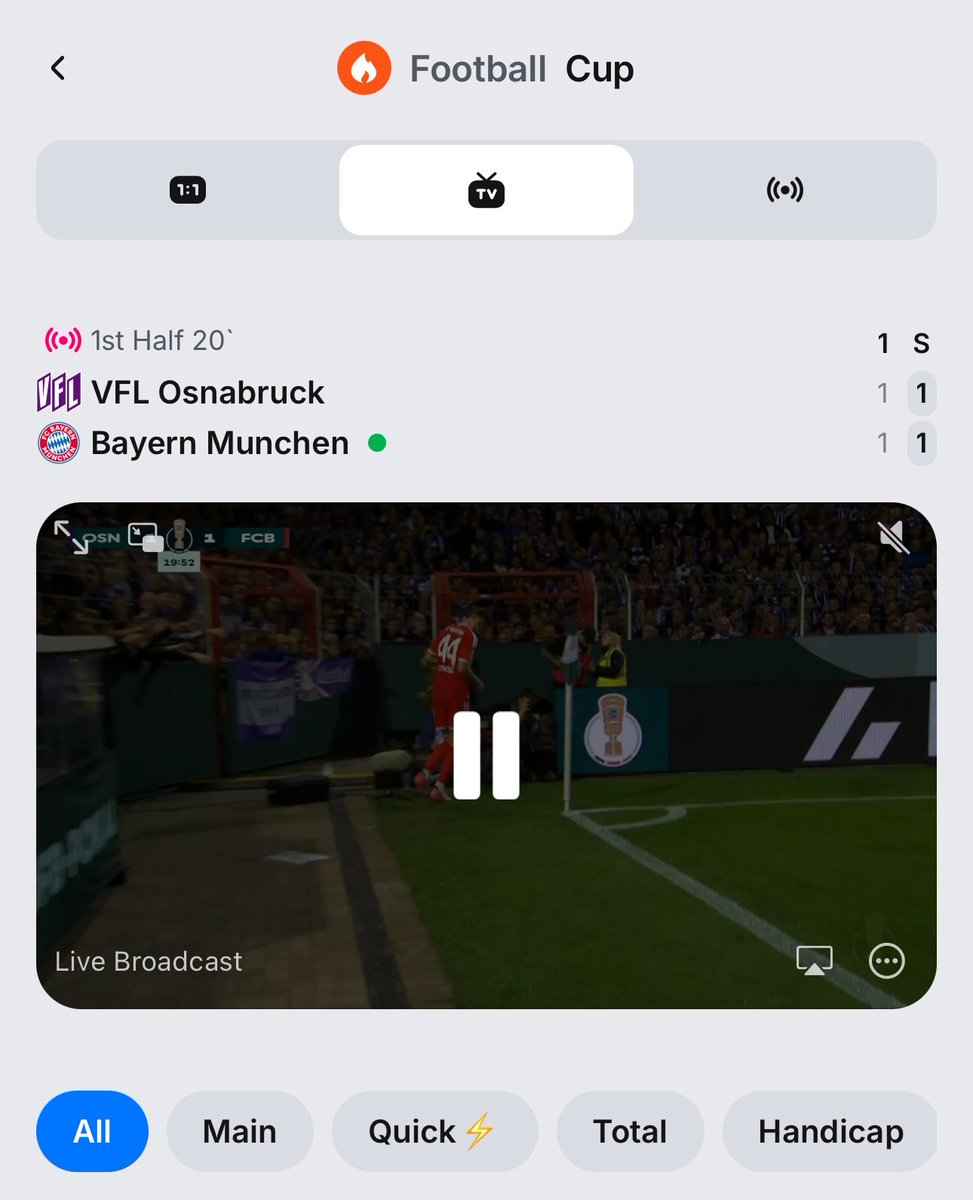
🏴 England 🆚 Japan 🇯🇵
⏰ Kick-off time
📺 How to watch
🔢 Team news
❓ Prediction
💰 Match odds
Nations Championship preview
#ENGvJPN | #NationsChampionship
https://t.co/BNGucsSgbi
The U.S. Army sniper credited with 33 confirmed enemy kills survived six years serving in one of America's most elite military units. But after leaving the battlefield, Nicholas Irving faced a personal battle that nearly cost him his life.
His enemies knew him as “The Reaper,” while his fellow Rangers recognized him as one of the most effective snipers in their battalion. Yet the battle that nearly destroyed him began after he returned home.
Irving enlisted in the U.S. Army straight out of high school in 2004, determined to earn a place in the elite 75th Ranger Regiment. The journey was brutal. Years later, in an interview, he recalled that his selection class began with 85 candidates, but only seven graduated. He was one of them. Assigned to the 3rd Ranger Battalion, Irving progressed through demanding combat positions, serving as a machine gunner, assaulter, designated marksman, and sniper team leader. He also became the first African American sniper in his battalion.
During six years of military service, he deployed repeatedly to Iraq and Afghanistan, experiencing the realities of warfare that few civilians could fully understand. His defining deployment came in Afghanistan during the summer of 2009. According to his published military memoir, Irving was credited with 33 confirmed enemy kills during that deployment, a figure his publisher describes as a battalion record. His teammates and commanders gave him the nickname that would follow him throughout his life: “The Reaper.” His memoir also recounts a dangerous confrontation with an enemy sniper known as “The Chechnian,” one of the encounters that helped establish his reputation.
From the outside, Irving's military career appeared extraordinary. He had survived dangerous missions, earned the respect of fellow Rangers, and developed skills that made him one of the most recognizable American snipers of his generation. But surviving combat did not mean returning to civilian life would be easy.
When Irving left the Army, the structure that had defined his existence disappeared. There were no more missions to prepare for, no daily routines built around the men beside him, and no simple way to leave his wartime experiences behind. In a deeply personal interview with PBS, Irving revealed the seriousness of his struggles. He battled alcohol dependence and went through two rehabilitation programs. At one of his lowest moments, he recalled sitting with a bottle of whiskey and a pistol containing a single round. He felt like a burden. The man who had survived years of combat was now struggling to find a reason to keep living.
But that night became part of an unexpected turning point. Irving began writing notes on his computer. Those notes eventually developed into a journal, which became the foundation of his bestselling memoir, “The Reaper.” Writing helped him share experiences that had previously remained largely trapped in his memories.
However, Irving later explained that the greatest transformation in his life came from something entirely different. His son was born on November 28, the same date as Irving's birthday. He described his son's arrival as the moment he discovered a new purpose. After years of measuring success through military missions and objectives, he now had someone whose future depended on him. He wanted to provide his child with the kind of fatherhood he felt had been missing from his own upbringing.
His books went on to become bestsellers, he appeared on television, and he established HardShoot, a business focused on precision-shooting instruction. But perhaps his most meaningful achievement had nothing to do with a rifle.
For years, Nicholas Irving had been known by a nickname associated with taking lives. The turning point he described after leaving the Army came when he found a reason to dedicate himself to protecting, loving, and raising one.
The world knew him as “The Reaper.”
His son gave him another identity.
Dad.
I went to Computer Village today and found our business model already running in the market.
A solar vendor has put prepaid meters on the shops around him and sells power by the unit. The receipt says ₦894 per kWh plus VAT, which comes to ₦967.50. A shop paid ₦5,000 and got 5.17 kWh.
At T&S Power Grid, the most we charge on any site is ₦400 per kWh. The same ₦5,000 buys 12.5 kWh from us. That’s more than twice the power.
So I sat down and asked him how it works.
He was honest. On many days the solar doesn’t last two hours, because the shops lean on it when NEPA fails. If a customer plugs in a heavy appliance, he can’t see it and can’t stop it. One big load drains the battery and everyone goes dark.
That isn’t a pricing problem. It’s a control problem.
This is why we built the Gateway Hub.
It gives the host control of every connection:
→ Live usage per customer. The host sees who is drawing power and how much.
→ A power cap on each connection. If a shop plugs in a pressing iron or a freezer above its limit, that line trips on its own. The other customers stay on.
→ Remote cut and reconnect. The host does it from the dashboard without going to the meter.
→ Time-of-day pricing. Evening power can cost more, which protects the battery for the hours that matter.
→ Prepaid billing that runs on the device. It keeps working when the internet drops.
Control is what brings the price down. When the battery isn’t drained by one customer, it serves everyone for longer. More kWh sold per day means the host earns well at a fair price, and customers stop paying a scarcity premium.
The Computer Village vendor proves that people will pay for reliable power next door. Our job is to make it fair, measured and in the host’s control.
If you own solar with spare capacity, or you’re funding solar for a market, an estate or a plaza, let’s talk.
Super El Niño Explanation in Yorùbá
You probably have been wondering why it's super hot these days. You've also heard about El Niño and want to know what it means for an average Nigerian. I made this easy to grasp explainer video for you, in Yorùbá Language.
I spent 47 days as one of several thousand African migrants seeking to enter Europe through the Sahara Desert and the Mediterranean Sea.
Story on @fijnigeria tomorrow, Thursday and on Friday.
TAKE NOTE OF THR FOLLOWING JUST IN CASE!!!!!!
When you want you to write a statement at the POLICE station or EFCC or law enforcement office;
1. Don't leave blank spaces, cross a line over any blank space left once you are done.
2. Remember to put full stop once you are done writing and sign at the front of that full stop.
3. If you are forced to write a statement against yourself.
DON'T WORRY, at the signature part.
Just add UD as part of your signature (meaning under Duress)
4. It is not a WAEC answer sheet where you must fill up all the page, write what you know only and cross line on the space remaining.
5. Don't agree to write a statement when your lawyer or someone you trust is not there.
If they force you to write, remember (number 3 point.)
6. Avoid answering unnecessary questions when your lawyer is not there.
You have the right to remain silent, cos anything you say can be used against you in court
7. If POLICE send you invitation during weekend, try tell dem say you go show face on Monday as you are out of town for now, cos they will probably detain you till Monday before they can transfer you to court if the matter is the one the type they need to transfer to court
8. Don't forget to share this p0st
9. Sign on every page of the paper, not just the final page
10. If there is a mistake when writing, cross it out cleanly, write the correction, and place your initials directly beside the alteration.
Happy taco Tuesday 🎉
“When you stand to Pee, you put stress on your prostrate, squatting or sitting pee is far better. In the north, the squat to pee, that’s why they have rare cases of Prostrate cancer.”
Interesting!
1. The vagina is about ten times cleaner than the mouth. No matter how you brush your teeth always, the mouth is still the dirtiest part of the body.
2. Your intestines know what shape they're supposed to be in, and can move themselves, which means surgeons can just stuff them back into you when they're done and they'll sort themselves out.
3. When you do tattoo removal, the ink doesn't disappear, you pee it out. Your body's immune system breaks down the pigments of ink and it flows in your blood stream, gets processed through your kidneys, then you pee out the ink.
4. If you hit your chest at a very specific time in the electrical cycle your heart will stop.
5. The pain you feel from a sunburn is your skin cells effectively killing themselves before they mutate into cancer.
6. The way your eyes are shaped causes your vision to be upside down but your brain flips the image automatically.
7. When you die, your hearing is the last to go. So imagine you die in a fire or in a war or something and the last thing you hear is like screaming and chaos
8. The length of a man's penis is equal to the length of his thumb times 3
9. Everyone's tongue print is different, just like fingerprint.
10. Babies have 94 More Bones Than Adults.
11. The human brain typically weighs around three pounds, and men’s brains are on average a bit larger than women’s. But Brain weight is not a measure of intelligence.
12. Your heart pumps about 2,500 gallons of blood every day.
Driving home, 2011. Checkpoint. Drunk policeman.
3 gun shots, one bullet punched through my car boot into my right hand.
That hand once edit, animated, paid bills and fed my family. Overnight it became dead weight.
Career gone. Marriage cracked. Mind still bleeding daily.I sued the Nigeria Police.
2015: Federal High Court ordered them to fund reconstructive surgery to restore my life.
Eleven years later: zero naira, zero apology, zero accountability.
I still can’t fully use the hand they destroyed. Still begging strangers so I don’t lose it forever.
The Nigeria Police that shot me ignores the court. Who protects the rest of us?
@MobilePunch@TunjiDisu1@UNDP@NhrcNigeria
#NigeriaPoliceNotYourFriend #JusticeForTomori
You'll be shocked to know one of the leading causes of this kidney issue in Enough is AKPU & RED OIL
Processors soak cassava in Paracetamol & detergent for days!
Retailers add red dye to the oil to make it more attractive.
Imagine eating. AKPU that's made with Paracetamol & washing detergent & swallowing it with soup made with red dye at least twice a day!
What I can't imagine is - a young man working so hard to make a living and spending the little money he made on food that will eventually ruin his life!
How can a society be working against itself?
Nigeria is so weird!
THE ECO: The currency West Africa wants to use
1. Have you heard that West African countries want to have one common currency called the ECO?
But there is a catch.
Not every country can simply wake up and join.
There are economic conditions to meet.
Let me explain: 👇🏽