More good news in pancreatic cancer:
Daraxonrasib recently doubled survival in metastatic disease in Phase 3. Now, combined with vopimetostat, it has shown a 92% objective response rate. This is far above the 25–35% seen with either drug alone.
Thread below 👇
The RAS revolution continues!
Tango Therapeutics' new results date back to the discovery of a synthetic lethal interaction, in 2016: PRMT5 inhibition selectively kills cancer cells deficient in MTAP — about 40% of pancreatic cancer — while ~sparing normal cells
This mechanism itself is probably independent of RAS, but given RAS inhibition is the likely future foundation of therapy, Tango's PRMT5 inhibitor, Vopimetostat, was tested in combination with RevMed's RAS inhibitor, Daraxonrasib — in MTAP-deficient pancreatic cancer
Today's data come from a small number of patients, but the 6-month progression-free survival was 90% (compared, cross-trial, with Daraxonrasib alone, ~56%)
In 1979, Madison; Wisconsin, a woman sits in a basement office, writing code line by line on a computer most hospitals don't even know they need yet.
Her name is Judy Faulkner. She's started with $6,000 to $7,000 of her own money, plus contributions from friends and family totaling around $70,000. No venture capital. No Silicon Valley connections. Just a conviction that the American healthcare system is killing people because doctors can't access the information they desperately need.
She had watched it happen. Medical records stayed trapped in filing cabinets and incompatible systems when patients moved between cities and providers. Doctors made critical decisions in the dark, lacking the patient histories they needed. People died from preventable mistakes.
That systemic failure became her mission. Faulkner began building software that would let patient information follow the patient, no matter where they went. It was a radical idea in an era when most hospitals still relied on paper charts and metal drawers.
Decades later, she controls Epic Systems, the most powerful health technology company in America. Her software manages medical records for over 300 million patients worldwide. Roughly half of all U.S. hospital beds run on systems she created. Her wealth sits between $7 and $8 billion.
And almost no one knows her name.
She never took Epic public. Never accepted venture capital. Never sold out. She believed Wall Street would force her to chase quarterly profits instead of patient outcomes. So she kept control, kept her wealth locked in private shares, and kept building.
Now in her eighties, she's methodically dismantling that fortune. In 2015, she signed the Giving Pledge. Then went further, committing to give away 99 percent of her wealth. She and her husband created the Roots & Wings Foundation, named after advice she once gave her children when they asked what they needed most from her.
"You need roots and wings," she told them. Values to anchor you. Freedom to grow. Everything else is noise.
Today, that foundation distributes tens of millions annually, aiming for $100 million a year. Food security. Healthcare access. Education. Housing. She's not waiting until she's gone to make an impact. She's converting ownership into action right now, while she's still here to see it work.
In an age of billionaire spectacle, Judy Faulkner built an empire in silence, accumulated unimaginable wealth without chasing it, and is now giving it all away with the same quiet determination she used to write that first line of code in a Wisconsin basement.
Faulkner still runs Epic Systems from its headquarters in Verona, Wisconsin, where the campus has become legendary for its design. Buildings are themed after famous works of literature and fantasy, with conference rooms modeled after Hogwarts, Alice in Wonderland, and Star Trek. Employees traverse tunnels decorated like subway stations and walk through spaces that feel more like theme parks than corporate offices. It's Faulkner's way of making grueling work feel a little more human.
Unlike most tech billionaires, she lives modestly and avoids the spotlight. She doesn't own yachts, doesn't collect estates, and rarely seeks media attention. Her focus remains on Epic's mission: building software that saves lives by making sure critical information is always available when it matters most.
Faulkner majored in mathematics and computer science at a time when women made up less than 10 percent of the field. Before founding Epic, she taught herself programming languages and worked on developing systems for hospitals while teaching at the University of Wisconsin. Another fascinating detail: Epic remains one of the largest privately held software companies in the world, with thousands of employees and zero outside investors. Faulkner retains control by design, ensuring the company answers to patients, not shareholders.
#archaeohistories
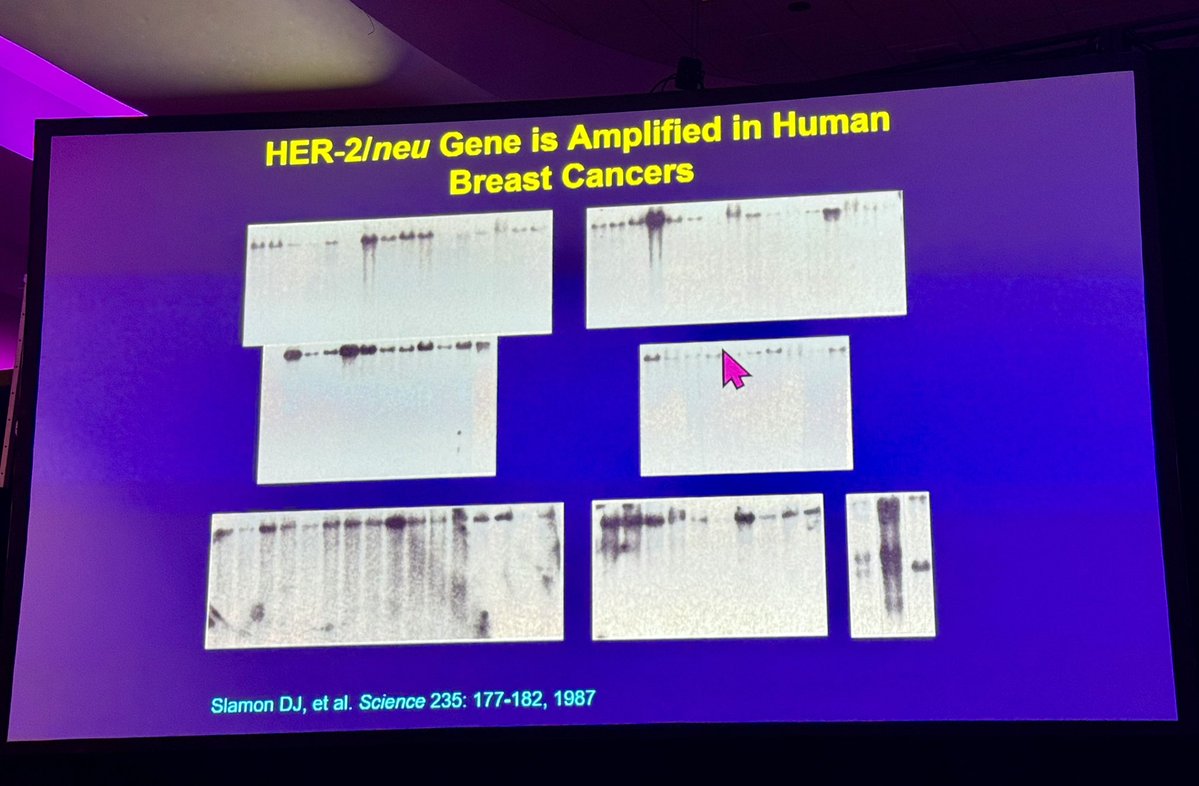
40 years ago, a young physician submitted a paper reporting on the alteration of a gene called HER2/neu to Science. He didn’t know that it was the beginning of one of the most remarkable scientific stories of the human kind, which would eventually impact the lives of COUNTLESS patients with cancer — first via mABs, then through ADCs, bsAbs and beyond.
Unforgettable Keynote presentation by Dennis Slamon at #MBCC26.
When a phase 1 trial is published in @NEJM, you can bet it will be impactful. Here, the p53 reactivator rezatapopt showed an ORR 20% among 77 pts with TP53 mutant (Y220C) advanced tumors. Are we getting closer to drug the most undruggable of all mutations? https://t.co/lpkvWiNNmu
FDA grants Breakthrough Therapy Designation to @EliLillyandCo Sofetabart Mipitecan (LY4170156) in platinum-resistant ovarian cancer.
This isn’t just "another ADC." This is the paradigm shift we’ve been waiting for👇🏻
1. The "Post-Elahere" Solution:
Unlike current SOC, Sofetabart shows robust activity in patients refractory to prior mirvetuximab (Elahere).
Why? It swaps the tubulin-inhibitor payload (DM4) for a Topoisomerase-I inhibitor (exatecan). No cross-resistance = new runway for our patients.
2. The "Low-Expressor" Unlock:
Current approval is limited to FRα-High (≥75%).
Sofetabart showed responses across ALL expression levels (High, Moderate, & Low).
Impact: We move from treating ~35% of PROC patients to potentially >80%.
3. The Clinician’s Win (Safety):
🚩 NO significant ocular toxicity reported. No keratopathy. No mandatory eye exams.
Low rates of neuropathy/alopecia.
This is a massive QoL win compared to current ADC burdens.
The Bottom Line:🧠
Phase 3 FRAmework-01 is now the trial to watch. If these signals hold, we are looking at the new backbone for PROC-replacing chemo in the FRα-Low setting and rescuing the FRα-Highs post-progression. @ocrahope@Ovacome
#gyncsm #ovariancancer #oncology #drugdevelopment #ASCO25 @OncoAlert
https://t.co/w81FsBEkDZ
JUST IN: The report we always look for every year: CANCER STATISTICS, 2026
New milestone with 5y Survival of 70%!!! Still a lot of room to improve but also excellent progress !
@AmericanCancer@CACancerJournal@DanaFarber
https://t.co/ZtFDhFOGgU
A major NCI-led study in @NEJM found that a single #HPV shot may be as effective as two in preventing #CervicalCancer. Tracking 20,000 girls for 5 years, the findings show how NCI's sustained research support translates into real #CancerPrevention impact. https://t.co/fO1ggQlVvq
A new Nature paper just delivered a shock to a long-lived oncology myth.
🔗 https://t.co/gVGM9QvQqw
For years we’ve been told that radiotherapy—and its cousins like SBRT, TARE, Y-90—might trigger the “abscopal effect,” a systemic immune response that helps control distant disease.
This study shows the opposite: radiation induces Amphiregulin (AREG) and can stimulate distant metastasis through myeloid-cell reprogramming.
So what does this mean for HPB oncology?
👉 The “abscopal effect” is not a clinical strategy. It’s a story.
👉 Radiation-driven systemic benefit is, at best, unreliable—and at worst, misleading.
👉 Surgery remains the only method of local control with reproducible impact on survival.
I often hear "I wish we didn't have to waste these $$$ meds every time a patient stops & has extra left over."
Here's what the state of Michigan did to combat this:
- Statewide cancer drug repository, 105 sites
- $26M value/>100K pills donated to >1K pts
https://t.co/GWpRVfZKE0
“We are truly putting the brakes on scientific innovation in this country at a time when our ostensible adversary, China, is going faster and faster and faster,” says Harvard scientist Don Ingber. “If we can’t be the leader, we’re going to be the follower.” https://t.co/6UCqfCoWbs
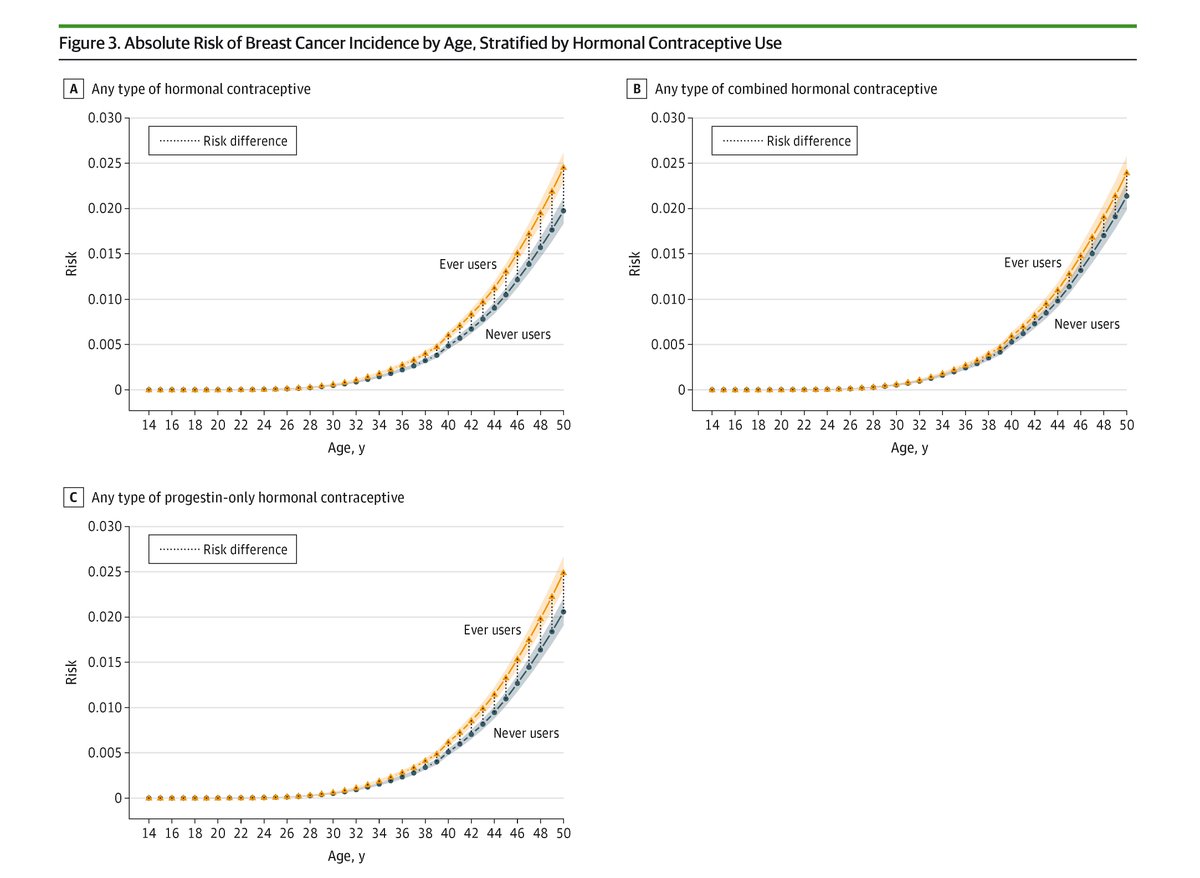
Both combined and progestin-only contraceptives are linked to increased breast cancer risk, with greater risk observed for progestin-only, particularly desogestrel-containing products. https://t.co/L118nPvjh7
Fascinating dynamics in ovarian cancer with multiple ADC programs demonstrating a ~50% ORR.
FRa in the lead ( $GMAB and $LLY in P3s, AZ reported today), CDH6 in P2 (Daiichi reporting P2 data later today) and NaPi2b (Tubulis presented strong results today) in P1.
All programs are topo1-based so whoever reaches the market first could render most other programs (>15 in the clinic) irrelevant assuming efficacy stays similar
#ESMO25