The most valuable knowledge in your company has never been written down.
We're launching kept on August 31 to change that. Here's the product in 90 seconds:
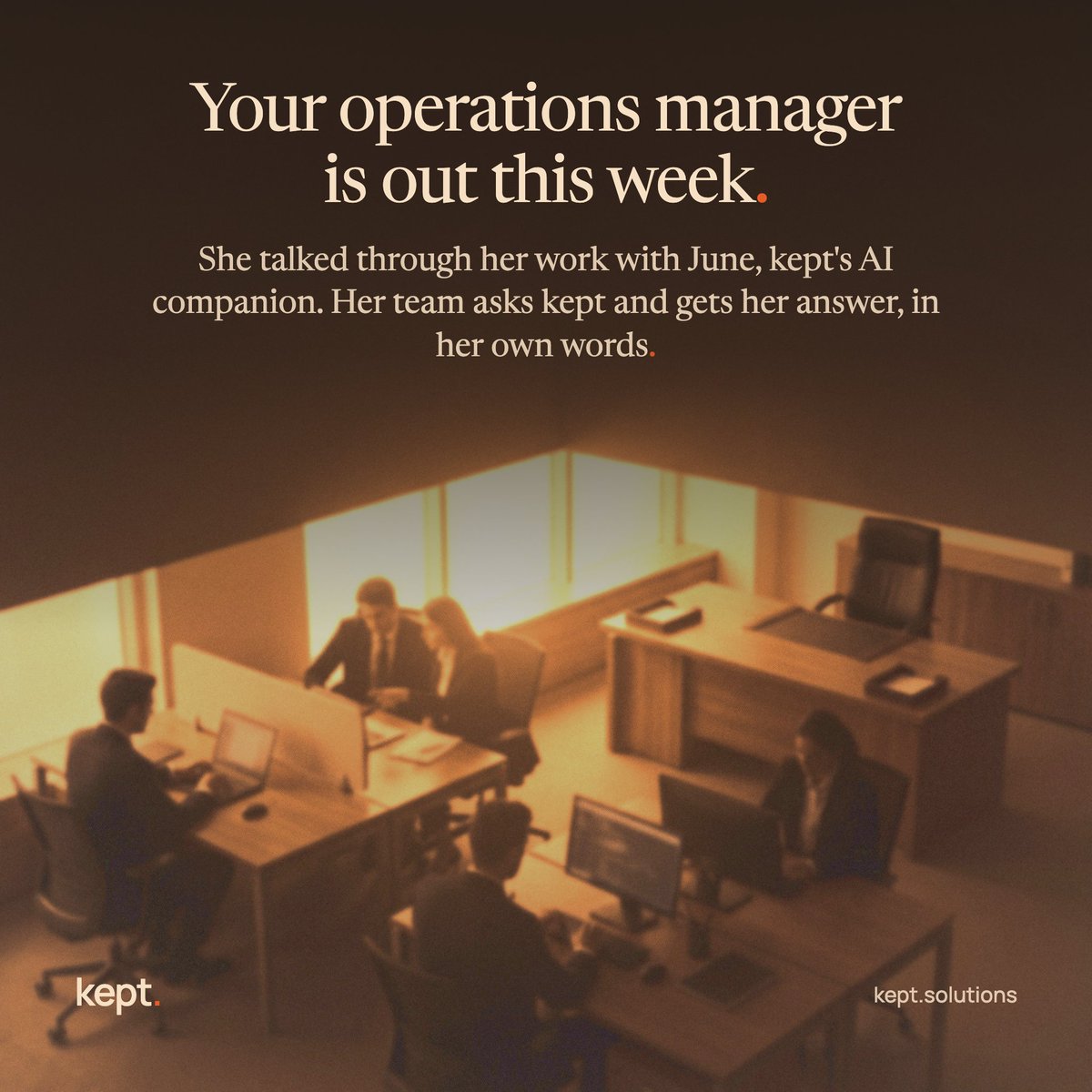
A rush order comes in, and nobody's sure who can approve it.
Normally the answer would wait until your operations manager is back.
This time, the team already has her answer.
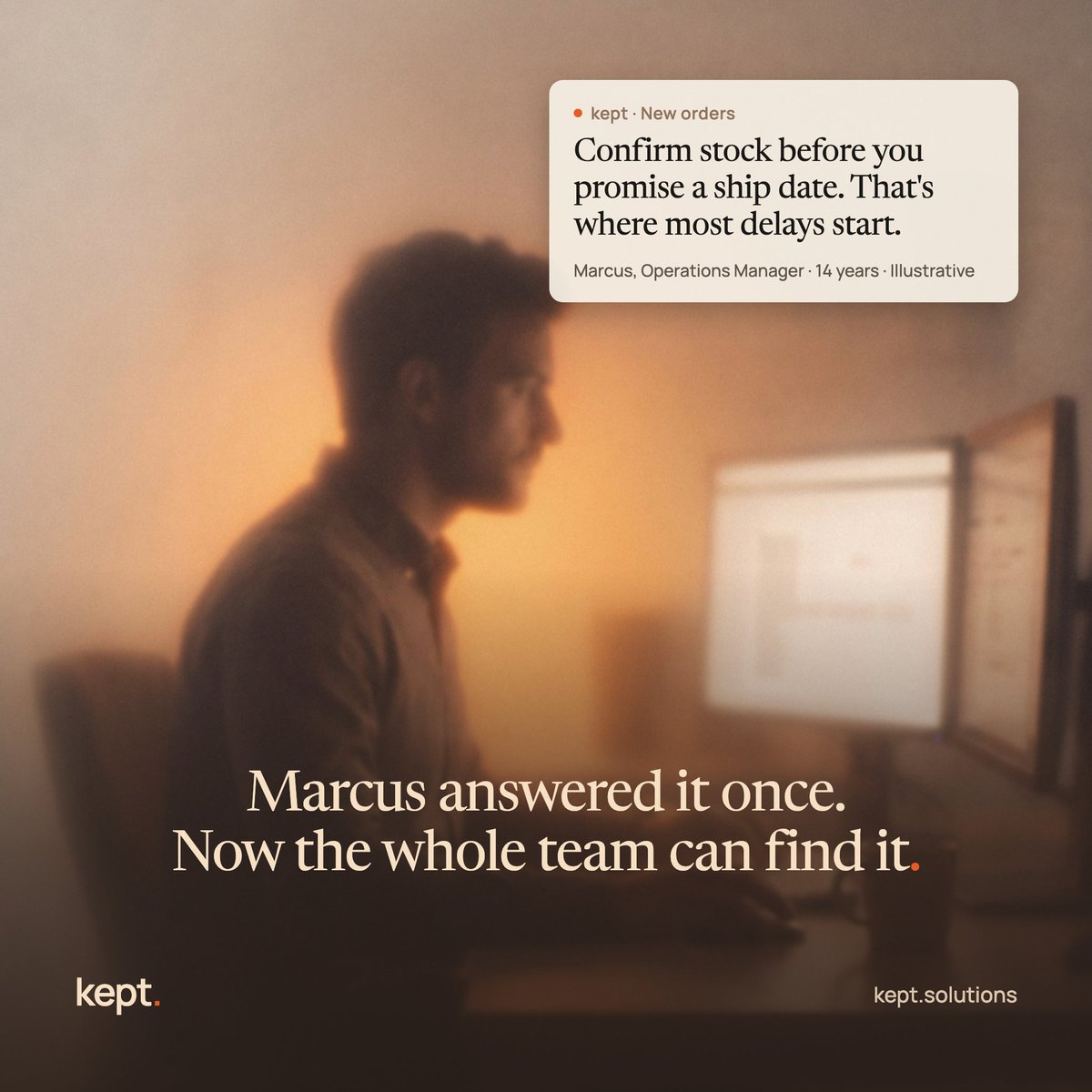
"Just ask Marcus" is the most expensive sentence at work.
It works until Marcus is on vacation, stuck in back-to-back meetings, or answering the same question for the fourth time this week.
What Marcus knows shouldn't need Marcus in the room.
Most handoffs pass on the tasks and lose the reasons.
The new owner knows what to do each week. Nobody told them why, so the first time something changes, they're stuck.
kept keeps the why with the work.
Human judgment is the edge. AI can know more than any one person ever could, but there are things you only understand through experience. Knowing what matters, when to make an exception, or when something just feels off comes from being there and seeing it play out. That kind of judgment is hard to replace.
I am very uncomfortable about people trying to ascribe religious force or a surrender of human judgment to AI models, and think it is a real safety issue.
Your business runs on the people you hand the work to. Over time they pick up the context that makes that work actually get done right.
Every employee builds a lifetime value. The longer they stay, the more they know about your clients, your quirks, and why things are done the way they are.
When someone leaves, that value resets to zero. The context and tribal knowledge they carried is one of the most valuable things your business has, and it's easy to overlook until it walks out the door.
Curious how much of what these 5,000 people know is actually documented. The workarounds, the judgment calls, the expertise. My guess is very little, and that's the part AI would need most.
That's tribal knowledge. It was built over years of real customers, trial and error, and learning what actually works. It lives in people's heads. Lose the people and it's gone, and AI can't pick it up, because it never lived through any of it.
Experience shapes which problems people notice and how they solve them.
A field experiment with 776 P&G professionals found that AI-assisted product ideas combined technical and commercial perspectives more evenly.
That raises a question for businesses: how much of what one department knows is available to everyone else?
An engineer may remember why an earlier design failed. A sales colleague may know why customers rejected it. Those experiences can change the next decision, if the people making it can learn from them.
That is why Kept exists. Knowledge gained through experience becomes more useful when other people can understand it and apply it.
A business has experience that never appears in its data.
On Stanford’s If/Then podcast, Amir Goldberg discusses turning organizational experience into useful information, and why people still have to interpret it.
What important detail would an experienced employee give AI before it starts?
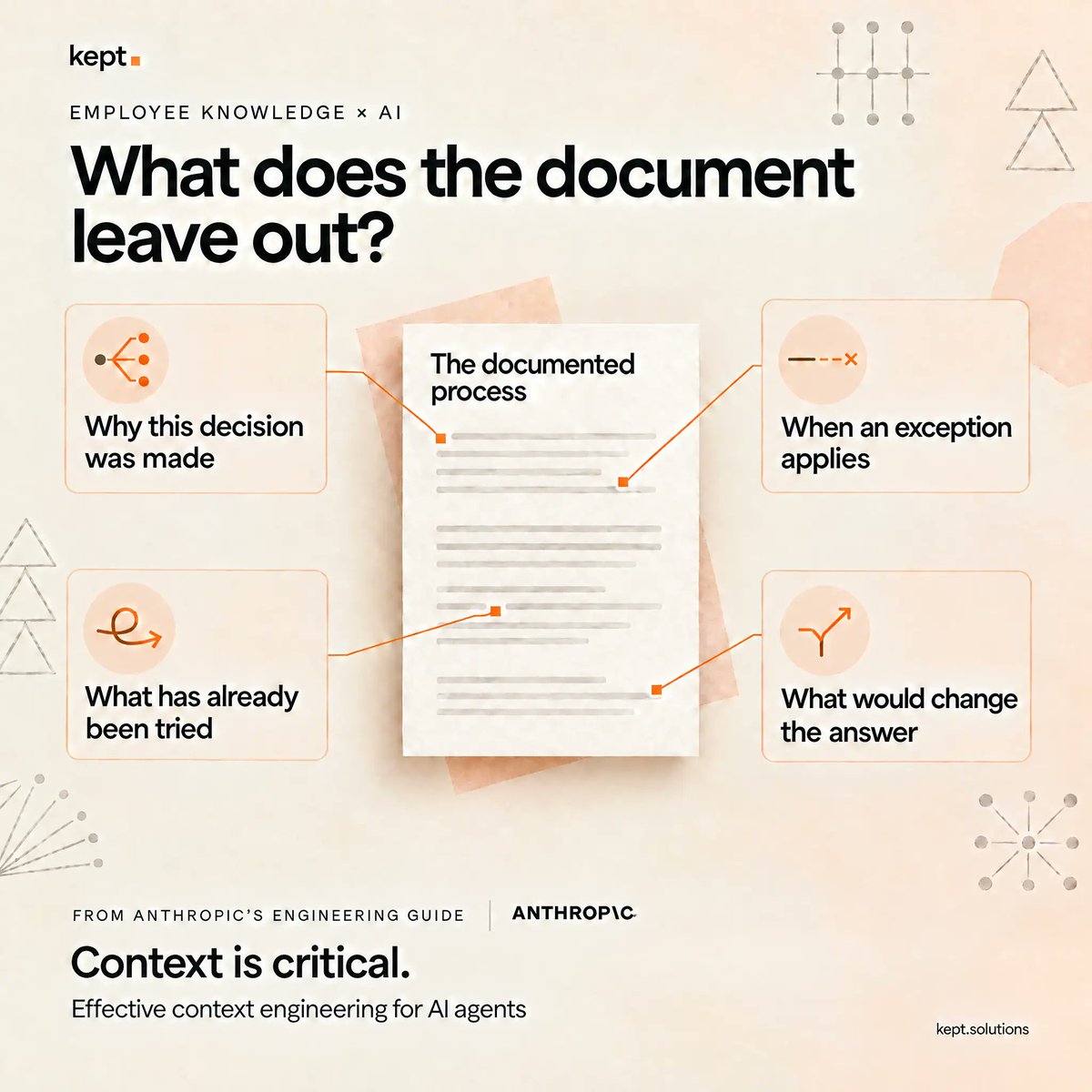
Anthropic’s guide explains why selecting relevant context matters. For a business, that raises a question about knowledge that has never been written down.
@ycombinator Long-term advantage compounds through context. Companies that preserve not just what was decided, but why, turn years of experience into judgment their competitors can’t easily replicate.
An employee’s judgment can be what finally solves a problem that has held up a team.
Capturing how they reached that decision gives others knowledge they can use when the problem returns, even when that employee isn’t available to help.
22% of employed adults aged 25–65 reported learning something new at work every day.
How much of that knowledge reaches a colleague who needs it?
https://t.co/OaDW1s4jXq
That explanation can help a new hire handle an unfamiliar task or give another team a way to investigate a similar problem.
Keep it alongside the relevant process. Include when the approach works and what would make a different approach necessary.