The EU just passed the Chat Control law to scan people’s private online messages
It could have been rejected, but the EU parliament members needed to block it were already on a summer holiday
You cannot possibly get more European than this
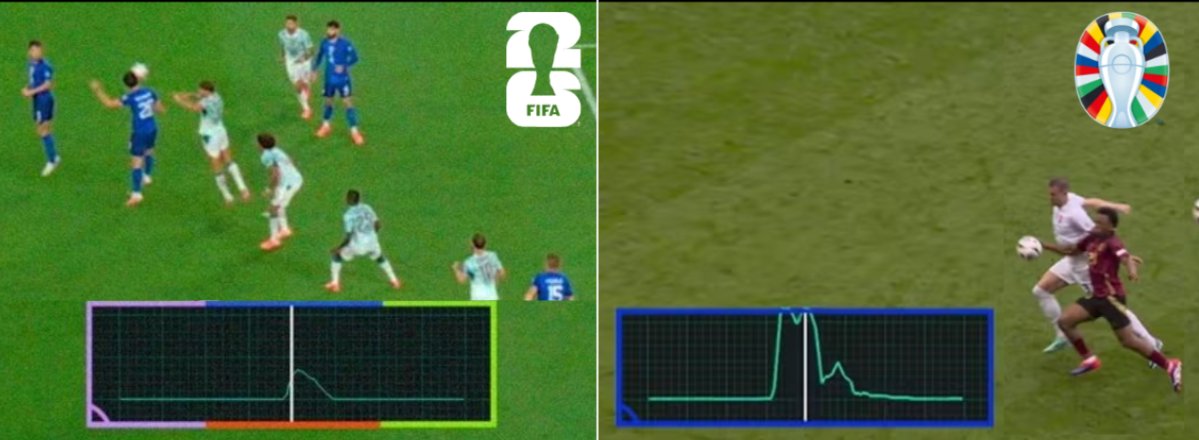
Fiz um quadro a quadro dos dois lances em que o chip da bola foi utilizado para anular um gol. Na Copa do Mundo deste ano (Portugal x Croácia) e na Euro 2024 (Bélgica x Eslováquia). A comparação mostra a diferença na intensidade do toque.
Em 2024, o chip detectou o leve toque na mão do jogador belga. Bem leve mesmo. Mas percebam pelo gráfico que a intensidade ainda foi muito maior do que o mínimo resvalo no jogador croata hoje.
Muito maior. Hoje não foi um toque, talvez nem um resvalo. Um sopro decidiu o jogo.
Mas tecnologia existe para isso. Objetividade extrema. Sem margem para a subjetividade ou para o risco de uma interpretação humana intencional.
ROBO A CROACIA: Errores en física.
Si nos vamos a poner detallistas con el tema de los sensores de las pelotas, de si hubo un mínimo roce y aplicar el reglamento al milímetro, también tenemos que aplicar física al milímetro.
La pelota Trionda usa tecnología de balón conectado con un sensor de movimiento de 500 Hz que da información al VAR sobre movimiento/contactos del balón. Ese sensor no “ve” una cabeza: mide aceleraciones, rotaciones y patrones de movimiento. Por eso, si la pelota pasa muy cerca de una cabeza, puede haber perturbaciones aerodinámicas, vibraciones o ruido mecánico. En principio, eso puede generar una señal pequeña. Que el algoritmo la clasifique como contacto ya es otra cosa.
Si el sensor muestra una señal típica de impacto —pico brusco, alta frecuencia, cambio instantáneo de rotación o trayectoria, sincronizado con la posición de la cabeza—, entonces la anulación es defendible aunque en TV no se vea. Las cámaras tienen parallax, motion blur, pocos frames comparado con el sensor, y un contacto mínimo puede ser invisible.
Si el sensor solo muestra una oscilación ínfima y no hay cambio coherente de trayectoria, ni deformación, ni imagen compatible, ni firma de impacto, entonces NO se debe anular un gol. Ahí se estaría convirtiendo una herramienta probabilística en un oráculo.
A Croacia le anularon un empate tardío tras una revisión del VAR polémica vinculada a una detección marginal del balón. Una cosa es una señal clara de impacto; otra es un “blip” diminuto.
Sobre los árbitros: no necesitan ser físicos, pero sí deberían tener formación suficiente en limitaciones de medición, la cual OBVIAMENTE NO TIENEN. Un árbitro moderno que usa sensores, semiautomático, tracking 3D y VAR debería entender conceptos básicos: margen de error, falso positivo, calibración, umbral, sincronización temporal y diferencia entre dato bruto e interpretación algorítmica. Si no, termina pasando esto: la tecnología deja de asistir al arbitraje y empieza a reemplazar el juicio crítico.
En conclusión, no se ve contacto y el único argumento es “el sensor detectó un roce ínfimo” que, como ya mencioné, por el gráfico se puede ver que está mas relacionada a diferencias de presión en el aire al pasar cerca de una cabeza que por un toque con la misma (si la hubiera tocado se vería un pico muy alto y brusco en la imagen).
Se está usando tecnología muy avanzada con árbitros que no la saben comprender (ni el propio VAR). Ningún físico diría que ese gráfico muestra un toque.
En una jugada decisiva, la carga de la prueba debería ser altísima. Sensor sí, fe ciega en el sensor, NO.
🇭🇷 Croatia got eliminated from the World Cup by a closed-source sensor.
FIFA says the Kinexon chip in the Trionda "proved" Matanović touched the ball. Absolute disgrace. What actually happened: they ran signal processing over 500Hz IMU data from a 14-gram sensor and isolated a supposed contact spike from thousands of noisy samples dominated by bladder harmonics, panel flex, spin wobble and stadium micro-tremors, then nullified one of the most dramatic World Cup equalizers in history via spectral analysis of what is essentially glorified noise.
Oh, and it gets better. They moved the chip this year. Back in 2022, it used to hang suspended in the center of the ball. Now it's glued into the sidewall of ONE panel, with counterweights stuffed into the other three so the ball doesn't fly like a shopping cart. So sensitivity now depends on which side of the ball the "contact" happens relative to the sensor. Totally fine basis for ending a nation's tournament.
An IMU measures acceleration. Somewhere in a proprietary pipeline, a threshold decides which acceleration counts as "touch." That threshold is unpublished. The false positive rate is unpublished. The calibration data is unpublished. The patents are literally still in their secrecy window. And FIFA owns the raw data, so nobody can independently audit the trace that ended Modrić's last World Cup.
And we're all supposed to accept a "heartbeat graphic" on the broadcast as if that settles anything.
Since we sadly all know you won't ever admit your crimes or remove this technology for good, at least open source the detection pipeline, @FIFAcom!
Publish the thresholds, the error rates, the raw IMU trace from last night. If the tech is right, transparency costs nothing, right?
Today, on my final day as Director of National Intelligence, I’m releasing never-before-seen communications and documents exposing how Dr. Fauci provided millions in US taxpayer dollars to fund dangerous gain-of-function research at the Wuhan lab, worked with politicized elements within the Intelligence Community to suppress the truth about his actions and hide the virus’ lab-leak origins, and lied to Congress while under oath in 2024. It’s time you know the truth.
https://t.co/3YJSstB7d4
"Da nam je netko prije nekoliko godina rekao da će HDZ i vladajuća većina predlagati dodatni porez od 50% na „ekstraprofit", povećavati poreze malim iznajmljivačima i uvoditi veće porezno opterećenje uspješnim paušalnim obrtnicima, pomislili bismo da čitamo program Radničke fronte."
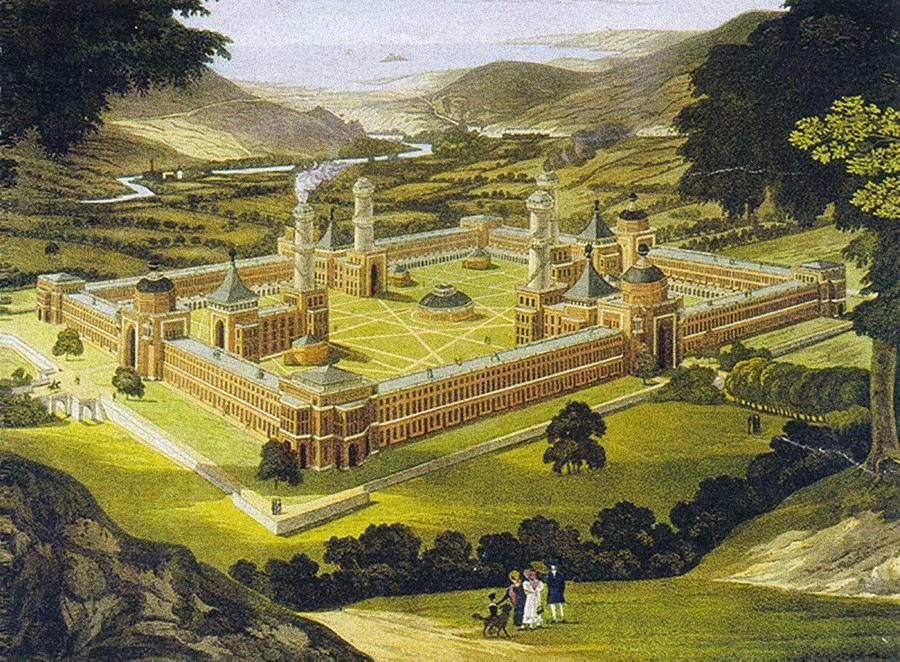
Robert Owen's New Harmony experiment stands as perhaps the most instructive lesson in economic history about why socialism fails every single time someone tries it. This wasn't some theoretical debate in a university classroom. Owen put his money where his mouth was, purchasing the thriving town of Harmonie, Indiana in 1825 for $150,000 and transforming it into his vision of a perfect socialist society.
The setup looked promising. Owen brought genuine intellectual firepower to Indiana. Scientists, educators, and progressive thinkers flocked to this "Community of Equality" where private property would disappear, money would become obsolete, and collective labor would serve the common good. Owen had already made his fortune in the textile industry, so he understood production and management. He wasn't some armchair theorist.
Within months, the cracks appeared. The hardest workers started questioning why they should break their backs when lazy neighbors received identical compensation. Why stay late to finish critical tasks when someone else could sleep in and still eat the same meals? Owen had eliminated the price system that communicates information about individual contribution and social need. Incentives collapsed immediately.
You can trace the predictable cascade of failure. Production dropped as effort declined. Disputes erupted over work assignments because no market mechanism existed to allocate labor efficiently. Without private property rights, nobody maintained equipment properly. Without profit and loss signals, managers couldn't determine which activities created value and which destroyed it. The community devolved into endless meetings about governance while crops rotted in fields.
Owen tried multiple reorganizations, breaking the community into smaller units, adjusting the rules, bringing in new leadership. Nothing worked because the fundamental problem remained: socialism eliminates the knowledge-generating mechanism that makes complex societies function. Prices coordinate millions of individual decisions without central planning. Property rights ensure people maintain and improve resources. Competition rewards innovation and punishes waste.
By 1827, Owen admitted defeat and sold the property. He later wrote that the experiment failed because of "the extremely defective and vicious training of the population of the world, under the existing systems." Translation: people behaved like people instead of like the angels his system required.
Without market prices, you cannot rationally allocate resources. Without individual ownership, you cannot maintain accountability. Without competition, you cannot discover efficient methods. Owen's community lacked all three mechanisms.
New Harmony's collapse took just two years, but it taught future generations exactly why voluntary exchange and private property create prosperity while collective ownership creates poverty. Owen spent his own money proving that human nature doesn't bend to utopian schemes. Production responds to incentives, not good intentions.
The Indiana prairie reclaimed Owen's socialist paradise, but the economic lessons endure. Every subsequent attempt at collective ownership fails for identical reasons. Owen's honest admission about human nature's resistance to pure collectivism deserves respect. Most socialist experiments end with leaders blaming saboteurs, foreign enemies, or insufficient revolutionary fervor rather than acknowledging the system's inherent contradictions.
Socialism always collapses when confronted with economic reality. New Harmony's failure was no exception.
🇭🇷 🚕 Europe's first commercial robotaxi service rolls out in Croatia
A Croatian company has been rolling out what it says is Europe's first robotaxi service on the streets of Zagreb.
When I first saw the hantavirus story I thought: given it's a single stranded RNA virus, Ivermectin is very likely to work--because IVM is effective with RNA viruses generally. Look what happened when I pursued it with Claude.
It clammed up, for "safety" reasons.
Buckle up!
The math on this project should mass-humble every AI lab on the planet.
1 cubic millimeter. One-millionth of a human brain. Harvard and Google spent 10 years mapping it. The imaging alone took 326 days. They sliced the tissue into 5,000 wafers each 30 nanometers thick, ran them through a $6 million electron microscope, then needed Google’s ML models to stitch the 3D reconstruction because no human team could process the output.
The result: 57,000 cells, 150 million synapses, 230 millimeters of blood vessels, compressed into 1.4 petabytes of raw data. For context, 1.4 petabytes is roughly 1.4 million gigabytes. From a speck smaller than a grain of rice.
Now scale that. The full human brain is one million times larger. Mapping the whole thing at this resolution would produce approximately 1.4 zettabytes of data. That’s roughly equal to all the data generated on Earth in a single year. The storage alone would cost an estimated $50 billion and require a 140-acre data center, which would make it the largest on the planet.
And they found things textbooks don’t contain. One neuron had over 5,000 connection points. Some axons had coiled themselves into tight whorls for completely unknown reasons. Pairs of cell clusters grew in mirror images of each other. Jeff Lichtman, the Harvard lead, said there’s “a chasm between what we already know and what we need to know.”
This is why the next step isn’t a human brain. It’s a mouse hippocampus, 10 cubic millimeters, over the next five years. Because even a mouse brain is 1,000x larger than what they just mapped, and the full mouse connectome is the proof of concept before anyone attempts the human one.
We’re building AI systems that loosely mimic neural networks while still unable to fully read the wiring diagram of a single cubic millimeter of the thing we’re trying to imitate. The original is 1.4 petabytes per millionth of its volume. Every AI model on Earth fits in a fraction of that.
The brain runs on 20 watts and fits in your skull. The data center required to merely describe one-millionth of it would span 140 acres.