Hamstrings force‑length relationships and their implications for angle‑specific joint torques: a narrative review maps how architecture, moment arms, and activation shape hamstring force. Takeaway: bi‑articular hamstrings act as big force producers at the hip
La adaptación es dependiente de dosis + tiempo:
•Tendón: semanas–meses
•Hueso: meses
•Capacidad aeróbica: días–semanas
Esto explica por qué:
“te sientes en forma” antes de estar estructuralmente preparado
This is a good read and it gives a very clean framework for a conversation we often overcomplicate.
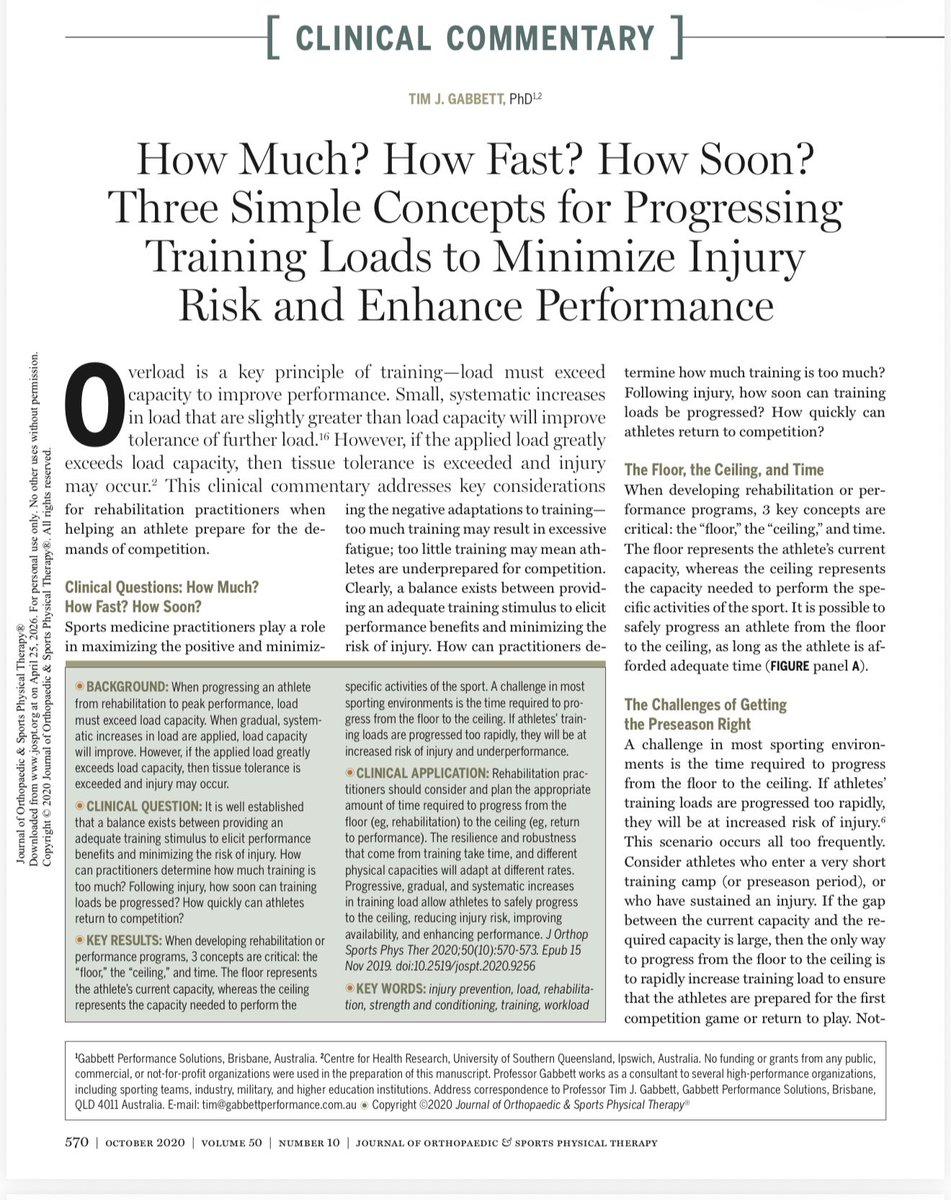
Gabbett frames rehabilitation and performance programming around three concepts: the floor, the ceiling, and time. The floor is the athlete’s current capacity. The ceiling is the capacity required to perform the specific demands of the sport. The problem is that we cannot pretend someone is ready just because symptoms are down or because they look good in a controlled setting. The real question is whether their current capacity has been progressively built toward the demand they are about to face.
That is why injury mitigation cannot become the primary operating system.
When injury mitigation leads the process, it can easily become exposure reduction. Less load. Less speed. Less complexity. Less chaos. That may look safer on paper, but Gabbett makes the opposite concern very clear: if the training stimulus is inadequate, the athlete may be underprepared, underperform, and be at risk for reinjury. The paper also states that reducing the ceiling is not realistic because the demands of performance continue to evolve, and the physicality and complexity of sport are generally increasing.
The right structure is performance first, with injury mitigation as a byproduct of intelligent preparation.
The goal is not to avoid demand. The goal is to build the capacity to tolerate demand. That means maintaining an adequate floor, identifying the ceiling, understanding the most demanding passages of play, and progressing training loads in a gradual, systematic way. Gabbett’s summary is the line that matters: appropriately prescribed training can create resilient and robust athletes capable of withstanding the high loads of competition.
That is the distinction.
Therapy can restore function.
Performance has to build capability.
Those are connected, but they are not the same thing. The end point cannot simply be “less pain” or “less exposure.” The end point has to be readiness for the real environment.
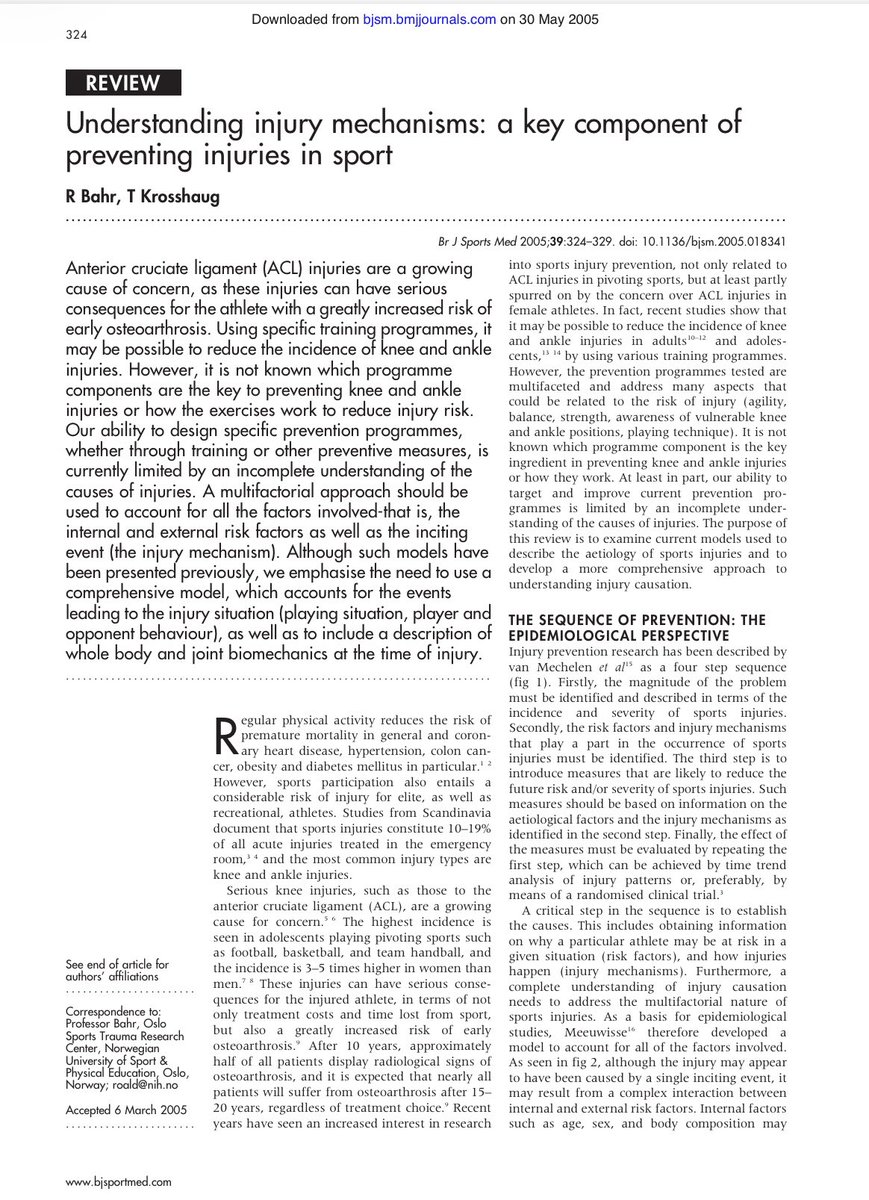
“Injury prevention” became a buzzword in sport for a long time. Too often it got reduced to corrective exercise menus, movement screens, and product driven claims that a test or tool could “prevent” injury. But Bahr and Krosshaug remind us that this is not what injury prevention actually is. They argue that our ability to design effective prevention strategies is limited when we do not first understand the cause of injury and the mechanism by which it occurs.
Their framework is simple, but important. The chart shows that injury prevention is not step 1. It comes after you define the injury problem and identify the aetiology and mechanisms. Only then do you introduce a preventive measure, and only then do you judge whether it worked by reassessing injury incidence and severity. In other words, prevention is not guesswork, and it is not branding. It is a process grounded in mechanism.
What the figure makes clear:
• First define the injury problem by incidence and severity
• Then establish the aetiology and mechanisms of injury
• Then introduce a targeted preventive measure
• Then test whether it actually changed outcomes by repeating step 1
Bahr and Krosshaug push this further by arguing that injury mechanism is not just a tissue level explanation. A complete model has to account for internal risk factors, external risk factors, the playing situation, athlete and opponent behavior, and the relevant biomechanical features at the whole body and joint level. That is the real challenge. Injury prevention cannot be taken seriously without a clear understanding of the mechanistic pathway of sport injury.
This one indicates that muscle strain injuries cause persistent atrophy of the injured musculature and enlargement of the muscle aponeurosis, which is not counteracted by protein supplementation during the rehabilitation period.
This review gives an overview of the complexity of genetic determinants affecting leptin and ghrelin, hormones that control the feeling of hunger and satiety, and the complexity of interactions occurring during the development of obesity.
🔝"This paper presents a 5-point strategy for preventing HSI in elite ⚽️"
➡️A lumbopelvic hip stability program
➡️Fatigue +⬇️hams ECC strength = altered neuromuscular coordination, suggesting ⬆️risk of HSI
👉@m_buckthorpe et al, 2019 🏴
📂Open Access: https://t.co/2XMRIzFime
🔝"Slow, deep breathing after training in ⚽️ can have several benefits, including ⬇️ HR, ⬆️ REC, relaxation & ⬆️ posture"
➡️Mindfulness + DB: excellent tool to calm the NS, thus ⬇️ feelings of stress & anxiety
👉@migliacciogm et al, 2023 🇮🇹
📂Open Access: https://t.co/nhj69Tgw6F
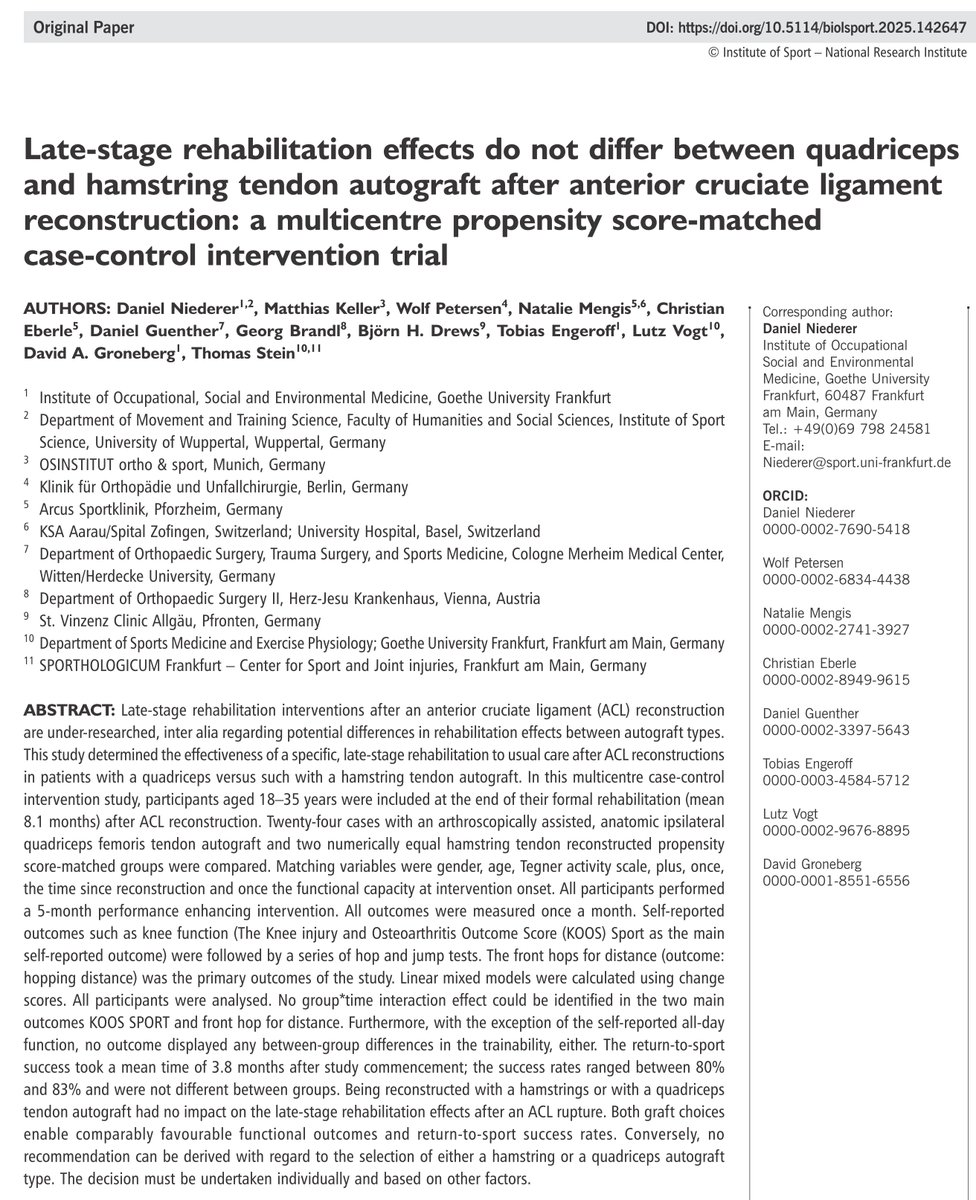
This study determined the effectiveness of specific, late-stage rehabilitation to usual care after #ACL reconstructions in patients with a quadriceps versus such with a hamstring tendon autograft.
✍️Daniel Niederer et al. 🇩🇪🇦🇹🇨🇭
🔓#OpenAccess🔗https://t.co/WpmzhYrb25
In case you missed this wonderful editorial you can download it from @JSportsSci https://t.co/DM5QRO0tfq "a shift to understanding the broader system, rather than at the individual level, will have greater positive impacts on some of the more difficult issues.."
Very happy to have collaborated on this study 🤗
Muscle repair after physiological damage relies on nuclear migration for cellular reconstruction | @ScienceMagazine
👀👇🏼
https://t.co/pjO6SyFSKb
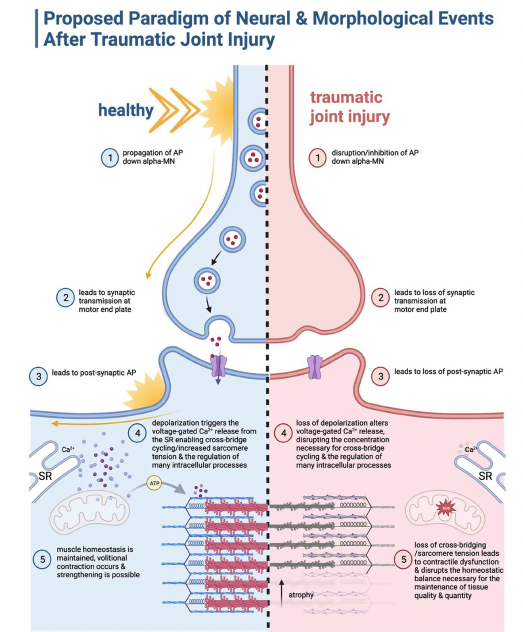
Eccentric Exercise as a Potent Prescription for Muscle Weakness After Joint #Injury
An approach that can stimulate the body's systems to enhance muscle growth, despite the numerous factors contributing to the deterioration of muscle health
🧵Hypothesis
https://t.co/BHWdoAjLgu
ACL Friday!
Lots of discussion lately about the ACL "healing." Let's critically evaluate the main study that has brought this to the mainstream, the KANON trial (a thread) 1/5:
Methods
120 pts randomized to rehab & optional delayed ACL recon vs early ACLR
https://t.co/lUYsbrgDVf
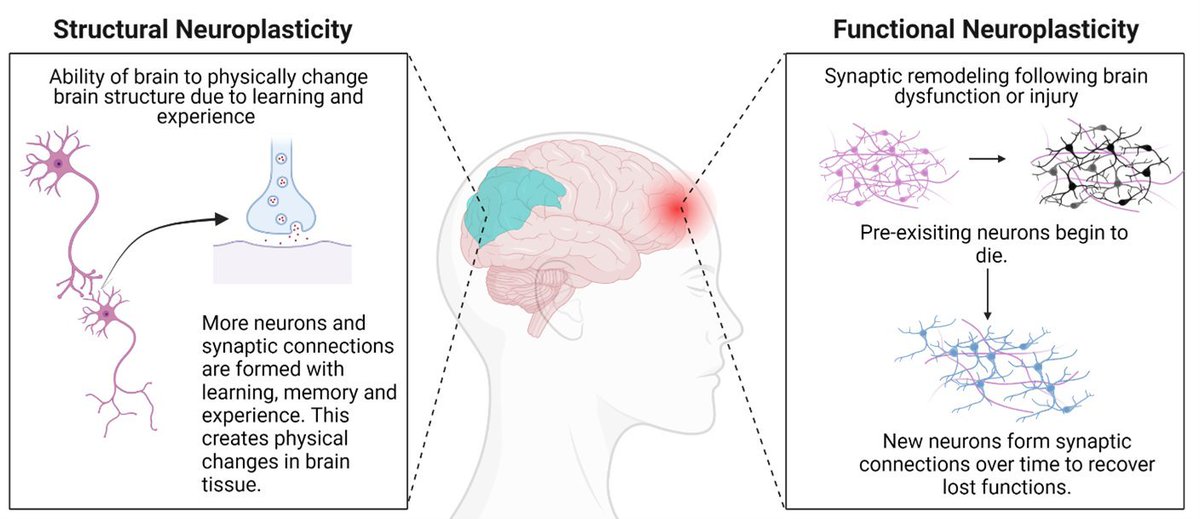
"Neurocognitive differences may be associated with the loss of neuromuscular control and coordination errors, predisposing certain intercollegiate athletes to noncontact anterior cruciate ligament injuries." 🧠🦵
https://t.co/F74nSf5a4P
☝️ Una temporada más, nuestro equipo masculino seguirá compitiendo en la máxima categoría de la #LigaMGSHockey. Agradecemos enormemente todo el apoyo que nos han brindado. ¡Nos vemos la temporada 2023-2024!