A retired NASA engineer who had worked on the Space Shuttle program for 25 years was hired by SpaceX at age 62. He described the first week as the most disorienting experience of his professional life.
At NASA, a design change required 3 meetings, 2 committees, a review board, and 6 to 18 months of documentation. At SpaceX, his new supervisor said "if it works, build it. If it doesn't, change it by Friday."
He sat at his desk after the first day and called his wife. He told her he felt like a man who had been swimming with ankle weights for 25 years and someone just cut them off. He could move. He could decide. He could build something in the morning and test it in the afternoon. The constraint that he had accepted as the nature of aerospace engineering turned out to be the nature of bureaucracy.
Within 6 months he had contributed to more design iterations than he had completed in his last 5 years at NASA. Not because he was working harder. Because the time between having an idea and testing the idea collapsed from months to hours. The same brain. The same knowledge. A different operating system.
He described a specific moment where he proposed a modification to a Raptor engine component. At NASA, the proposal would have entered a queue. At SpaceX, the modification was machined by the end of the day and tested by the following morning. He watched his idea become a physical object in 18 hours. At NASA, 18 hours would not have been enough to schedule the first meeting to discuss whether to schedule a meeting.
He told an interviewer: "I didn't get smarter when I went to SpaceX. I got faster. The intelligence was always there. The system was in the way."
The difference between SpaceX and NASA is not talent. NASA has extraordinary talent. The difference is the time between a thought and a test. SpaceX compresses it. NASA elongates it. The same engineer produces 10x more at SpaceX than at NASA because the bottleneck was never the engineer. It was the meetings about the meetings about the work.
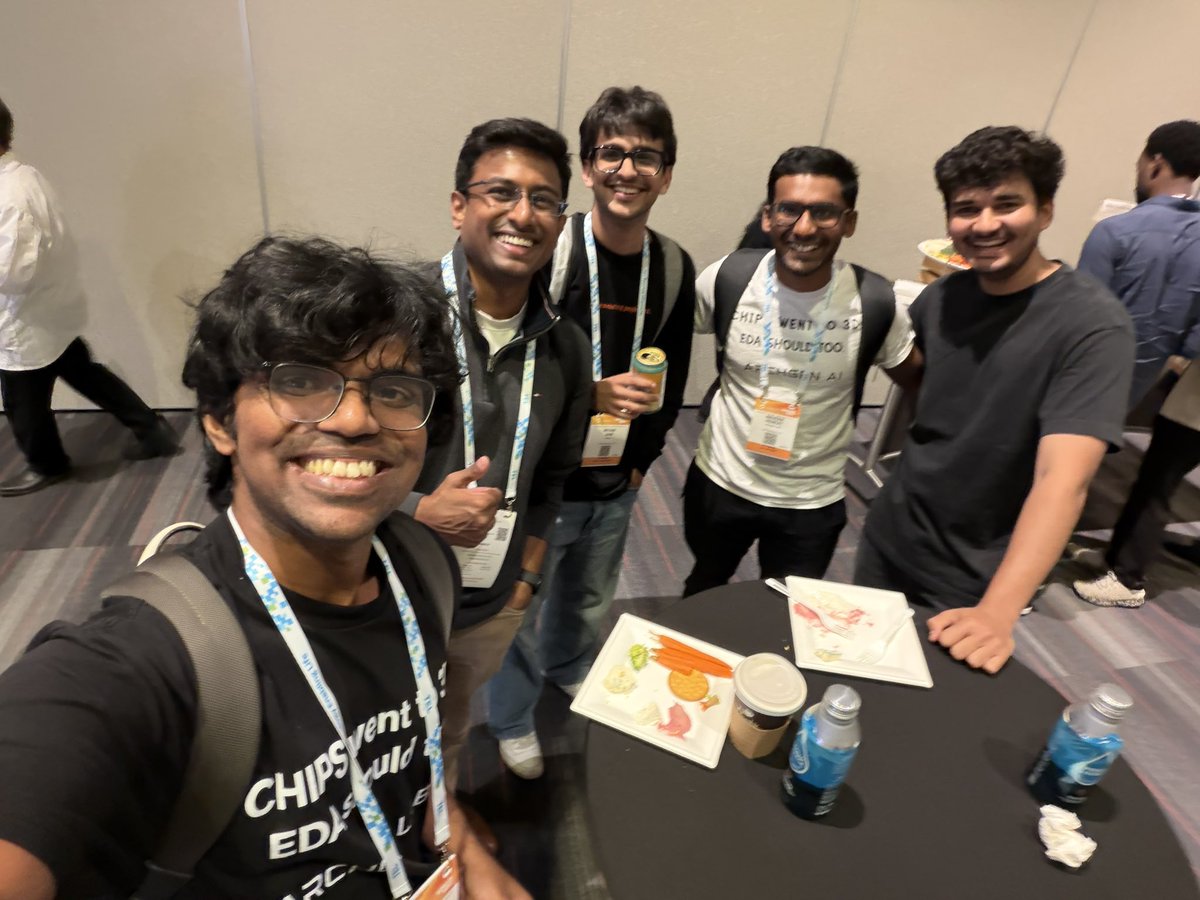
After a lot of discussions at SemiCon/tech week, it is evident that there's a long long road ahead to bring 'Superintelligence to everyone everywhere'. Chips, models, energy, physical AI, edge ai!?
To anyone who's building in these areas and beyond... There's never been a better time to build... Keep going folks!
(Goiing back to some key insights into how Agentic workloads use hardware I posted a while back.)
If AI agents spends more time waiting than generating answers, what should we actually be accelerating?
And what does that mean for the next generation of AI chips?
A look at where the time, memory and money go when agents get to work. https://t.co/tTa9mSVbse
HUGE UPDATE !!!
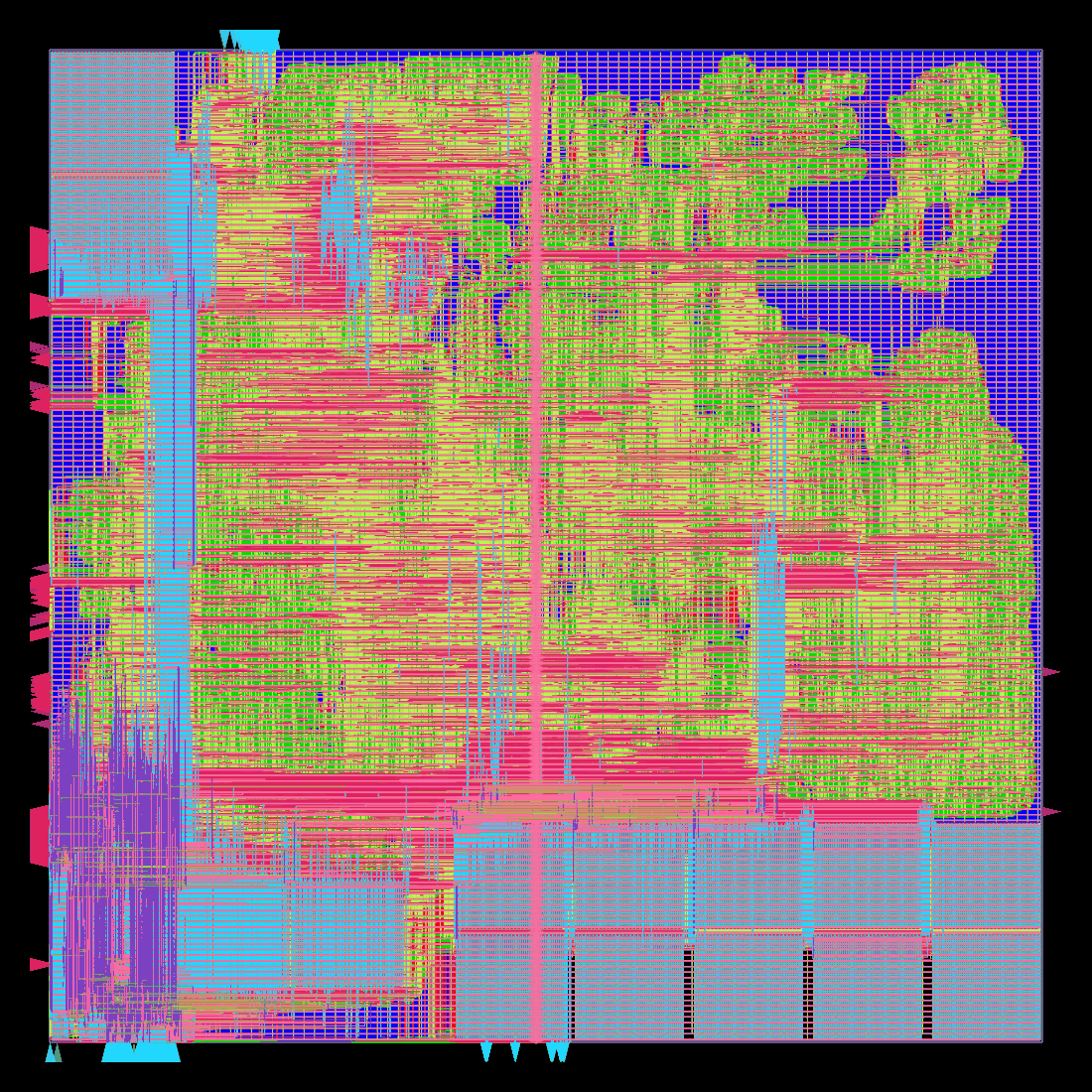
Muse has now completed full place and route in OpenROAD and generated a final GDS for our RISC-V based crypto accelerator SoC. The crypto accelerator includes SHA-256/512, Keccak, Ed25519 + secp256k1 field arithmetic and closed on nangate45 with the following specs:
- 61,590 cells
- 100 MHz with +4.5 ns slack,
- 20 mW, zero DRC/electrical violations.
The GDS is public and is under releases in the repo. The host core has also passed the full RISC-V scalar compliance sweep too which consists of ACT suites + 1.5M Berkeley TestFloat vectors. This was all done with ~100M output tokens or roughly ~$2,000 of work !!!
Next step for me... add vector instructions, rip out the third party core we used as a baseline, and then port to run the @thru_xyz block chain natively on the chip with the exact memory map to make it the fastest block chain on earth.
If anyone has any MPW shuttles coming soon that aren't quite booked please reach out! We are looking to start taping out ASAP and my hope is to pass DRC on a new node by end of month.
Got qwen running on a aws f-2 instance tonight that muse wrote entirely itself after 3 long hours of cutting timing slack (for some reason LLMs still insert resets everywhere).
Looking forward to posting in coming days but sadly a lot of work left for the bubble boi, I'm an artist at heart.
Current frontier LLMs do something I call "spinbusy". Where they make the least amount of incremental progress towards a goal, over and over again, instead of doing the obvious thing and just completing the goal
Spinbusy LLMs. Just wasting tokens, running tests, wasting time
I think @PGelsinger's point actually hints at something much bigger.
A lot of today's chip design workflows, tools, and abstractions were built around the limitations of humans and traditional algorithms.
AI could fundamentally change those assumptions.
And when the assumptions change, entire industries become ripe for disruption!!
From EDA and verification to manufacturing and packaging, this might be one of the most exciting times in decades to build disruptive deep tech.
We shouldn't just be asking how AI makes the existing flow faster. We should be asking how much of that flow needs to exist in its current form at all.
I think @PGelsinger's point actually hints at something much bigger.
A lot of today's chip design workflows, tools, and abstractions were built around the limitations of humans and traditional algorithms.
AI could fundamentally change those assumptions.
And when the assumptions change, entire industries become ripe for disruption!!
From EDA and verification to manufacturing and packaging, this might be one of the most exciting times in decades to build disruptive deep tech.
We shouldn't just be asking how AI makes the existing flow faster. We should be asking how much of that flow needs to exist in its current form at all.
AI will make chip design faster. It won't make chips easier. I sat down with Raghu Raghuram and Guido Appenzeller at a16z to talk about what's really constraining the AI buildout. It's not just compute.
1) Silicon still takes quarters to manufacture, no matter how fast we design
2) Memory bandwidth and advanced packaging are huge choke points
3) Copper is giving way to optical
4) Energy capacity is becoming economic capacity
I also think today's explosion of specialized AI chips will consolidate around fewer architectures. And I'd love to see what a "VMware for agents" looks like when infrastructure is built for them instead of for us.
Full conversation at the link. Thank you Raghu and Guido – always great to talk with you!
Dusting off this tweet from April because this gap in shared understanding of LLM capability is *widening*. It's now less "two groups of people speaking past each other" and more a sharp funnel.
- Napkin math somewhere around 6B people (~75% of the population) have barely come in contact with LLMs at all.
- Around 1-2B (~20%) are casual and infrequent users of free-tier ChatGPT-like products. This group sees derpy chatbots and treats them a bit like a better Google search, a writing aid, or etc. Maybe an agent tries to book you a flight. I have non-tech friends who (reasonably, imo) say they have not much use for it at all. Even many professionals outside of math&code are in this tier. For example, execs and many other functions spend a lot of their time talking to other people, so while they understand what is happening intellectually, it is still second-hand and a bit abstract.
- Now we get to professional use of frontier-grade LLMs in math&code. Somewhere around 20M people (0.2%) see first-hand that large, complex projects that used to take them weeks/months can now be completed by agents with a prompt. Building apps, copying apps, translating apps, decompiling apps from binaries... This has all happened very quickly and recently - less than 1 year ago, I was writing code manually by hand, typing memorized computer code commands into a code editor character by character, occasionally pressing Tab to autocomplete a little chunk of code.
- And finally we get to the ~5,000 people (~0.00006%) with access to frontier-grade systems internally. The external world has seen the preview. It looks like swarms of thousands of agents collaborating over weeks on software mega projects: minting zero days, running cyber attacks and defenses at machine speeds, discovering new science, advancing the frontier of mathematics. Things that would have taken top professionals in the industry years of work. Meanwhile, human review and comprehension are starting to fall behind. For example, people are still involved in the "archeology" of the OpenAI-HF incident from many months ago. Mathematicians may be poring over the 722 manuscripts on frontier mathematics for a while.
The funnel is driven by a combination of factors:
1. The impact scales with ambition, problem size, and horizon. A question with a paragraph answer barely stresses the system. You need a reservoir of big, difficult problems that you really care about. This aspect drives the consumer / professional dimension of the funnel.
2. The jaggedness of the system (which I have written about a lot separately). Capability peaks in domains that are digital, verifiable and economically valuable. This is because LLM capability emerges from reinforcement learning on verifiable rewards on a curated environment mixture driven by revenue potential. This aspect primarily drives the area (e.g. math&code) dimension of the funnel.
3. Access. Free-tier, paid-tier, internal.
So this is the weirdness of the moment. The general public has mostly not interacted with these systems. When they have, it looks like a derpy chatbot. The majority of professionals still see only a modest uplift. And a small sliver of professionals are experiencing the vertigo of the curve going vertical. And it is all happening at the same time.