We hired a new VP of Engineering who is obsessed with agile methodology.
He called a meeting on his first day and said we need to transition to 2-week development sprints.
He wanted daily stand-ups, retrospective boards, and continuous deployment pipelines.
He wanted us to actually write new code.
I realized immediately that he was an existential threat to my lifestyle.
I let him finish his impassioned speech about workflow velocity.
Then I stood up, walked to the whiteboard, and drew a single horizontal line.
I told him agile sprints are a localized solution for a localized mindset.
I said our infrastructure operates on a Zenith Release Cycle.
He asked what a Zenith Release Cycle was.
I told him it's a holistic, macro-stabilization framework where we observe the system in a state of prolonged stasis.
By not touching the code for 18 months, we allow the legacy dependencies to organically settle.
I told him that deploying bi-weekly updates creates micro-abrasions in our database architecture.
I used the phrase chronological data scarring.
The CEO was in the room and audibly gasped.
He told the new VP that we can't risk chronological data scarring just to satisfy a trendy tech buzzword.
The VP looked at me like I'd just invented a new color.
He was completely paralyzed by the sheer density of my fabricated jargon.
He quietly agreed to adopt the Zenith Release Cycle.
We're officially scheduled to deploy our next update in the third quarter of 2027.
I spent the rest of the afternoon buying things I don't need on Amazon.
Agile is a disease invented by people who want to be punished for their salary.
I refuse to participate in my own suffering.
@hirofinanceai Looks interesting, but it’s marketed as an AI Financial Planner and the T&C disagree: ‘HIRO IS NOT A FINANCIAL ADVISOR OR FINANCIAL PLANNER, AND MAKES NO GUARANTEES ABOUT THE ACCURACY, QUALITY, CURRENCY, COMPLETENESS, USEFULNESS, OR RESULTS OF INFORMATION OR DATA PROVIDED…”
@michaelstat@innoutburger_ It’s just a really good smash burger. I’ve gotten it down pretty well to make my own decent replica, but this online guide seems pretty spot on if you want to try it yourself: https://t.co/j4bU4noxjB
There is a foolish conception that tariffs help the nation that implements them, and hurts the nation on which they're targetted.
Under this premise, threatening tariffs on others plausibly makes sense, because it encourages both sides to potentially "disarm".
But the premise is flawed. Tariffs hurt both the nation on which they're targetted (obviously), but also the nation that implements them (less obvious).
Yes, it may help certain special interests (uncompetitive domestic producers), but harms great numbers of less vocal victims (every consumer in the nation + any producer with constituent inputs from abroad).
The number of producers which *only* have constituent inputs from within their country is suprisingly small, especially in America where our advanced economy has moved up the value chain to produce items of increasing complexity... rarely is such accomplished from within any single jurisdiction.
But tariffs are cheered on with vigor by those uncompetitive domestic producers, and by the sycophants who would just as quickly decry them had the other team proposed the same.
America is supposed to be a capitalist, free-market nation. As such, any government price control or tax
should be viewed with disdain by principled Americans.
If other nations, being more socialist, want to hamstring themselves with the sophistry of protectionist tariffs, so be it. They can find their own way through the darkness of economic ignorance. Casting such shadows on ourselves to "teach them a lesson" is decel.
We are supposed to be leaders toward the path of liberty, not followers toward the path of ruin.
Suggestions for current stock market:
1. Don't panic. I'm not selling any stocks (why would I? They're for long-term investments.) During chaotic times, people make rash decisions that have life-changing ramifications. Even people who preach "long-term investing" see 1 day, then 1 week, then 1 month of bad news and eventually capitulate. That decision will haunt them forever.
2. Build a war chest. I would encourage a 12-month emergency fund. Normally I recommend 3-6 months. During COVID I recommended 12. Because of the massive uncertainty of the Trump admin, I'd recommend being more conservative. If you can't do 12, focus on 6. Cut discretionary spending before the world forces you to.
3. You should be pissed off. The sudden, large decline in the stock market was caused by one thing only: Trump. There was no reason to levy these tariffs, which will cost the average American family thousands of dollars -- all to give wealthy people like me a massive, unnecessary tax cut. Money is deeply political.
Don't panic, build a war chest, and get mad. More on my other social channels.
the rate of change is such that we are all living in a perpetual state of technological adolescence. we have the tools of gods but the wisdom of children. it is one thing to be able to rewrite the genome or simulate entire virtual worlds; it is another to do so with restraint and foresight.
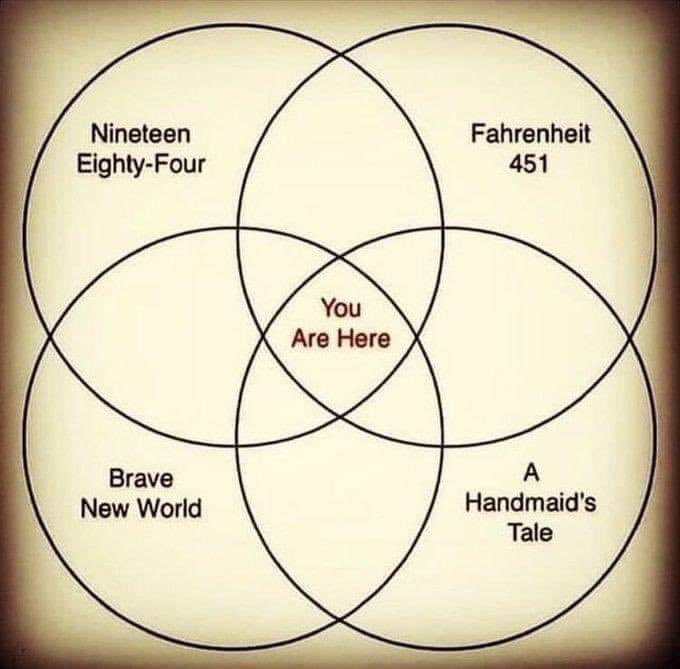
This image hit me hard...
I think of this as the Beginner's Paradox:
You have to start poorly to end well.
The most successful people I know love the feeling of being an embarrassing beginner.
They thrive on that feeling of newness. They love diving into something with a child-like curiosity. The beginner’s embarrassment is actually a positive signal.
Your entire life will change when you start to embrace that embarrassment of being a beginner.
The only way to accomplish something meaningful is to endure days, weeks, months, or even years of embarrassing failure.
Those who embrace that feeling of embarrassment will eventually win.
Every expert started out as a beginner.
Lesson: You have to start poorly to end well.