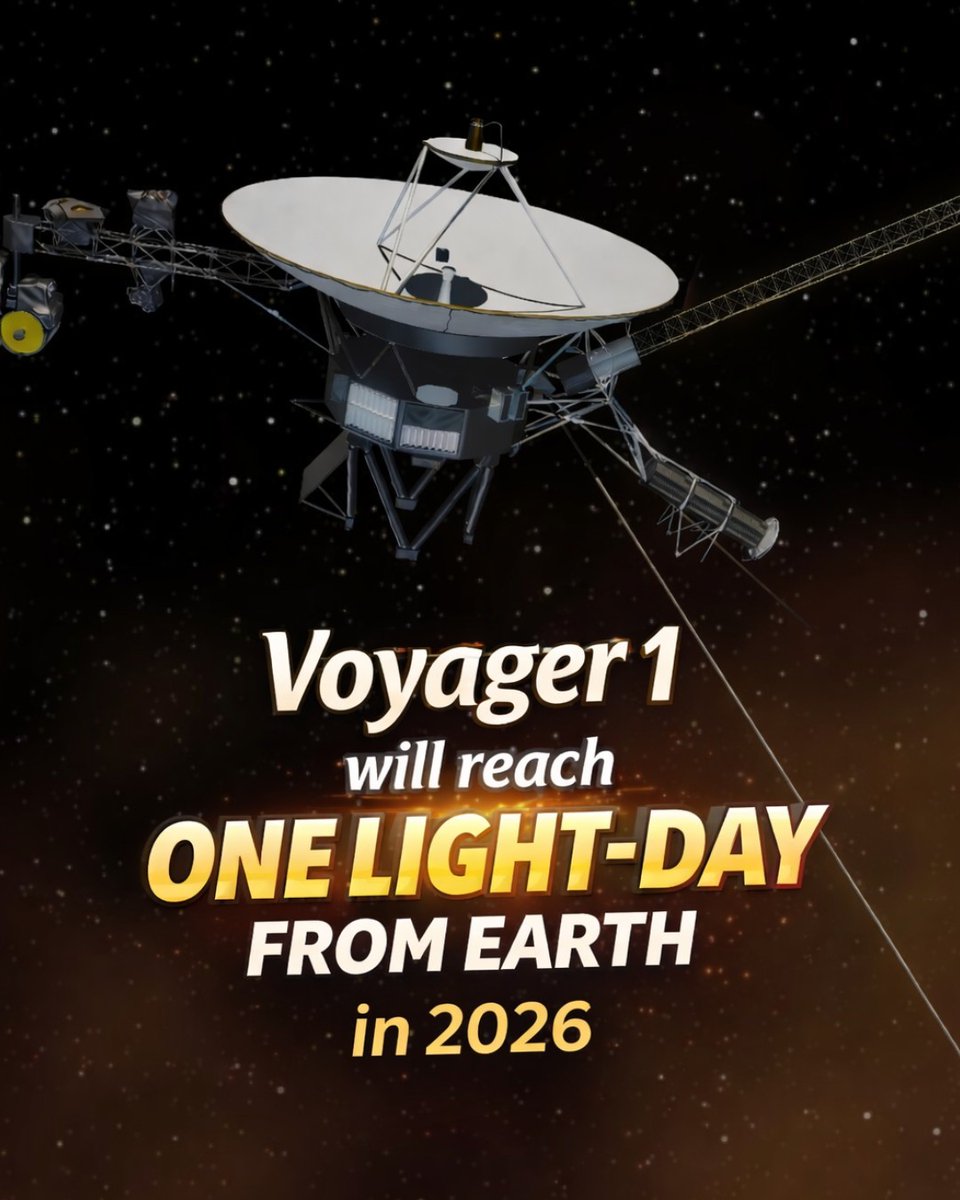
Voyager 1 is now a full light-day from Earth!
This week, Mission Control Houston marked the spacecraft’s journey in honor of the teams at NASA’s Jet Propulsion Laboratory, where flight controllers communicate with the spacecraft.
Being one full light-day from Earth, it now takes a full 24 hours to send to and receive communications to Voyager 1. We can’t wait to see how far this golden spacecraft will go. ✨
"We launched as friends, and we came back as best friends."
Artemis II commander Reid Wiseman takes a moment to thank the world before today's crew news conference at @NASA_Johnson.
Voyager 1 is about to make history 🚀✨
In November 2026, NASA’s legendary probe is expected to become the first spacecraft ever to be one light-day away from Earth — so far that a signal from us would take a full 24 hours to reach it.
Launched in 1977, Voyager 1 is still traveling through interstellar space nearly 50 years later. By around November 15, 2026, it should be about 16.1 billion miles (25.9 billion km) from Earth. 🌌
Humanity really built something in the 1970s… and it’s still going. 🥲
#Voyager1 #NASA #SpaceExploration #Astronomy #StarWalk
HOME.
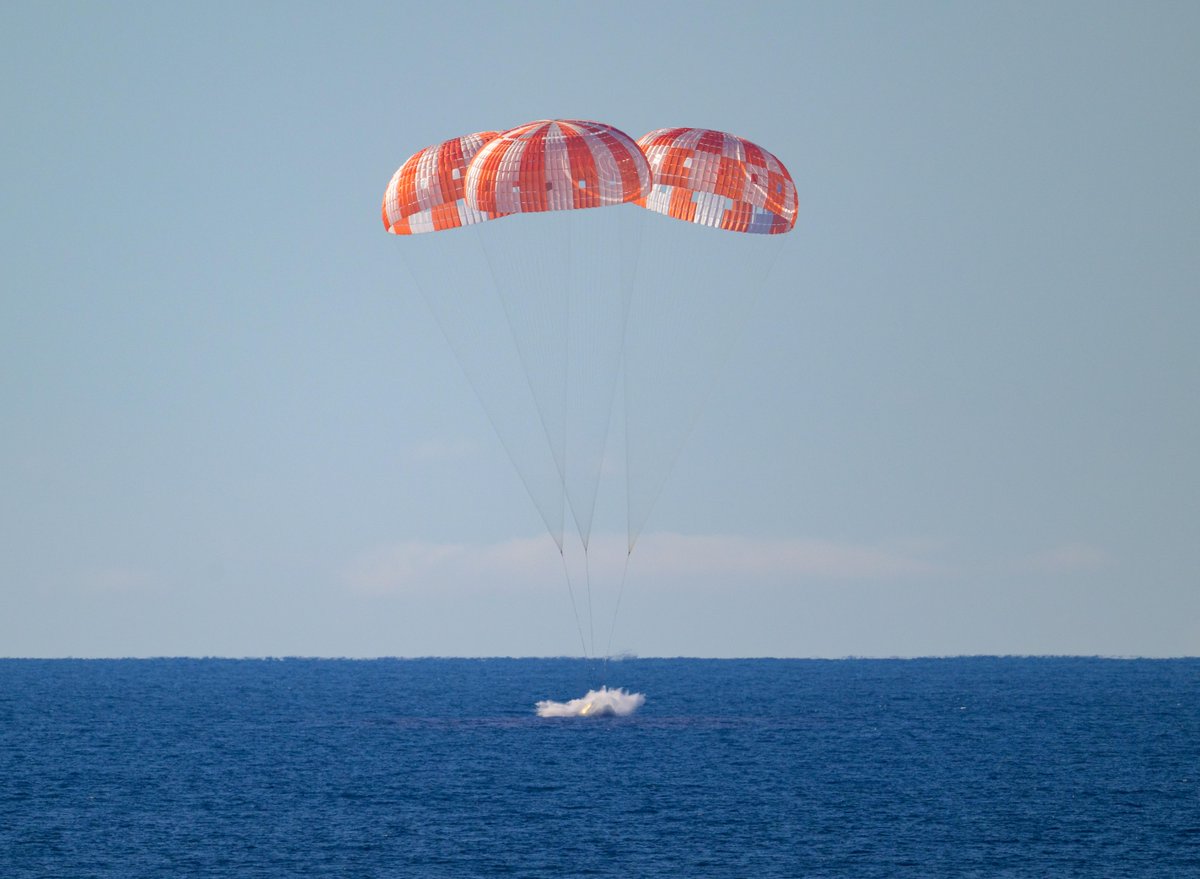
The Artemis II crew has arrived back on Earth, ending a nearly 10-day journey around the Moon. The trip took them farther into space than humans have ever gone before, and now they're safely home with us.
https://t.co/XmDQwNlCPR
Welcome home Reid, Victor, Christina, and Jeremy! 🫶
The Artemis II astronauts have splashed down at 8:07pm ET (0007 UTC April 11), bringing their historic 10-day mission around the Moon to an end.
All four of the Artemis II astronauts have been successfully extracted from the Orion spacecraft following splashdown and are now on the USS John P. Murtha. Next up, they will be escorted to the medical bay where they will undergo post-mission medical evaluations.