So if one door of provision closes, do not allow your heart to collapse with it. Your provision was never dependent upon that particular door.
Allah can provide for you through avenues you never considered.
The library of the noble Shaikh, Al-‘Allāmah, Rabee’ ibn Hādī al-Madkhalī (may Allah’s mercy be upon him) is now open, and welcomes visitors to benefit.
May Allah make this another means of reward for the shaikh after his death.
Visiting hours from ‘Asr prayer till ‘Ishā.
After Layth ibn Saʿd replied to the letter of Imām Mālik regarding several scholarly disagreements between them, he concluded his letter with remarkable humility, respect, and brotherhood:
“I have left many similar matters unmentioned. I ask Allah to grant you the ability to do good and to bless you with a long life, for I hope that the people will continue to benefit from you. I also fear the great loss that would be felt should someone like you depart, together with the comfort I find simply in knowing you are present, even though you live far away.
This is the esteem in which I hold you and what I truly think of you, so believe it. Do not forget to write to me with news of yourself, how you are, how your children and family are, and whether there is any need that you or anyone close to you may have, for it would be a pleasure for me to help. As I write to you, we are well and in comfort, all praise is due to Allah. We ask Him to grant us the ability to thank Him for what He has bestowed upon us and to perfect His blessings upon us.
Wa al-salāmu ʿalaykum wa raḥmatullāhi wa barakātuh.
Mughīrah said:
“A man was in a good state, then he committed a wrongdoing or fell into a sin. His companions then rejected him and cast him off.
This reached Ibrāhīm al-Nakhaʿī who said: “Go back to him, advise him, and do not abandon him.”
The Greatest Calamity: When the People of Knowledge Hold Back from Aiding the Truth
Al-ʿAllāmah ʿAbd al-Raḥmān al-Muʿallimī al-Yamānī (d. 1386 AH) said:
“The greatest affliction and the gravest calamity was the scarcity of scholars and their holding back from supporting the truth: among them were a coward who fears the people more intensely than he fears Allāh; a domineering one who seeks fame, reputation, and status; one put to trial by love of perishing worldly scraps and fear of being cut off [from them]; and another, and another, whom we will not lengthen [the discussion] by mentioning, nor will we now go far in tearing away their covering [by exposing them].”
Source: Risālah Ṣadʿ al-Dujnah fī Faṣl al-Bidʿah ʿan al-Sunnah (p. 126). See also: Majmūʿ Āthār al-Muʿallimī (6/126).
Sufyān al-Thawrī (d. 161 AH/778 CE): "If you see a man acting upon a matter in which there is a difference of opinion, do not forbid him from doing so"
The Question
A questioner asks: what is the meaning of the statement attributed to Sufyān al-Thawrī (d. 161 AH/778 CE): "If you see a man acting upon a matter in which there is a difference of opinion, do not forbid him from doing so"? And is this principle to be acted upon?
The Response of Shaykh Muḥammad ibn Ṣāliḥ al-ʿUthaymīn
The apparent meaning of this statement is that if a person observes another acting upon a matter in which there exists a scholarly difference of opinion, and he himself does not agree with that ruling, he should nonetheless refrain from censuring him. This is because there are no grounds for religious censure in matters of ijtihād.
This is correct, and we have stated on numerous occasions that students of knowledge, when dealing with contentious matters whose basis lies in ijtihād, ought not to make such differences a cause for dispute, enmity, or animosity. Rather, they should remain brothers under all circumstances.
References
Muḥammad ibn Ṣāliḥ al-ʿUthaymīn (d. 1421 AH/2001 CE), Fatāwā al-Ḥaram al-Makkī, session: Fatāwā al-Ḥaram al-Makkī 1407 – 14b, al-Athar Audio Archive, recording no. 117791. Available at: https://t.co/7ryRePcvhy
Regarding the Ḥaddādī Innovator Hishām al-Beily
An deviant known to attack senior scholars and play on the issues of Imān, Irjāʾ and tārik al-ʿamal in order to sow the seeds of distrust against Shaykh al-Albānī and others.
Read more:
https://t.co/S1di0lM3VB
Poignant & Fatherly Advice Forwarded from Shaikh Abu Hafsah Kashiff Khan (may Allāh preserve him upon good):
💎 In the name of Allah.
The most noble with Allah is the one who has the most Taqwa (Surat al-Hujurat: 13), and Taqwa is a direct result of knowledge (Surat al-Fatir: 28), and for this reason Allah raises the scholars levels above the rest of the believers (Surat al-Mujādilah: 11). It is taqwa that raises a person’s rank with Allah, not a title that they are given by the creation, such as Imām, ‘Allāmah, Shaykh, or Ustādh. Rather, these descriptions are given to help understand a person’s level of knowledge by other scholars, and they are not something that inherently elevate a person’s status in the sight of Allah. At times, scholars may differ regarding a person’s level of knowledge, but this differing does not change their true status with Allah, which is based upon Taqwa.
I have always, and Allah is my witness, advised with respect for all those that are recognized for their knowledge and benefitting the ummah, especially the scholars. I have done this in private and public settings. I have done this in the United States and the United Kingdom and in Pakistan. Even if I disagree with a scholar’s opinion or believe they have erred in their ijtihād, I have always advised with respecting their honor, and disagreeing while maintaining manners with them.
In this present affair, may Allah remove it from us, we have heard unbefitting speech regarding Shaykh al-Fawzān, Shaykh ‘Abdul Muhsin al-‘Abbād, Shaykh Hassan al-Banna, Shaykh ‘Ali al-Hudhayfī, Shaykh ‘Abdullah al-Bukhari, and other scholars and those less than them. I have advised against all of it, privately and publicly. I wrote some days ago, “Dangerous is the precedence of accepting tabdī based on personaliities instead of proofs.” My words were general so that they remain applicable to whosoever falls into this affair, regardless of who is declared an innovator or the one declaring it.
But…
I, clearly and with no ambiguity, do not support selective anger, and demands to write support and defend a single scholar, basing our walā-wal-barā on whether you support that one group of scholars. I have heard over the last year well known scholars and teachers being referred to or implied to be jāhil, fake, lacking competence, undedicated to da’wah, mubtadi’, and much more. But I did not see a single writing defending Shaykh Hassan al-Banna or Shaykh ‘Abdul Muhsin, or other than them. I did not demand from anyone to write or inform me of their stance on Shaykh ‘Ali al-Hudhayfī, and then formulated my stance against them or for them based on their response.
As for my private advices, then there is no legislated obligation upon me to make them public just as their was no legislated obligation on Usāmah, radiyallāhu ‘anhu, to make public his advice to Uthmān radiyallāhu ‘anhu. I have no obligation to sign a Bayān/Mawqif/Nasīhah when I can advise in a more intimate and private manner if and when I see fit to do so. How many lectures have we given mentioning the patience of Shaykh Rabī with the people of innovation? A better example is Nuh ‘alayhis-salām who was patient with his people for 950 years. Your ijtihād on how to advise is not binding on me, nor an indication of guilt in anything.
Let it be known that even those that I have deeply disagreed with, Allah is my witness, that I have not blocked a single of them. I still speak with them when the opportunity arises.
As for me visiting Maktabah Salafiyyah or TROID, then I have known them for close to 30 years. I have lectured there alongside others on many occasions. Then they are, all of them, my brothers. We agree and we disagree. We advise and we argue and we remain brothers. There is a not a single one of them except that we have at some point disagreed, some more than others as of late. This has been my relationship with all of my brothers, and will continue to be so for those that wish to continue their relationships with me.
In closing, I advise my brothers everywhere to ask for Allah’s protection, fear your sins, and busy yourselves with that.
As for the fitnah, then allow the scholars to deal with it. Do not busy yourselves, your families, and your communities with this, and Allah’s protection is sought.
Your brother,
Abu Hafsah Kashiff Khan
Maryland, USA
Free Ebook:
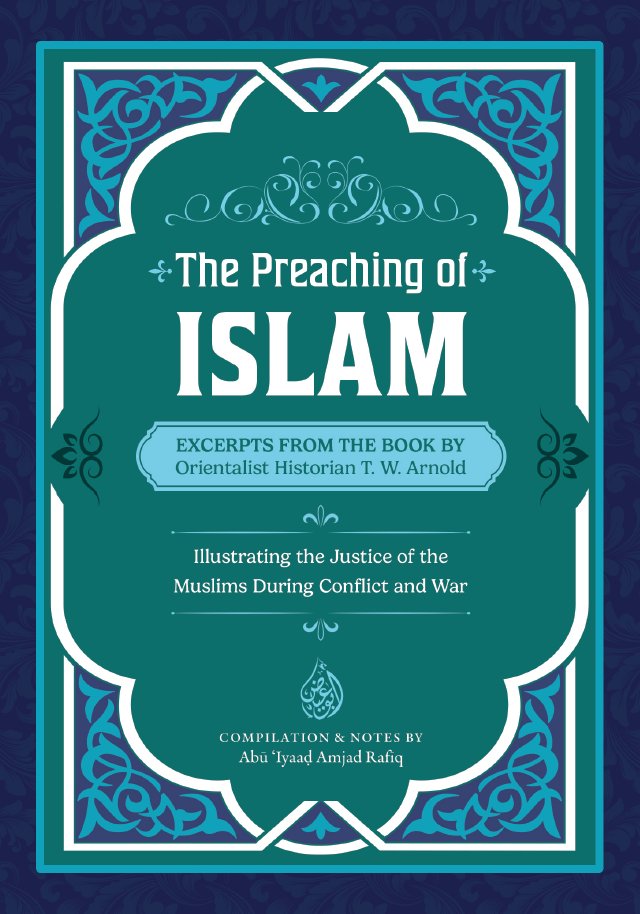
The Preaching of Islam
Excerpts from the book by Orientalist historian, T. W. Arnold (1913). Illustrating the Justice of Muslims During Conflict and War
80 pages, PDF
Direct link to book:
https://t.co/Yyjh2DoP48
Details here:
https://t.co/idFejdGX0c
Concealment Behind the Imāms: A Recurrent Practice in the Spread of Deviations, Past and Present
Shaykh al-ʿAllāmah Rabīʿ ibn Hādī al-Madkhalī (رحمه الله) said:
“This approach is among the approaches of the people of innovations (bidʿah) and tribulations (fitan): they must conceal themselves behind one of the prominent figures.
So the Qadariyyah concealed themselves behind al-Ḥasan (al-Baṣrī), and they wrote, spread, and authored epistles, attributing the saying regarding al-qadar to al-Ḥasan [meaning their claim of its negation] falsely and by fabrication, while he is not from them. And it may be that until now they claim that al-Ḥasan al-Baṣrī is from them—Allāh disfigure them, and Allāh declare him free of them.
And the Khawārij used to conceal themselves behind another great figure: Abū al-Shaʿthāʾ Jābir ibn Zayd, one of the major students of Ibn ʿAbbās, among the major fuqahāʾ. The Khawārij conceal themselves by means of him.
So these are among the stratagems of the people of innovations, because their innovations do not spread if they do not conceal themselves behind the Imāms of Islām.
And you see that the Ashʿarīs cling to the Imāms, meaning: a man from among the Ashʿarīs may have his madhhab [in the subsidiary rulings (furūʿ)] Mālikī, yet he attributes his Ashʿarī affiliation to Mālik, and his Ṣūfī affiliation to Mālik. Likewise, the Māturīdīs ascribe themselves to Abū Ḥanīfah while they are Māturīdīs, and their madhhab is derived from the madhhab of Jahm ibn Ṣafwān.
And all the people of the deviant paths (ṭuruq) conceal themselves behind the Imāms of Islām: the Zaydīs conceal themselves behind Zayd (ibn ʿAlī); the Rāfiḍah conceal themselves behind Jaʿfar al-Ṣādiq and behind the Ahl al-Bayt, because their rejected sects do not spread except through stratagems and concealment behind the Imāms.
And in this way, many people act. The Quṭbiyyah did not spread except through this concealment behind Ibn Taymiyyah, Ibn al-Qayyim, Ibn Bāz, al-Albānī, Ibn ʿUthaymīn, and others besides them from the regarded figures accepted by the people in the world.
So they say: ‘We are students of Ibn Bāz; we are upon the manhaj of the Salaf, and [we are] from the students of al-Albānī; we are students of Ibn ʿUthaymīn,’ and they mislead the people into thinking that these Imāms are with them.
So their tricks take in many of the youth who love knowledge, love the scholars, love Islām, and love the truth. However, the tricks of these people deceive many people, so they fall into their snares.”
Source: al-Dharīʿah ilā Bayān Maqāṣid Kitāb al-Sharīʿah (2/101-102).
FREE EBOOK:
Shaykh ʿAllāmah Rabīʿ bin Hādī's Advice to the Callers
Beneficial words of advice, admonition and encouragement from the Shaykh ʿAllāmah Rabīʿ bin Hādī al-Madkhalī to the callers.
Download here (PDF, 100 pages)
https://t.co/PQBKRy4gzW
I just came across a frivolous attack upon Shaykh Abu ‘Iyād, claiming he has no scholars, etc., written by a shameless, foolish individual, may Allāh guide him.
By the grace of Allāh, we witnessed with our own eyes Shaykh Abu Iyaad’s relationship with some of the kibār over the last few decades. We will document these events in the future, inshā’ Allāh.
One of the ironies with these attacks is that these very scholars didn’t even know this slanderous individual whilst he was a “student” in Madinah for six years.
My “advice to the brothers” is to ignore this arrogant individual and his likes. One who was sat and advised about his behaviour, shed crocodile tears in front of us, claiming he would rectify himself and stop oppressing his brothers.
His elders have ignored the attacks and abuse he’s spewed, whilst he caught flights to Saudi (files in hand), sowing seeds of discord and tribulations, painting deceptive pictures.
Alhamdulillāh, the marākiz of the UK clarified their unity and requested rectification from him, but he persists upon his path.
The recent conference in Birmingham showed the love, unity, and brotherhood within the UK. We will not remain silent whilst this foolish individual keeps attacking individuals who have defended and promoted the dīn since he was a child.
If it isn't Broken, Dont Fix it.
When Allah opens for a servant a door of goodness and grants him success in it, that success is a form of blessed rizq. It is therefore wise to recognise this blessing and striving to preserve it.
Some people, however, grow overconfident because of the success Allah has granted them in one area. They attempt to venture into other fields for which they lack skill, experience, or understanding. As a result, they bring about more harm than benefit - sometimes even complete harm and failure, much like someone who seeks provision from an unsound source.
For this reason, a person should not burden himself with matters he isn't familiar with. Rather, he should know his limits and appreciate his strengths. May Allah have mercy on the one who knows his own worth.
May Allah guide us to sincerity, humility, and wisdom - to speak only with knowledge, to act within our capacity, and to value the doors of goodness He opens for us.
UPDATED: Zakir Naik Names His Scholars: The Sufi, Muhammad Wild ad-Daddu; the Khariji, Abdul-Aziz al-Tareefi; and the Ikhwani, Salih al-Munajjid.
- Watch Muhammad Daddu seeking blessings (tabarruk) from the spit and saliva of his Tijāni Sufi shaikhs.
- Daddu pays his respects to his Tijāni Sufi shaikh.
- Daddu claims that the Ash’aris and Māturīdis are Ahlus-Sunnah.
- Daddu and Yusuf Al-Qardawi together at a political rally inciting revolution with men and women singing, clapping and dancing!
- Abdul-Azeez At-Tareefi’s Manhaj of the Khawārij in openly rebuking the Muslim Rulers: Refuted by Shaikh Al-Fawzān and Shaikh Ibn Bāz.
- Misguided and ignorant Muhammad Hijab ―another Daddū and Qardawi supporter.
Al-‘Allāmah Sālih al-Fawzān stated: “If you see a man praising the people of evil and the scholars of misguidance, such as these offshoots of the Jahmiyyah, then know that he is a sinner (fāsiq), a corrupt and misguided person."
https://t.co/cPCb69FtDC
Is It Obligatory to Choose a Madh`hab from the Four Imams?
Imām Muḥammad ibn Ṣāliḥ al-ʿUthyamīn, al-ʿAllāmah Ṣāliḥ al-Fawzān, Imām ʿAbd al-ʿAzīz ibn Bāz
https://t.co/fjN4IUX9XI
It was a pleasure having our dear brother ʿAbdullāh Abū Dāwūd al-Meksikī (@IslamPuro) with us at our recent park gathering.
Allāh reward him for his visit and for his continued efforts in translating and spreading the Salafī daʿwah in the Spanish language.


![KhalilFilastini's tweet photo. Concealment Behind the Imāms: A Recurrent Practice in the Spread of Deviations, Past and Present
Shaykh al-ʿAllāmah Rabīʿ ibn Hādī al-Madkhalī (رحمه الله) said:
“This approach is among the approaches of the people of innovations (bidʿah) and tribulations (fitan): they must conceal themselves behind one of the prominent figures.
So the Qadariyyah concealed themselves behind al-Ḥasan (al-Baṣrī), and they wrote, spread, and authored epistles, attributing the saying regarding al-qadar to al-Ḥasan [meaning their claim of its negation] falsely and by fabrication, while he is not from them. And it may be that until now they claim that al-Ḥasan al-Baṣrī is from them—Allāh disfigure them, and Allāh declare him free of them.
And the Khawārij used to conceal themselves behind another great figure: Abū al-Shaʿthāʾ Jābir ibn Zayd, one of the major students of Ibn ʿAbbās, among the major fuqahāʾ. The Khawārij conceal themselves by means of him.
So these are among the stratagems of the people of innovations, because their innovations do not spread if they do not conceal themselves behind the Imāms of Islām.
And you see that the Ashʿarīs cling to the Imāms, meaning: a man from among the Ashʿarīs may have his madhhab [in the subsidiary rulings (furūʿ)] Mālikī, yet he attributes his Ashʿarī affiliation to Mālik, and his Ṣūfī affiliation to Mālik. Likewise, the Māturīdīs ascribe themselves to Abū Ḥanīfah while they are Māturīdīs, and their madhhab is derived from the madhhab of Jahm ibn Ṣafwān.
And all the people of the deviant paths (ṭuruq) conceal themselves behind the Imāms of Islām: the Zaydīs conceal themselves behind Zayd (ibn ʿAlī); the Rāfiḍah conceal themselves behind Jaʿfar al-Ṣādiq and behind the Ahl al-Bayt, because their rejected sects do not spread except through stratagems and concealment behind the Imāms.
And in this way, many people act. The Quṭbiyyah did not spread except through this concealment behind Ibn Taymiyyah, Ibn al-Qayyim, Ibn Bāz, al-Albānī, Ibn ʿUthaymīn, and others besides them from the regarded figures accepted by the people in the world.
So they say: ‘We are students of Ibn Bāz; we are upon the manhaj of the Salaf, and [we are] from the students of al-Albānī; we are students of Ibn ʿUthaymīn,’ and they mislead the people into thinking that these Imāms are with them.
So their tricks take in many of the youth who love knowledge, love the scholars, love Islām, and love the truth. However, the tricks of these people deceive many people, so they fall into their snares.”
Source: al-Dharīʿah ilā Bayān Maqāṣid Kitāb al-Sharīʿah (2/101-102).](https://pbs.twimg.com/media/HAX7sq6WcAAZhis.jpg)


![KhalilFilastini's tweet photo. The Greatest Calamity: When the People of Knowledge Hold Back from Aiding the Truth
Al-ʿAllāmah ʿAbd al-Raḥmān al-Muʿallimī al-Yamānī (d. 1386 AH) said:
“The greatest affliction and the gravest calamity was the scarcity of scholars and their holding back from supporting the truth: among them were a coward who fears the people more intensely than he fears Allāh; a domineering one who seeks fame, reputation, and status; one put to trial by love of perishing worldly scraps and fear of being cut off [from them]; and another, and another, whom we will not lengthen [the discussion] by mentioning, nor will we now go far in tearing away their covering [by exposing them].”
Source: Risālah Ṣadʿ al-Dujnah fī Faṣl al-Bidʿah ʿan al-Sunnah (p. 126). See also: Majmūʿ Āthār al-Muʿallimī (6/126).](https://pbs.twimg.com/media/HIpXPXsWAAAVfsj.jpg)

![KhalilFilastini's tweet photo. Concealment Behind the Imāms: A Recurrent Practice in the Spread of Deviations, Past and Present
Shaykh al-ʿAllāmah Rabīʿ ibn Hādī al-Madkhalī (رحمه الله) said:
“This approach is among the approaches of the people of innovations (bidʿah) and tribulations (fitan): they must conceal themselves behind one of the prominent figures.
So the Qadariyyah concealed themselves behind al-Ḥasan (al-Baṣrī), and they wrote, spread, and authored epistles, attributing the saying regarding al-qadar to al-Ḥasan [meaning their claim of its negation] falsely and by fabrication, while he is not from them. And it may be that until now they claim that al-Ḥasan al-Baṣrī is from them—Allāh disfigure them, and Allāh declare him free of them.
And the Khawārij used to conceal themselves behind another great figure: Abū al-Shaʿthāʾ Jābir ibn Zayd, one of the major students of Ibn ʿAbbās, among the major fuqahāʾ. The Khawārij conceal themselves by means of him.
So these are among the stratagems of the people of innovations, because their innovations do not spread if they do not conceal themselves behind the Imāms of Islām.
And you see that the Ashʿarīs cling to the Imāms, meaning: a man from among the Ashʿarīs may have his madhhab [in the subsidiary rulings (furūʿ)] Mālikī, yet he attributes his Ashʿarī affiliation to Mālik, and his Ṣūfī affiliation to Mālik. Likewise, the Māturīdīs ascribe themselves to Abū Ḥanīfah while they are Māturīdīs, and their madhhab is derived from the madhhab of Jahm ibn Ṣafwān.
And all the people of the deviant paths (ṭuruq) conceal themselves behind the Imāms of Islām: the Zaydīs conceal themselves behind Zayd (ibn ʿAlī); the Rāfiḍah conceal themselves behind Jaʿfar al-Ṣādiq and behind the Ahl al-Bayt, because their rejected sects do not spread except through stratagems and concealment behind the Imāms.
And in this way, many people act. The Quṭbiyyah did not spread except through this concealment behind Ibn Taymiyyah, Ibn al-Qayyim, Ibn Bāz, al-Albānī, Ibn ʿUthaymīn, and others besides them from the regarded figures accepted by the people in the world.
So they say: ‘We are students of Ibn Bāz; we are upon the manhaj of the Salaf, and [we are] from the students of al-Albānī; we are students of Ibn ʿUthaymīn,’ and they mislead the people into thinking that these Imāms are with them.
So their tricks take in many of the youth who love knowledge, love the scholars, love Islām, and love the truth. However, the tricks of these people deceive many people, so they fall into their snares.”
Source: al-Dharīʿah ilā Bayān Maqāṣid Kitāb al-Sharīʿah (2/101-102).](https://pbs.twimg.com/media/HAX7sscWQAAtcpn.jpg)