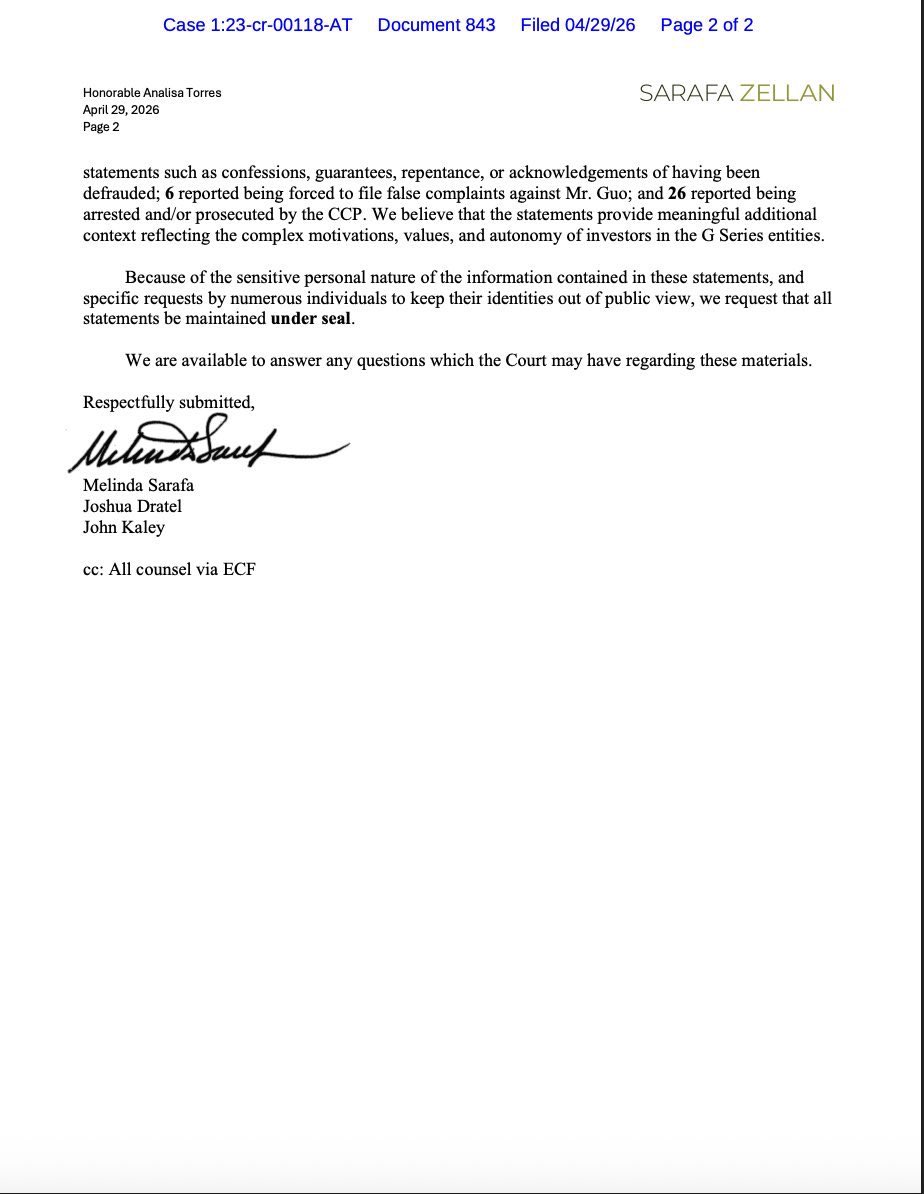
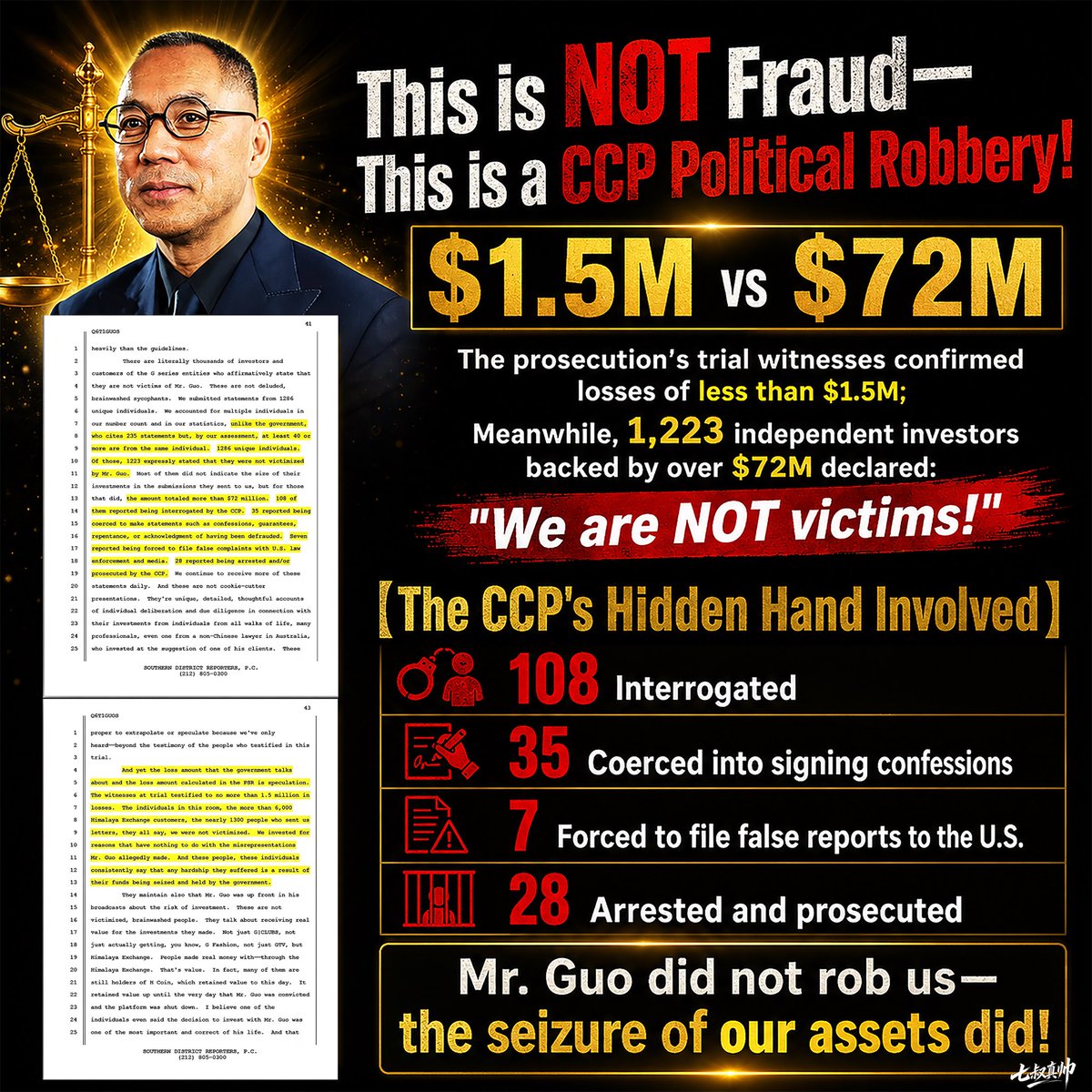
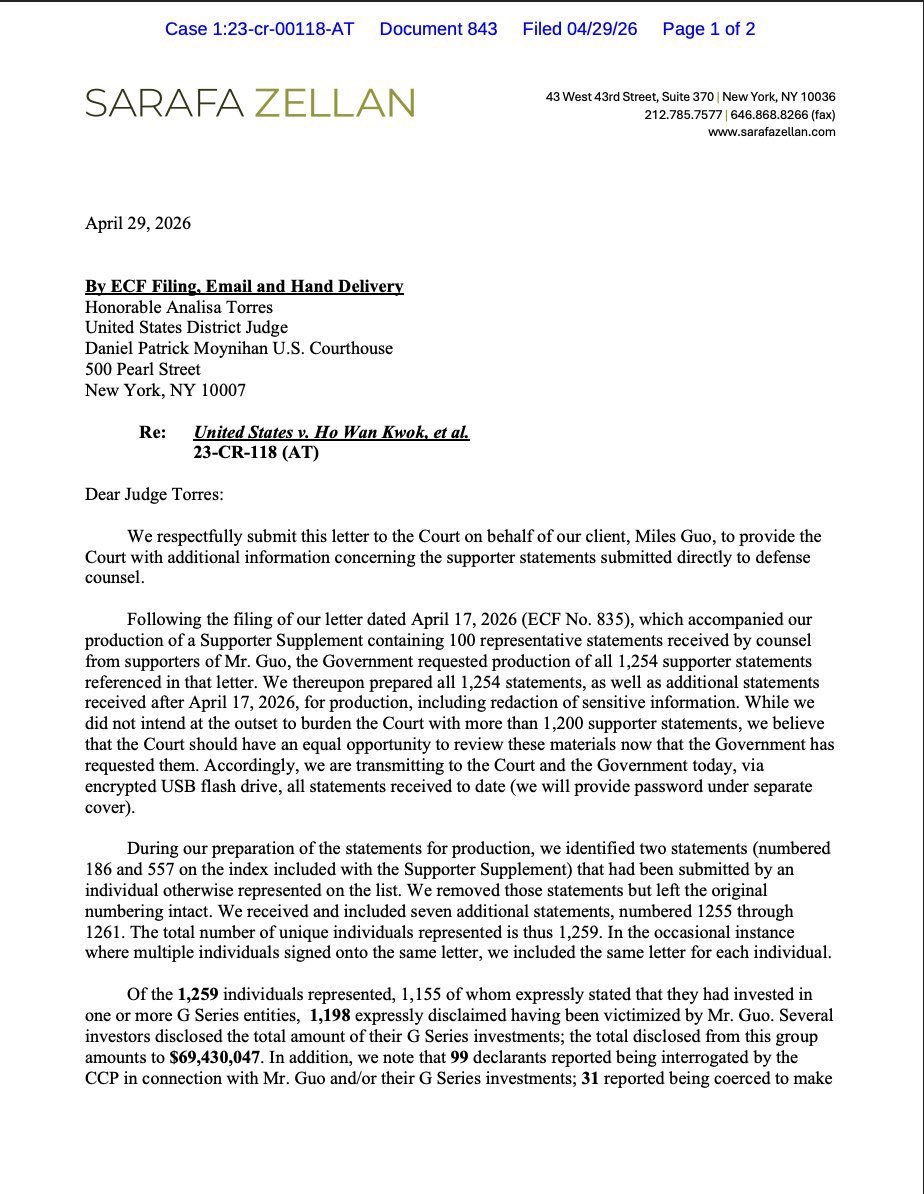
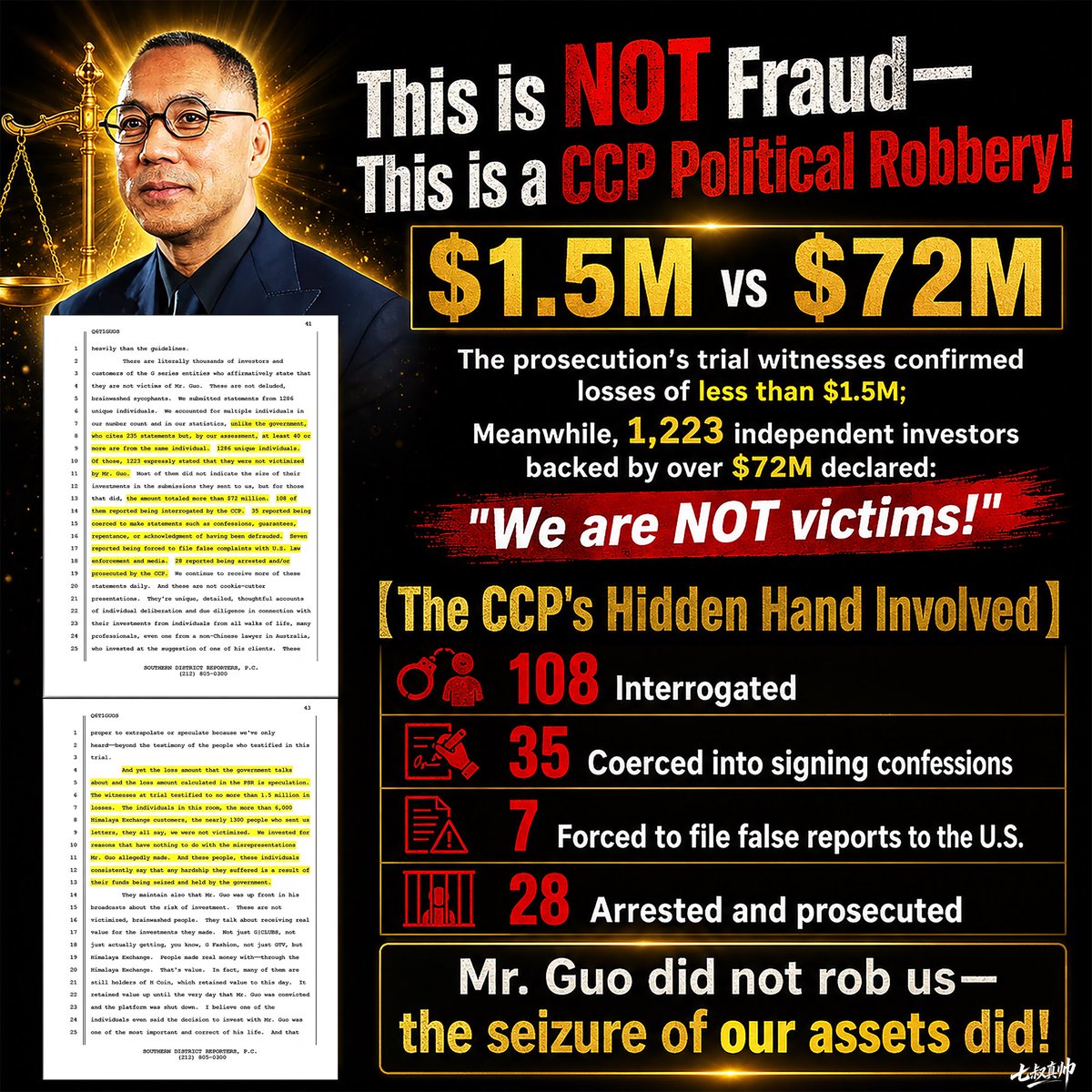
1,259 independent individuals;
1,155 people who identified themselves as having invested in G-Series entities;
1,198 people who explicitly stated that they had not been harmed by Mr. Guo;
The total amount of investments voluntarily disclosed by investors was approximately $69.43 million;
99 people stated that they had been questioned by the CCP in connection with Mr. Guo and/or G-Series investments;
31 people stated that they had been coerced by the CCP into making statements, signing guarantees, expressing remorse, or admitting fraud;
6 people stated that they were forced to file false complaints against Mr. Guo;
26 people stated that they had been arrested and/or prosecuted.
First: A large number of investors themselves said, “I was not defrauded by Mr. Guo.” A total of 1,198 people explicitly denied that they had been harmed by Mr. Guo. If some of these individuals happen to have been included among the “victims” counted by the prosecution, that raises a very specific question: Why did the government classify that person as a victim?
Second: Some individuals claim that they were questioned, pressured, or even required by authorities in China to make complaints against Mr. Guo. If these statements can be substantiated, then the process by which the government’s evidence was generated warrants scrutiny.
Investor → subjected to pressure by Chinese authorities → makes an adverse statement against Mr. Guo → the U.S. government uses that statement as evidence of victimization.
Third: The $69,430,047 figure
Suppose an individual says:
“I personally invested $1 million. I knew what I was investing in. I did not believe that I had been defrauded, and I never asked Mr. Guo to compensate me.”
Shouldn’t there be a clear determination of how many actual victims there were and what amount of loss corresponds to those victims?
If these facts are reasonably disputed, then they are issues that warrant consideration at sentencing. If the prosecution previously counted or described a particular group of G-Series investors as “victims,” then these 1,259 statements could prompt the Court to ask:
Which individuals actually suffered harm caused by the criminal conduct charged in this case?
Yet, on all three of these points, the government and the Court have provided zero investigation and zero explanation. ⬆️
Suppose the defense establishes that:
Certain statements, complaints, loss determinations, or testimony attributed to alleged victims were produced under threats, questioning, coercion, or other forms of pressure by the Chinese government.
If so, this could directly implicate the reliability of the government’s evidence and certain sentencing findings of fact, including the calculation of loss and the identification of victims. If some of these materials could in fact change a material sentencing fact, the Court’s failure to address the issue could raise procedural concerns.
Of particular importance:
Federal Rule of Criminal Procedure 32:
Clearly requires the Court to resolve disputed facts that may affect sentencing, or explain why a ruling on the dispute is unnecessary.
The Presentence Investigation Report (PSR) should include information concerning the defendant’s conduct, the economic and other impact on victims, and other information relevant to sentencing. Before sentencing, the Court must also give both parties an opportunity to comment on and challenge the relevant information.
The presentence report contains information concerning the defendant’s background, the circumstances of the offense, victim impact, and other matters relevant to sentencing. The Court must also give both the defense and the government an opportunity to address these matters at sentencing.
@nataliegwinters The Communist Party is the root of all disasters. The foundation of America becoming great again is making the American justice system great again.⚠️