Perspective by Miguel A. Linares, MD, MPH, Daniel Liauw, MD, MPH, and Lilia Cervantes, MD, MSCS: The Exam Room as Sanctuary — Caring for Undocumented Patients https://t.co/ETO5hyST3p
#HealthPolicy#MedicalEthics
Topical review by Teasell et al.: There is an unmet need for future #stroke rehabilitation clinical trials, especially those conducted in the early and subacute phase with variation in technique, timing, and intensity. https://t.co/tFjftA3IOK
For many bilingual people, switching between languages feels effortless. Now, scientists have figured out how bilingual brains accomplish this feat at the single neuron level. https://t.co/XEPGq7IVeJ
Xinyuan Yan, Benjamin Y. Hayden, Sameer A. Sheth & colleagues
@cellcellpress
Observations in Down syndrome were critical to Alzheimer’s disease discoveries, writes Michael S. Rafii, MD, PhD, in a new Perspective. But persons with Down syndrome have historically been excluded from trials relying on insights derived from their biology. Read the full Perspective: https://t.co/cPECnspqCI
Bussy et al. found that microstructural abnormalities in cerebral small vessel disease were greatest in periventricular regions. Around white matter hyperintensities, gradients of demyelination, axonal damage and oedema extended into nearby tissue. https://t.co/6rtGIPk5bz
Delamare et al. present a computational model of memory formation inspired by recent experimental data, in which individual memories are encoded not only in synapses, but also in the nucleus via epigenetic plasticity. https://t.co/PqfG3S6Opx
Fire up those synapses for the latest #NeurologyRF quiz!
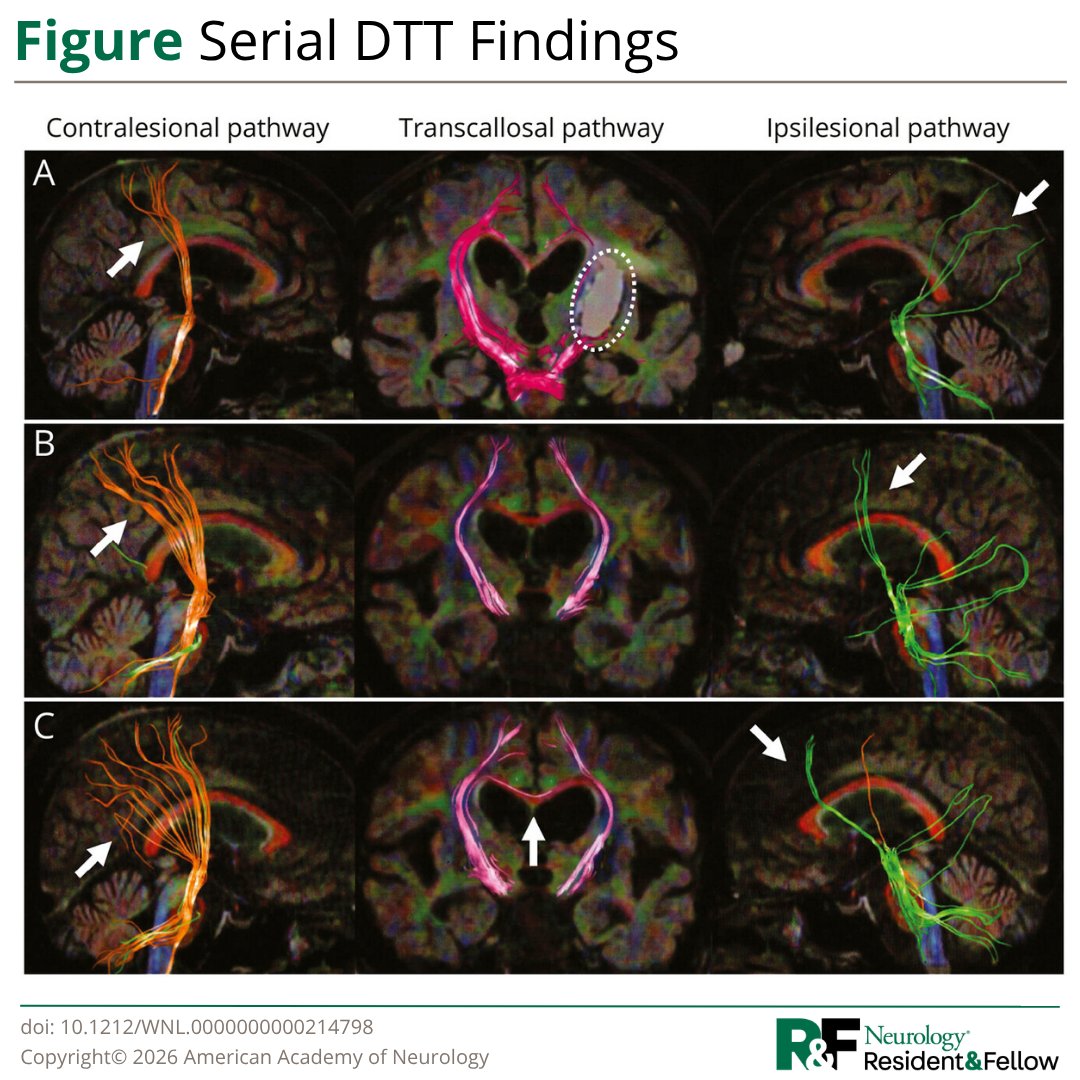
After hemorrhagic stroke, serial diffusion tensor tractography (DTT) showed a sequential anterior shift in ipsilesional motor pathway origins and dynamic changes in contralesional and transcallosal pathways.
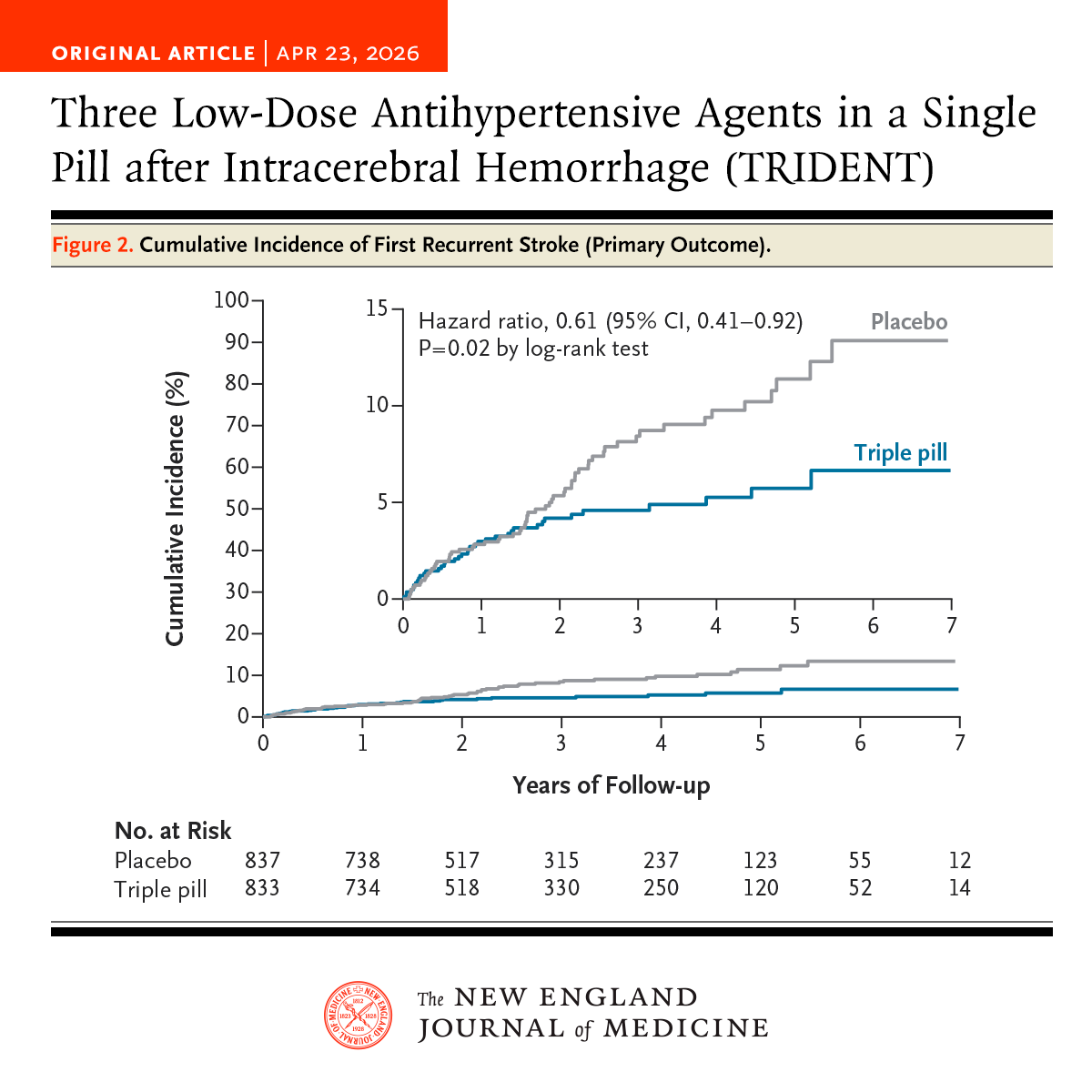
Among survivors of intracerebral hemorrhage, a single pill with three low-dose antihypertensive agents added to standard care was associated with a lower incidence of stroke and major cardiovascular events than placebo. Full TRIDENT trial results: https://t.co/0tiij1H7tb
Editorial: Blood-Pressure Control after Intracerebral Hemorrhage — An Unbroken Glass Ceiling https://t.co/Me1YWely2x
“Integrity is doing the right thing, even when no one is watching.” – C.S. Lewis
It’s not enough to have the right stuff – the skills needed to achieve excellence. You have to commit to doing the right thing, always…
Episode9 of #BarrowBaseCamp has dropped: “On Integrity”
Click: https://t.co/fLJDvnwkTO
Season4: Traits of Greatness
Interesting Research! Alzheimer’s has long been considered “undruggable” because the proteins involved, specifically amyloid-beta, lack a fixed shape for traditional drugs to latch onto. Researchers @KobeU_Global have found a solution. Learn More @ChemEurJ https://t.co/7w43PzjeMA
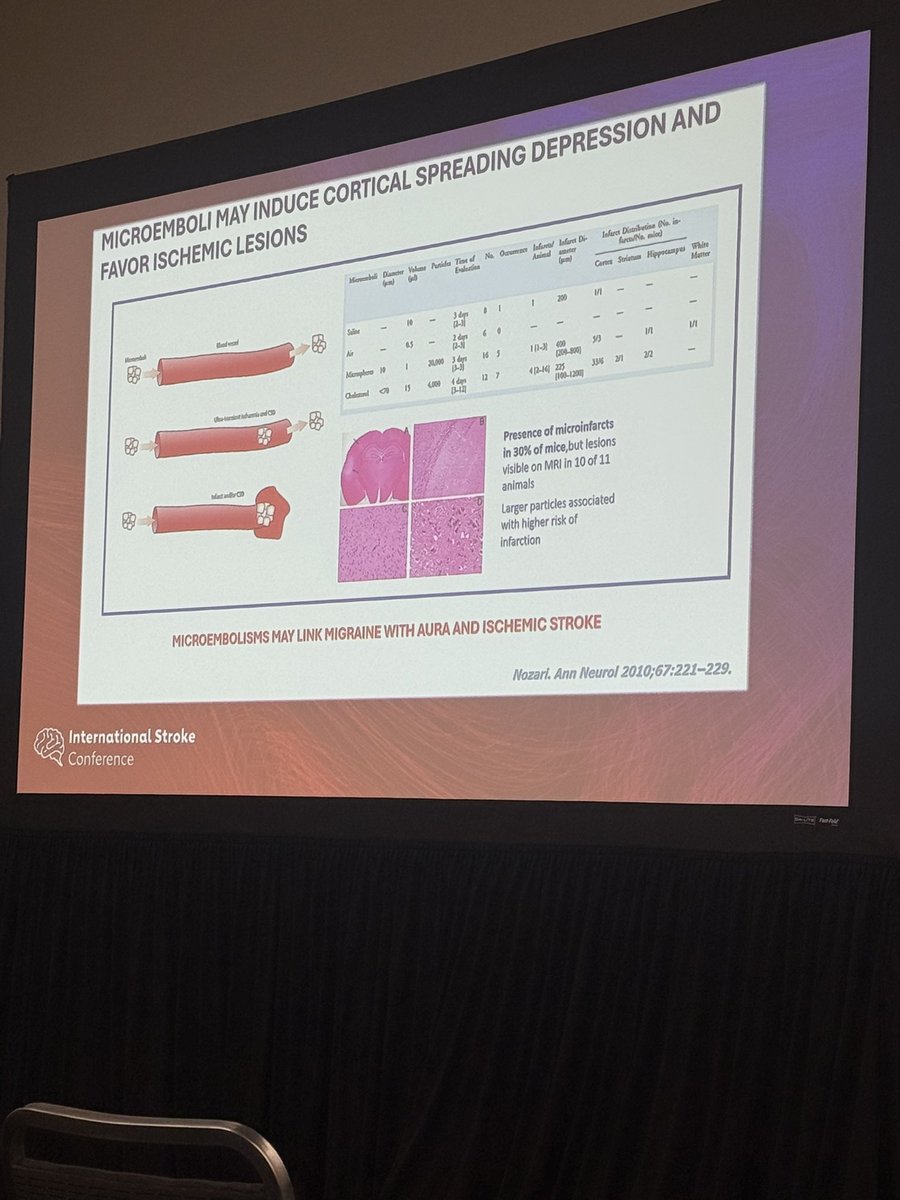
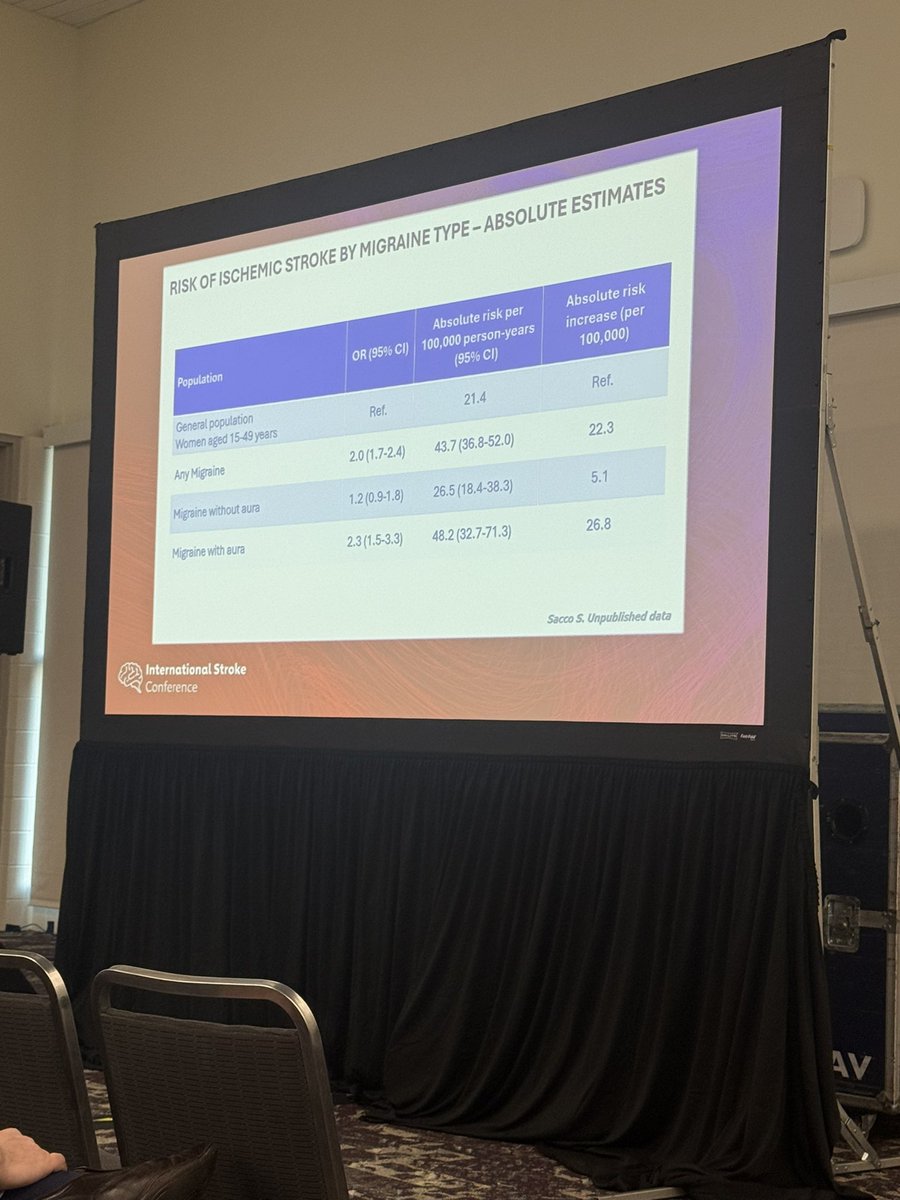
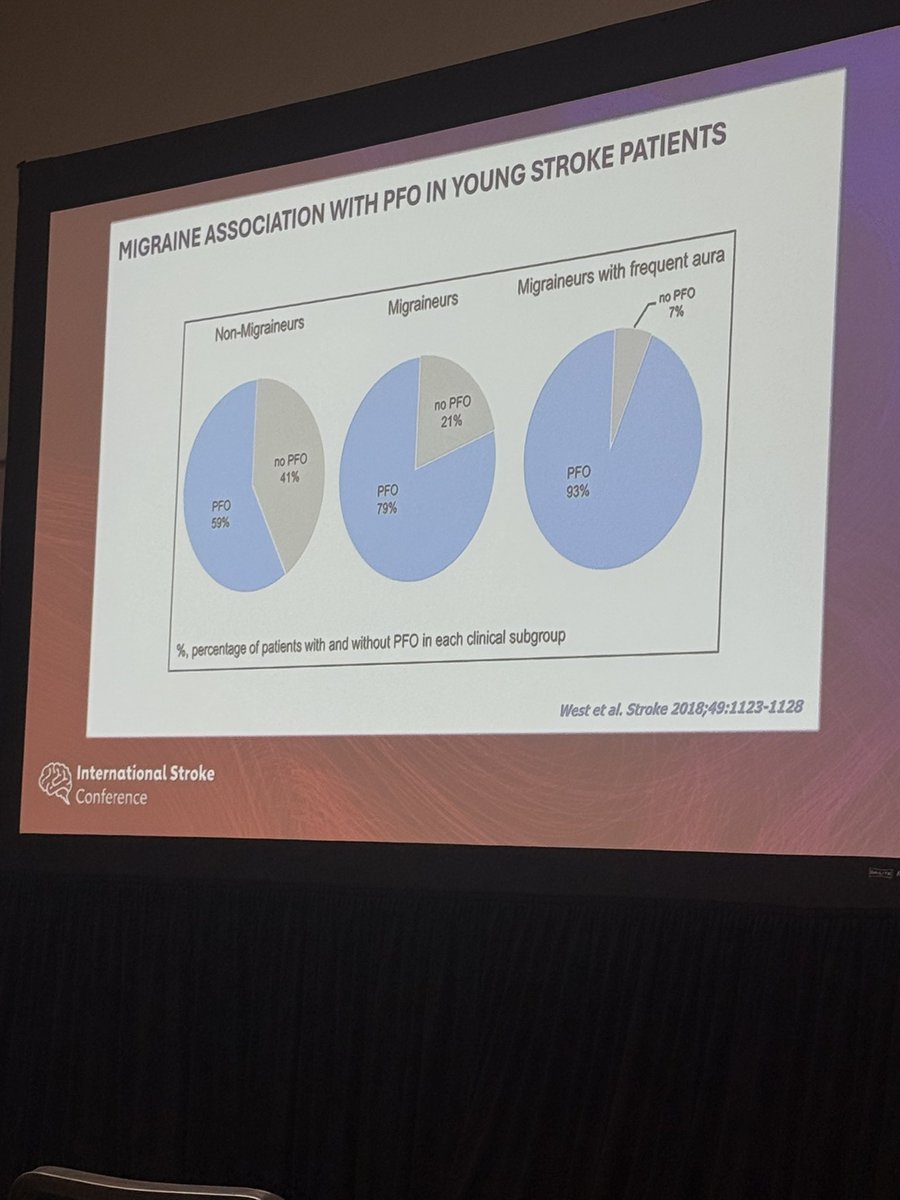
⚡️Migraine and Stroke
Several studies describe this relationship. Why?
🎲 Data demonstrated high association with PFO. As well as microemboli causing cortical depolarization.
📈 Woman are in higher risk. Consider also CHC, pregnancy and AFib.
#ISC26@StrokeAHA_ASA
Video - New study found stroke survivors who were uncomfortable sharing their thoughts and feelings about their condition and future had slower physical and cognitive recovery after their stroke. American Stroke Association volunteer expert Amytis Towfighi, M.D., FAHA says a safe place to share is key. #ISC26 https://t.co/x1FzCuSUeq
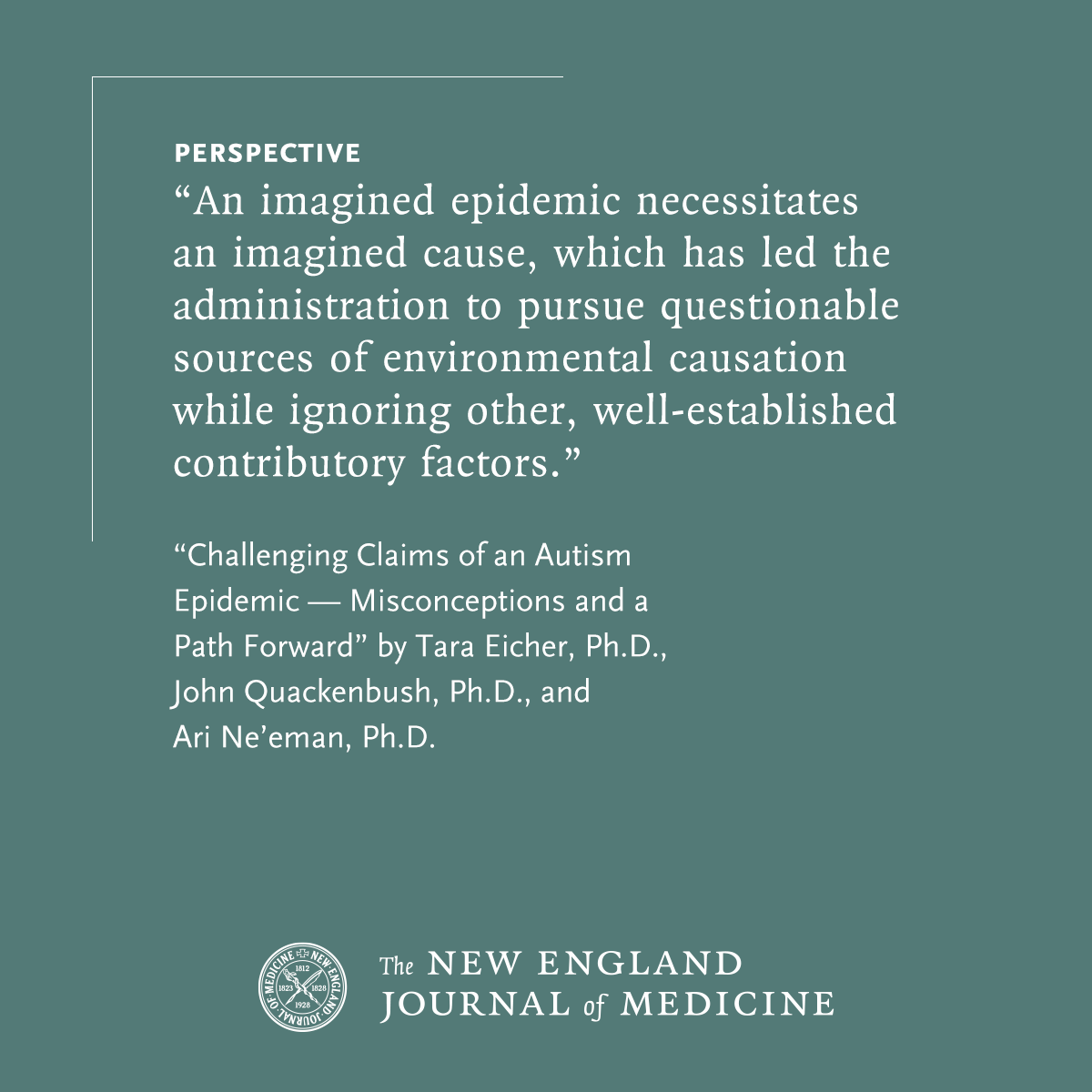
Perspective by Tara Eicher, PhD, John Quackenbush, PhD (@johnquackenbush), and Ari Ne’eman, PhD (@aneeman): Challenging Claims of an Autism Epidemic — Misconceptions and a Path Forward https://t.co/zGtj5cNL5Y
#HealthPolicy#MedicalEthics
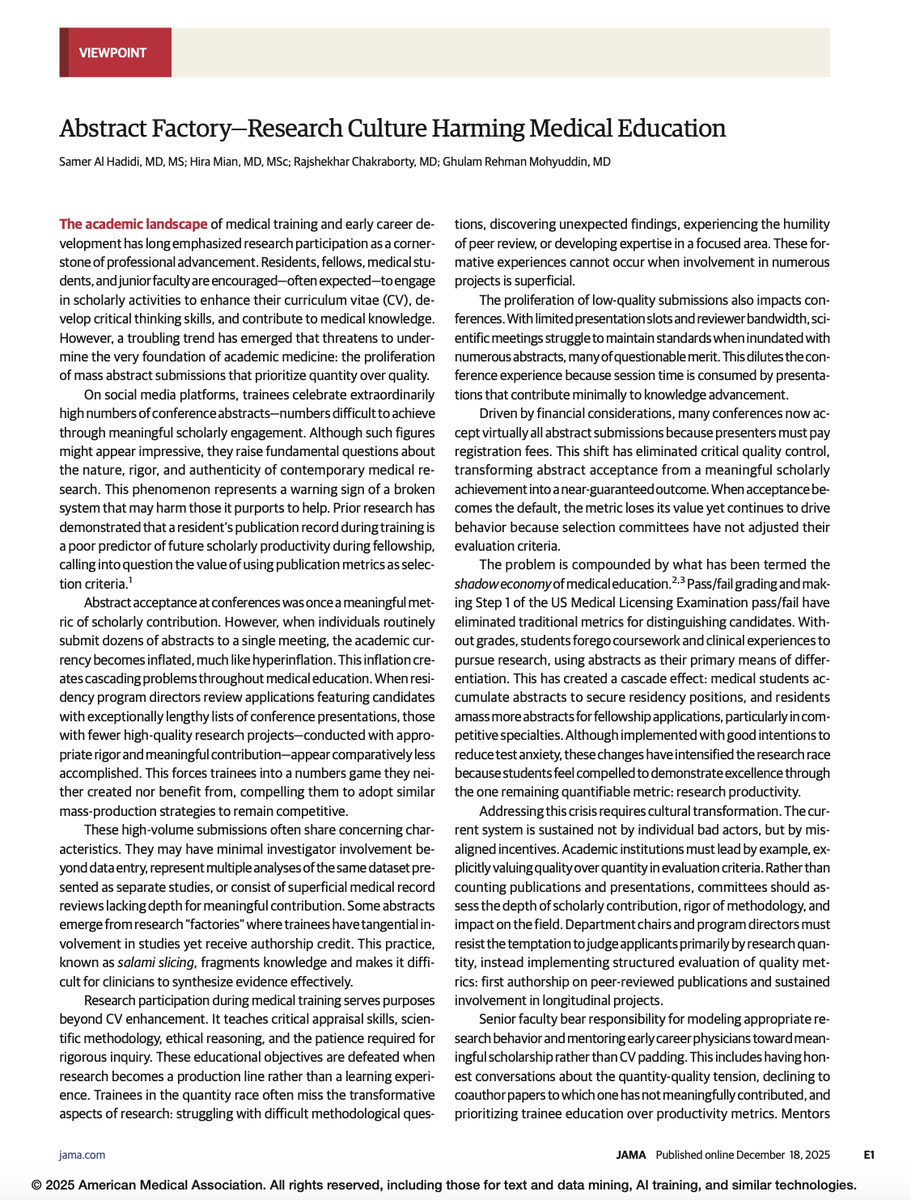
Check our viewpoint published @JAMA_current#MedEd
Abstract Factory—Research Culture Harming Medical Education
The "abstract factory" is destroying medical education. Trainees and junior faculty compete with abstract counts instead of meaningful research. Result: inflated CVs, diluted conferences. We shouldn't celebrate this—you don't need publications to be a great doctor.
➡️https://t.co/IMBhy45L1K
@utswcancer@rajshekharucms@HiraSMian@ManniMD1@HemOncFellows@ASCOTECAG
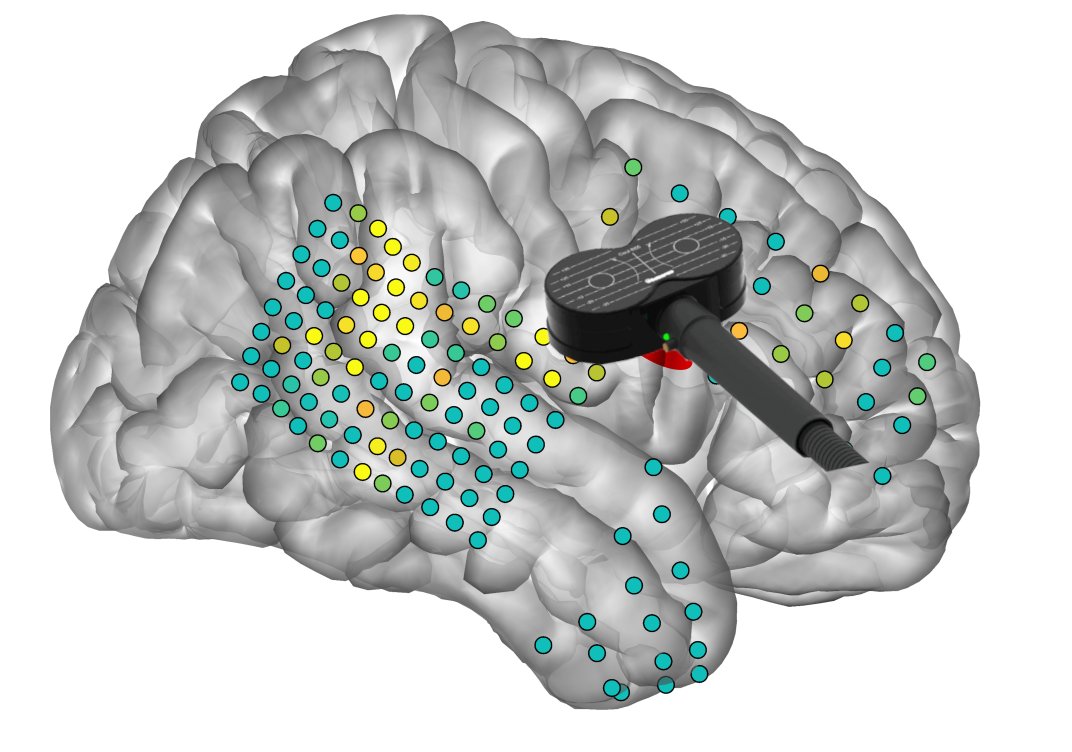
Tsang et al. reviewed 13 studies combining TMS with intracranial EEG in humans and non-human primates. They found that stimulation can rapidly alter neuronal activity and connectivity, with some effects persisting for extended periods. https://t.co/3cvW3JzboR