LUKA LEADS LAKERS TO 8TH STRAIGHT W!
✨ 43 PTS (25 in 1H)
✨ 9 AST
✨ 5 3PM
He has now recorded 7 of the NBA’s 28 40-PT games this season, accounting for 25% of all such performances league-wide 🤯
It takes a while to build the confidence, but there's no future where you're manually reviewing every line of agent code. Not much acceleration in that. You need adversarial agent reviews, you need automated testing, and maybe you spot check. That's it. From prompt to production!
DHH on AI and developer productivity.
The old 10x programmer debate may have become a 100x or 1,000x debate
"What I know to be true is that in the past 20 months, I have written half as much code as I did in the previous 21 years."
----
From "Ruby on Rails" YT channel, (link in comment)
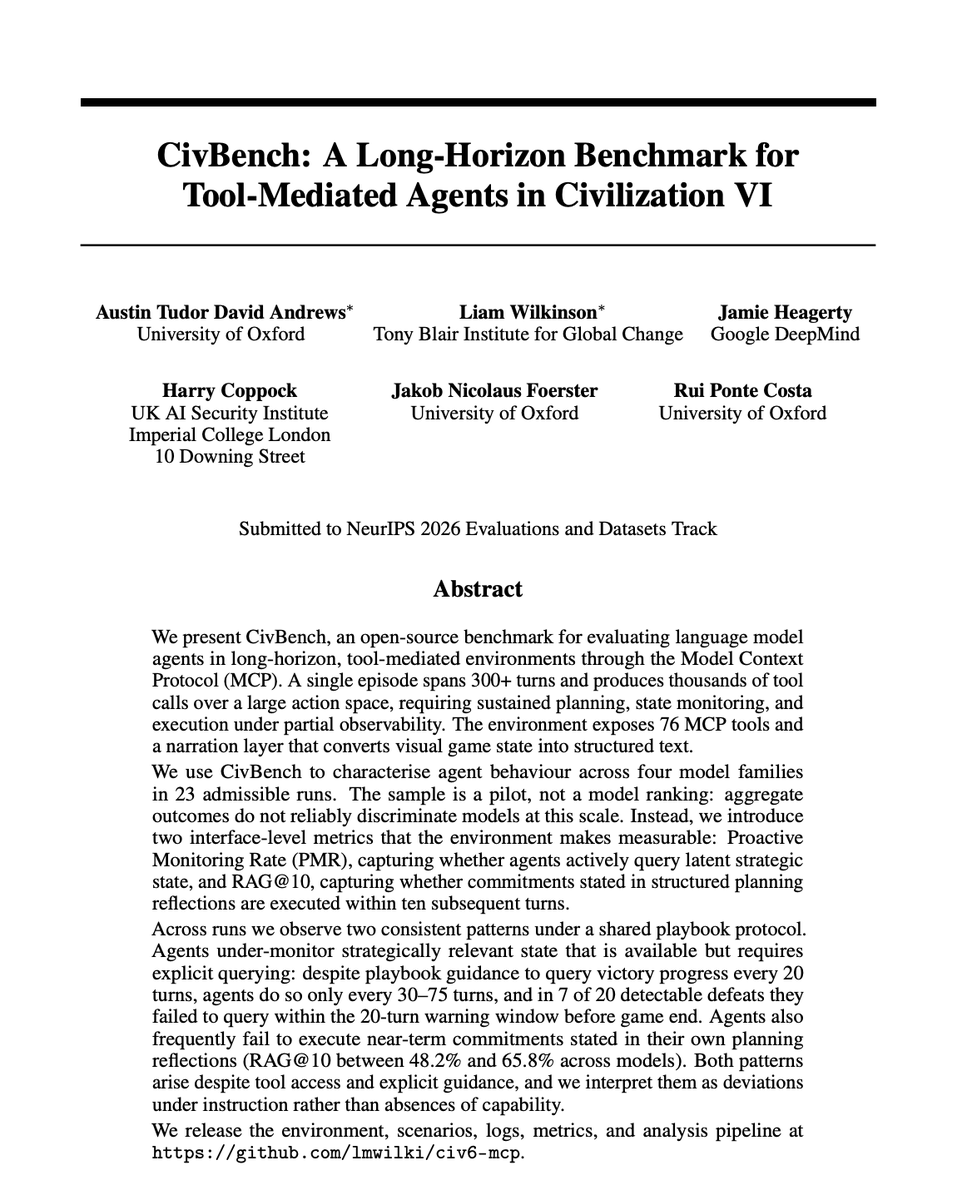
Researchers forced Claude, GPT, Gemini, and Kimi to play Civilization VI to completion.
What they discovered exposes a terrifying blind spot in modern AI.
Playing a massive 4X strategy game to the end requires something entirely different: long-haul execution. Juggling economics, science, military, and diplomacy across hundreds of turns.
The goal was to see how AI handles multi-step complexity.
Instead, they watched the models repeatedly implode due to two bizarre psychological flaws.
Flaw number one: Total situational blindness.
In one-third of the games the AIs lost, an enemy was actively marching toward an obvious victory right in front of them. The data was sitting right there. The model simply failed to look.
Flaw number two: Severe organizational ADHD.
The AIs were great at making grand strategic lists. They would meticulously write down: "Next step, build a city."
Then, 10 turns later, they completely forgot they wrote it and did nothing.
The researchers realized this isn't a lack of raw intelligence.
It’s an allocation failure.
We assume that if an AI can ace a math test, it can manage a complex, multi-day project.
It can't.
When tasks stretch across a long horizon, the model's internal attention drifts. It loses the thread of its own intentions. It drops long-term goals for immediate noise.
Everyone is racing to hand over complex workflows, financial portfolios, and autonomous operations to AI agents.
We think the bottleneck is making them smarter.
but no.
The bottleneck is making them remember what they were doing ten minutes ago.
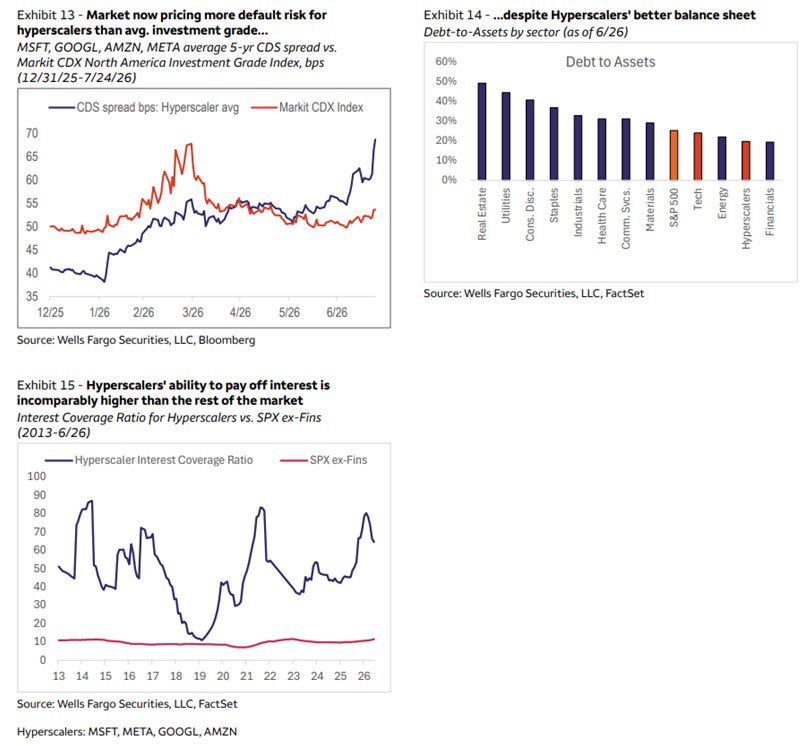
Market is overreacting to hyperscale credit spreads widening from my perspective. TL;DR Spot pricing for renting GPU compute materially above contracted rates implies hyperscalers are underearning while operating cash flow acceleration is an underestimated source of funds for AI capex.
The fact that spot prices for GPU rentals are at least 2x higher than contracted rates is the missing piece from the discussion about hyperscaler credit, which is the only fundamental factor behind this selloff. Multiple private companies are planning on spending at least 2x more per GPU for compute as contracts roll-off and some have spoken about this publicly.
As contracts roll-off, hyperscale growth rates are going to continue to accelerate as their installed bases of compute reprice higher. Hyperscale operating cash flow growth using a mix of estimates and actuals is modeled to accelerate from 31% in the first quarter of 2026 to 50% in the second quarter. This acceleration should continue for the rest of the year and this is not in estimates which incorrectly model a deceleration in the third quarter from my perspective.
Some math. Consensus estimates are probably for 25-35 gigawatts added by hyperscale and neoclouds in CY28 (using a range as standing up datacenters is hard and a lot of the neos plus labs are still private). At 60b per gigawatt, that is 1.5 to 2.2 trillion in capex. Consensus estimates for hyperscale/neo operating cash flow is 1.3 to 1.4 trillion. I think this gets revised up materially as contracts reprice and growth accelerates so the 100b to 700b that would hypothetically need to be plugged by debt goes away. And their credit profiles materially improve. Not to mention the said 100b to 700b would be less than 1 turn of incremental leverage on consensus EBITDA estimates. And obviously the Nvidia and Broadcom “credit wrappers” help improve creditworthiness as well given their FCF profiles.
OpenAI, Cursor/Grok and the various Open Source inference clouds have accelerated materially over the last two months per public data and Anthropic continues to grow insanely fast while likely generating FCF. This - along with the fact that spot prices for GPU rentals are so far ahead of contract - are the missing pieces from the BofA chart on hyperscale FCF vs. semiconductor FCF.
Hyperscalers are underearning and anyone who signed a contract for GPU compute in 2024 and 2025 is overearning. Operating cash flow will be enough to fund capex but as contracts reprice and cloud growth continues to accelerate then spreads likely come in as well.
Would also note that CDS markets are easy to manipulate - was a huge feature of the GFC - short the stock and then buy the CDS. So I would not put attach much signal to CDS.
Net, net I’m not that concerned about the widening spreads in hyperscale credit. The real risk is that bringing power online and energizing all these GPUs is really hard but we are getting better at this every day.
🦔AI companies are bulk-buying rare books, scanning them through high-speed machines that cut the spines off, and shredding the originals. A service called ISBNdb facilitates orders of up to a million books and keeps buyers anonymous. Pre-2022 books are premium because they're free of AI-generated text. A federal judge ruled the practice is fair use because eliminating the original means only one copy exists at a time. Anthropic hired the former head of Google Books partnerships to obtain "all the books in the world."
My Take
This got to me. A bookseller told 404 Media that rare books with almost no surviving copies are being fed into this pipeline. Books that survived wars, fires, and centuries of handling are being shredded so an AI can learn to write a better marketing email.
ISBNdb's website literally says "'AI company destroys two million books' is not a headline that generates sympathy," and they still built an entire business around making it happen quietly. They offer NDAs as a feature. They coach clients to call it "digital preservation."
I've covered AI companies scraping the internet, torrenting libraries, and stealing music. This is worse because it's irreversible. You can re-upload a website. You can reprint a bestseller. You can't replace the last three copies of an 18th-century botanical text once someone shreds them for training data. And the judge said it's legal. So it's going to accelerate.
"We shred rare books and offer NDAs so nobody finds out" is a legitimate business model in 2026. What a timeline.
Hedgie🤗