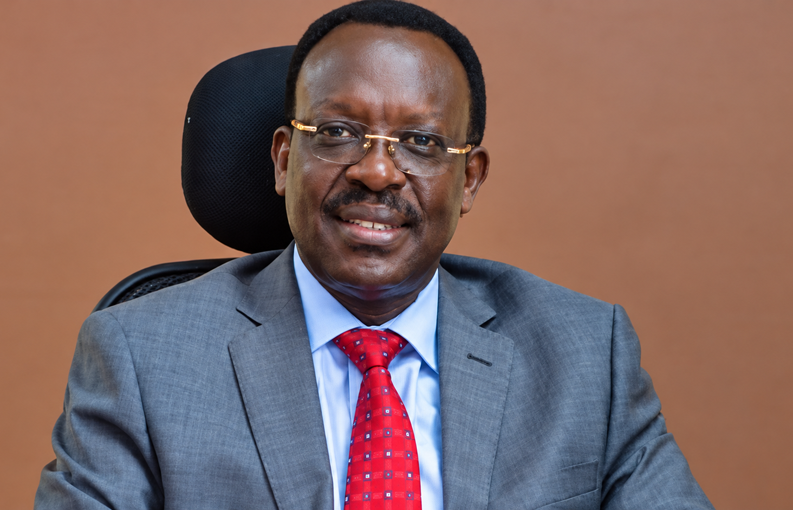
#South_Sudan's Kiir dissolves government, clears hurdles to delayed election
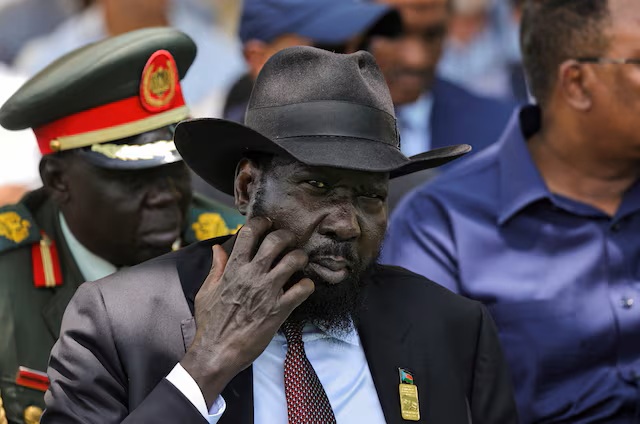
South Sudan President #Salva_Kiir dissolved the transitional government on Tuesday, hours after signing amendments to election laws that removed requirements to complete a permanent constitution and national census before a vote, in a move aimed at advancing long-delayed election plans.
South Sudan's transitional arrangements were established under a 2018 peace deal after years of conflict, but repeated delays to key benchmarks, including a constitution and census, have pushed back election preparations.
Kiir's office said in a statement he had dissolved the transitional government as required under the electoral process.
Parliament late on Monday passed amendments to the National Elections Act, which Kiir subsequently signed into law on Tuesday, as the country entered what authorities described as a critical phase of election preparations. Voter registration has yet to begin.
Under the amended law, the incumbent executive leadership remains in office with full constitutional powers through the election period until a newly elected president takes office.
Last week, Kiir replaced the head of the elections commission without giving a reason.
Kiir's longtime rival Riek Machar, who leads the main opposition SPLM-IO, has been under house arrest since March 2025 and is on trial on charges including treason and murder, which he denies.
The law cuts the National Legislative Assembly to 270 members from 650. State assemblies will be reduced to 58 seats from 100, while legislative councils in administrative areas will have 20 members.
https://t.co/bwJrVLbpjS
#DRC#MONUSCO#AFC/#M23
ANATOMY OF A DIPLOMATIC COVER-UP: UN REPORT S/2026/748 ON MONUSCO:
A detailed analysis of UN Security Council Report S/2026/748 which will be presented at the #UNSC at the end of the month exposes how UN reporting systematically distorts facts on the ground in eastern DRC. Rather than providing an objective operational assessment, the document functions as a calculated political tool explicitly engineered to maintain, protect, and whitewash #DRC President Félix Tshisekedi’s regime while justifying @MONUSCO's $2.13 Billion humanitarian appeal.
Here is the breakdown of how Report S/2026/748 whitewashes the Kinshasa regime and manipulates facts:
1. Maintaining & Whitewashing Tshisekedi’s Regime
- #MONUSCO welcomes Félix Tshisekedi’s "National Dialogue" legitimizing a political mechanism used by his regime to delay political accountability, bypass internal reform, and prolong power.
- #MONUSCO sanitizes state governance failures to present MONUSCO as an irreplaceable savior, securing justification for its massive $2.13 billion fundraising appeal.
2. Linguistic Sanitization of Regime-Backed Extremists
- Whitewashing FDLR & Militias: #MONUSCO systematically rebrands genocidal elements (FDLR) and state-backed Wazalendo militias as "armed self-defense forces" to morally legitimize their combat operations on behalf of Kinshasa.
- Minimizing Atrocities: #MONUSCO downplays systemic FDLR crimes using passive qualifiers ("low levels," "allegedly," "at least 44 human rights abuses") to conceal Tshisekedi’s direct political and military reliance on genocidal and extremist non-state actors.
- Asymmetric Narrative Anchors: #MONUSCO uses graphic phrasing ("at least 60 bodies") at the start of sentences regarding AFC/M23 counter-operations to trigger immediate emotional condemnation, while burying qualifiers ("reportedly").
3. Statistical Manipulation to Protect Kinshasa
- Distorted Fatality Charts (Figure I): #MONUSCO displays prominent black bars for overall male fatalities in North Kivu to trick readers into visually attributing all deaths to AFC/M23, even though the report's text acknowledges that the ADF killed more civilians during this period.
- Splitting the Regime's Coalition (Figure III): #MONUSCO inflates AFC/M23's abuse column with over 600 undefined "other abuse victims" while strategically fragmenting Tshisekedi’s alliance (FARDC, PNC, Wazalendo, FDLR) into separate small bars. When aggregated, violations committed by Kinshasa’s state coalition match or exceed those attributed to AFC/M23.
4. Masking State Drone Warfare & Regime Offensives - Concealing State Atrocities: #MONUSCO ambiguously attributes combat drone strikes in populated civilian areas to generic "State and non-State actors," masking the fact that Tshisekedi’s military is the sole actor deploying combat drones into civilian centers.
- Blaming the Opposition: #MONUSCO reduces regional hostilities to bilateral clashes to frame AFC/M23 as the peace-spoiler, insulating Kinshasa from accountability despite its active military offensives and routine violations of the Doha and Washington peace processes.
5. Weaponizing "Access Restrictions"
- Pre-Emptive Cover: #MONUSCO systematically accuses AFC/M23 of "access restrictions" in footnotes and disclaimers to construct automatic cover for MONUSCO’s own investigative and reporting failures.
- Subverting Local Governance: #MONUSCO uses saturation claims of "denied access" as a calculated campaign to guilt-trip local administration.
THE BOTTOM LINE: #MONUSCO's Report S/2026/748 demonstrates how international reporting is weaponized to prop up Félix Tshisekedi's failing regime, whitewash state-sponsored atrocities, and preserve a multi-billion-dollar UN footprint at the expense of factual truth and genuine regional peace.
Video credit: @Conspiracygl
MUSASIZI CLARIFIES DEBT, OIL REVENUE AND FISCAL RULES
Finance Minister @henrymusasizi1 has clarified how Government will implement the new Charter for Fiscal Responsibility for FY2026/27 to FY2030/31, addressing questions on public debt, petroleum revenues, fiscal consolidation, domestic arrears & monitoring of the five-year fiscal framework.
Musasizi appeared before Parliament’s Budget Committee to respond to issues raised by different entities during scrutiny of the Charter, which sets fiscal rules to guide Government’s budgeting, borrowing and expenditure decisions over the next five years.
One of the key issues was the difference between the Ministry of Finance’s projected public debt ratio of 54.7% of non-oil GDP for FY2026/27 & the 57.7% projection attributed to the Bank of Uganda.
Musasizi said the Ministry, Bank of Uganda and Uganda Bureau of Statistics (UBOS) harmonise debt measurement during the annual Debt Sustainability Analysis, usually conducted after final GDP figures for the completed financial year become available.
“The Ministry, however, remains the authority mandated with debt reporting and projection through the Annual Debt Sustainability Analysis (DSA) and reporting framework,” he said.
He said the Ministry would engage the Central Bank to understand the difference, noting that one possible reason could be the treatment of domestic arrears.
“One reason could be that they included the stock of domestic arrears, which we do not include in the DSA in line with international practice,” Musasizi said.
He explained that the institutional coverage for public debt is central Government, with external debt valued at the nominal amount disbursed and outstanding, while domestic debt is valued at cost. Domestic arrears and temporary Bank of Uganda advances are not included in the international definition of debt, although their associated risks are reported through the annual Fiscal Risk Statement.
Under the Charter, public debt is projected to peak at 55.1% of non-oil GDP in FY2027/28 before declining to 50% by FY2030/31.
Musasizi said the Charter provides the overall fiscal limits, while detailed borrowing decisions & management of interest rate, refinancing, foreign exchange and private sector credit risks remain under Government’s debt management framework.
The Minister said the petroleum revenue rule does not replace provisions of the Public Finance Management Act, but sets the annual limit on petroleum revenue that can be used for budget operations.
Under the rule, transfers from the Petroleum Fund to the Consolidated Fund cannot exceed 0.8% of the preceding year’s estimated non-oil GDP outturn provided by UBOS.
“The remainder of the petroleum revenue shall be transferred to the Petroleum Revenue Investment Reserve,” Musasizi said.
The Charter targets a reduction in the fiscal deficit excluding oil revenue from 6.6% of non-oil GDP in FY2026/27 to 1.5% by FY2030/31.
Musasizi said the adjustment is weighted towards the later years because revenue gains from the Domestic Revenue Mobilisation Strategy are expected to build up over time, while expenditure related to first oil production is concentrated in the early years.
If the assumptions are not realised, he said shortfalls will be addressed through expenditure reprioritisation, containment of non-priority recurrent spending & where necessary, additional revenue measures rather than additional borrowing.
The Charter also seeks to reduce commercial borrowing relative to domestic non-oil revenue from 33.7% in FY2026/27 to 19.3% by FY2030/31, while total interest payments are projected to fall from 32.5% to 20%.
Musasizi said Gov't will monitor implementation through the budget process, macroeconomic modelling and forecasting.
@mofpedU will report performance against the Charter to Parliament through the Half-year Fiscal Performance Report by end of February & Annual Fiscal Performance Report by end of October each year.
In 2001, KCCA put City Square up for redevelopment, with six companies qualifying to bid. Bassajjabalaba won & paid KCCA a bid premium of Shs1.65 billion, with the lease running for 49 years from 2002 meaning it would run until 2051. This is becoming interesting!
ALL PROJECTS MUST GO THROUGH PIMS PROCESS BEFORE APPROVAL
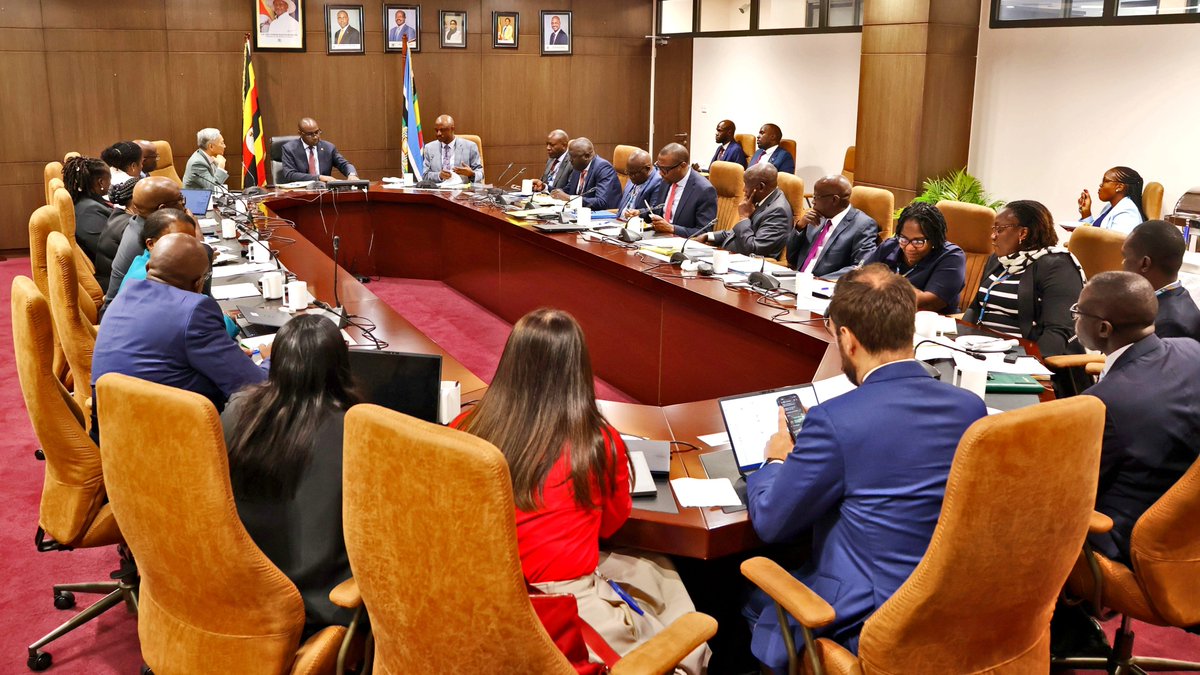
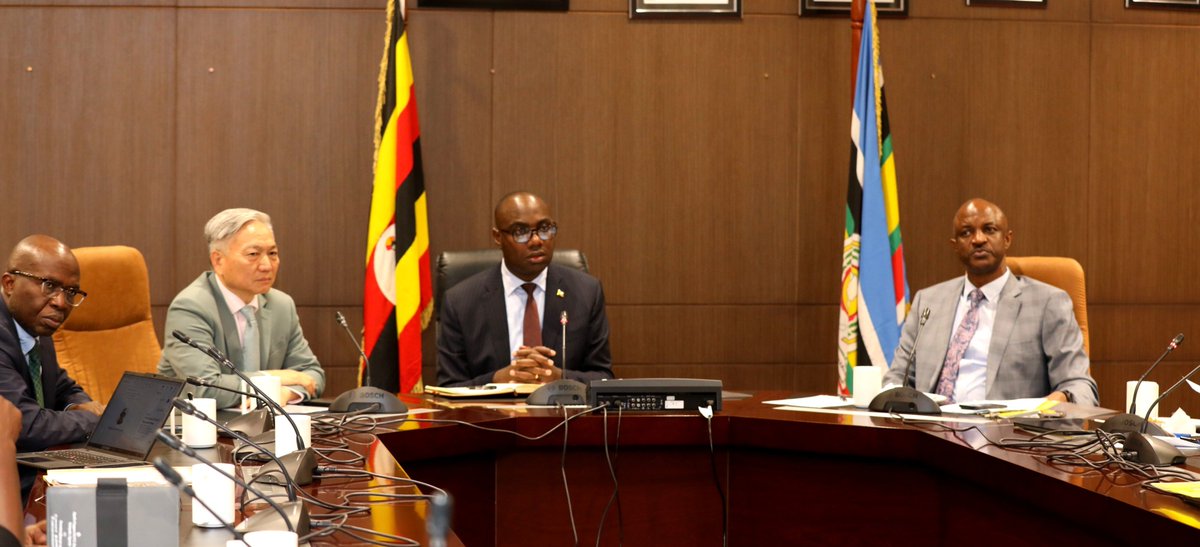
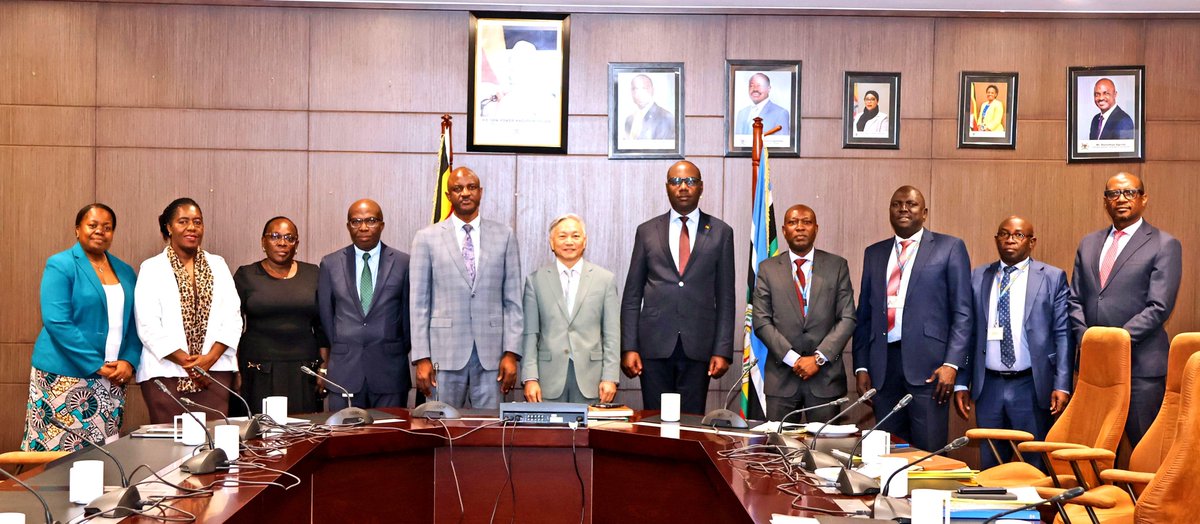
Finance Minister @henrymusasizi1 and World Bank Division Director for Uganda, Kenya, Somalia and Rwanda, Qimiao Fan, have agreed that all projects must undergo the Public Investment Management System (PIMS) process before consideration for approval and financing by both the World Bank Board and the Government of Uganda.
This measure is aimed at ensuring that development projects are properly prepared and implemented within approved budgets and timelines.
The meeting took place at the Finance Ministry ahead of the 2026 Annual meetings of the International Monetary Fund and the World Bank Group next Month in October.
The Minister said all projects must be aligned with the national development agenda, adding that the current priorities of government are: the standard gauge railway, electricity generation and transmission, irrigation and value addition.
“We are looking at one agenda of efficiency and effectiveness and this will greatly improve with PIMS.This will also cure the challenge of poor absorption of funds. We have to do the right job at every stage so that we see impact on the ground,” said Musasizi.
The World Bank Division Director explained the process of allocation of resources by the World Bank and challenged Uganda to streamline processes to shorten the time between project preparation, Government approvals, negotiations, procurement, implementation and results on the ground.
He highlighted the need to accelerate inclusive growth to create jobs for thousands of young people who join the job market annually.
The Permanent Secretary and Secretary to the Treasury @rggoobi called for balance of prudence with efficiency and speed, adding that implementing agencies and the Development Committee must ensure that projects deliver tangible and sustainable results.
The meeting also discussed progress on the USD 500 million Development Policy Operation to support the Tenfold Growth Strategy and the International Development Association (IDA 21) pipeline projects including UgIFT (2.0),revised INVITE & infrastructure development in Greater Kampala.
Uganda’s World Bank portfolio stands at approximately US$4.62 billion, with US$1.48 billion disbursed, according to figures presented at the recent Country Portfolio Performance Review.
🇺🇬 WATCH: 𝗕𝗔𝗦𝗔𝗝𝗝𝗔𝗕𝗔𝗟𝗔𝗕𝗔 𝗦𝗔𝗬𝗦 𝗛𝗜𝗦 𝗖𝗢𝗠𝗣𝗔𝗡𝗬 𝗣𝗔𝗜𝗗 𝗞𝗖𝗖 𝗦𝗛𝗦𝟭.𝟲𝟯𝟱𝗕𝗡 𝗙𝗢𝗥 𝗖𝗜𝗧𝗬 𝗦𝗤𝗨𝗔𝗥𝗘
Hassan Basajjabalaba told COSASE that his company defeated about five other bidders for the City Square redevelopment deal in 2001 and paid Shs1.635 billion to Kampala City Council.
“I will give you the receipt, the offer letter—I will give you everything.”
Watch here:
#News_Alert: #Tigray says armed forces ordered into ‘defensive combat’; reports of fighting emerge
Tigray authorities said Wednesday that their armed forces had been ordered into “defensive combat” after what they described as an “open invasion and attack,” as reports emerged of fighting between Tigrayan and federal forces along the #Tigray-#Afar border.
https://t.co/9biU7fmATz
#Guerre_du_M23: Après leur première étape des nominations illégales des comités de Gestion dans les universités et instituts superieur de #Goma et #Bukavu, les rebelles M23 alliés au #Rwanda decident maintenant de fermer les portes des plusieurs établissements d’enseignement supérieur et universitaire sous motif de la non viabilité.
Cette décision dévoile la stratégie des rebelles de restreindre le secteur éducatif pour rester avec peu d’établissements dans les zones occupées afin de bien garder l’œil sur la gestion financière des institutions universitaires, tranformant ainsi les frais académique en carburant de la guerre et les crimes.
En outre, cette décision met plusieurs enseignants en chômage et complique davantage les étudiants qui désormais doivent se soumettre au dicta de la rébellion.
En fin, cette décision conforte la position du gouvernement congolais qui a suspendu les comités de gestion installés illégalement par les rebelles.
" Les étudiants devront se soulever contre le mouvement rebelle qui met en péril l’avenir des milliers des jeunes dans le secteur éducatif", indique un membre de la société civile de #Kabare, dans la province du Sud kivu.
🇺🇬 WATCH: “𝗔𝗖𝗖𝗢𝗥𝗗𝗜𝗡𝗚 𝗧𝗢 𝗨𝗦, 𝗪𝗘 𝗗𝗜𝗗 𝗡𝗢𝗧 𝗥𝗘𝗖𝗘𝗜𝗩𝗘 𝗧𝗛𝗘 𝗦𝗛𝗦𝟭𝟰𝟬 𝗕𝗜𝗟𝗟𝗜𝗢𝗡...” — 𝗕𝗔𝗦𝗔𝗝𝗝𝗔𝗟𝗔𝗕𝗔
His breakdown to COSASE: BoU paid US$25m of a US$34.5m guarantee, leaving about US$10m. He said a separate US$26m guarantee was also unpaid.
Watch here:
According to Basajjabalaba, BOU has very many unresolved cases b'se there is a group of lawyers getting commissions from these cases.
This one chamber of lawyers has been with @BOU_Official since 2002,BOU has many cases but they only go to court to get commissions not win cases.
UPDATE: The High Court in Wakiso has barred attorney Hassan Kamba from representing National Resistance Movement (NRM) candidate Daniel Kananura in an election petition against Kira Municipality MP George Musisi, citing a critical conflict of interest. Justice George Okello ruled that because Kamba’s law firm concurrently represents the Electoral Commission, his participation would compromise the integrity of the judicial process.
#MonitorUpdates
📹: Teddy Nakaliga
Businessman Hassan Basajjabalaba, while appearing before COSASE, says the government is acting unfairly towards him.
Basajjabalaba claims that he reached an agreement with the government to terminate his contracts on the understanding that he would be paid the full amounts owed to him, but says he has not received the full amounts as agreed.
#NTVNews
📹 @lbrahim_Kavuma
UPDATE: COSASE chairperson Muwanda Nkunyingi says the committee has recorded fresh figures regarding businessman Hassan Basajjabalaba’s Haba Group of Companies, which differ from those contained in the Auditor General’s report. During the committee’s interaction with Basajjabalaba, he claimed that the actual amount owed to him is Shs168.8 billion, compared with Shs140.8 billion stated in the Auditor General’s report. The differing figures have raised questions among committee members as they scrutinise the payments and agreements involving Basajjabalaba and the government.
#MonitorUpdates
📹: Ibrahim Kavuma
Supreme Court Rules Against Money Lender Ben Kavuya UGX350m Loan Claim in 18-Year Dispute, Orders Compensation and Return of Land Title
The Supreme Court has ruled against businessman and moneylender Ben Kavuya and Global Capital Save in an 18-year loan dispute. The court rejected their UGX350 million loan claim, ordered compensation to the borrower, Alice Okiror, and directed the immediate return of her Lukuli land title held as security.
Read the full story 👉🏼 https://t.co/mNePsqSyRq
📽️ City businessman Hassan Basajjabalaba is appearing before Parliament’s Committee on Commissions, Statutory Authorities and State Enterprises (COSASE) over a disputed sh140.487 billion Bank of Uganda guarantee issued in 2017 to facilitate borrowing by Haba Group of Companies.
The matter is highlighted in the Auditor General’s report for the 2024/25 financial year, with the amount still outstanding. COSASE is examining the circumstances surrounding the guarantee, the obligations of the parties involved and efforts made to recover the funds.
#NewsInBytes #VisionUpdates