Forgetted anniversary - Affair of the failed arson of Lev Printery house in Ružomberok
1/ 🧵 On 27 March 1920, a bomb was found at a printing house in Ružomberok.
It was meant to burn the building down.
The Department of War's new post-quantum strategy requires military systems to adopt quantum-resistant encryption by 2031. Adversaries may already be collecting encrypted data to decrypt later.
Are organizations prepared for the post-quantum era?
https://t.co/c3mHBJwzVn
7/7
of the mid-19th century.
I wrote about the discovery, the 1853 advertisement, the booklet itself, and what it tells us about cryptography, love, privacy, and everyday secrecy.
New post on my blog https://t.co/HBst9vWJ5U
1/7
🔐 Secret writing for lovers and friends?
While researching encrypted messages in 19th-century German newspapers, I came across a small 1853 advertisement in Augsburger Tagblatt.
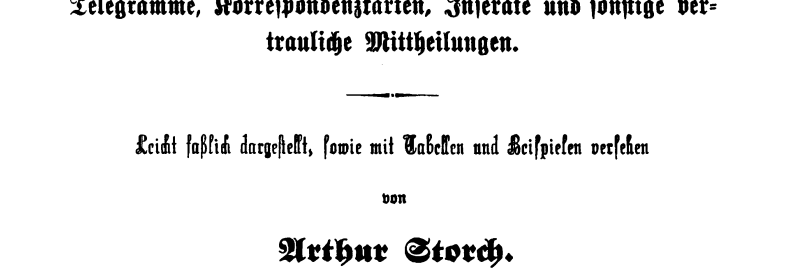
It advertised a booklet titled Die geheime Schrift — “The Secret Writing.”
6/7
This changes how we should search for historical cryptography.
Not every “Chiffre” in a newspaper is a cipher. Often it is just an anonymous ad reference.
But Nordeck’s booklet proves that a market for private secret writing really existed in the German-speaking world...
Offline-first, searchable arsenal for pentesting & bug bounty: payloads, a click-to-build command generator, GTFOBins, wordlists, embedded CyberChef, reverse shells, checklists & an engagement tracker. https://t.co/RduABFoIji
On This Day in Cryptology
On June 23, 1467, Leon Battista Alberti completed his manuscript describing the polyalphabetic cipher.
By shifting ciphers within a message, Alberti created a stronger method of protecting information and laid the groundwork for modern cryptography.
chainreactors/aiscan: pi-like agentic security scanner — single binary for AI-driven pentesting, from red team ops to bug bounty https://t.co/dzvZkSyA7n
To help those interested in Second World War UK cryptology who wonder about the difference between an indicator and a discriminant, what forty-weepy might be, or what bonking and blogging meant at that time, I have compiled from original sources a glossary. (1/3)
@H_Wilson_Author "She was murdered in 415 CE by a frenzied mob for being a pagan scholar challenging Christianity."
No, she wasn't.
https://t.co/ySY6FU3sNO