In medicine, prevention is pretty much always better than trying to undo damage. Scientists are trying to develop an Alzheimer's "clock" to flag people who have no symptoms now, but will soon -- and could benefit from early treatment https://t.co/DA6hN1ur2G
🚨New paper out in Nature Computational Science!
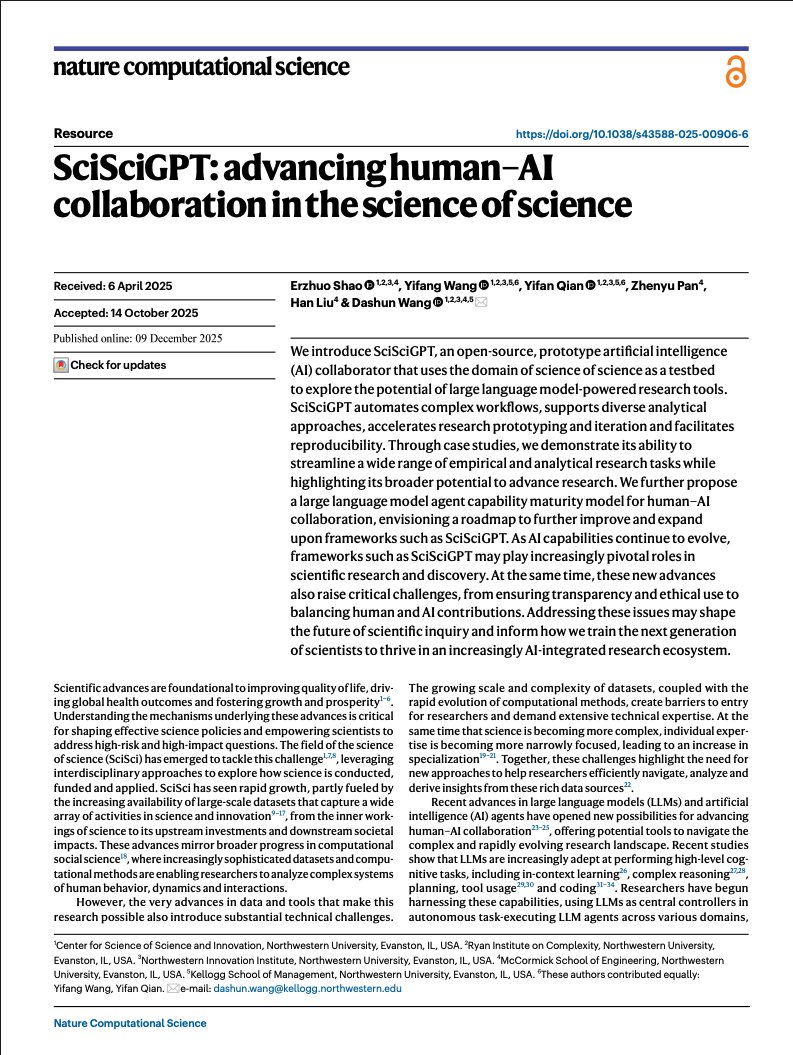
Introducing #SciSciGPT: an open-source, multi-agent, prototype AI collaborator designed to support research and discovery, using the science of science as a testbed.
Led by the amazing @ErzhuoShao
Demo + paper below!
1/n
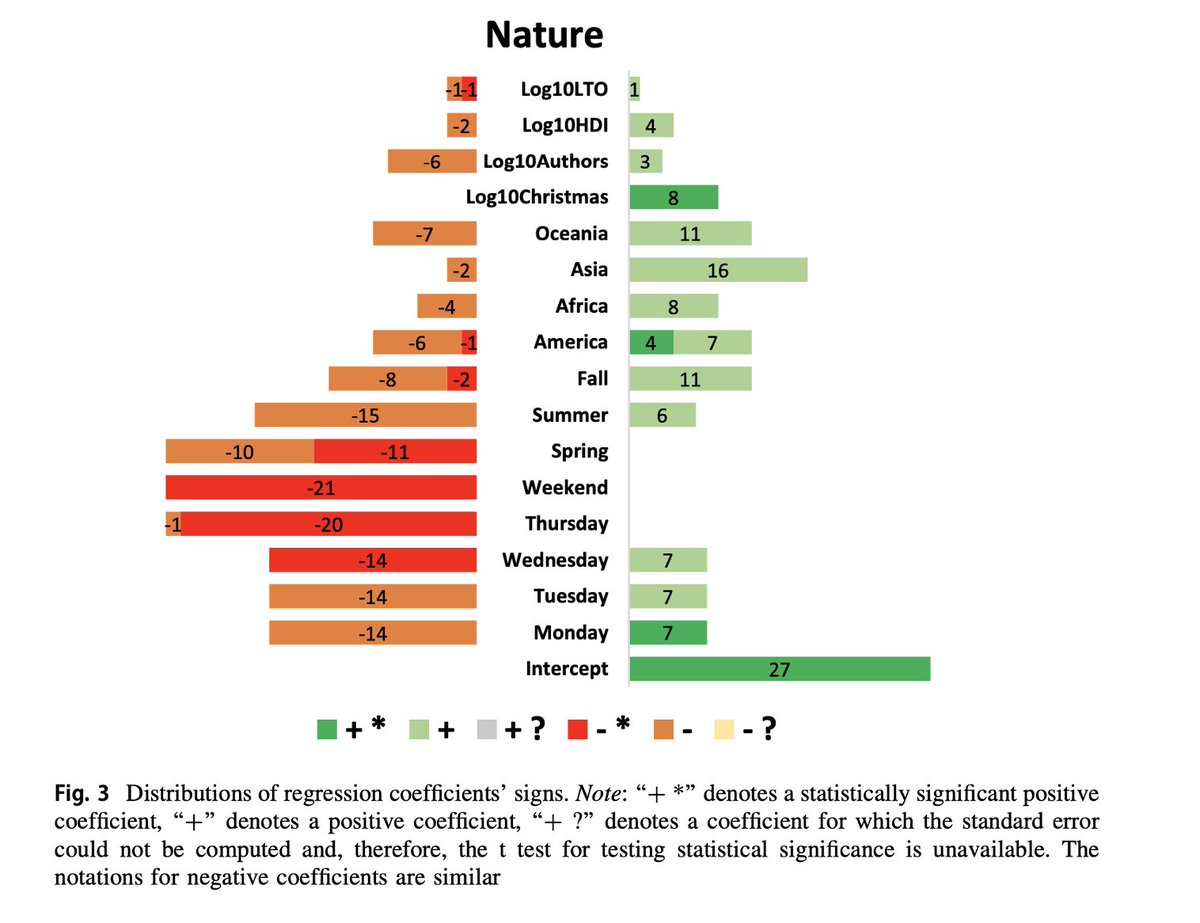
Papers submitted on Tuesdays are more likely to be accepted by Nature whereas Wednesdays seem the most likely day to submit and secure acceptance to PLOS ONE. For Cell, Mondays and Tuesdays seem the best submission days in case of accepted papers.
https://t.co/6w5AraWMzG
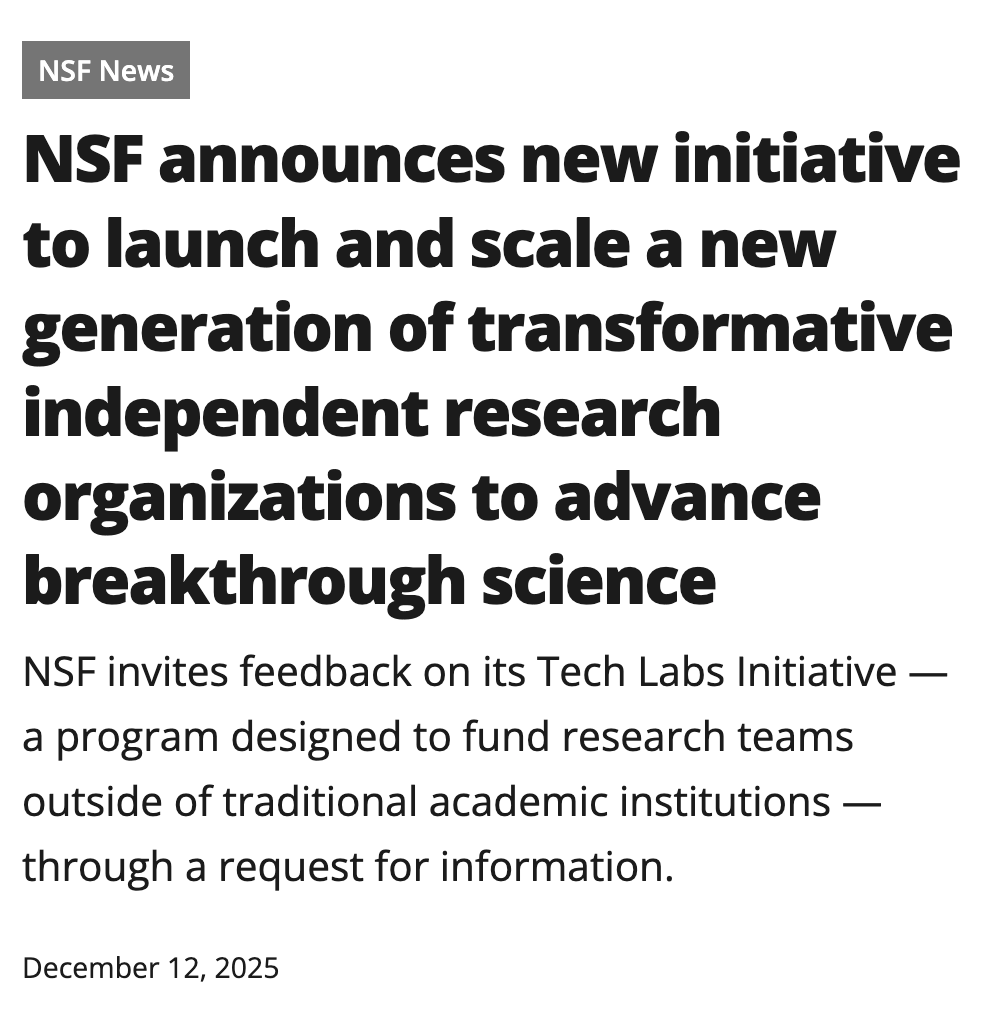
NSF is launching one of the most ambitious experiments in federal science funding in 75 years.
The program is called Tech Labs, and the goal is to invest ~$1 billion to seed new institutions of science and technology for the 21st century.
Instead of funding projects, the NSF will fund teams. I’m in the @WSJ today with a piece on why this matters (gift link): https://t.co/xteQ3NgWVC
Here’s the basic case:
1) Most federal science funding takes the form of small, incremental, project-based grants to individual scientists at universities.
2) The typical NSF grant is ~$250k/year to a professor with a couple of grad students and modest equipment over a few years. This is a perfectly reasonable way to fund some science, but it's not the only way.
3) A healthy portfolio needs more than one instrument. Project-based grants are like bonds: low-risk, steady, safe. But no one trying to maximize long-run returns would put 70% of their portfolio in bonds.
4) Yet that's basically what our civilian science funding portfolio looks like. Around 3/4ths of NSF and NIH grant funding is project-based.
5) Tech Labs is NSF's attempt to diversify that portfolio. The Tech Labs program is aiming for:
- $10-50 million/year awards per team
- 5+ year commitments
- Measuring impact through advancement up the Tech Readiness Level scale rather than papers published
- Up to ~$1 billion for the program
- Supporting research orgs outside traditional university structures
6) Scientific production looks very different than it did when the NSF launched 75 years ago. The lone genius at the chalkboard can only do so much. Frontier science + tech today is increasingly team-based, interdisciplinary, and infrastructure-intensive.
7) The team behind AlphaFold just won the Nobel Prize in Chemistry. It came from DeepMind, an AI lab with sustained institutional funding and full-time research teams. It would be near-impossible to fund this kind of work on a 3-year academic grant.
8) Same pattern at the @arcinstitute (8-year appointments, cross-cutting technical support teams) and @HHMIJanelia (massive infrastructure investments to map the complete fly brain). Ambitious science increasingly needs core institutional support, not a series of project grants stapled together.
9) Similarly, Focused Research Organizations (@Convergent_FROs) have showcased a new model supporting teams with concrete missions and predefined milestones to unlock new funding.
10) There’s a whole ecosystem of philanthropically-supported centers doing amazing research, like the Institute for Protein Design, the Allen Institute, the Flatiron Institute, the Whitehead Institute, the Wyss Institute, the Broad — the list goes on.
11) But philanthropy can’t reshape American science alone. The federal government spends close to $200 billion each year on research and development, an order of magnitude more than even the largest foundations.
12) If we want to change how science gets done at scale, federal funding has to evolve. And the NSF and NIH don’t have dedicated funding mechanisms to support or seed these sorts of organizations.
13) Earlier this year, I started working on a related framework called “X-Labs” that built on all this exciting institutional experimentation that’s been happening within the private and philanthropic sectors. It’s time for the federal government to step into the arena: https://t.co/0iVLobqQeA
14) Traditional university grants are still important for training the next generation of scientists and for certain kinds of curiosity-driven work. But after 75 years of putting nearly everything into one model, we should try something different.
15) And key program details are still being developed! You can reply to the Request for Information with suggestions or feedback on how to design this program here: https://t.co/R6MNo0ZfN1
16) Science is supposed to be about experimentation. Science funding should be too.
We lost someone extraordinary
Ethan Neumann, a PhD candidate in my lab, worked tirelessly to study #fibrolamellar carcinoma, the cancer that would ultimately claim his life
On the day before he died he officially became Dr. Neumann:
https://t.co/qKvfxi3v3h
Updated Application Policies: NIH Administrative Burden Reduction Effort Removal of Requirements for Letters of Intent and Unsolicited Applications Requesting $500,000 or More in Direct Costs https://t.co/O588ezqHQi
NIH grant applicants:
October and November grant application submission *deadlines* will be rescheduled (🤯). Specific dates TBD.
https://t.co/RWkio5joq0
I encourage you to read this article, in which we describe the current situation and the directions in which, in our view, mathematics is heading. Many thanks to Ken Ono for including me in this extraordinary project. I look forward to a wide-ranging discussion and will be sharing more about activities related to this article.
https://t.co/kd84ApmvLO
Teaching a new course @Stanford this quarter on explainable AI, motivated by neuroscience. I have curated a paper list 4 pages long (link in comment). What are your favorite papers on explainable AI/mechanistic interpretability that I am missing? Please comment or DM. thanks!
🚨 Our latest paper just came out in Science, where we report a simple, historical pattern:
From 1980 to 2020, Republican lawmakers consistently funded science at a higher level than their Democratic counterparts.
four years in the making. Led by @zfurnas
thread 1/n
As biomarker tests for Alzheimer’s disease are increasingly being used in clinical care, there are some key differences to note about biomarkers in clinical care and research:
1️��� Clinical amyloid PET scans are not the same as research amyloid PET scans. In clinical practice, amyloid PET scans are visually interpreted as positive or negative by a person and only the positive/negative result is provided in the clinical report; quantitative values are rarely provided, although some expert centers are working to add quantitative values. A recent large study showed ~86% agreement between clinical amyloid PET visual reads and quantitative values.
2️⃣ Tau PET scans are almost never performed in clinical practice in the US because they are rarely reimbursed by insurance and extremely expensive.
3️⃣ Clinical tests are primarily indicated for clinical decision making that impacts patient management (e.g., to aid with diagnosis, which may affect further testing and treatment), not to “follow” patients. For example, clinicians do not periodically perform a brain MRI or PET scans just to “follow” disease progression because we do not expect that additional scans would affect patient management.
4️⃣ In research, blood biomarker panels are analyzed using algorithms, but in clinical practice, interpreting multiple blood biomarkers is challenging due to their varying diagnostic importance. For example, p-tau217 is highly accurate in identifying amyloid pathology, while p-tau181 and Aβ42/40 offer minimal or no added value. Most clinical blood test panels (unlike PrecivityAD/PrecivityAD2, which use weighted algorithms) do not prioritize biomarkers, potentially causing confusion about amyloid status due to unclear interpretation of individual test results when results are discordant. A single, high accuracy test is often best and easiest to interpret.
5️⃣ Performing more test modalities is not necessarily better, especially if the certainty of Alzheimer’s is very high following the first test. Performing a second test in patients with a very high likelihood of Alzheimer’s may lead to a significant number of false negative results.
6️⃣ A test doesn’t have to work perfectly in everyone, as long as we know who is at risk for an inaccurate result. For example, it is very simple to identify patients with severe chronic kidney disease, which affects plasma p-tau217 levels, and choose CSF or PET for those patients.
7️⃣ Continuous values are important to clinical certainty and data on the distribution of values is helpful. This helps clinicians to know whether a value is borderline abnormal or very abnormal.
8️⃣ Diagnostic accuracy is not just based on the biomarker test sensitivity/specificity. Clinicians can integrate biomarker values with clinical information to achieve high diagnostic accuracy/positive predictive values for Alzheimer’s disease.
Amyloid-PET Quantification and Real-World Visual Reads https://t.co/CFqBIrBOcs
BREAKING from #AAIC25: U.S. POINTER, a large-scale, randomized controlled clinical trial, shows a healthy lifestyle program targeting multiple risk factors can protect cognitive function in diverse populations in communities across the United States. https://t.co/BcWNnj70ex
Finally, a good modern book on causality for ML: https://t.co/jsHdpOEb96 by @eliasbareinboim. This looks like a worthy successor to the ground breaking book by @yudapearl which I read in grad school. (h/t @JoshuaSafyan for the ref).
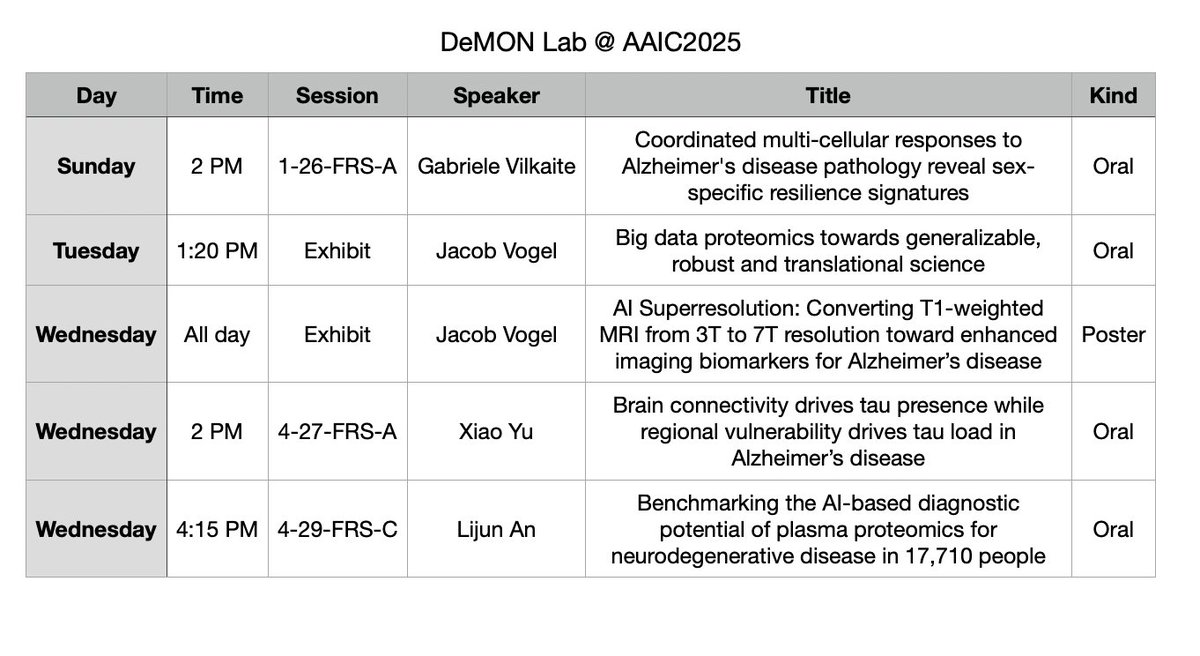
Coming to #AAIC2025? DeMON lab is here and we'd love to share our work with you!
* Sun: Multi-cellular responses to AD using snRNA
* Tue: Proteomics and big data
* Wed: AI super-resolution for MRI
* Wed: AI appleid to proteomics
* Wed: Network modeling of tau
Come talk to us!
Visit us at the @LEADS_study booth at AAIC! We are part of the NIA Pavilion, Booth 609F. Hear about our data sharing efforts and how you can take part in advancing research on EOAD.
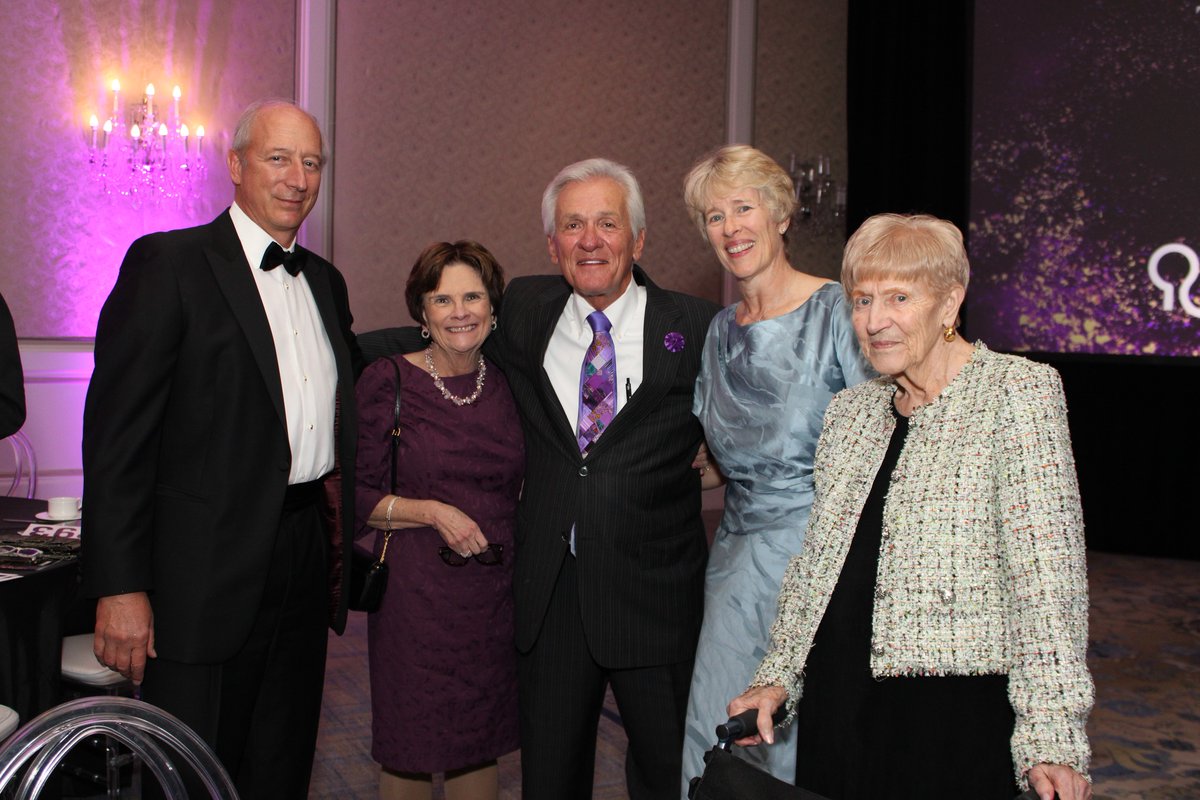
David Holtzman, MD, received the Beacon of Hope Award at the Alzheimer's Association Greater Missouri Chapter's 2025 Beacon of Hope Gala. Congratulations!
(Photo credit: Alzheimer's Association Greater Missouri Chapter)
Thank you @60Minutes for giving the devastating NIH pauses and proposed budget cuts the attention they deserve. ALL Americans regardless of party affiliation will be impacted, and the impact goes long beyond one administration. https://t.co/FTDRbOQIbx