Today's Paper of the Day is:
Diagnosis and management of autoimmune diseases in the ICU
https://t.co/JKgcYjlUQ5
Join us to read 1 paper per day and stay up-to-date as we cover the spectrum of critical care across 2026
In patients with cardiovascular disease and an implantable cardioverter–defibrillator, increasing potassium levels to the high-normal range reduced the risk of arrhythmia events, hospitalizations, and death. Full POTCAST trial results and Research Summary: https://t.co/6HUcV2CkKq
A simplified ANDROMEDA- SHOCK-2 algorithm display by Jesus Nieves from Spain! As he said complex at first glance but quite easy when practicing!! Thanks Jesus😍😍
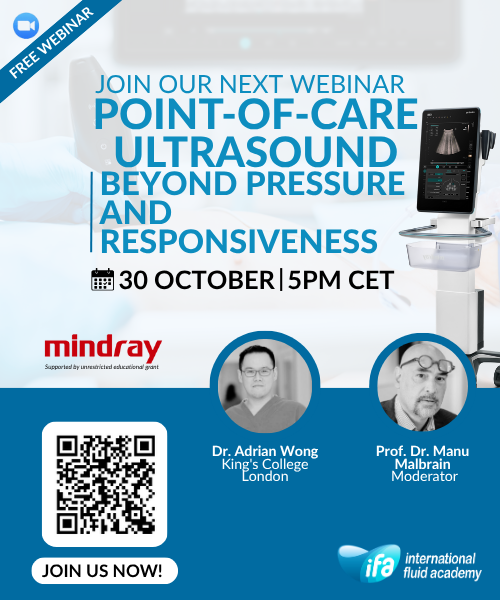
Join us tomorrow for an exclusive introductory webinar to the upcoming Haemodynamic Management Course: Critical and Acute Care Ultrasound (CACU) & Beyond
This session will provide participants with an overview of the course content, structure, and faculty, while highlighting the importance of advanced haemodynamic assessment and personalized fluid therapy in critically ill patients.
🔹 30 October
🔹 5 PM CET
🔹 via Zoom
🔗 https://t.co/jMz1mNZ3Im
Course information, programme & registration:
➡️ https://t.co/h9KyWHak3f
Self-extubation in ICU patients is common—and risky.
This large French cohort study found that 39.4% of patients who self-extubated required reintubation, which was linked to higher mortality, longer ICU stays, and increased risk of pneumonia.
https://t.co/ICDJHfqdZR #CritCare
🧠 IV Fluids in Brain Injury: Salty or Sweet? The Ongoing Debate
Choosing the right fluid in patients with acute brain injury remains a delicate balance. In their latest editorial in Intensive Care Medicine, Van Regenmortel & Van der Jagt revisit the evidence for resuscitation and maintenance fluids in neurocritical care.
🔹 Saline vs. Balanced Solutions:
Meta-analyses show balanced solutions slightly reduce mortality in general ICU populations—but TBI patients may be the exception. Evidence suggests hypo-osmolality in balanced fluids like Plasmalyte may increase mortality risk in TBI.
🔹 Chloride Load vs. Kidney Safety:
While NaCl 0.9% remains the go-to for cerebral protection, hyperchloremia's renal effects shouldn't be ignored. Balanced hypertonic solutions might reduce chloride burden while preserving ICP control.
🔹 Maintenance Fluids—Glucose Dilemma:
In TBI, hypotonic glucose solutions risk cerebral edema. Yet, isotonic glucose–saline combinations remain underexplored. Meanwhile, tight glycemic control is crucial, as even mild hyperglycemia may worsen outcomes.
📚 For a full breakdown of recommendations, clinical implications, and the gaps that still need to be addressed—
👉 Visit our IFA Members Portal for the detailed summary and curated discussion-https://t.co/4KUnrumnE1
#FluidTherapy #NeurocriticalCare #IVFluids #TBI #ICU #FOAMed #FluidAcademy #EvidenceBasedMedicine
🫀NEW GUIDELINE🫀
Read our newest #ASEGuideline, "Recommendations for the Evaluation of Left Ventricular Diastolic Function by Echocardiography and for Heart Failure With Preserved Ejection Fraction Diagnosis!" https://t.co/bKTTQachMJ
Happy Birthday to us!
We are honoured to celebrate our 55th birthday with the intensive care community- working with and for you to support the whole multiprofessional team.
Thank you to all who shared #ICUWeek2025 with us - our birthday is a perfect end to a fantastic week!
Vascular leakage during circulatory failure: physiopathology, impact and treatments
CCR Journal Watch - tracking the critical care literature daily
https://t.co/Sp06oA6IDG
Lung #POCUS and mortality in a cardiogenic shock population.
#FOAMed#FOAMcc
B-lines ≥50% at 24 h were significantly associated with ⬆️ 30-day mortality (HR 4.705; 95% CI 2.329-9.508) and the ⬇️of B-lines during 24 h was associated with lower 30-day mortality (HR 0.739; 95% CI 0.571-0.956)
🔗Eur J Heart Fail. 2025 May 30. doi: 10.1002/ejhf.3692.
Today's Paper of the Day is:
Point-of-care Ultrasound in Cardiac Arrest
https://t.co/JKgcYjlUQ5
Join us to read 1 paper per day and stay up-to-date as we cover the spectrum of critical care across 2025
Do you have fond memories of the first central line you placed? Or were you quite nervous? Here's a review to help out our future colleagues with their first central line. 🎩 tip to the authors.
https://t.co/wtiQFg1wGN