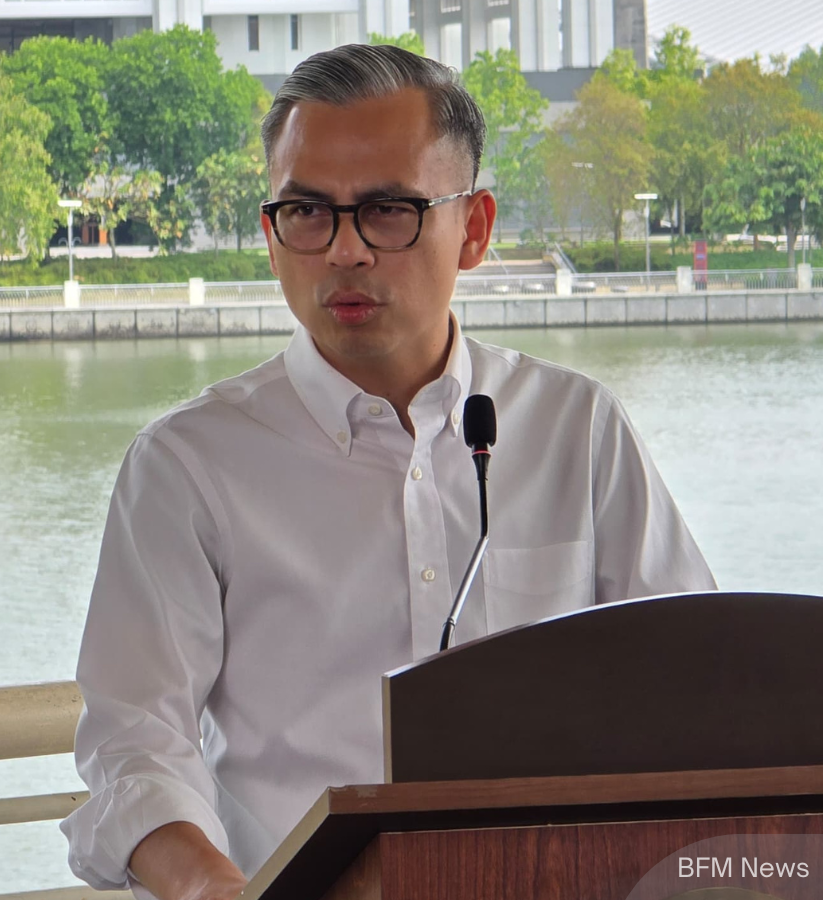
Communications Minister Fahmi Fadzil has instructed MCMC not to proceed with implementing the Domain Name System (DNS) redirection.
Fahmi says the decision was made after considering the views expressed during an engagement series by MCMC, and from the general public.
🧵1
The way Israel is conducting this offensive is creating massive obstacles to the distribution of humanitarian aid inside Gaza.
An effective aid operation in Gaza requires security; staff who can work in safety; logistical capacity; and the resumption of commercial activity.
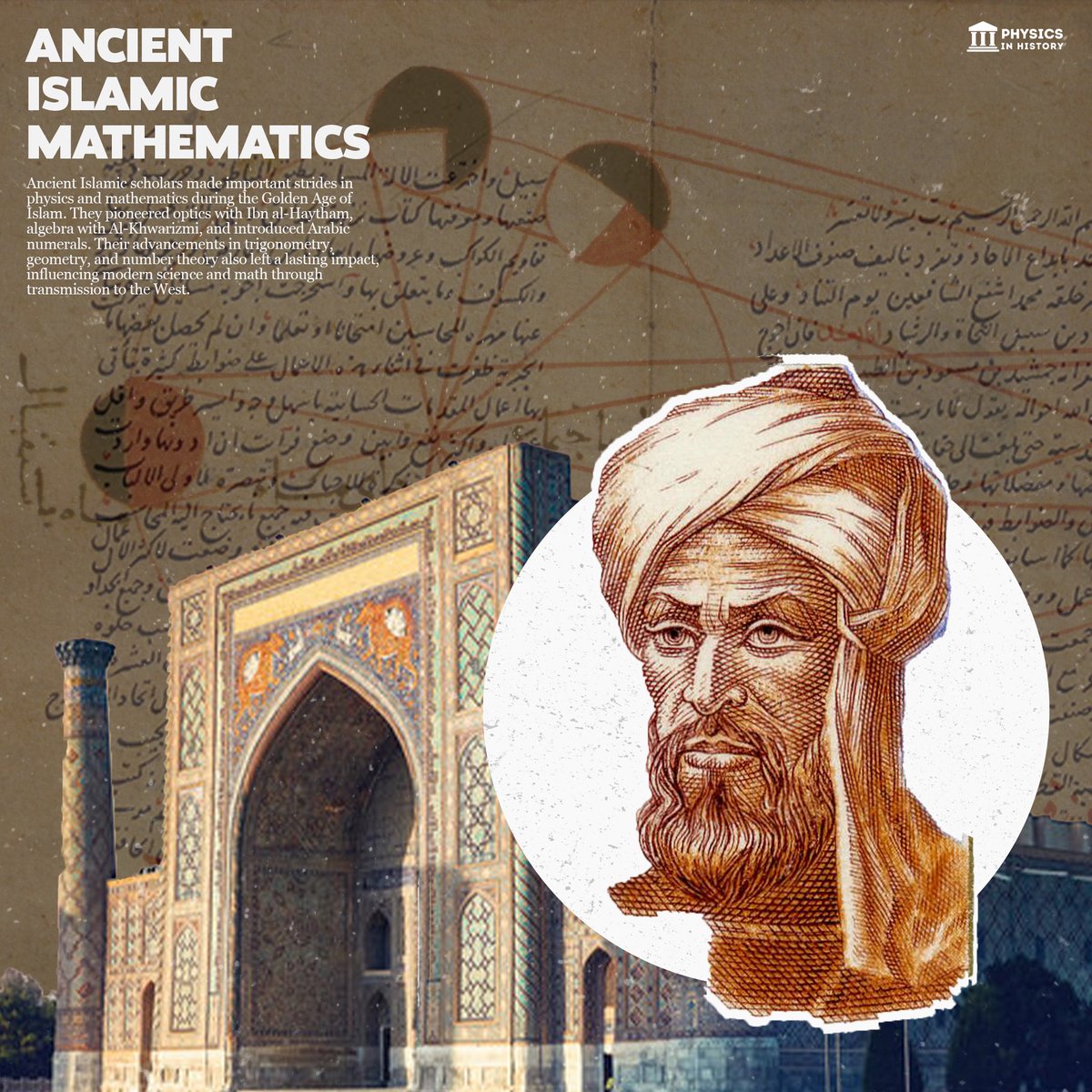
Islamic Scholars and the development of Physics and Mathematics ▲
Mathematics and physics were greatly developed by ancient Islamic scholars and scientists during the Golden Age of Islam, which spanned from the 8th to the 13th century.
Al-Khwarizmi (c. 780-850): He is considered the father of algebra, a term derived from his book al-Kitab al-mukhtasar fi hisab al-jabr wa’l-muqabala (The Compendious Book on Calculation by Completion and Balancing). He also introduced the Arabic numerals and the decimal system to the Western world, and wrote influential works on astronomy, geography, and trigonometry.
Ibn al-Haytham (c. 965-1040): He is regarded as the father of modern optics, as he made significant contributions to the theory and practice of optics, vision, and light. He wrote the Kitab al-Manazir (Book of Optics), which was a landmark in the history of physics and psychology. He also studied the laws of reflection and refraction, the nature of colors, the structure of the eye, and the mechanism of vision. He also proposed the scientific method of experimentation and observation, and criticized Aristotle’s physics.
Omar Khayyam (c. 1048-1131): He was a renowned poet, mathematician, astronomer, and philosopher. He is best known for his Rubaiyat, a collection of quatrains that express his views on life, love, and fate. He also contributed to algebra, geometry, number theory, and binomial theorem. He also calculated the length of the solar year with remarkable accuracy, and devised a calendar reform that was more accurate than the Gregorian calendar.
Al-Biruni (c. 973-1048): He was a polymath who excelled in various fields of science, such as astronomy, mathematics, physics, geodesy, geography, geology, mineralogy, chemistry, pharmacology, anthropology, history, and linguistics. He wrote over 146 books on various topics, and is considered one of the greatest scholars of all time.
He measured the radius and circumference of the Earth using trigonometry, determined the specific gravity of various substances using hydrostatics, described the heliocentric model of the solar system, and studied the motion of planets and comets.
Al-Farabi (c. 872-950): He was a philosopher, logician, musician, and scientist who wrote influential works on metaphysics, ethics, political philosophy, cosmology, psychology, music theory, and logic. He synthesized the ideas of Plato and Aristotle with Islamic theology, and developed his own system of classification of sciences. He also studied sound waves and musical harmony, and invented several musical instruments.
These contributions from ancient Islamic scholars laid the groundwork for the advancement of physics and mathematics in the subsequent centuries. Their works were translated and disseminated in Europe during the Middle Ages, playing a crucial role in the Renaissance and the development of modern science and mathematics.
1. A Canadian court has ruled that sending the thumbs up emoji can be interpreted as agreeing to a contract.
This comes after farmer Chris Achter responded to a a photo of a drafted contract sent by a grain cooperative in 2021, with a "👍".
#InformationTechnology - SEO
Search Engine Optimization (SEO) is the process of optimizing a website's technical configurations and content management to improve its visibility in search engine platforms such as Google.
#AppliedMathematics - Game Theory
Application of mathematical models to assess strategic interactions between competing rational agents called players.
#InternationalOrganizations - The Permanent Court of Arbitration (PCA)
PCA is an international organization providing dispute resolution services to the international community.
PCA is the first permanent intergovernmental organization to provide a forum for the resolution of international disputes through arbitration and other peaceful means.