This story is simple, but it nails something I see all the time in my industry.
A guy walks into a coffee shop, stuck between a latte and a cappuccino. He tells the barista:
“Anything works. I just don’t want black coffee.”
The barista is extremely busy and nods, half-listening, already reaching for cups.
A few minutes later the drink lands on the counter…
Black coffee.
Was it the barista’s fault? The place is loud, the line is moving, and the person never clearly says what they want.
So the one word that actually lands is the one that gets treated like the order.
This is called “The Black Coffee Theory.”
I’d be surprised if you never heard around you:
“I don’t want to miss the deadline.” “I don’t want another round of redesign.” “I don’t want a fight over scope or budget.”
None of that is irrational. If anything, it’s the most honest part of the job.
But that’s where it gets tricky (like that same loud coffee shop).
Between meetings, emails, site issues, and packed calendars, there’s rarely a pause to clarify what we’re actually aiming for.
And when you don’t say what you want early and clearly, the gaps get filled for you.
That’s how you end up with:
🔹 a coordination problem nobody “owned”
🔹 a deadline everyone assumed someone else was tracking
🔹 a client who feels surprised, even though you warned them three times
🔹 a team that’s working hard but somehow drifting
Focus becomes direction.
Those who do well tend to get clear fast. They then keep pulling the team back to that clarity:
What you focus on becomes the project. What you repeat becomes the culture. What you say becomes the standard.
So….
If you don’t name the outcome, don’t be surprised by what shows up at the counter! ☕️
Send this to someone who needs to name the outcome.
#Leadership #AEC #Architecture #CivilEngineering #Construction #ASCE
Antoni Gaudí didn’t design the Sagrada Familia by waiting for perfect conditions. So let’s talk about the secret of successful projects:
Antoni Gaudí designed around the imperfections (gravity, material limits, even budget), turning each constraint into part of the masterpiece.
Every great designer or builder (whether designing cathedrals, a hospital, or data centers), knows the job isn’t to eliminate problems.
Unfortunately, most teams do the opposite:
• They rename problems as “coordination issues”
• They bury them in RFIs and meeting notes
• They push responsibility downstream (the “kick the can down the road” approach)
What should be evident is that progress comes from asking:
“What’s the single biggest constraint keeping this project (or team) from moving forward?”
Then tackling it, relentlessly until it’s solved.
Have you asked yourself this question? If so, great!
Gaudí didn’t rely on blueprints alone. He built models, broke them, and rebuilt them, week after week. Each failure revealed what was structurally true.
In our industry, projects that thrive apply a similar process. And it’s NO SURPRISE:
• Identify the constraint (in schedule, budget, or design)
• Focus the team’s energy there
• Measure the outcome
• Repeat
In our industry, small problems fill your inbox.
Big problems define your legacy.
Solving these will upgrade how you build the next ten projects.
You can’t control the weather, the client’s budget, or the subcontractor’s timeline. But you can control how you prioritize, adapt, and execute.
That’s how successful projects are built.
That’s true leadership.
Don’t hope for the absence of problems, but instead expect to use your skills in the mastery of solving them in sequence.
The great builders, like Gaudí, don’t avoid friction.
They build with it.
#RandomThoughts #AEC #Civil #Engineering #ASCE #AIA #Construction #Barcelona
The AEC industry doesn’t have a labor problem.
It has a mindset problem.
Because flexibility (not headcount) is the new currency of growth.
But scalable workforce structures are changing that equation, which is something I addressed at #APWA#PWI Module #2.
A scalable and multi-generational workforce can replace rigid structures with fluid, adaptive teams, drawing from global talent pools, specialized skills, and on-demand expertise.
The secret is no longer “outsourcing”
The secret is “right-sourcing”, giving firms the ability to expand and contract seamlessly as project needs evolve.
Technology is no longer a futuristic add-on, but instead it is a force multiplier. With a growing number of firms already integrating AI for analytics, simulations, and digital twins, technology is freeing humans to focus where creativity matters most.
Yet as 44% of infrastructure skills are set to transform within five years, adaptability has become every firm’s most critical capability.
Even modular prefabrication, is now cutting timelines by up to 50%. The formula: Rethinking how we collaborate, train, and deploy.
Scalable workforces build smarter. Scalable workforces build fairer. Scalable workforces build efficiently
Scalable workforces build for change.
The future in #AEC is already scalable.
The only thing left to scale is how we think… Right?
A big thank you to #Caltrans District 11 for hosting, and to @APWATWEETS SD County Chapter and @asce_sandiego for inviting me to share insights on behalf of @BKF_Engineers.
#AEC #ConstructionInnovation #FutureOfWork #Leadership #AIinConstruction #Workforce
The U.S. faces a $3.7 trillion investment gap in infrastructure by 2033, but we have a path forward.
That staggering number comes straight from the 2025 Report Card for America’s #Infrastructure, released earlier this year. It reflects what it will take just to bring our systems (from roads and transit to water and energy) into a state of good repair.
At the ASCE National Convention 2025, we attended a session led by ASCE 2026–2027 President-Elect Carol Haddock and other experts involved in creating the Report Card. The discussion made one thing clear: while recent funding has moved our national grade up to a “C” (the highest ever), sustained and strategic investment is essential if we want to close the gap.
Key insights from the session:
🔹 Every dollar invested wisely today saves multiples in avoided costs tomorrow. 🔹 Funding is not enough; prioritization, resilience, and sustainability must guide decisions. 🔹 Collaboration between engineers, policymakers, and communities is the only way to deliver long-term results.
The $3.7 trillion figure is both a warning and a roadmap. How we choose to invest will define the safety, resilience, and prosperity of generations to come.
#ASCE2025 #ASCE25 #Infrastructure #Investment #Resilience #Sustainability #Leadership @ASCETweets@BKF_Engineers
This year’s national convention is off to an inspiring start, as President @feniosky warmly recognized the rising stars of Civil Engineering for their outstanding contributions.
#ASCE25#ASCE2025
Converge #SanDiego ‘25 will bring together an incredible community of innovators and leaders on October 16th. It will be my pleasure to join this event as a speaker. If you are planning to attend, DM me for a discount code, I’d love to see you there! Thanks @AIAPalomar & @USGBCCalifornia
The most striking insight from the “Economic Trends 2025” event by the San Diego Business Journal was either:
A. California hospitals challenged and facing billions in seismic upgrade costs to meet 2030 safety standards.
B. Major insurers exiting California due to regulatory delays.
C. San Diego’s $3.4B airport redevelopment driving regional and global connectivity.
D. The shift from China to Southeast Asia and Mexico in global supply chains.
E. AI reshaping industries, with San Diego ranked 16th for AI job postings nationally.
F. Tourism’s 30M annual visitors supporting 1 in 8 San Diego jobs.
G. Programs like SkillBridge tapping into military talent for key industries.
H. Global trade and cross-border investments continuing to grow despite geopolitical tensions.
I. The decline in foreign direct investment into China as companies diversify supply chains.
J. The rise of tariffs causing uncertainty and slowing business investment globally.
K. AI’s long-term potential to boost global productivity and redefine labor markets.
What stands out most to you? Take your pick.
One way or another, California is at a pivotal moment as the state is navigating challenges like rising housing costs and insurance premiums while doubling down on innovation in AI, life sciences, and infrastructure.
These are the kinds of conversations that spark meaningful change, particularly for what pertains to the #Architecture, #Engineering and #Construction industry; core areas of focus for the work we do at @BKF_Engineers
What does the future of rebuilding look like?
California’s new wildfire response could set the standard.
Here are my 7 quick takeaways from California Executive Order N-4-25, issued 1/12/25:
🔹 Suspension of CEQA and Coastal Act permits for faster project approvals
🔹 Rebuilding limited to 110% of original property footprint and height
🔹 Pre-approved plans and expedited permitting processes (30-day goal)
🔹 Extension of price gouging protections for building materials and services (through Jan 2026)
🔹 Focus on incorporating fire-resilient designs and defensible space
🔹 State review of building codes (Title 24) to streamline and reduce costs
🔹 Potential legislative reforms to address systemic barriers in rebuilding
The intent of this order is to accelerate recovery, emphasizing resilience, and opening significant opportunities to innovate and rebuild smarter, faster, and more sustainably.
Now, while the order accelerates rebuilding…
Could it create new challenges for the AEC industry in balancing speed, quality, and future liability?
Stuck between a billion-dollar rock and a hard hat? Growth barely moved, but the story beneath November’s numbers isn’t static.
How does a $2.15 trillion industry balance stability and opportunity?
The latest data from the U.S. Census Bureau (just released January 2, 2025) shows total construction spending holding steady at $2.15 trillion, a 3% year-over-year increase:
🔹 Residential construction continues to lead private sector growth.
🔹 Public construction dipped slightly, potentially reflecting project delays.
🔹 Nonresidential spending remains flat, signaling cautious market sentiment.
🔹 Overall spending is up 6.5% year-to-date, showing industry resilience.
As we started with 2025, the steady demand highlights opportunities, particularly in housing.
What’s your prediction? What trends do you see shaping the months ahead?
#AEC #MarketInsights #2025Outlook
December (decem, meaning “ten”) used to be just another month in the mix. Whether you knew this or not, here is why it matters.
The calendar has evolved, which is why September is no longer the 7th month, and so on. However, our habit of waiting for the “right time” to set goals still persists.
I typically work on goal-setting with my team in January—out of convenience as we start the new year. Realistically, what matters most is not when you start but that you actually start. Here are a few quick tips:
🔹 Set clear and specific goals (avoid generic inspirational goals).
🔹 Break goals into smaller steps over the year (milestones).
🔹 Review your progress regularly (ideally with a mentor) and adjust as needed to stay on track.
Progress happens when we take the first step, regardless of the date on the calendar.
The Roman calendar originally had only ten months, starting with March. January and February were added later to account for the winter gap, and were named for symbolic reasons rather than following the pattern.
One way or another, the point is: time isn’t waiting for us, and neither should our ambitions.
#GoalSetting #freshstart2025 #Goals #AEC #Engineering
“Everything”
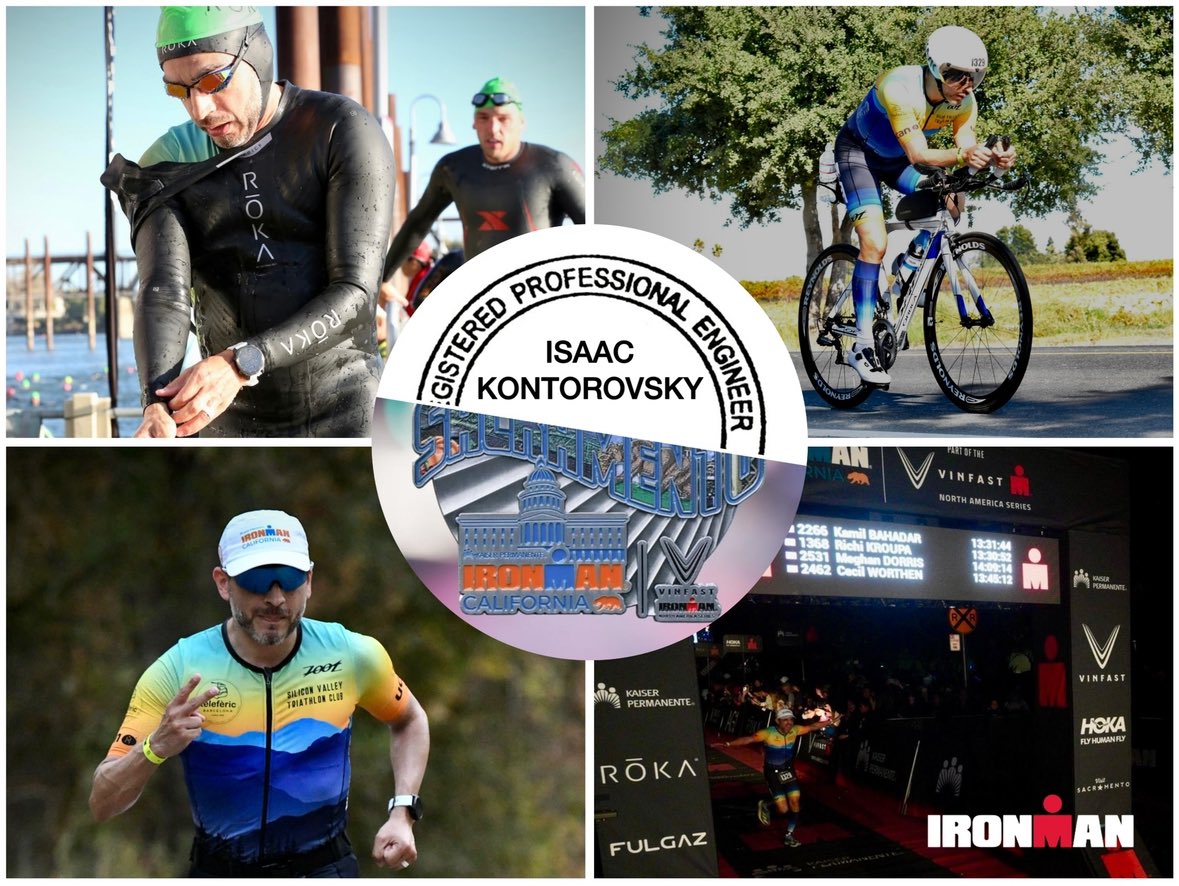
Just a few days ago, Ironman California challenged me with 2.4 miles of swimming, 112 miles of cycling, and a 26.2-mile marathon run at the end. From sunrise to sunset, it was the culmination of a long-term goal that demanded sharp focus and perseverance.
So… what’s the connection to my approach to work?
Looking back, the connection lies in the day-to-day process. The journey of finding fulfillment (and work-life balance) while tackling challenging engineering projects.
I’ll give you the secret here: True fulfillment doesn’t come from urgently chasing a goal, but from recognizing that every small action, however imperfect, contributes to meaningful progress. It’s the paradox of contrarian thinking: The less you fixate on the grand prize and the more you commit to consistent, purposeful efforts, the more likely you are to achieve something meaningful.
Long-term goals are easier to achieve when driven by a strong purpose and meaningful reason… A powerful "why."
So, find your “why”, set your goal, and embrace the small steps. In the end, they all add up to many miles.
#Triathlon #Ironman #ASCE #WorkLifeBalance #Purpose
It was an honor to speak on the national stage at #PWX2024 (APWA National Conference in #Atlanta), representing @BKF_Engineers along with Doug Fleming, exploring how to Unlock Innovation in Collaborative Public-Private Partnerships (P3’s). The Q&A session was quite engaging! It was an incredible opportunity to share insights and connect with forward-thinking professionals. Thank you #APWA @APWATWEETS and @APWAGeorgia for the opportunity. Looking forward to seeing these conversations starting to drive real change! #PublicPrivatePartnership #P3
BKF is looking forward to teaching and learning as we continue to grow while delivering inspired infrastructure throughout the industry. Be sure to catch BKF presenting Unleashing Innovation through Collaborative Public-Private Partnership
We're proud to be a sponsor of the ASCE Cities of the Future event at the Fleet Science Center in Balboa Park! Join us as we support and celebrate five young ASCE members tackling the world's most pressing challenges with innovative solutions. #BKFEngineers#BKFSanDiego#ASCE
Honored to be part of such an inspiring red carpet event at the @fleetscience Center! Looking forward to seeing the innovative solutions our young #ASCE members have developed and watching the middle schoolers shine in the Future City Competition. The CGI on the #IMAX screen is going to be amazing!
Here’s how to make sure you are set up to receiving these alerts, and make sure to share with anyone that might benefit from this:
https://t.co/dKKx1fwdY2
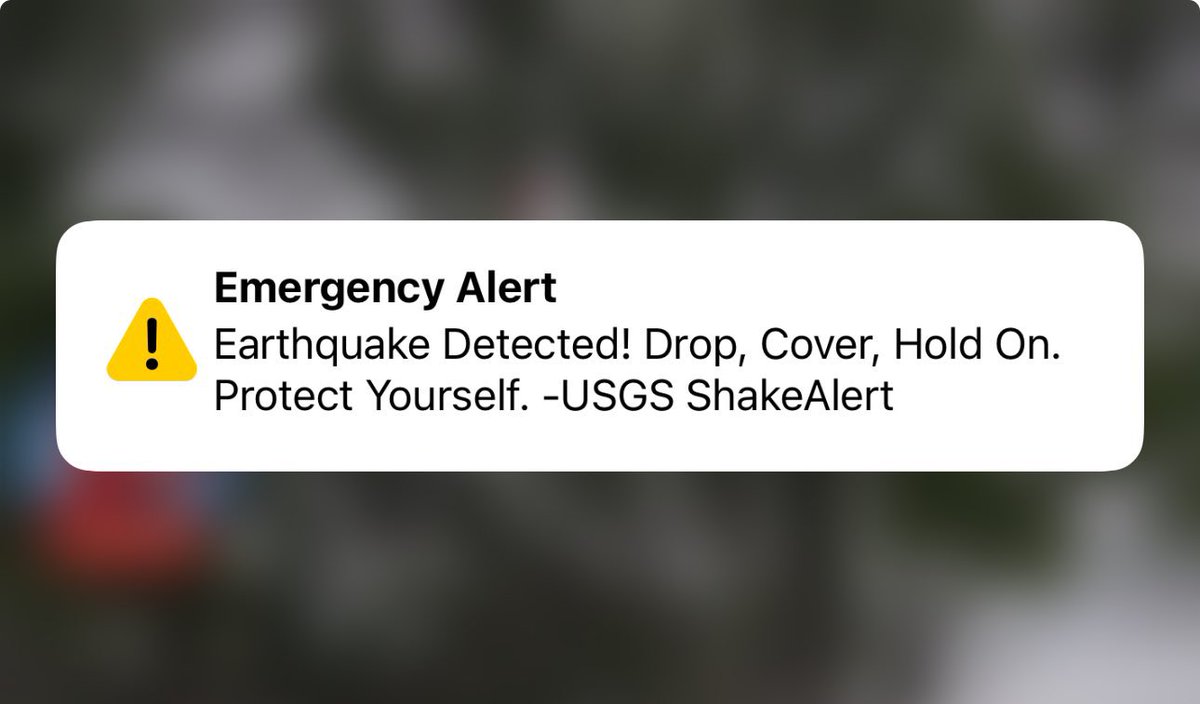
Many people received the warning 10 to 20 seconds before it happened! California’s Earthquake Early Warning (EEW) system is a game-changer. Here’s what you need to know… 🧵
California’s EEW system, known as ShakeAlert, managed by the US Geological Survey (@USGS), is a groundbreaking initiative. It leverages a network of seismic sensors to detect initial P-waves from #earthquakes, providing seconds to tens of seconds of advance warning before the more damaging S-waves and surface waves arrive. It’s not a prediction tool. It is an imminent shaking warning.
#PublicServiceAnnouncement #CivilEngineering @USGS_Quakes