Former Mayo Clinic research director and AI compliance lead Traci Tamiko Eto alleges that the globally recognized hospital retaliated against her for blowing the whistle on its disastrous implementations of AI health tools
Read more: https://t.co/5XIV4QnDCL
What does synapse position buy a neuron? We trained a dendritic network to place its own synapses on a covariance task. It clustered correlated inputs onto shared branches, and shuffling that placement destroyed performance.
Preprint: https://t.co/3Zui4an2zK
0/
This is, in many ways, the whole bet: does superintelligence help us predict our way out of the causal complexity barrier? Or is it fundamentally unpredictable? I suppose a reasonable bet could be made either way, although I do think humans overestimate their own abilities.
How does the brain know which neurons to blame when a movement goes wrong?
In machine learning, gradient descent solves this credit-assignment problem. We asked whether the cerebellum might do something similar.
https://t.co/SLSAfQwIPG
One of the biggest misconceptions people have about intelligence is seeing it as some kind of unbounded scalar stat, like height. "Future AI will have 10,000 IQ", that sort of thing. Intelligence is a conversion ratio, with an optimality bound. Increasing intelligence is not so much like "making the tower taller", it's more like "making the ball rounder". At some point it's already pretty damn spherical and any improvement is marginal.
Now of course smart humans aren't quite at the optimal bound yet on an individual level, and machines will have many advantages besides intelligence -- mostly the removal of biological bottlenecks: greater processing speed, unlimited working memory, unlimited memory with perfect recall... but these are mostly things humans can also access through externalized cognitive tools.
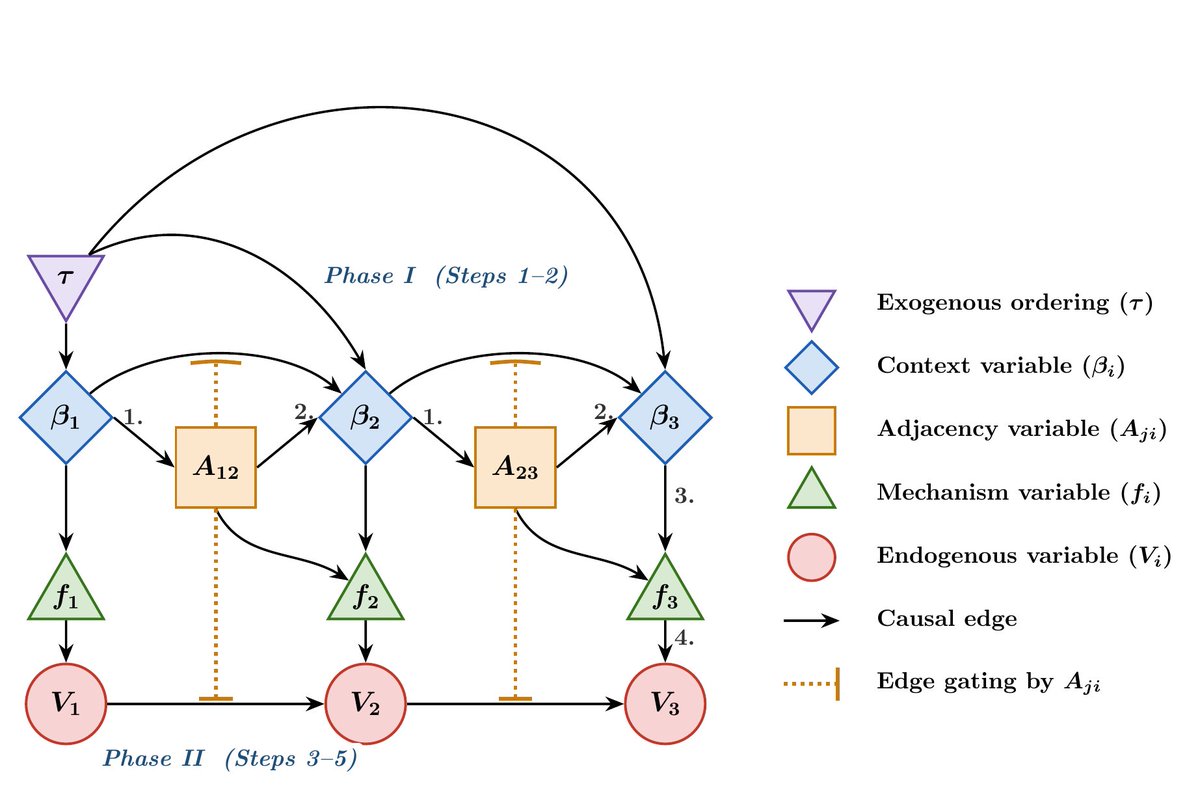
UAI 2026 paper: A genetic perturbation can change the connectome, a new policy can rewire economic links between firms. In each case, interventions change the graph itself which standard SCMs treat as fixed.
We tackle this in Partially Observed Structural Causal Models (POSCMs).
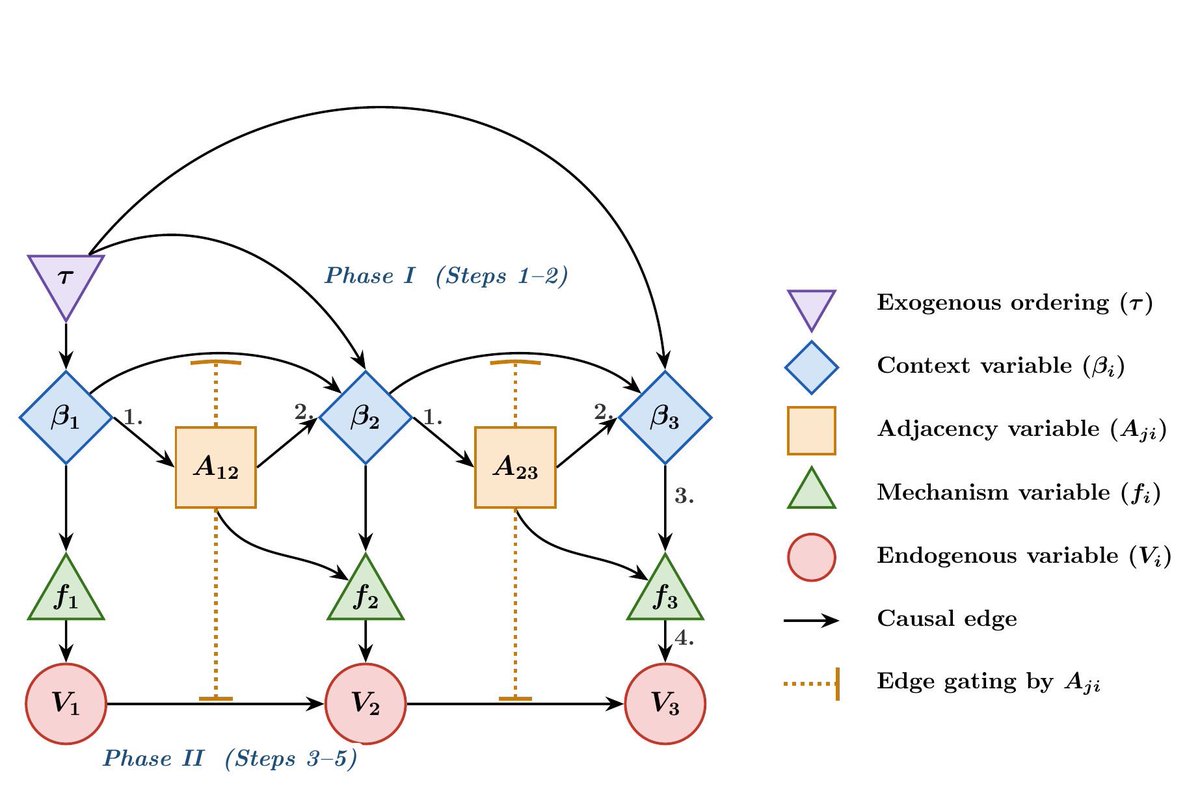
UAI 2026 paper: A genetic perturbation can change the connectome, a new policy can rewire economic links between firms. In each case, interventions change the graph itself which standard SCMs treat as fixed.
We tackle this in Partially Observed Structural Causal Models (POSCMs).
A truly embarrassing advertisement by https://t.co/9FgKNzNcr5 spotted in nyc: lots of obnoxious (and vacuous) ai-speak sentences. Vanilla Claude visuals. No one should put out anything that is not better than AI. Work with ai. Don’t have ai do your work. Only eat good dog food.
Today I'm posting a blog about another ridiculous antibody blunder. Dozens of papers in the senescence and ageing field have mistakenly used an antibody for E. coli β-galactosidase when trying to stain for the human protein with the same name. Link in next comment 👇🏼