Remember: the “elite” talk shit about Harvard constantly calling it woke but send their kids there. Bad for you but good for them. Their entire world view and policies behind them are lies.
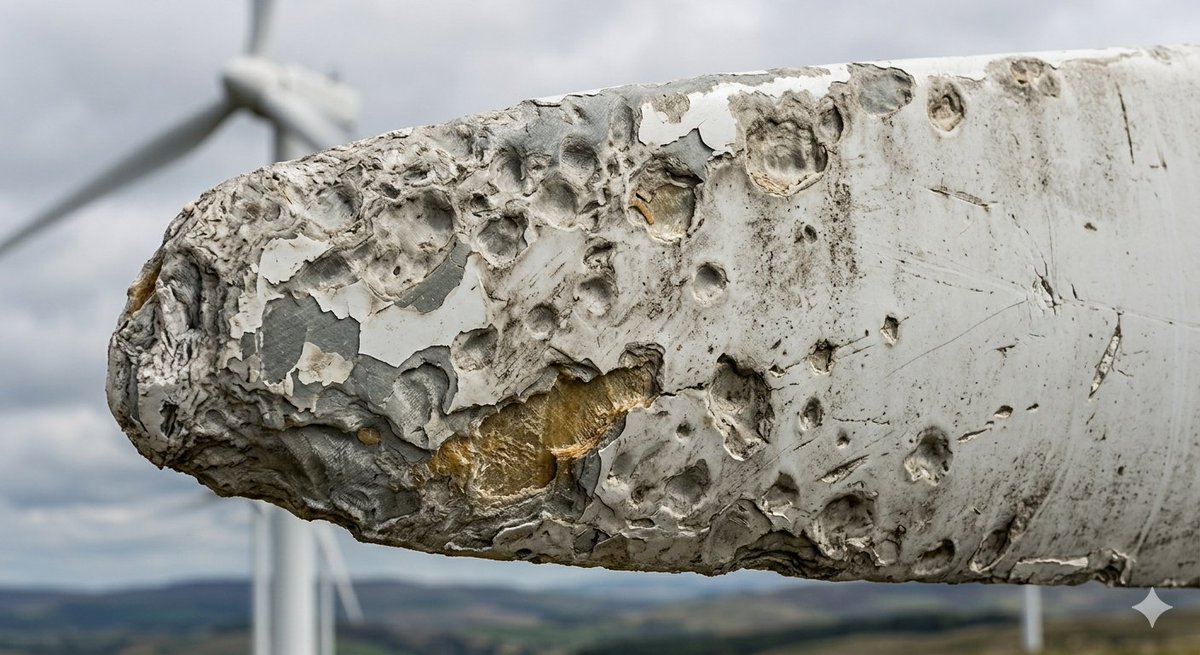
Many of the onshore wind farms along the coasts of the UK and Denmark are falling apart after only 10 years.
A study reveals that energy contributions from wind farms begin to fall sharply after only 10 to 15 years, leaving the skeletons of steel and plastic blowing in the wind.
The economic analysis reveals the lifespan of an onshore turbine is not 20 to 25 years, as stated by the wind industry itself, supported by the UK Government.
This peer reviewed British study reveals that the energy production of onshore wind farms falls substantially as they get older, due to wear and tear. Energy and environmental economist, Professor Gordon Hughes (University of Edinburgh), carried out the statistical analysis of wind farm performance data in the UK and Denmark.
He concluded that load factors, like electricity generated as a percentage of capacity, declined a lot faster than expected, suggesting a baseline 10 to 15 year lifespan. This is when the technical life of most turbines crunch to halt, and become unprofitable to continue. Rising maintenance costs makes them uneconomical.
The study found the average UK wind farm's ability to meet electricity demand had fallen by a third after around 10 years, leading to a conclusion that many are fully uneconomic to run after only 12 years.
While the wind industry generally forecasts a 25-year lifespan, the data reveals a different reality about the viability of keeping them spinning so long. Many companies now 'repower' (replace old turbines with new ones) long before the 25-year target to maximise subsidies and output. This often ends the lifespan of the original hardware much sooner.
The wind farm study is published by the 'Renewable Energy Foundation on the Performance of Wind Farms in the United Kingdom and Denmark, 2012'.
"Mr. Wonderful" (not so much) sold a melting company to Mattel for $4.2 billion, dumped his stock before the disclosure, got fired six months later, and watched the buyer write off everything he sold them. He is now on a podcast telling that as a folksy work-ethic anecdote. This guy has been running the same grift for 26 years.
The Learning Company was losing $105 million a year on $800 million in revenue when Jill Barad announced the deal in December 1998. Mattel paid $4.2 billion in stock for a company hemorrhaging cash. Kevin took over as president of the new TLC digital division on May 13, 1999. He sold his Mattel shares within weeks for roughly $6 million. The buyer was still unpacking the boxes.
In October 1999, Mattel disclosed that the division Kevin ran had not produced the projected $50 million in Q3 profit. It had lost $105 million. The stock crashed, wiping out $3 billion of shareholder value in a single trading day. The next quarter the division lost another $206 million. Mattel fired Kevin in November, six months into a three-year contract. Four months later they fired Barad too. Two careers ended cleaning up the mess he sold them.
Shareholders filed a class action. It named Kevin personally. The complaint alleged TLC had used accounting tricks to inflate quarterly revenue and claimed he cashed out his Mattel stock at the peak right before the truth went public. Mattel settled for $122 million in 2003. Kevin kept his $6 million.
Sixteen months after closing, Mattel sold The Learning Company to Gores Technology Group for $27 million. BusinessWeek put the acquisition on its "Worst Deals of All Time" list. The Telegraph called it one of the worst takeovers in modern business history. Kevin's own explanation was "the technology meltdown" and "a culture clash." Translation: anything except the man holding the microphone.
The grift never stopped. The guy who sold Mattel a $4 billion turkey, dumped his shares before disclosure, and got named personally in the resulting class action is now on television calling himself "Mr. Wonderful," lecturing founders about discipline. Same playbook, smaller targets. Sell a story, cash out, blame the room.
Mattel investors lost $4 billion. Kevin kept $6 million in cash. He kept the microphone too.
@danielcberk@codybarbo@Spotify I used to have this problem when my kids were younger. New problem @GustavS is that my daughter uses Spotify as a replacement for YouTube. YouTubers are putting their YouTube episodes up as podcasts. I banned YT for a reason, but I don’t want to have to close her Spotify acct.