“Human cognition relies profoundly on our ability to move up or down the ladder of abstraction.” D.Hofstadter.
Personal account, I don’t speak for my employer
Well, never thought I would build a computer out of breadboards but here I am, https://t.co/DI3ecUusGG :) Thank you @beneater for the fantastic videos and the kit!
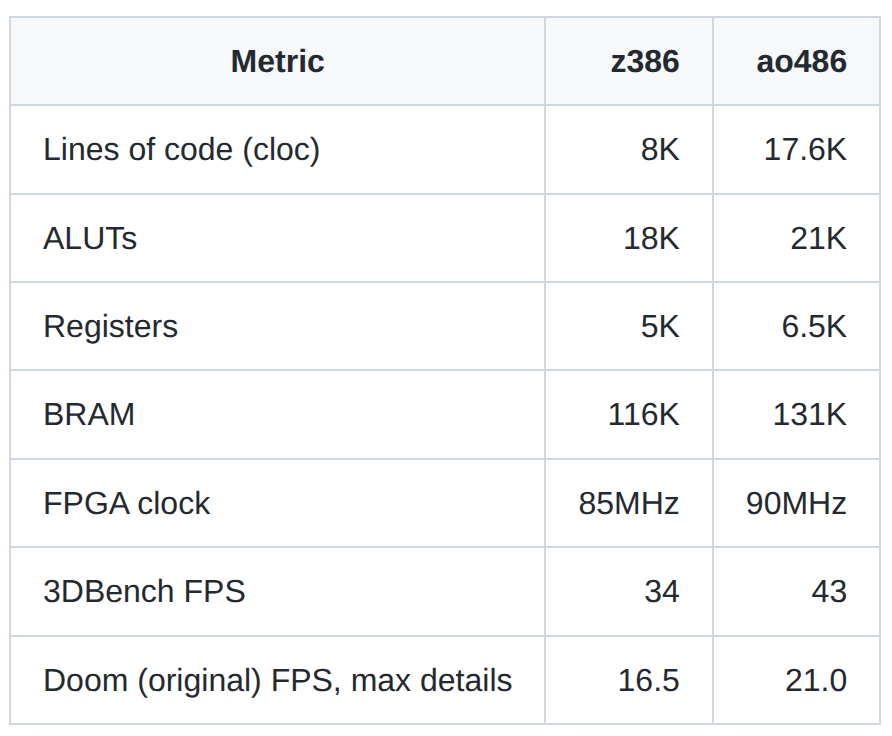
Introducing z386: an 80386-class FPGA CPU built around the original 386 microcode.
It’s more compact than ao486 and useful for studying how the 386 really worked.
Also: z386-MiSTer, an experimental PC MiSTer core built on z386.
https://t.co/3VVqkOHmMJ
https://t.co/bQ3lrZdYqm
It works 🚀
First demo of the new #386fpgacore running on real FPGA hardware (Sipeed Tang Console 138K).
VGA output, 3DBench, Norton Commander, and Turbo C all running.
Still slow and buggy — but a lot of programs already work.
78% pass rate on the real-mode 80386 instruction test set 🚀
I’d say I’m ~1/3 through real mode 386, factoring in debugging time.
The 2,000+ lines of 80386 microcode is very interesting: compared to the 8086, there are dozens of internal registers (vs <10). 1/
...are somewhat missing the point: if one of these big problems turned out to be solvable using only existing mathematical insights and technology, it would be an immense disappointment: a wellspring that we previously thought to be gushing is, in fact, dry. (5/12)
Indeed, we identify such problems as being "interestingly hard" precisely because we intuit that they represent a "gap" in our current understanding and methods. This is why crackpots who claim to solve (say) the Riemann hypothesis using "tricks" or elementary methods... (4/12)
How many *true* theorems have plausibly written but erroneous proofs? These are much, much harder to catch. My guess is that it is a not insubstantial portion of the literature. 15/n, n=15.
as a word of advice to math-curious AI watchers, if someone actually resolves a Millenium problem (or really any significant mathematical problem), they will almost certainly be able to describe the main *ideas* of the proof, even prior to complete formalization of the argument
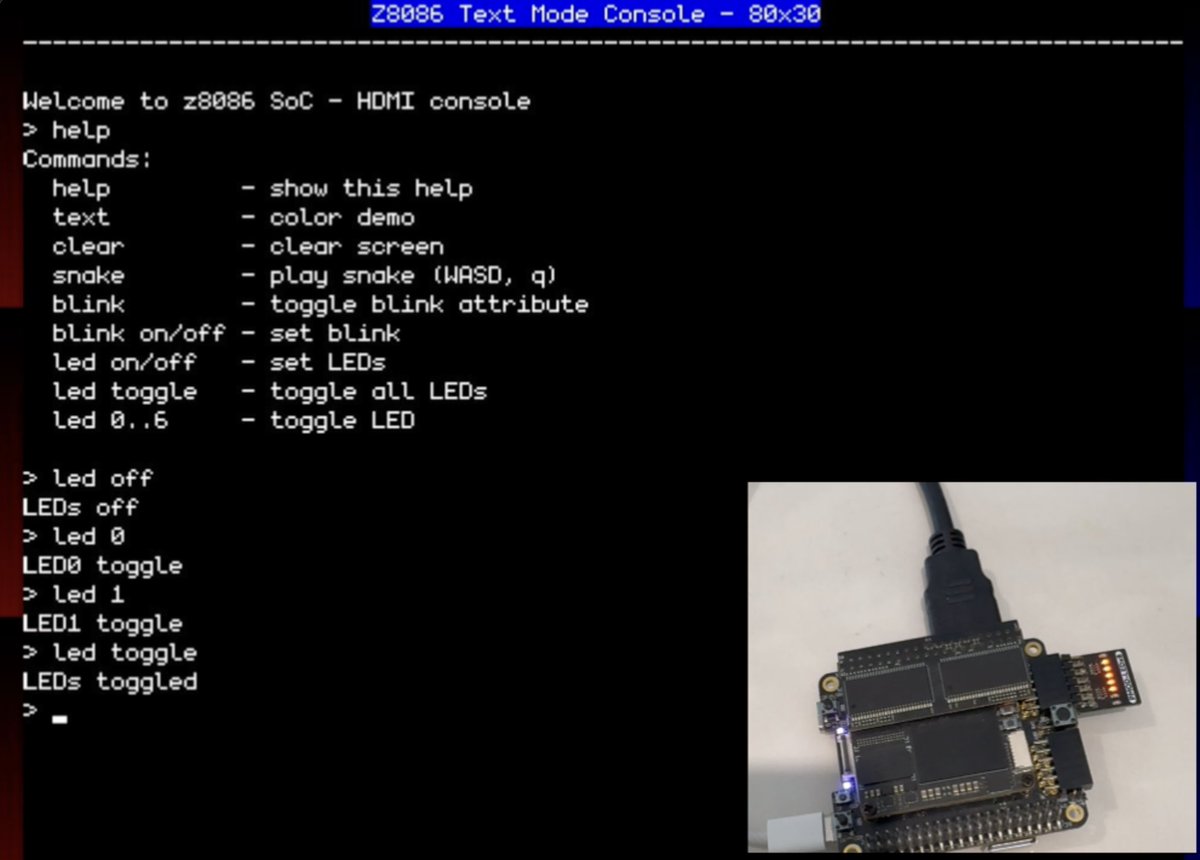
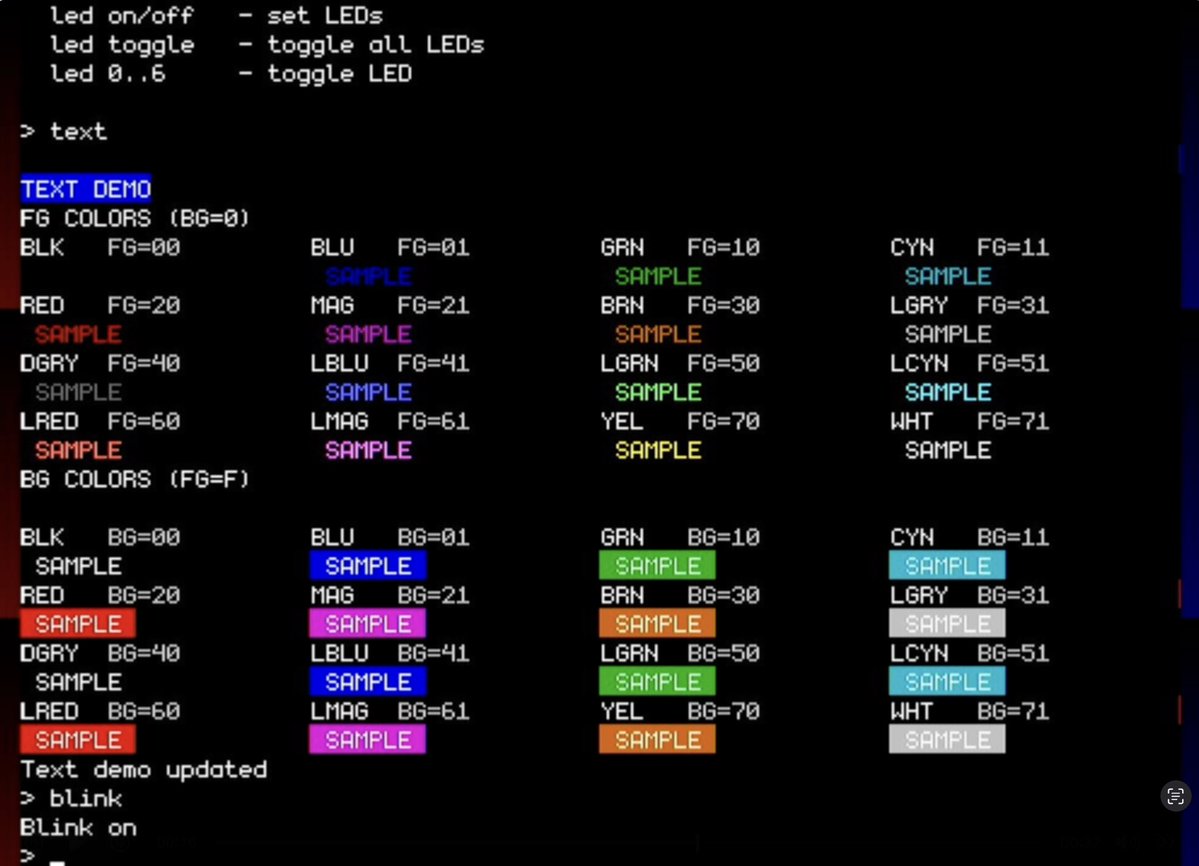
Just uploaded #z8086 v0.2 🚀 — an 8086 FPGA core running the original microcode.
This release adds the soc_hdmi demo (HDMI + UART + C firmware) and fixes a CPU bug.
v0.2 shows that z8086 is now able to do useful things.
GitHub: https://t.co/uM52d96xQN
False. The change only seems radical because the new tools offer a potentially significant productivity boost. (Perhaps 20% when the dust settles.)
This is not new. We’ve seen similar boosts many times over the last eight decades. The shifts from binary to assembler to G1 compilers (eg Fortran) to G2 (eg C) to G3 (VMs like Java) to G4 (eg Python).
Radical change was predicted for each. FUD over programming jobs was rampant.
Yet two things remained constant:
* The ever increasing demand for programmers.
* The principles of software engineering.
A longer introduction to z8086 - the 8086 soft core that runs the original microcode - and some interesting discoveries building it: ☕⚡
1. two important formulas in patent are wrong,
2. microcode greatly saves resource,
3. the 8086 interrupt bug.
https://t.co/7MMlWn52cp
Still pondering a Christmas gift for the electronics enthusiast in your life? 🎁 @MouserElec has a limited number of @RadionaOrg ULX3S dev boards: #FPGA+ Espressif ESP32 (on the other side). More in stock early next year.