Global Head @Sanofi: Techbio, AI/ML, Data Science, Precision Medicine, Bioinformatics & Drug Discovery. Ex @AstraZeneca @MayoClinic @Philips @mountsinainyc
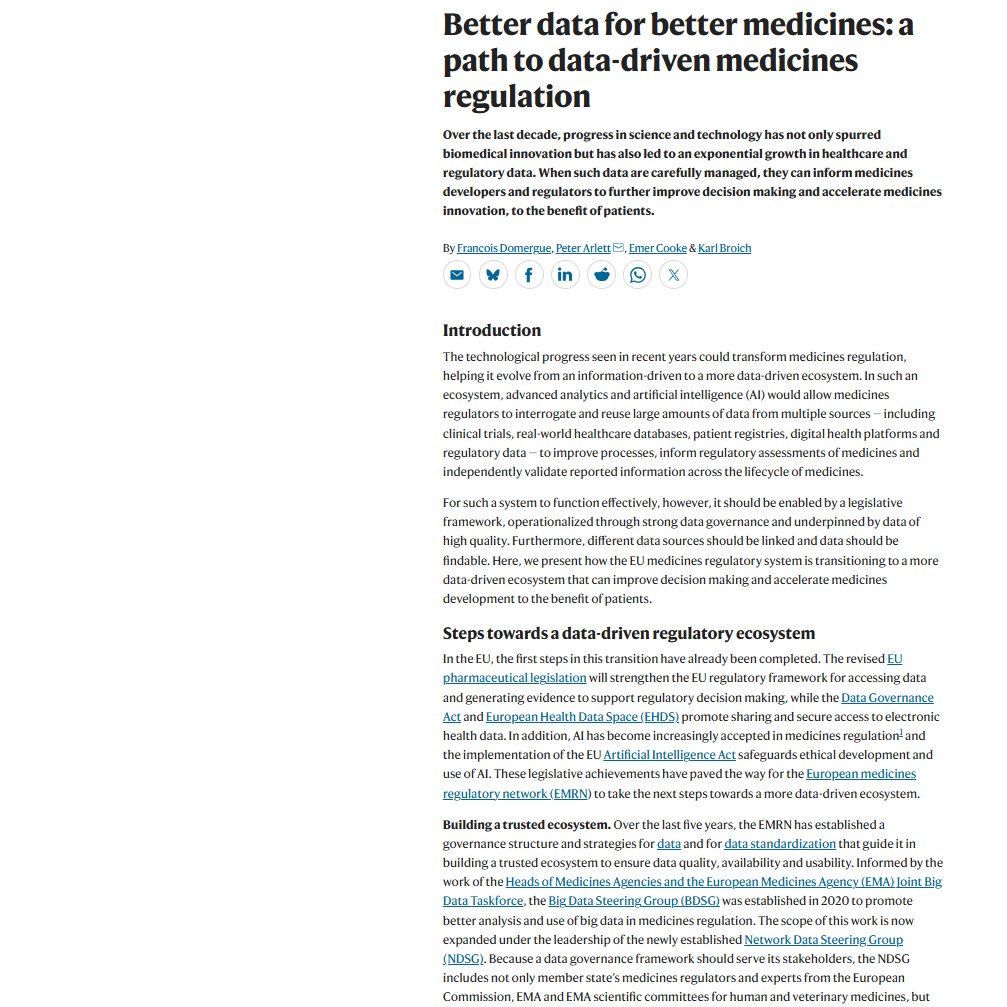
Better data for better medicines: a path to data-driven medicines regulation
https://t.co/fQwMVIrZ0i
This new Comment article highlights how the EU medicines regulatory system is becoming more data-driven
@EMA_News
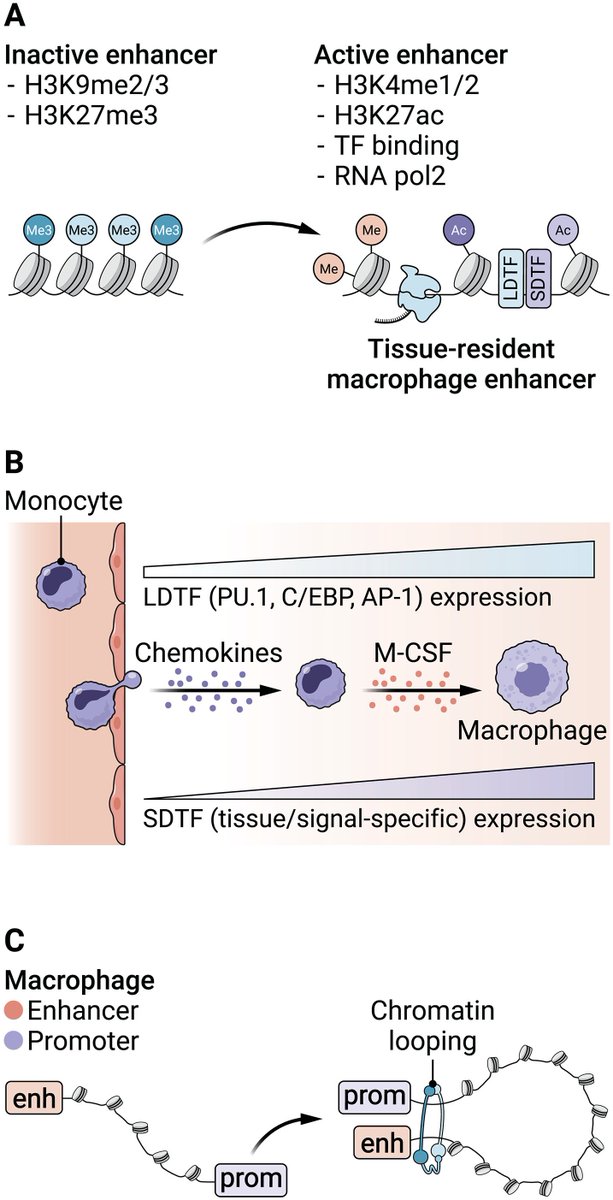
Review @SciImmunology
The transcriptional and epigenetic regulation of macrophage differentiation, specialization, and activation in health and disease
https://t.co/Woxrw6xR6N
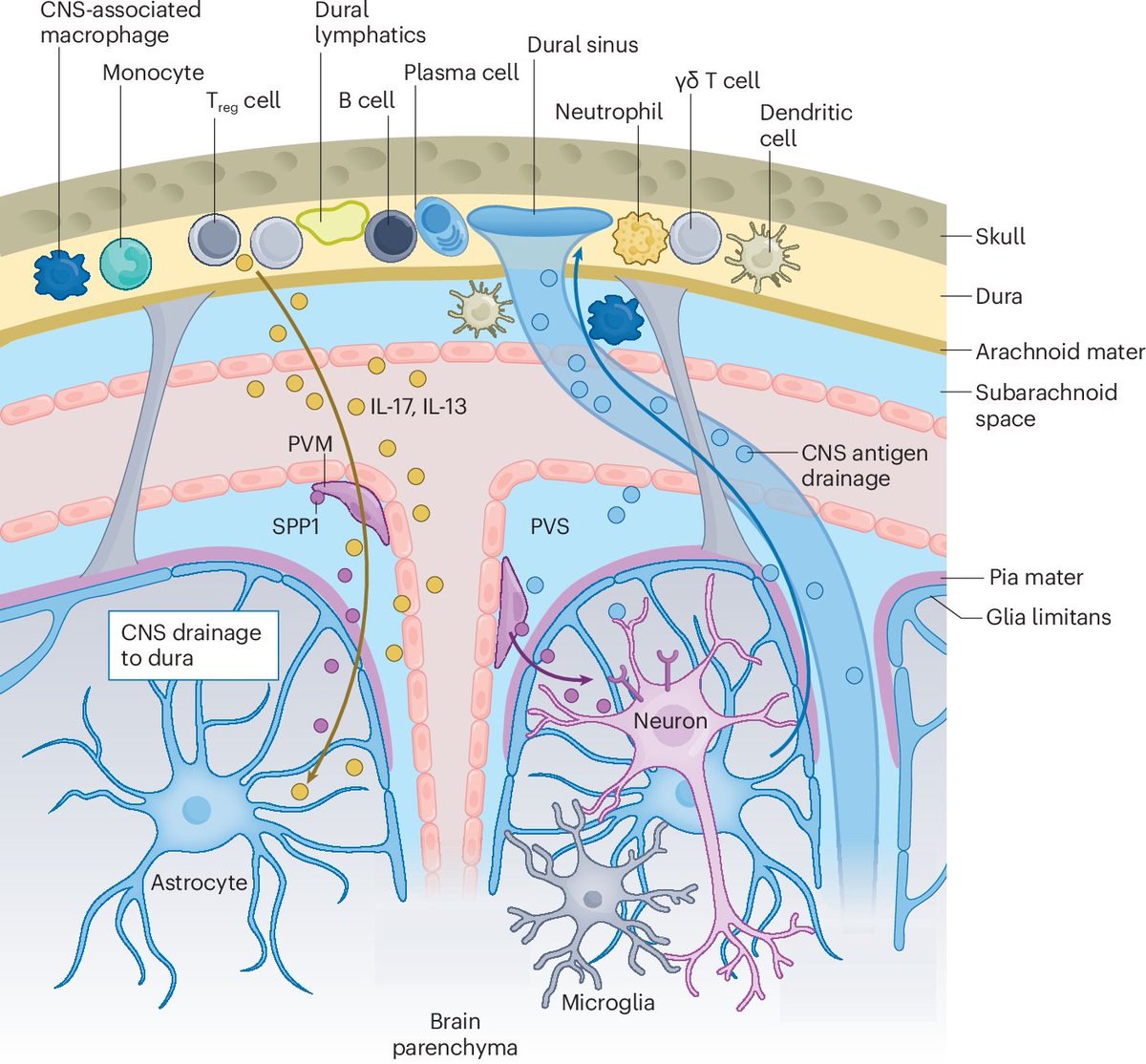
This Review in the May issue discusses how microglia integrate signals from central and peripheral immune cells in neurodegenerative disorders, highlighting therapeutic targets and biomarkers https://t.co/55hOoh2sjr
https://t.co/Og0eJo8GuS
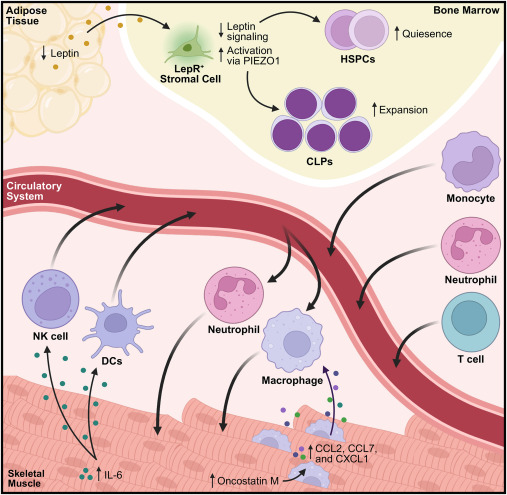
Muscle talks to the brain. 💪🧠
Exercise triggers myokines & myometabolites that boost cognition, while inactivity sends harmful signals that impair brain function. This muscle–brain crosstalk shapes behavior and resilience to aging and neurodegeneration. @WuTsaiAlliance
https://t.co/63skqJToIa
A new amazing resource for drug target explorations with genomic data was released today @Nature:
A massive meta-analysis GWAS for 249 NMR-quantified metabolites in UK Biobank and Estonian Biobank across 619,372 individuals👇
A big day for multi-agent AI to accelerate biomedical discovery, hypothesis generation, designing experiments with proof points of new candidate drugs (cancer, fibrosis, macular degeneration, antimicrobial resistance, and more)
2 @Nature reports @GoogleDeepMind@FutureHouseSF
https://t.co/u1EYvJ05VJ
https://t.co/8DpAolom0F
Large-scale data-driven pre-trained DNA models enhance performance across diverse genomics tasks
1. The paper introduces SUCCEED, a supervised multi-task DNA foundation model pretrained on 6,389 ENCODE functional genomics tracks, aiming to learn transferable regulatory representations that can be adapted across many downstream genomics tasks with minimal retraining.
2. SUCCEED’s core design is a lightweight hybrid CNN–Transformer: convolutional layers learn local motif features, while a Transformer encoder models long-range regulatory dependencies; several LLM-inspired upgrades are included (SwiGLU, RMSNorm, RoPE, and grouped-query attention) to improve stability and efficiency.
3. In a DNA-only benchmark against Enformer, SUCCEED achieves comparable or better performance despite reduced architectural complexity; for example, it improves CAGE prediction (PCC 0.76 vs 0.703), is similar on histone ChIP-seq, slightly below on TF ChIP-seq, and close on DNase/ATAC.
4. On standard short-sequence genomic benchmarks (promoter and splice-site tasks), fine-tuning the pretrained SUCCEED yields a higher mean accuracy than training from scratch (0.906 vs 0.891) and is competitive with (or better than) large self-supervised DNA language models on most tasks.
5. Interpretability analyses indicate SUCCEED learns biologically meaningful features: first-layer filters recover known TF motifs (via TOMTOM/JASPAR matching), and Input×Gradient attributions suggest predictions rely on both local motifs and distal sequence context.
6. The work emphasizes multi-scale transfer: models trained at 131 kb inputs can be fine-tuned to longer contexts (e.g., 524 kb, 1 Mb, 2 Mb) and different resolutions with strong performance; updating only the prediction head (or head + Transformer) can outperform training from scratch while reducing compute and accelerating convergence.
7. For unseen cell types, SUCCEED is tested on scATAC-seq-derived pseudo-bulk profiles from 45 human brain cell types; fine-tuning is computationally cheaper and can match (or sometimes exceed) de novo training, suggesting the pretrained model captures broadly reusable regulatory “grammar”.
8. To predict cell-type-specific epigenomic profiles, SUCCEED is extended with an ATAC-seq encoder to inject cell-state information; in cross-chromosomal and cross-cell-type evaluations, it generally outperforms EPCOT, with especially strong gains for histone mark prediction and competitive TF-binding prediction.
9. SUCCEED is also used as a prior for denoising/enhancing chromatin accessibility: it outperforms AtacWorks on bulk and scATAC-seq, remains robust under extreme low coverage (e.g., 0.2M reads), and can reconstruct accessibility from very small cell counts (reported as single-cell input approaching conventional performance that typically needs far more cells).
10. For 3D genome modeling, SUCCEED improves training stability and can predict cell-type-specific Hi-C contact patterns; notably, it can reconstruct 3D architecture without requiring CTCF ChIP-seq input, and it remains effective when driven by sparse scATAC-seq (including small numbers of cells), supporting scalable 3D inference where Hi-C/CTCF data are unavailable.
📜Paper: https://t.co/JigpGa76GQ
#ComputationalBiology #Genomics #DeepLearning #FoundationModels #ENCODE #Epigenomics #ATACseq #HiC #3DGenome #TransferLearning
Published in Nature Biotechnology, new research from the Icahn School of Medicine at Mount Sinai challenges long-held assumptions about how mRNA vaccines work—revealing that non-immune cells play a critical role in shaping vaccine effectiveness.
Led by Brian D. Brown, PhD, the study shows that cells such as muscle and liver cells help regulate immune responses, rather than relying solely on traditional immune cells. Using a novel technology to control where mRNA is expressed in the body, researchers were able to enhance vaccine performance—significantly improving anti-tumor responses in preclinical lymphoma models.
The findings introduce a powerful new framework for designing mRNA vaccines and therapeutics, with implications for cancer immunotherapy, infectious disease, and gene-based treatments. By fine-tuning where and how mRNA is activated, scientists may be able to create more effective—and more precise—next-generation therapies.
Read more here: https://t.co/BMkBMrqMSe
Bridging boundaries: making drug repurposing the new normal
https://t.co/o04c3ZFOUO
This new article discusses approaches to overcoming systemic challenges in drug repurposing, enabling the approach to contribute more to new therapies, especially for rare diseases
Shifts in pharma’s therapeutic area focus
https://t.co/vPyYrDAQqp
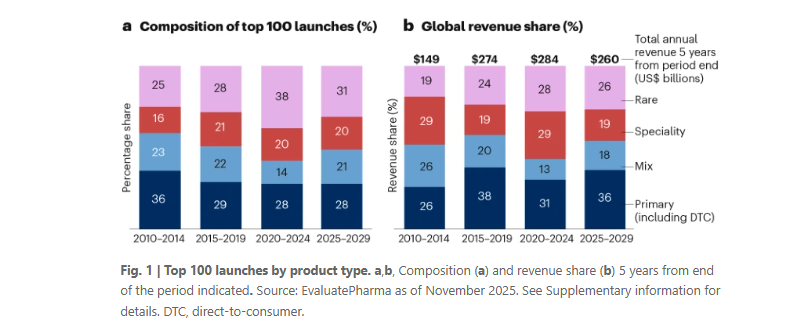
This new article analyses the evolution of the therapeutic area focus of large pharmaceutical companies, as well as phase III resourcing and the composition of drug launches