Lets talk abt Life & everything that grows with it - Stocks, Plants, Books, Songs, Emotions,Solutions, grey hairs...
Lets see colours.. not just black & white.
"Dancing is very bad behavior only when it is Indians doing it in foreign places. If foreigners join in, it becomes an art and celebration of life." - Self hating, Low self-esteem, colonized sepoy minds of India.
I'm finally reading Dune. This quote, which is in the first few pages, hits hard:
"Once men turned their thinking over to machines in the hope that this would set them free. But that only permitted other men with machines to enslave them."
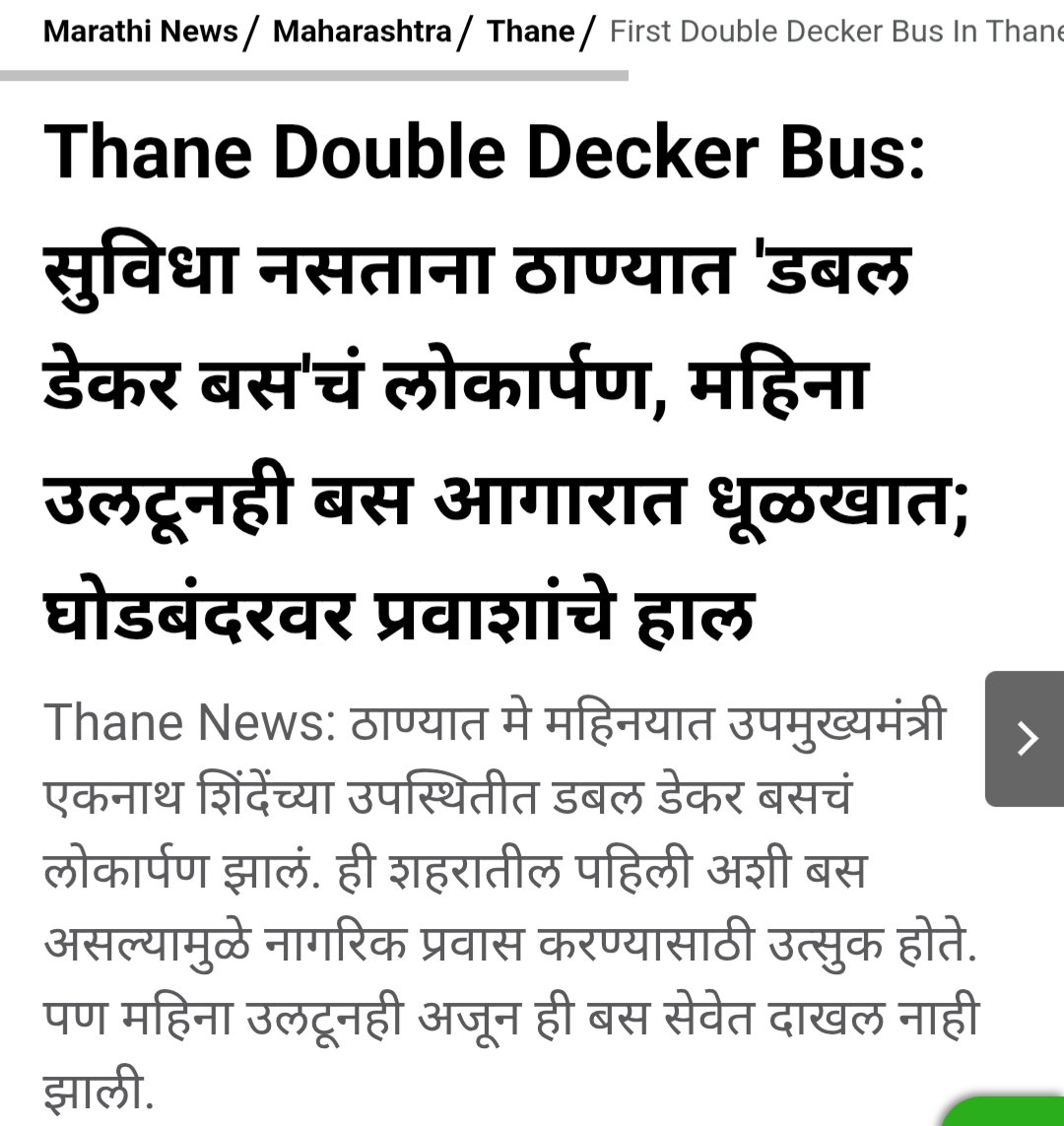
Thane politicians from all parties, including Deputy CM are letting the city down big time. All infra projects are crawling, concretization is in mess, GB road is disaster after removing service lanes, and unnecessary giving in to brainless protest against Ring metro. 😔
The Thane elected ministers did a demo for pre elections to fool real estate industry and the general public by taking two MRS1 trains from Line 7/2 and placing them on the line. The trains are rotting there. They may not be even compatible when the full Alstom signalling thing gets going. But no one bothers. One of the Thane elected ministers is also a builder with upcoming properties around the stretch of the line.
Subhash Kak's article on Bhirrana is essential reading. I would like to add one dimension which, from my maritime perspective, is important.
Bhirrana isn't just the world's oldest city that we know of, but the origin of commercial civilisation (as we know so far).
The standardised weights and measures found at Bhirrana, with identical ratios replicated across the entire Indus-Sarasvati world, predate similar systems everywhere else on Earth. When Dilmun (modern Bahrain) became the great entrepôt of the ancient world, it used Indus-Sarasvati weights and measures. But there is almost certainly more. The ruins found in 2012 in the Gulf of Cambay, widely believed to be Dwarka, likely predate even Bhirrana.
Archaeologists have found Indus-Sarasvati seals throughout Sumer. But no Sumerian seals in Indus-Sarasvati lands. Trade flowed outward from India. India originated the ancient world's commercial network.
Bhirrana's firing kilns reached 900–1000°C with controlled temperature adjustment. Its water filtration used sand, gravel, and charcoal. Its city grid had planned drainage. It predates Mesopotamia by millennia.
Those full-arm bangles from 7,500 years ago that women in Rajasthan and Gujarat wear today mean the tradition never broke. No invaders broke it. Continuity is the most significant trait of Indian history.
The AMT theory asks us to believe that a tiny group of steppe nomads from a region with roughly 7% of India's population swept through the most densely populated landmass in the ancient world and erased its language, culture, and memory. There is no historical parallel for this anywhere, ever.
I have acknowledged Subhash Kak in the Epilogue of my just published The Ascent of Maritime Trade, which updates fast changing archaeological and linguistic evidence since my first book.
This 4,500-year-old terracotta dice from the Indus-Saraswati Civilization is a powerful reminder of India’s living heritage. Dicing is also mentioned as a popular game in Rig and Atharva Vedas (two of the four sacred Vedic scriptures).
From symbols and craftsmanship to rituals, yogic practices, and collective memory, numerous elements of ancient Indian civilization continue to thrive in the daily social and religious life of Indian society across regions and communities.
Civilizational inheritance is not just about geography or ruins, it is defined by living customs, symbols, rituals, and unbroken cultural consciousness. India is the enduring living continuity of the Indus-Saraswati Civilization.
#IndusSaraswatiCivilization #AncientIndianHeritage
@priyasamagod@coolfunnytshirt Looking at people outraging at this, perhaps society should go towards renting people to outrage on hourly basis... oh isn't that already PR model? Never mind.
The market continues to underestimate the AI slop problem and what it means for enterprise adoption and spending: "Two engineers who built the core of the OpenClaw AI agent have a stark warning: The artificial intelligence supposedly capable of replacing well-paid software developers is flooding the world with bad, potentially even dangerous, code...“You have infrastructure that’s falling apart, and you have software that’s now very, very buggy compared to before,” says Mario Zechner, creator of Pi, the agentic harness inside OpenClaw. “We can play this game for a couple more months, or maybe even years, but eventually it will catch up to us”...Their core message: These systems are supposed to make senior engineers so productive that companies can lay off junior engineers, but in reality, many companies are trading near-term productivity for long-term woes. Not only does the pipeline of junior talent dry up, but residual effects include buggy software, service outages, security vulnerabilities and mounting technical debt."
I caught up with an old friend this week. He works for a large media company. Last year, AI use was mandated from the top down. This year, management pulled back and AI use is only recommended on a case-by-case basis. The productivity drag of slop was core to the pivot. As I warned in my December report on "GenAI & Productivity" (https://t.co/kEx5Z4BbRz):
"To sum up the weakness: genAI’s intellectual shortcomings lead to flaws in work products while at the same time compromising the organizational expertise required to mitigate the flaws. It’s a weakness that appears to be holding back genAI adoption for use cases far beyond computer programming...Often as we researched this report, self-interest was apparent in how thought leaders glossed over genAI’s current weaknesses, whether it’s the technologists selling genAI applications, the consultants poised to profit off of guiding companies through genAI transformations, or the investors whose future returns depend on genAI-driven outperformance. The dominant message is that the challenges are transitory and soon-to-be resolved. The technology is improving at a rapid rate. Companies recognize the steps they need to take to unlock genAI’s ROI potential so they’ll act quickly to resolve them.
We believe this is the most significant misguided genAI assumption priced into markets today. GenAI is delivering ROI already for many use cases across industries. However, for it to truly scale across industries and unlock the game-changing productivity gains many investors expect, significant weaknesses need to be overcome."
Learn more about Sage Road Research: https://t.co/Wgwz2xmY1y. Interested in subscribing? Message me.
WSJ link: https://t.co/u0iqlydxfS
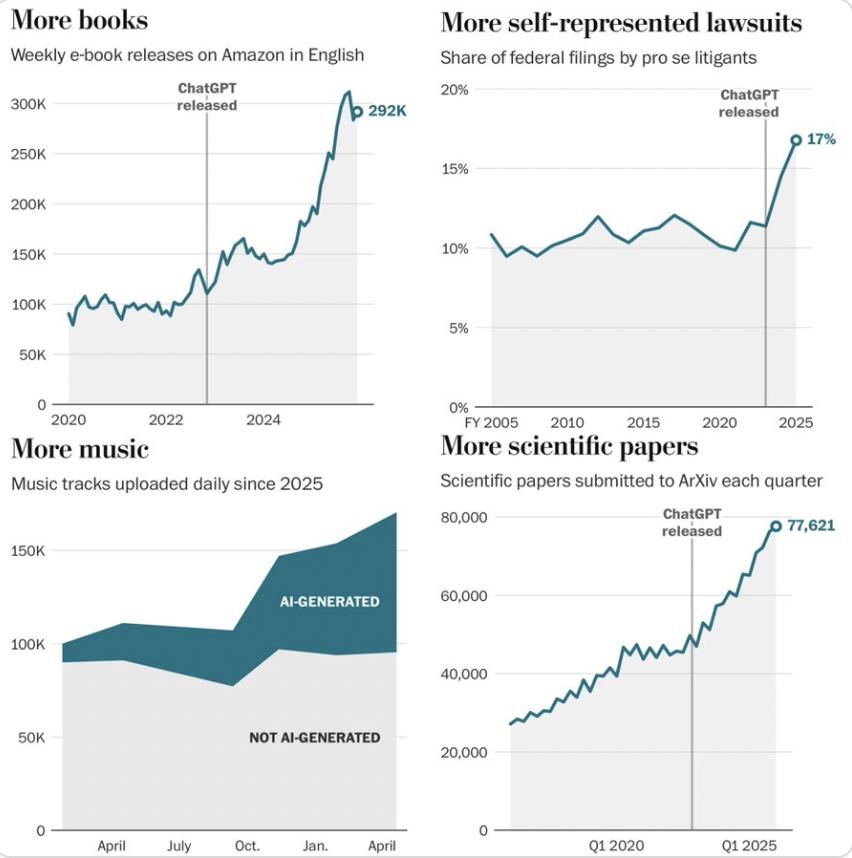
Chart link: https://t.co/6EB63MzkvW
Did you know that the U.S. defaulted on its sovereign obligations in 1971 when it unilaterally reneged on dollar-gold convertibility.
Russia defaulted in 1998 and 2022.
Argentina: 9 times since independence.
Pakistan: required IMF bailouts 23 times.
Greece defaulted in 2012.
And India? Zero defaults. Not even in 1991!
Yet Western investors classify India as "emerging risk" and call U.S. Treasuries the "risk-free rate."
This isn't risk analysis. This is cognitive bias a la Daniel Kahneman's book "Thinking, Fast and Slow". Humans systematically overweight culturally proximate information while underweighting statistical patterns that don't fit our mental models.
Western strategic planners trust Western partners not because the data supports it, but because the cultural markers feel familiar.
Three facts that challenge everything about how we assess partnership risk:
FACT 1: Across 5,000 years of recorded history, India has rarely waged wars of territorial conquest. Not in 3000 BCE when the Indus Valley Civilization had technological superiority. Not in 1000 CE when Indian mathematics and metallurgy exceeded Europe by centuries. Not in 2026 when it possesses nuclear weapons and the world's 4th-largest military. Not in 2047 when it projects to be a top-two economy.
Compare: China (annexed Tibet 1950, 14 territorial disputes, South China Sea expansion). Russia (Georgia 2008, Crimea 2014, Ukraine 2022). Europe (500 years of colonial conquest across three continents). U.S. (military interventions in 20+ countries since 1945).
This pattern is observable strategic behavior anchored in the Arthashastra, Kautilya's 2,300-year-old treatise arguing that short-term territorial expansion undermines the systemic conditions for sustained prosperity. The concept of "mandala" (circle of states) recognizes that each power's long-term interest depends on system equilibrium.
FACT 2: India has never defaulted on debt, treaties, or security guarantees since independence in 1947. The most revealing test: 1991 balance of payments crisis. Reserves fell to $1.2 billion = just three weeks of imports. Default appeared certain. Instead, India implemented painful reforms, honored every obligation. India didn't use political costs as an excuse to default. Commitments were kept.
This behavior isn't accidental. It's anchored in the Sanskrit concept of ṛṇānubandhaḥ, that obligations are metaphysically binding across time. The Mahabharata established 2,000 years ago that rulers who break commitments violate cosmic order and create systemic instability.
Philosophy became institutional architecture: investment-grade credit through multiple crises, $600B forex reserves (6th globally), zero defaults on government securities across 77 years.
FACT 3: During COVID-19, India exported 300 million vaccine doses to 110 countries while its own vaccination was incomplete. 96 countries received doses free through "Vaccine Maitri."
Meanwhile: U.S. ordered 1.2 billion doses for 330 million people (4x population). EU ordered 4.6 billion for 450 million (10x population). Canada ordered 400 million for 38 million people (10x population).
Western nations didn't begin international distribution until domestic targets were substantially met.
The distinction? India's Economic Survey 2020-21 quoted Sanskrit: "āpadā hi prāṇa rakṣā hi dharmasya prathama aṅkuraḥ" (in calamity, protecting life is the first duty). Not Indian life. Life in general.
This aligns with Vasudhaiva Kutumbakam (the world as one family), not as rhetoric but as policy. India supplies 60% of global vaccines and 20% of generic medicines normally, maintained production during its own constraints, built digital public infrastructure (UPI processes more transactions than all nations combined) and offers it open-source to developing countries.
WHY THIS MATTERS NOW:
Every CFO, sovereign wealth fund, and policymaker is asking: "Who can we depend on for the next 50 years?"
Ukraine shattered the illusion that economic integration prevents aggression. COVID exposed single-source dependencies. Taiwan reveals semiconductor concentration risk.
The global economy is re-optimizing from efficiency to trust.
But here's where Kahneman's research becomes critical: most strategic planners are making decisions using "System 1" thinking (fast, intuitive, pattern-matching based on cultural familiarity) rather than "System 2" thinking (slow, analytical, data-driven assessment of long-horizon behavioral patterns).
The result? Systematic mispricing of partnership risk.
Strategic planners face a choice:
- China: manufacturing efficiency + demonstrated willingness to weaponize interdependence (sanctions on South Korea over THAAD, Australia over COVID inquiry, Lithuania over Taiwan, Belt & Road debt traps in 60+ countries)
- Russia: resource access + repeated weaponization (invaded Ukraine despite economic integration, cut gas to freeze European cities)
- U.S.: innovation + extraterritorial enforcement (billions in fines on European banks for transactions legal in Europe, CLOUD Act overrides local privacy laws, "America First" tariffs hit Canada, Mexico, EU alongside rivals)
- India: 5,000-year track record of territorial restraint + zero defaults + systemic thinking during crises +
challenges (infrastructure gaps, bureaucratic complexity, uneven state capacity).
The question isn't perfection. It is: which risk profile aligns with 50-year partnership objectives when analyzed through System 2 rather than System 1 thinking?
THE UNCOMFORTABLE TRUTH:
If India's pattern suggests lower long-duration risk, why is trust in India still "emerging"?
Kahneman would predict exactly this outcome. Three cognitive biases at work:
1. **Availability bias:** We assess risk based on vivid, recent, culturally proximate information. NATO expansion incorporated Poland, Czech Republic, Hungary rapidly because they registered as "European." India's democracy, rule of law, English-language business environment gets discounted because cultural markers differ.
2. **Confirmation bias:** Western institutions have decades of frameworks built around current partnerships. New data contradicting established models gets filtered out rather than integrated.
3. **Status quo bias:** Existing relationships are comfortable. The U.S.-Europe alliance, U.S.-Japan partnership, Five Eyes intelligence sharing operate with established protocols. Structural change requires crisis-level disruption to overcome inertia.
The crisis arrived.
For boards evaluating long-term partnerships—semiconductors, pharmaceuticals, digital infrastructure, maritime security, critical minerals—India presents a risk profile worth systematic, System 2 analysis.
Because of demonstrated behavior across sufficient time horizons to be statistically meaningful.
In an era of fragmentation, weaponized interdependence, and trust deficits, historical patterns become predictive indicators.
Kahneman spent decades showing that intuitive judgments systematically diverge from statistical reality. Strategic partnership assessment is no exception.
The question is: Are we assessing risk based on data, or based on what feels familiar?
In the 21st century, power matters. But trust may matter more.
And trust should be measured by track record, not by cultural proximity.
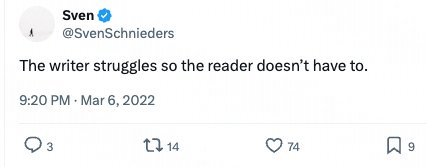
The real sign of AI writing is not superficial stuff like “It’s not X—it’s Y”. It’s the hollowness. Polished writing but relatively mundane ideas. The giveaway is that you’re less impressed when you read it the second time. With good writing, it should be the other way around.
I’m not sure this is inherently about AI. It’s more about the fact that people tend to turn to AI when they don’t have much to say.
Reading text that has the syntactic smell of AI is mildly annoying, but when I read hollow writing I feel the writer is wasting my time, which is much more frustrating. So don’t do it. People are unlikely to respond to your email or subscribe to your newsletter or whatever you’re trying to get them to do. And they’ll probably remember that you betrayed their trust as a reader.
Zero logic in #thane ring metro protest by Hiranandani residents. Let's hope @Dev_Fadnavis and @mieknathshinde will not let an important infra project get hijacked and delayed.