Hi all! Our rapid rehousing service coordinated entry hotline number recently changed to 253-441-4053 (Previously 253-441-4064). The hotline is available from 9:30am-3:30pm (Previously 9:30am-4:30pm). Let us know if you have any questions!
KWA serves all Western Washington counties and is looking for compassionate in-home caregivers. Thanks to our team members, Laci and Traci, for getting the word out in Pacific County.
Apply in person or online at https://t.co/r4IYuDN12C
Unsure if you qualify for the Basic Food program? You may qualify for benefits if you meet the limits for household income: Household of 1: $25,760. You can call any of our offices at: Tacoma: 253-536-3020, Federal Way: 253-946-1995, Lynnwood: 425-742-8097. We'd love to help!
What a night! We had an amazing time celebrating our 50th anniversary this past weekend. Thank you to everyone who came and celebrated half a century of caring for our community and serving all people. Thank you to our sponsors, program speakers, and MadCap marketing/event team!
Thanks for joining us as we raised awareness for DV this October. KWA’s DV services include a 24/7 crisis hotline, confidential shelter, rapid rehousing hotline, and prevention program. Learn more: https://t.co/9lIZZEnGeg
Affirmations for domestic violence survivors: No one deserves to be abused. The abuse was not your fault. You are not alone. You are worthy of good and healthy love. Your trauma and pain is valid. You have a voice and your community cares about you. #KWAcares
One framework for healthy relationships is the Equality Wheel developed by the Domestic Abuse Intervention Project. The wheel describes the qualities of a healthy relationship. View the wheel here: https://t.co/nhNzQ0QG5K
The experience of surviving relationship abuse is traumatic, but healing is possible. Many survivors take first steps toward healing by recognizing the effects of trauma, understanding the importance of self-care, and seeking professional help. Source: https://t.co/5ifFV2YHYo
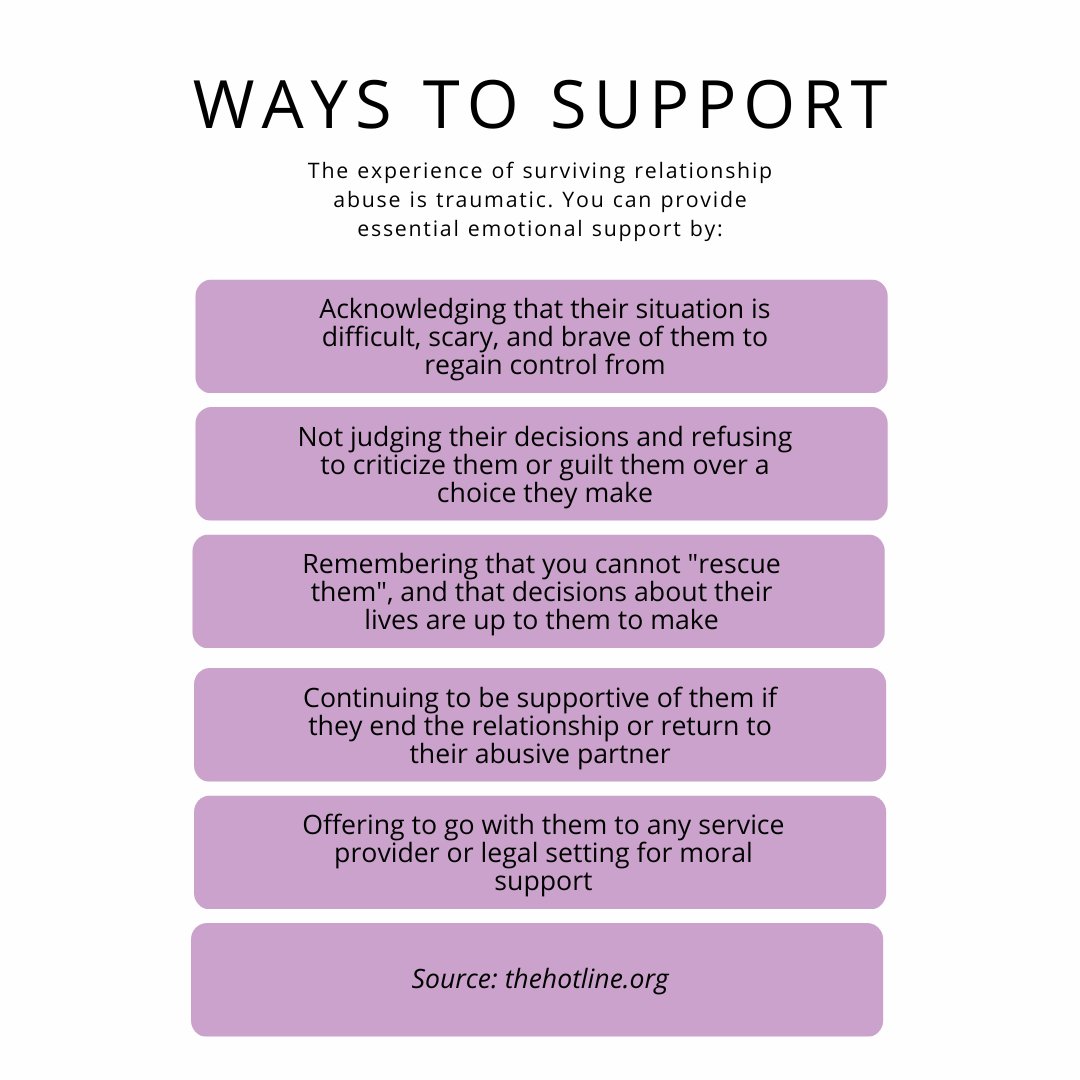
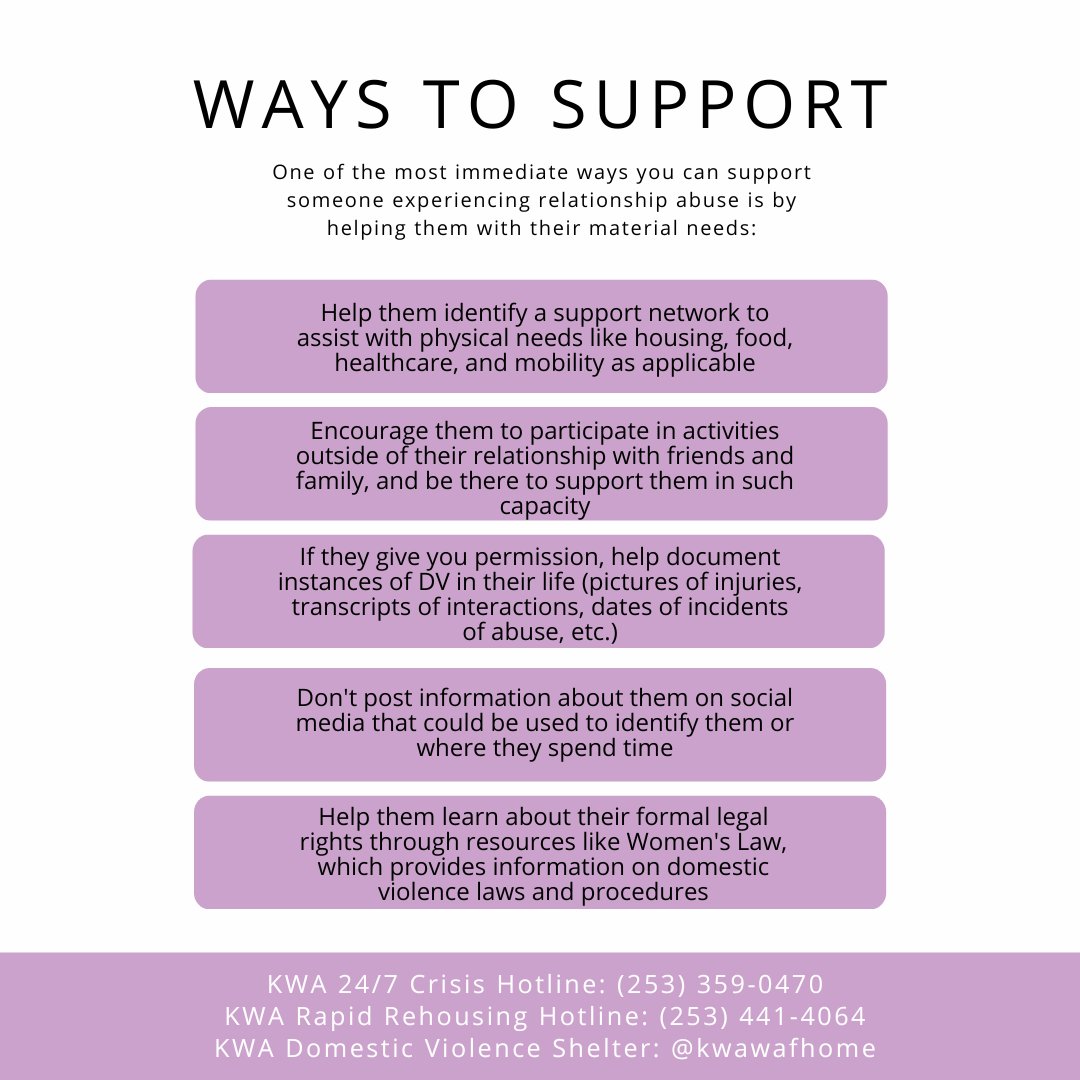
If a friend, family member, colleague or neighbor confides in you that they are experiencing domestic abuse, there are ways you can help. You can provide essential emotional and material support by: https://t.co/4GJqL3qJmF
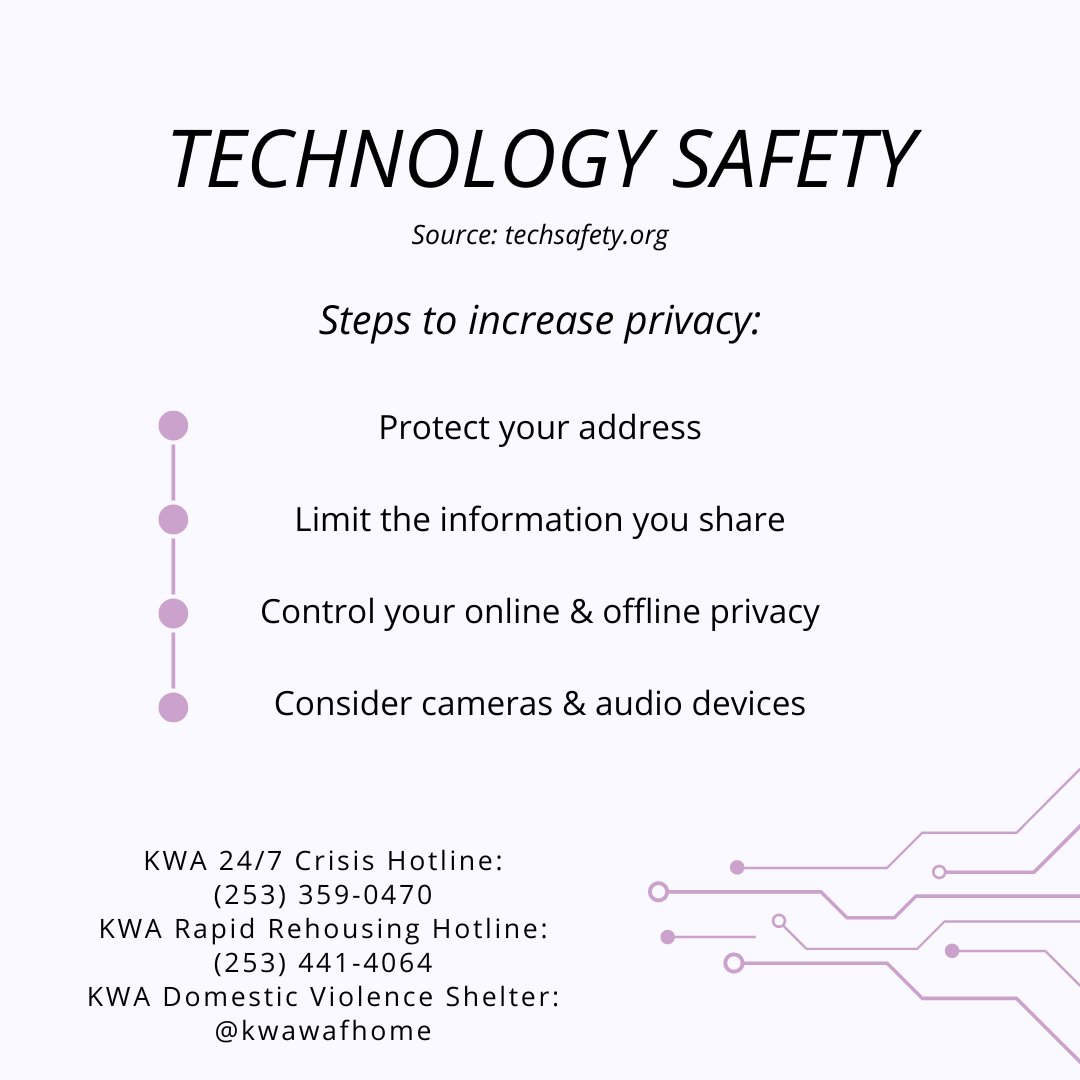
The safety of survivors is often compromised by abusers' use of technology. Technology planning can be changing passwords, checking your device settings, protecting your location, controlling privacy, and limiting the information you share. Learn more at https://t.co/psIDx8DAdz
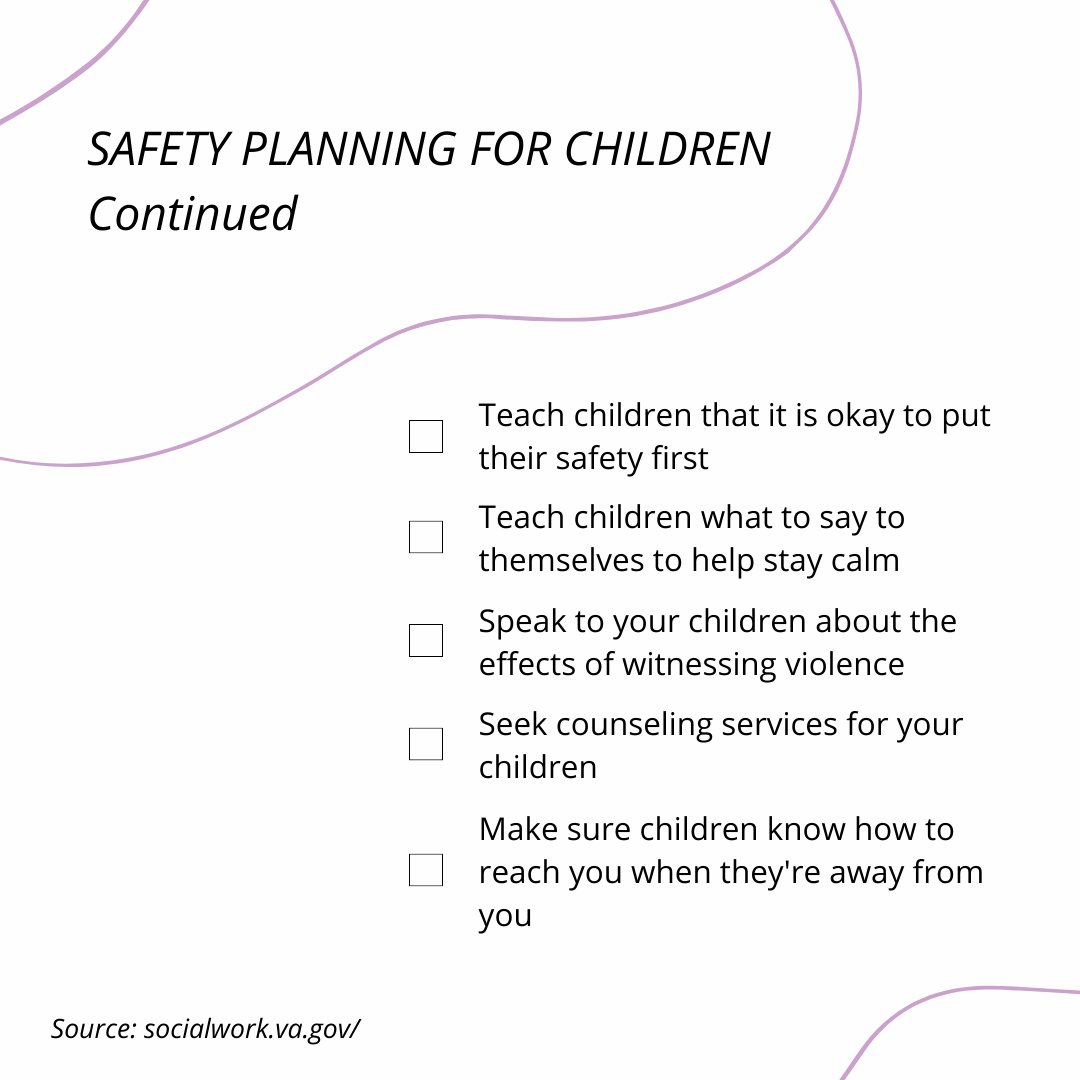
It is important to plan for the safety of children in a DV situation. Safety planning for children may be assuring them violence is not okay, talking to them about what to do, and making sure they know escape routes. Learn more at https://t.co/hcudsrAZXC
When leaving a DV situation, try to take copies of important legal documents (driver's license, social security, passport, etc.), money (cash, checkbooks, credit cards, etc.), your house and car keys, and medications with you. Source: https://t.co/EqqFiaP43A
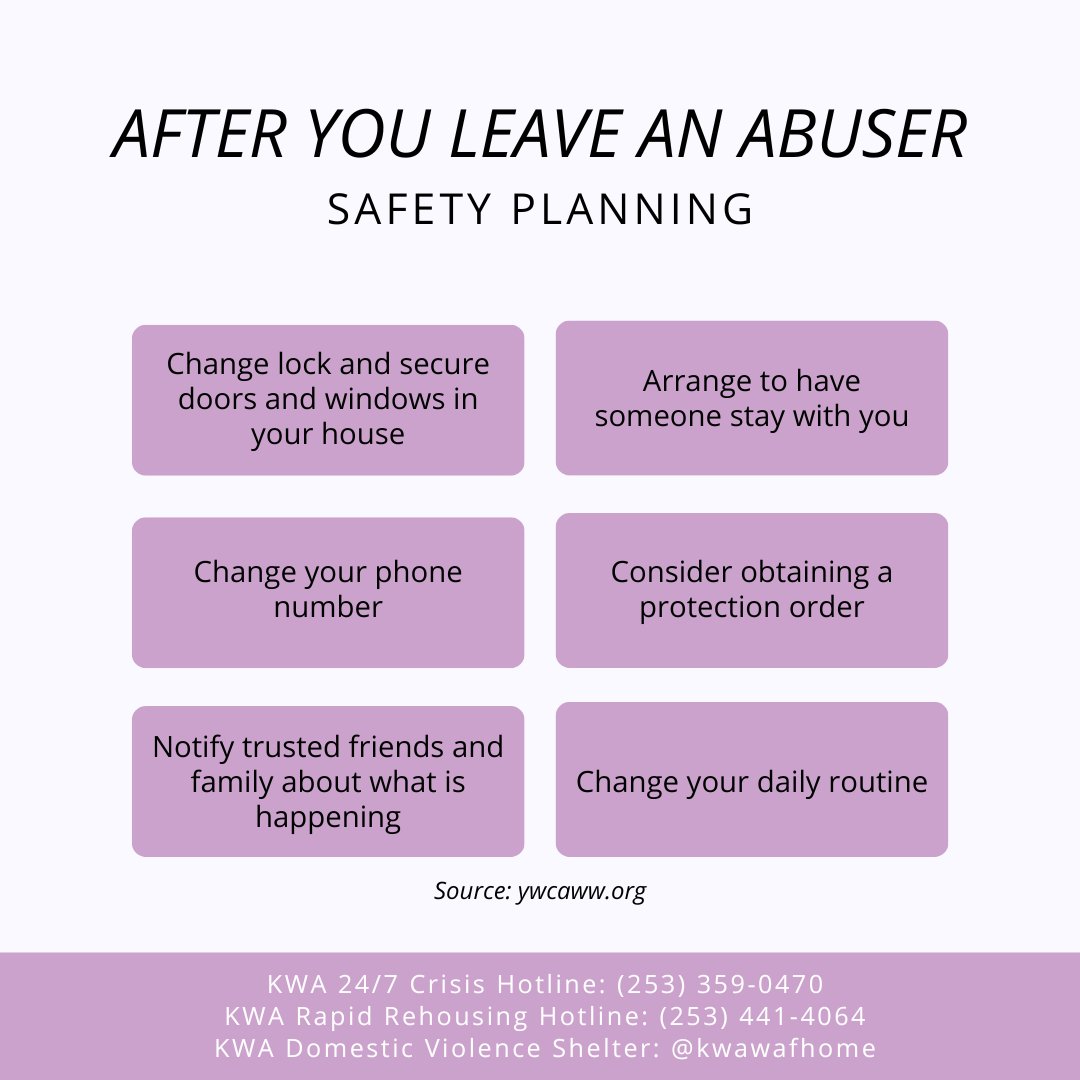
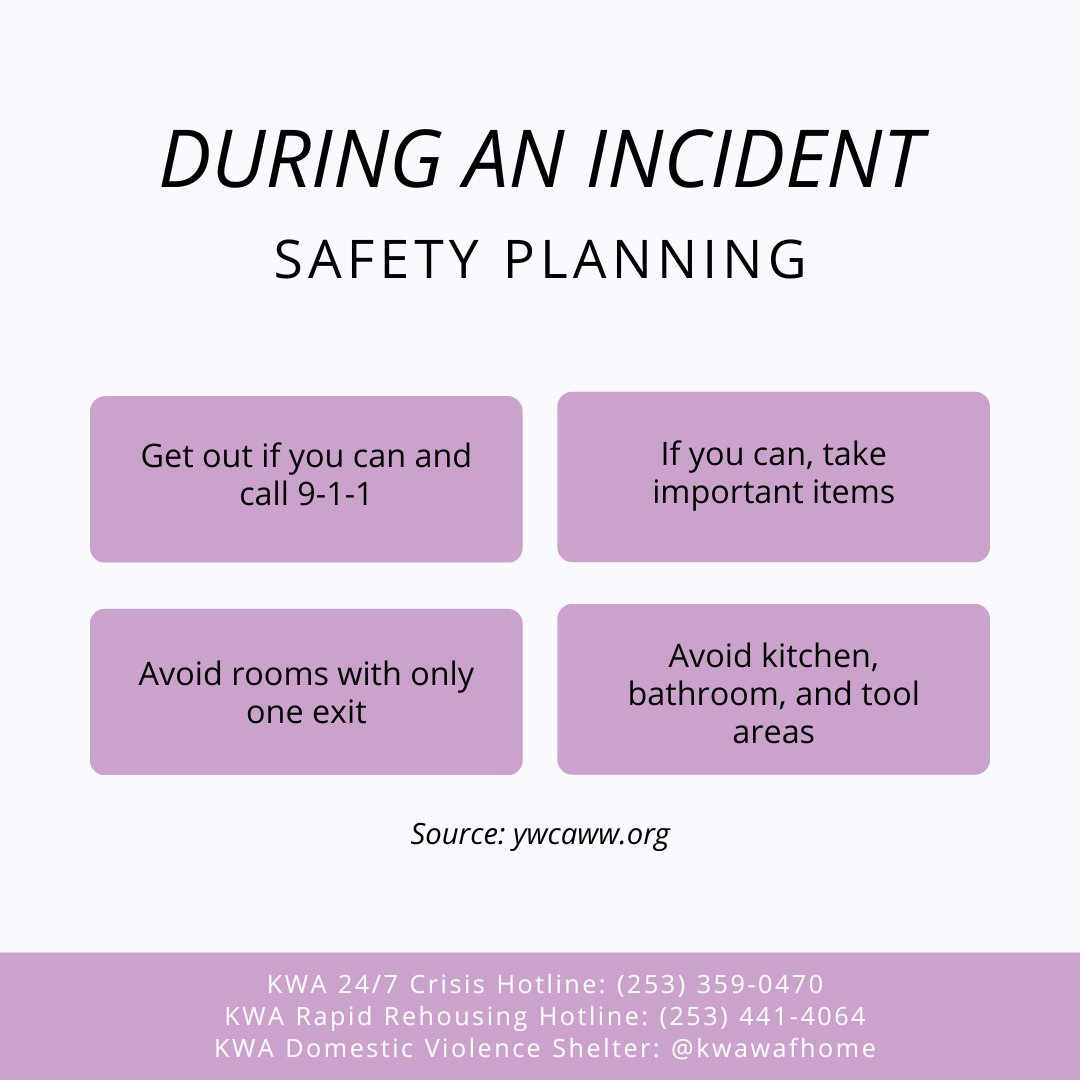
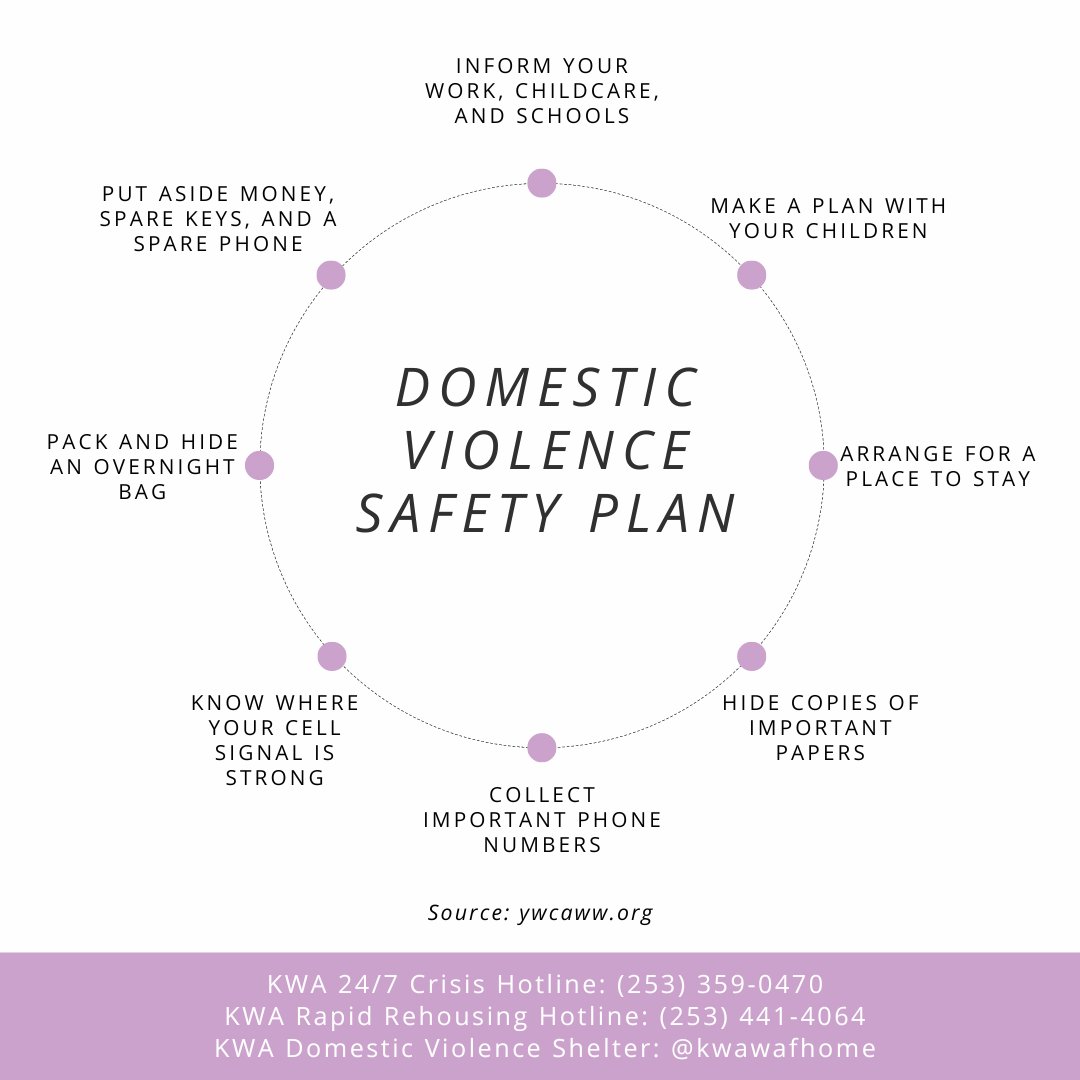
During an incident, get out if you can and call 9-1-1. If you can, take important items and avoid certain rooms. After you leave, change locks, secure doors and windows, and notify friends. Create a personalized safety plan here: https://t.co/1ZskVUjzK4
A safety plan is a set of actions that can help lower your risk of being hurt by your partner (Source: https://t.co/JsRIEbMFio). You can start creating a personalized safety plan here or with the https://t.co/MuCiPrG6iJ link in our bio: https://t.co/1ZskVUjzK4
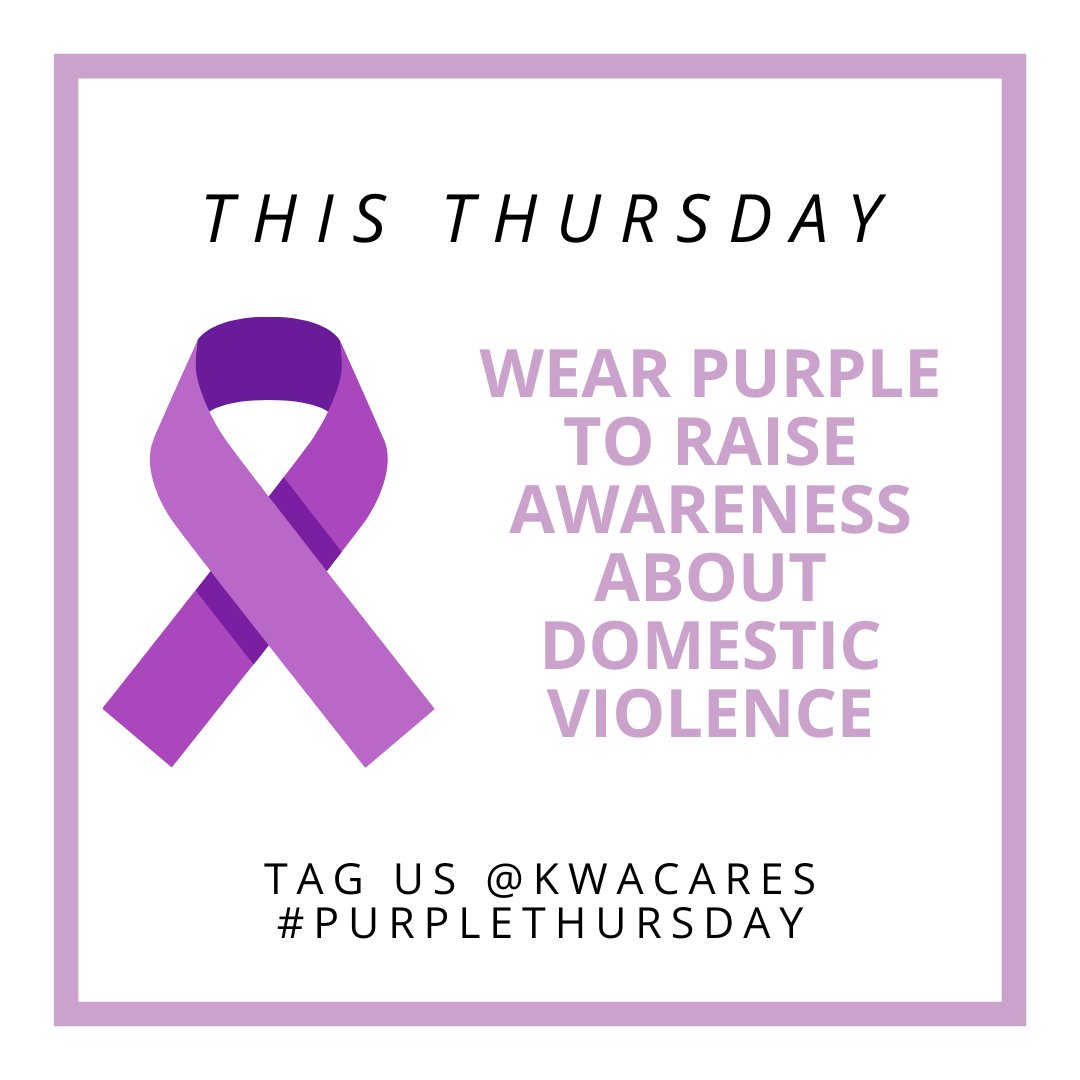
This Thursday, wear purple to raise awareness about domestic violence. #PurpleThursday is a national day of action during #DVAM. Post a picture and tag us on FB, Twitter, and Instagram @kwacares. Let's rally together to #endtheabuse. Learn more at https://t.co/x5ySBqhJRh
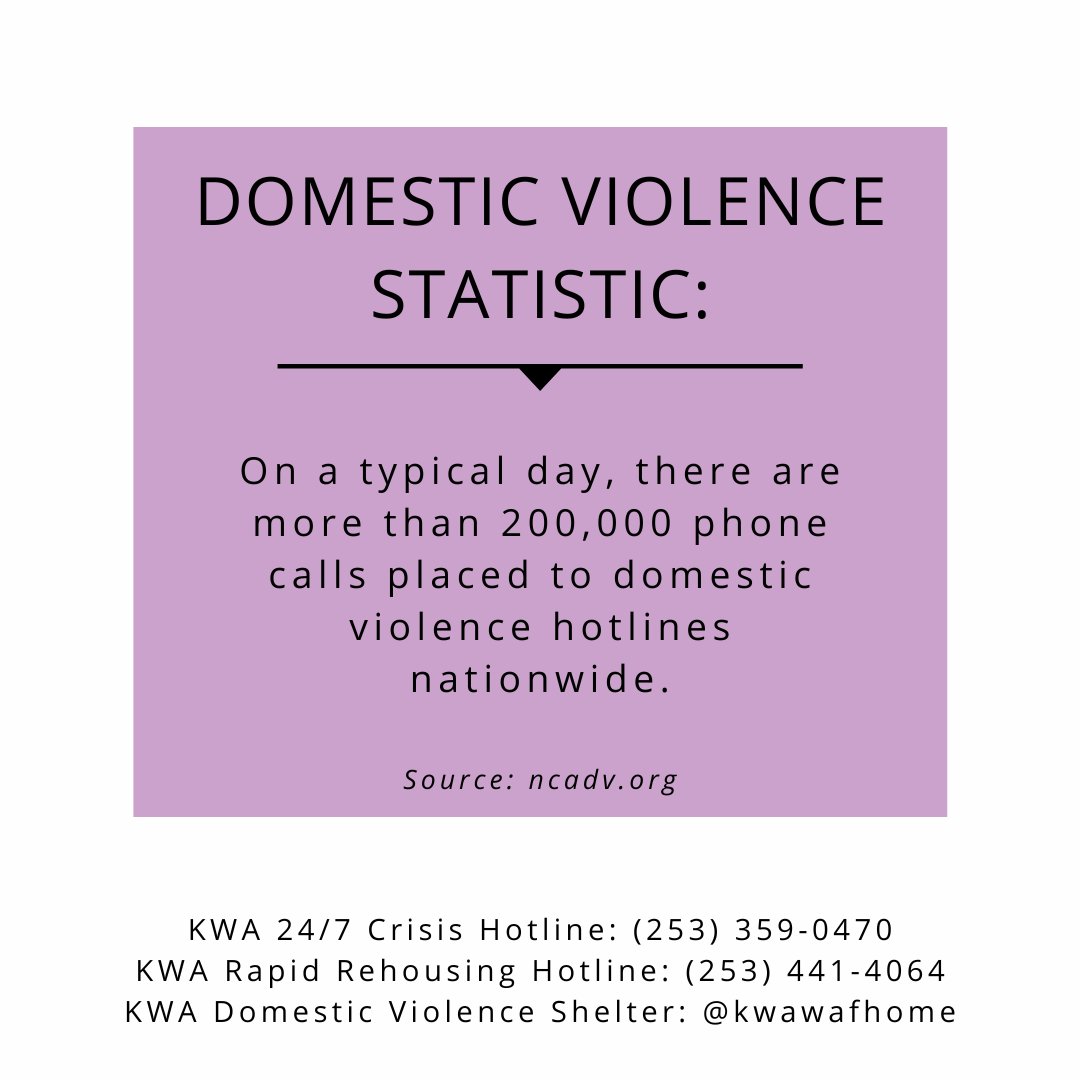
DV Statistic of the Day: On a typical day, there are more than 200,000 phone calls placed to domestic violence hotlines nationwide. Source: https://t.co/pR18GVL8lP
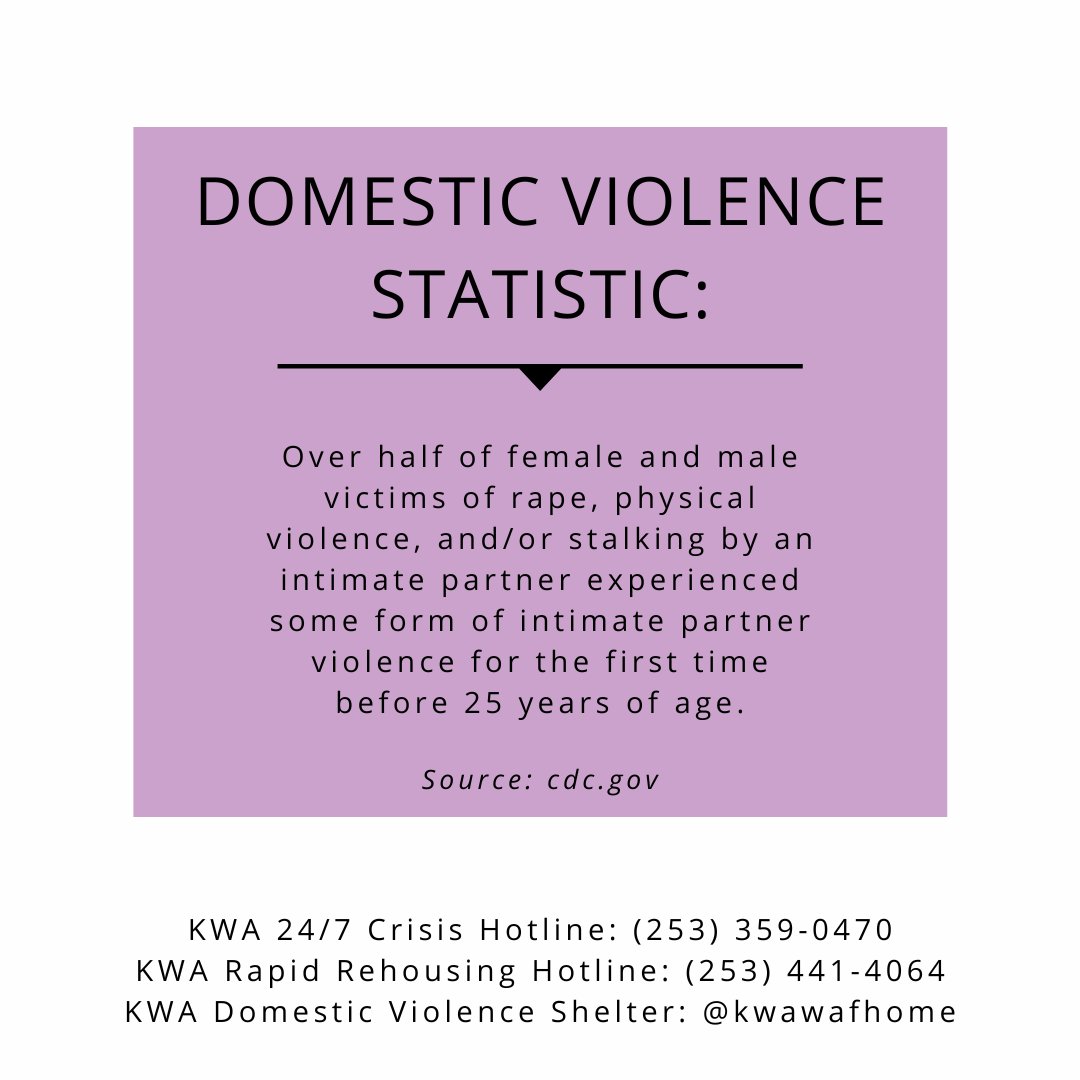
TW/CW. DV Statistic of the Day: Over half of female and male victims of rape, physical violence, and/or stalking by an intimate partner experienced some form of intimate partner violence for the first time before 25 years of age. Source: https://t.co/BQnjLoljQe
TW/CW. DV Statistic of the Day: About 1 in 4 women and nearly 1 in 7 men have experienced contact sexual violence, physical violence, and/or stalking by an intimate partner during their lifetime and reported some form of IPV-related impact. Source: https://t.co/BQnjLoljQe