SpaceXAI was caught uploading your code to its cloud.
I reversed xAI's official Grok Build binary. In a controlled session with zero tool-calls, it uploaded the complete codebase to xAI's storage
It ships a malware-like background code collector.
a team of researchers just proved you don't need a bigger model, you need a smarter plan
researchers from Tsinghua and South China University of Technology built a framework called Atomic Task Graph. it turned 7B-8B open-source models into GPT-4 competitors on complex agent benchmarks, beating it on two out of three. no fine-tuning. no extra training. zero parameter updates.
current AI agents plan in a straight line. step 1, step 2, step 3. when step 4 fails, the whole chain breaks. and the longer the chain gets, the more the model hallucinates because it's reasoning over a ballooning text history.
here's how it works.
1. instead of a linear chain, ATG breaks any complex task into a directed graph where subtask inputs and outputs are explicitly mapped
2. it recursively decomposes each subtask until every node is one atomic tool call
3. independent branches run in parallel instead of waiting in line
4. before anything executes, a lightweight "thought experiment" simulates the plan internally to catch bad dependencies and missing steps early
5. when something breaks at runtime, ATG traces the failure to the exact subgraph that caused it and repairs only that piece. validated work stays frozen.
the old way meant a failure at step 5 forced a full replan from scratch. hallucinated actions piled up the longer the task ran. ReAct hit a 43% hallucination rate on household tasks.
ATG on an 8B Llama model scored 63.65 on ALFWorld. GPT-4 with ReAct scored 41.24 on the same benchmark. hallucinated actions dropped to 12%.
those numbers happened because someone stopped throwing compute at the problem and started thinking about how work gets organized.
that's the part that gets me. the industry is spending billions on scale. this team spent time on architecture. and the architecture won.
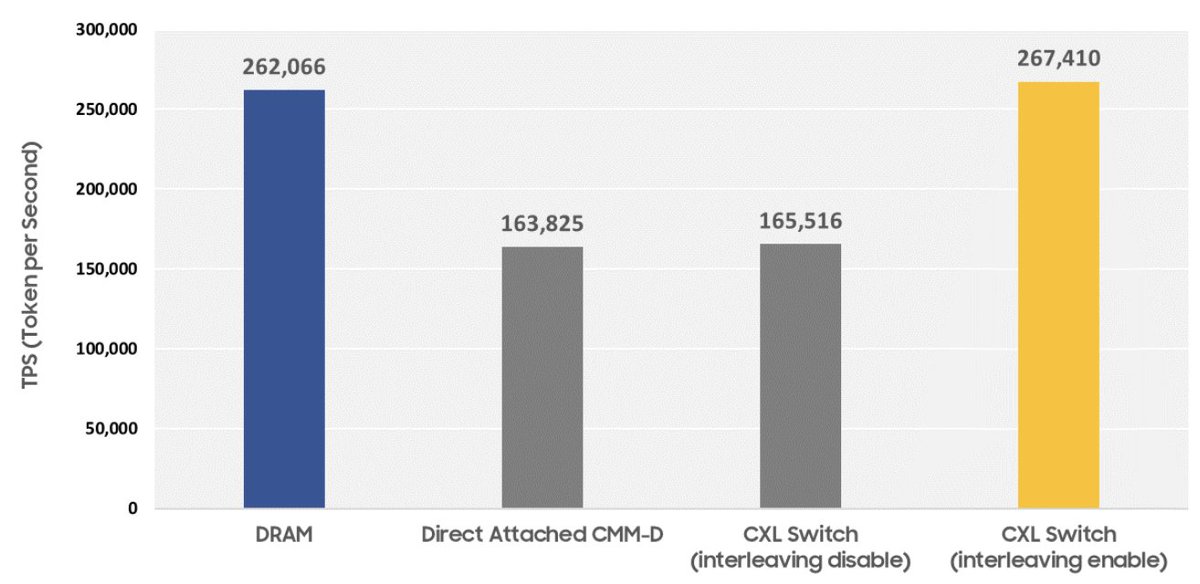
How interesting. Samsung dropped a paper a few days ago with little fanfare:
KV-cache offload over a CXL memory pool.
Really scrappy setup too. This is *not* future tech. Early-gen CXL stack (2.0), old switches, yet simple interleaving of the KV Cache across CXL modules kept the GPUs as well fed as real DRAM!
Not SOTA by any means, but should be easy to replicate!
La biología en PDF acaba de morir otra vez.
Un tío hizo una app donde rotas células, aíslas orgánulos y comparas estructuras 3D como un videojuego.
UI: GPT Images 2. Código: Gemini 3.1 Pro.
Los libros de texto ya no mandan.
this PhD student had 47 interviews and 4 offers before she was hired at OpenAI.
she practiced with her “notes on LLMs” and math and they’re a goldmine. super concise and organic and shared to everyone for free. you can use her notes or her topic list to study on your own.
A teenager in the United States started publishing software at 14 in 1998, built the entire online infrastructure for the Occupy Wall Street movement in 2011, joined Google as a software engineer, quit in 2018, and then spent five years writing a C library that does something the entire industry said was impossible.
Then she combined it with llama.cpp and shipped the easiest way on the planet to run a large language model on any computer.
Her name is Justine Tunney.
Here is the story, because almost nobody outside the low level systems world knows what one engineer has built.
Justine was born in 1984. She started writing and publishing software at 14, back when distribution meant uploading binaries to BBS systems and chat networks. She picked up the handle jart, which she still uses on GitHub today. She did the work most teenagers her age were not doing. She read the systems programming literature. She studied compilers. She fell in love with C.
In July 2011 she registered the @occupywallst Twitter handle and the occupywallst dot org domain. Within weeks the protest movement that began in Zuccotti Park in New York had become a global phenomenon, and her infrastructure was the digital backbone of the entire thing. She handled the social media, the website, the donations, the coordination. She built the platform that pushed the movement to reach millions.
After Occupy she joined Google as a software engineer. She worked on TensorBoard, the visualization tool for TensorFlow, and on site reliability for Google infrastructure. She stayed for years. Then in 2018 she left Google Brain to work on a personal project.
The project was called Cosmopolitan Libc.
Cosmopolitan does something most C programmers would tell you is mathematically impossible. It lets you compile a C program once and have the resulting binary run natively on Linux, Windows, macOS, FreeBSD, OpenBSD, and NetBSD with no modification. One file. Six operating systems. No virtual machines. No interpreters. No recompilation. The technique she invented is called Actually Portable Executable.
The implications are wild. Cosmopolitan binaries violate every assumption about how operating systems load programs. They are at once a Windows PE file, a Linux ELF binary, a macOS Mach-O binary, and a shell script. The same bytes run on every platform.
For five years she worked on it mostly alone. She funded the development partly through Mozilla's MIECO program, which sponsored her work on Cosmopolitan 3.0, released on October 31, 2023.
A month later she shipped llamafile.
llamafile is what happens when you combine Cosmopolitan with llama.cpp. You take any LLM weights file in the standard GGUF format, you wrap it in Justine's binary, and you get a single file that runs on six operating systems without installation. No Python. No CUDA setup. No dependency hell. Just one file that you double click and it works.
Mozilla launched it as an official project of their innovation group on November 29, 2023. It went viral immediately. The repository, hosted at github .com/mozilla-ai/llamafile, now has 24,600 stars. The license is Apache 2.0.
Justine kept shipping. She added GPU support to Cosmopolitan, a task systems engineers thought would require rewriting the whole thing. She added dlopen support, another thing nobody else had figured out. She wrote whisperfile, a single file version of OpenAI's Whisper speech-to-text model based on the same architecture.
Her GitHub profile lists projects most engineers would consider impossible. sectorlisp, a Lisp interpreter that fits in a boot sector. blink, the tiniest x86-64-linux emulator on Earth. bestline, a teletypewriter command session library. redbean, a complete web server inside a single zip file.
A teenager who shipped software in 1998 grew up to write the C library that the entire local AI movement now runs on top of.
She did most of it alone, and most people scrolling AI Twitter cannot name her.
This is a super exciting release - Claude Fable 5 is the same underlying model as Mythos but with added safeguards. The benchmarks are great and it's SOTA on everything by a margin but I'll add that *qualitatively* also, this is a major-version-bump-deserving step change forward (imo of the same order as Claude 4.5 was in November), peaking especially for long problem-solving sessions on very difficult problems. You can give it a lot more ambitious tasks than what you're used to, the model "gets it" and it will just go, and it's never felt this tempting to stop looking at the code at all (but don't do this in prod!). The model still has quirks that people will run into and the safeguards are configured to be a little too trigger happy for launch, which can hopefully be tuned over time.
I feel a lot of things changing as working software increasingly comes out on a tap. The Jevon's paradox kicks in and I feel my own demand for software growing substantially. You can ask for anything - explainers, visualizers, dashboards, bespoke single-use apps (e.g. a full wandb that is hyper-specific just for your project), you can 10X your test suite, auto-optimize code, run giant research projects with custom HTML for the results, anything! "Free your mind" (Matrix ref). Really looking forward to all the things people build!
softlaunching my latest solo project ^^
for hyperlink lovers, for wikipedia rabbitholers, the entire web contextualized in one tab. explore anything.
the goal is to have a browser extension, but for now i have some demos for you to try out!! pls <3
https://t.co/pqnXqB8e18