Elevations in plasma glucagon are associated with reduced insulin clearance after ingestion of a mixed‑macronutrient meal in people with and without type 2 diabetes. Our latest in @DiabetologiaJnl https://t.co/3NVrPxPf8v @OCDEM@HNERC_NclUni
2026 on a personal note has been superb: birth of my daughter, Rosa, and now notification that I’ve secured my Fellowship.
They say things happen in threes. What’s next? @ScotlandNT to win the World Cup?! 🏴
The classical view of insulin and glucagon positions them as having opposing effects on hepatic glucose metabolism
https://t.co/NNfxHwmLNw
Megan E. Capozzi & team @UW show that when #insulin and #glucagon rise together after a meal, they work together, not in opposition, to help the liver efficiently store and manage carbohydrates. The authors used a combination of mouse genetics, metabolic tracer studies, physiologic meal challenge, and hormone pharmacology experiments.
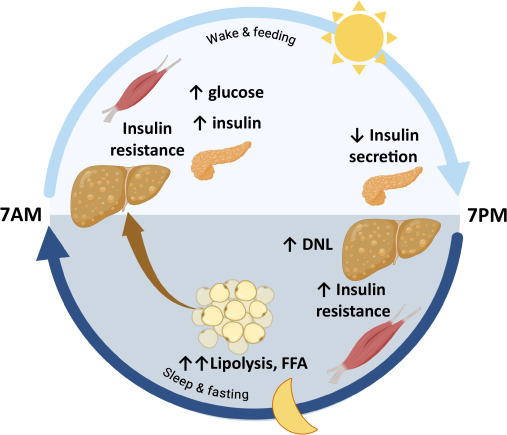
In humans nighttime metabolic dysfunction is a hallmark of #MASLD with multiple pathogenic pathways upregulated at night, including hepatic and peripheral insulin resistance, DNL, and systemic NEFA exposure https://t.co/sAm5bRLsBR #circadian
1/🧵New in @Cell_Metabolism: Human #MASLD is a diurnal disease driven by multisystem insulin resistance & reduced insulin availability at night.
The bottom line:
📢 Multiple pathways governing intrahepatic lipid accumulation are upregulated at night🌉
🔗https://t.co/JUuavcxkQO
⏰ Last chance to submit your research for our Dietary Manipulations meeting. Abstract submission closes on 30 November 2025!
Showcase your research and be part of the conversation on #MetabolicHealth and #Nutrition@ManMetUni on 8-9 April 2026 ➡️ https://t.co/JECjvD1my6
Join us in Oxford in March 2026 for the renowned Robert Turner Clinical Training Course and become part of a distinguished global network of alumni advancing diabetes research! @EASDnews@OCDEM
🚨Early career #researchers don’t miss your chance to apply for the EASD Robert Turner Clinical Research Training Course!🌍Enhance your research skills & connect with global peers:
📅16 - 20 March 2026, Oxford, UK
🔗 Apply by 5 Jan 2026: https://t.co/L27FnoQldd
#Diabetes
Are you working on nutritional physiology? Submit your research to join us at our Dietary Manipulations meeting, 8-9 April 2026 @ManMetUni.
Showcase your research & be part of the conversation. ⏰ Submit by 30 November 2025 🔗 https://t.co/JECjvD1my6 #MetabolicHealth#Nutrition
Calling all researchers working in nutritional physiology. Submit your abstracts to showcase your research at our 2026 Dietary Manipulations meeting!
📆 8 – 9 April 2026
📍 @ManMetUni
Abstract submission closes on 30 November. Find out more ➡️ https://t.co/IhT0pWJXYi
🚨Hiring a 2yr postdoc in the lab work on muscle biology, genomics & ALS. Expertise in the above advantageous, but work ethic, desire to learn/develop and being a good scientist/person more important. Some travel to CPH involved as well!
https://t.co/88blHJGQXS
🚨 3-year Post-doc opportunity at the Centre for Nutrition, Exercise and Metabolism, @CNEM_Bath@UniofBath
Opportunity to lead on an RCT involving symbiotic supplementation and ketogenic diets
https://t.co/eYgGlN2YHC
Building in our prior work https://t.co/EcNhOZfyth
Excited to have contributed to the latest review “The ins and outs of liver fat metabolism: the effect of phenotype and diet on risk of intrahepatic triglyceride accumulation” from the @Hodson_Group spearheaded by @kwrsmith 🙌@ExpPhysiol