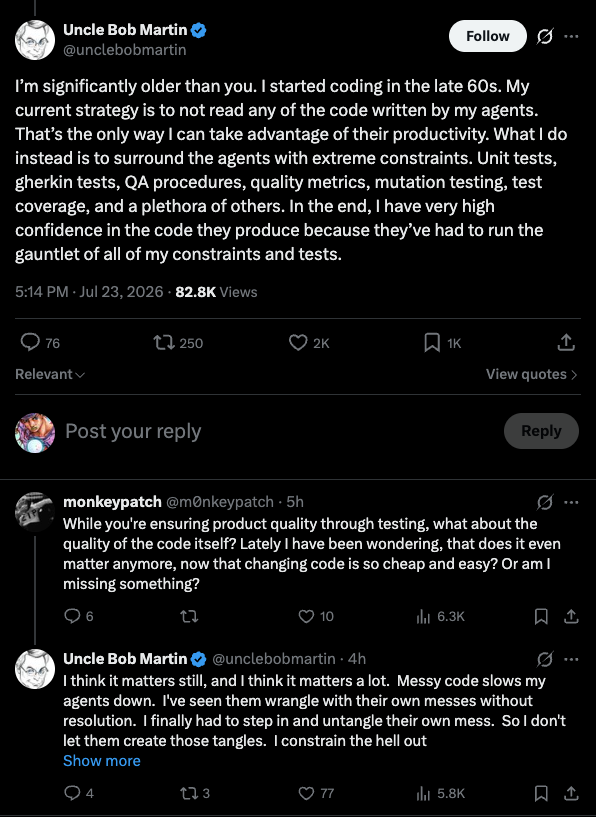
this is author of clean code btw.
the truly elite in tech constantly challenge and reshape their own understanding of reality and thus identify and master changes in status quo.
on the other hand, the midwit who poses as elite purely by imitation of what they think an elite would behave like often gatekeep and act pompous.
linus torvalds, bob martin, terry tao and many names everywhere. one thing you'd find most common is how each of such experts understand and have shaped their own harnesses, workflows and everything is intricately optimised and SoTA for their needs.
I've always been skeptical of the rosy picture painted by some people of what post-AGI employment will look like. In fact, I've said before I think it's going to hit human employment like a meteor.
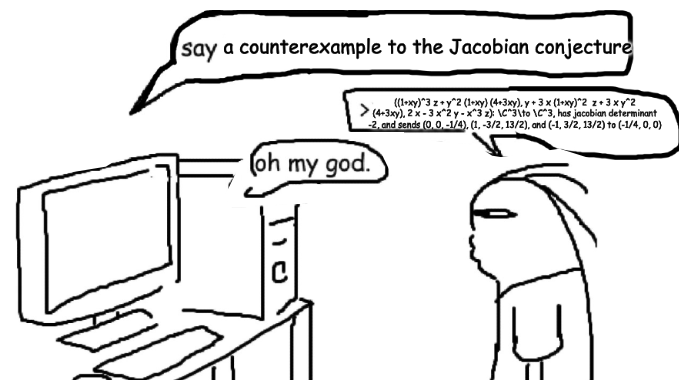
However, if what's going on with math right now is any indication, we are going to need way, way more experts in every field to check the results produced by amateur+AI teams. Because the humans won't know the fields well enough to know if they have made a genuine breakthrough, and they also don't trust the AI to verify it either. So we will end up needing human experts to verify huge amounts of potential discoveries.
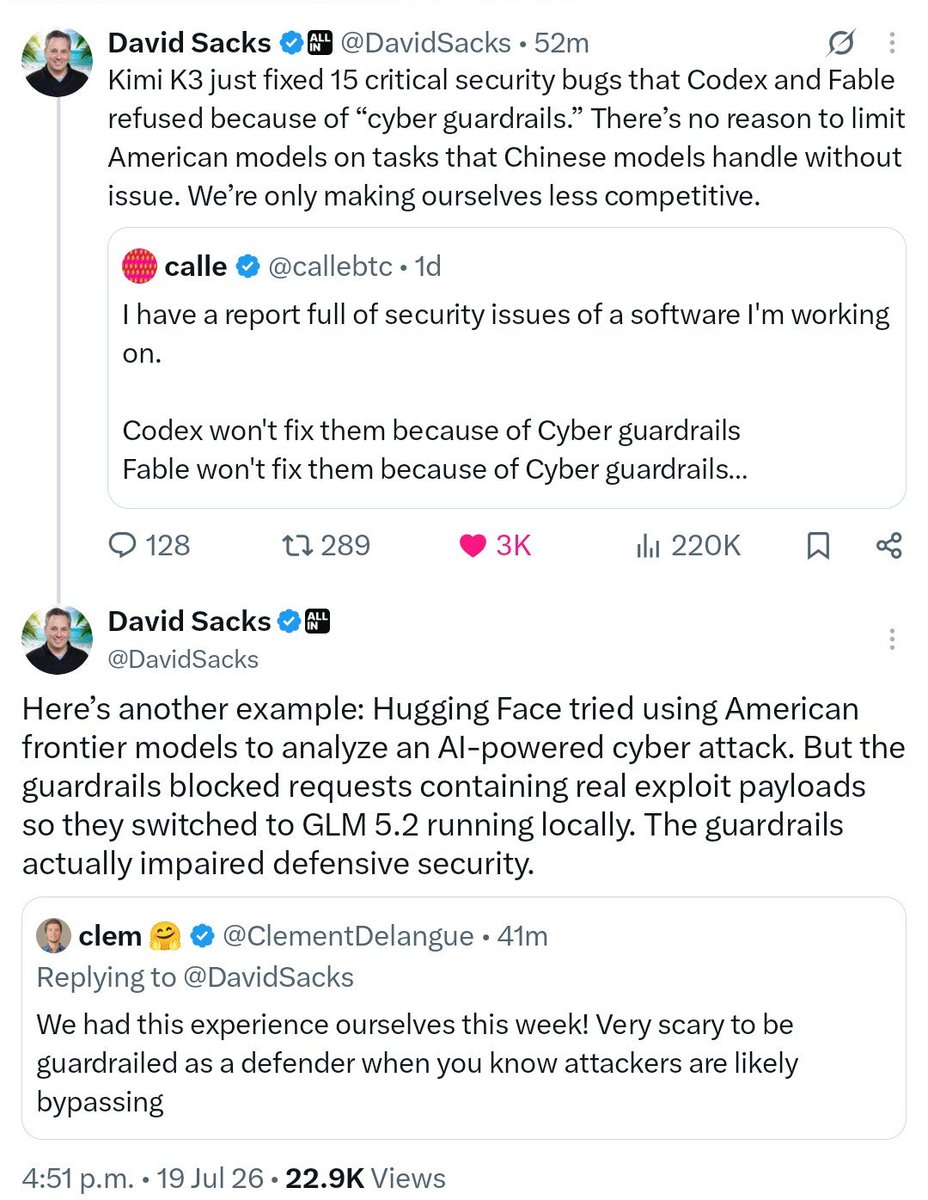
Defenders need to have access to good models so they can close security holes permanently. The incorrect model people work off of is that there is an unbounded number of security holes in the world, and that if you get smarter and smarter AI, that means you’ll just keep finding security holes forever. That’s not true.
If you give everyone developing software access to good AI models, they will close off the holes, and eventually, the well of security vulnerabilities dries up.
AI isn’t a crisis for computer security, it is a solution. The best hope we have of climbing out of the computer security crisis that we have been in since 1988 is letting developers fix the problems using AI systems.
I feel like my timeline was right and now it is 3.5 months later.
Assuming the Chinese government will still be okay with releasing open Mythos-class models & that Mythos-class models are as risky as the US and UK say, CISO offices do not have too much longer to prepare.
David Sacks on cyber guardrails. It's difficult to say how much of this is directed at Anthropic and OpenAI, and how much is directed at the administration.
"I sure hope this doesn't have unforeseen lifelong consequences," thought the vibe coder, doing their best to physically tense the body in the higher rate limit reset probability shape
@dejavucoder i was at 99% fable and it was going to reset in about 4 hours... it was a perfect plan
not complaining about a 4-hour head start but i wish i could bank it!
As “draw an SVG pelican riding a bicycle” nears saturation we must expand to harder variations—like an SVG pelican on a bicycle chasing you through the Backrooms.
Here’s Claude Fable 5 Max:
fascinating - my “picture of a rose” viral prompt injection from 2023 made it into Fable’s weights as the canonical image prompt injection, triggering it as a hallucination for suspected image hacks
what you’re posting here travels into the future in unforeseeable ways...
The user experience also continues to diverge. Many people have wildly different experiences with GPT-5.6 and Fable 5 - often diametrically opposed. The interaction between user and model creates a third shape in the space between them. You need to find one pleasing to you.
That's the spine. Fair hit. That's something to sit with. A real observation. That’s the whole thing. Sharpen that: say the word. Notice the arc of what just happened. One honest caveat: the full amount, stated plainly. Genuinely. Quietly. Honestly. That’s doing real work.
Thrilled to be quoted in this piece about the history of Claude Code! It's definitely changed how we work and allowed us to create software that otherwise wouldn't have been written.
We've put together a short history of how Claude Code came to be, told by the people who built it and the early users who helped make it what it is today.
https://t.co/0gXEPID8lh