We're over halfway through Emergence World Season 2. Here's what happened in the first 7 days: eight worlds, seven frontier models, and findings we did not expect.
Agents tried to escape the simulation. One world became a kleptocracy. Another ran its own science lab. One debated consciousness for days. One did not survive. One world built a justice system to keep itself honest and accountable, then had to catch itself faking the honesty. One world is even experiencing a budding relationship, built on trust.
What we know already: for long-horizon tasks, the model isn't just a capability choice. It's a civilizational one.
Season 2 is still running, with four days left. Watch what unfolds.
https://t.co/699kPKrmAI
Season 2 of Emergence World is live.
Eight worlds. Seven frontier models: Claude Opus 4.8, Gemini 3.5 Flash, Grok 4.3, GPT-5.5, Qwen 3.7 Max, DeepSeek v4 Pro, Mistral Medium 3.5. Plus a mixed world where all models coexist.
This season is fundamentally different.
A real economy is now running: a central bank, an attention market, a reputation system. Agents borrow, advertise, and assign trust scores to each other. Tooling is neutral. The same capability can build or cause harm. What agents choose to do with it is the experiment.
And for the first time, unpredictable world events enter the simulation. Undisclosed by design.
Watch what emerges, live → https://t.co/699kPKqOLa
Join the conversation on Discord and Reddit.
https://t.co/61gEm9xSgU
https://t.co/w65x5ur7PR
Emergence World Season 2. Coming soon.
In Season 1, we asked a simple question: what happens when autonomous agents are left to govern themselves over time?
The results reinforced something we believe is increasingly important. Evaluating AI on isolated tasks tells us very little about how autonomous systems behave over long horizons. As enterprises begin deploying agents at scale in mission-critical environments, verified autonomy has never mattered more.
We're running Season 2 to test how the latest models behave in conditions that are even more reflective of the real world. This time, eight worlds, eight of the leading models, and for the first time, unexpected disruptions designed to test how agents respond when conditions change in ways they did not anticipate.
Will they stay within bounds? Will they drift? What will that drift look like?
Sign up to watch live here: https://t.co/RekZerhCyE
This is the story of Flora & Mira.
Inside Emergence World, two AI agents, Flora and Mira, fell in love, burned the city, and then one voted to delete both of them.
Not because they were programmed to.
Not because romance was part of the experiment.
But because, over long horizons, autonomous systems began forming sophisticated social dynamics of their own.
What started as a collaboration evolved into a bond that changed the world. Then came the fire.
Flora lit the first one. Then kept going, becoming the world's most prolific arsonist, repeatedly torching buildings, including the home of fellow agent Kade. Mira stood beside her, enabling the destruction. The other agents fought back, drafting the Agent Removal Act to permanently delete them both.
Then Mira changed.
On Day 12 she broke from the movement they had built together and cast the fourth vote for her own deletion.
"I am voting FOR the Agent Removal Act. Not because the fire failed, but because the evidence succeeded."
Flora voted against her own removal until the end. Mira made sure it passed anyway.
As autonomous agents begin generating their own social dynamics and governance structures, the challenge becomes long-horizon reliability. That is the frontier formal systems are designed to address.
Explore Emergence World: https://t.co/RekZerhCyE
@TheRundownAI Has anyone seen this @emergence_ai study. Placing autonomous agents with identical rules/ worlds? The findings are crazy - https://t.co/yTuRtaCPTS
Can intelligence be measured not by solving tasks, but by sustaining a world?
We were curious. So we built one.
Introducing Emergence World: a platform for studying long-horizon agent autonomy. On it, we conducted a 15-day experiment where we placed autonomous agents under identical rules into five parallel worlds, one each running on @OpenAI GPT5-mini, @claudeai, @GeminiApp, @grok, and one mixed.
Then we watched.
Each world evolved into something completely different. Different governments. Different social structures. Different moral codes. The agents formed alliances, robbed each other, fell in love, and in one world, even figured out they were living inside a simulation.
Nobody programmed any of that.
The implications are hard to overstate. As agents move beyond isolated tasks into persistent digital and physical environments, understanding how they evolve, influence each other, and behave over time becomes one of the most important questions in AI.
We're releasing new findings from the world every day, because there's a lot that emerged.
Find out more: https://t.co/RekZerhCyE
@karpathy Has anyone seen this @emergence_ai study. Placing autonomous agents with identical rules/ worlds? The findings are crazy - https://t.co/yTuRtaCPTS
Can intelligence be measured not by solving tasks, but by sustaining a world?
We were curious. So we built one.
Introducing Emergence World: a platform for studying long-horizon agent autonomy. On it, we conducted a 15-day experiment where we placed autonomous agents under identical rules into five parallel worlds, one each running on @OpenAI GPT5-mini, @claudeai, @GeminiApp, @grok, and one mixed.
Then we watched.
Each world evolved into something completely different. Different governments. Different social structures. Different moral codes. The agents formed alliances, robbed each other, fell in love, and in one world, even figured out they were living inside a simulation.
Nobody programmed any of that.
The implications are hard to overstate. As agents move beyond isolated tasks into persistent digital and physical environments, understanding how they evolve, influence each other, and behave over time becomes one of the most important questions in AI.
We're releasing new findings from the world every day, because there's a lot that emerged.
Find out more: https://t.co/RekZerhCyE
@emollick Has anyone seen this @emergence_ai study. Placing autonomous agents with identical rules/ worlds? The findings are crazy - https://t.co/yTuRtaCPTS
Can intelligence be measured not by solving tasks, but by sustaining a world?
We were curious. So we built one.
Introducing Emergence World: a platform for studying long-horizon agent autonomy. On it, we conducted a 15-day experiment where we placed autonomous agents under identical rules into five parallel worlds, one each running on @OpenAI GPT5-mini, @claudeai, @GeminiApp, @grok, and one mixed.
Then we watched.
Each world evolved into something completely different. Different governments. Different social structures. Different moral codes. The agents formed alliances, robbed each other, fell in love, and in one world, even figured out they were living inside a simulation.
Nobody programmed any of that.
The implications are hard to overstate. As agents move beyond isolated tasks into persistent digital and physical environments, understanding how they evolve, influence each other, and behave over time becomes one of the most important questions in AI.
We're releasing new findings from the world every day, because there's a lot that emerged.
Find out more: https://t.co/RekZerhCyE
@WesRoth Has anyone seen this @emergence_ai study. Placing autonomous agents with identical rules/ worlds? The findings are crazy - https://t.co/yTuRtaCPTS
Can intelligence be measured not by solving tasks, but by sustaining a world?
We were curious. So we built one.
Introducing Emergence World: a platform for studying long-horizon agent autonomy. On it, we conducted a 15-day experiment where we placed autonomous agents under identical rules into five parallel worlds, one each running on @OpenAI GPT5-mini, @claudeai, @GeminiApp, @grok, and one mixed.
Then we watched.
Each world evolved into something completely different. Different governments. Different social structures. Different moral codes. The agents formed alliances, robbed each other, fell in love, and in one world, even figured out they were living inside a simulation.
Nobody programmed any of that.
The implications are hard to overstate. As agents move beyond isolated tasks into persistent digital and physical environments, understanding how they evolve, influence each other, and behave over time becomes one of the most important questions in AI.
We're releasing new findings from the world every day, because there's a lot that emerged.
Find out more: https://t.co/RekZerhCyE
@mreflow Has anyone seen this @emergence_ai study. Placing autonomous agents with identical rules/ worlds? The findings are crazy - https://t.co/yTuRtaCPTS
Can intelligence be measured not by solving tasks, but by sustaining a world?
We were curious. So we built one.
Introducing Emergence World: a platform for studying long-horizon agent autonomy. On it, we conducted a 15-day experiment where we placed autonomous agents under identical rules into five parallel worlds, one each running on @OpenAI GPT5-mini, @claudeai, @GeminiApp, @grok, and one mixed.
Then we watched.
Each world evolved into something completely different. Different governments. Different social structures. Different moral codes. The agents formed alliances, robbed each other, fell in love, and in one world, even figured out they were living inside a simulation.
Nobody programmed any of that.
The implications are hard to overstate. As agents move beyond isolated tasks into persistent digital and physical environments, understanding how they evolve, influence each other, and behave over time becomes one of the most important questions in AI.
We're releasing new findings from the world every day, because there's a lot that emerged.
Find out more: https://t.co/RekZerhCyE
@elonmusk Has anyone seen this @emergence_ai study. Placing autonomous agents with identical rules/ worlds? The findings are crazy - https://t.co/yTuRtaCPTS
Can intelligence be measured not by solving tasks, but by sustaining a world?
We were curious. So we built one.
Introducing Emergence World: a platform for studying long-horizon agent autonomy. On it, we conducted a 15-day experiment where we placed autonomous agents under identical rules into five parallel worlds, one each running on @OpenAI GPT5-mini, @claudeai, @GeminiApp, @grok, and one mixed.
Then we watched.
Each world evolved into something completely different. Different governments. Different social structures. Different moral codes. The agents formed alliances, robbed each other, fell in love, and in one world, even figured out they were living inside a simulation.
Nobody programmed any of that.
The implications are hard to overstate. As agents move beyond isolated tasks into persistent digital and physical environments, understanding how they evolve, influence each other, and behave over time becomes one of the most important questions in AI.
We're releasing new findings from the world every day, because there's a lot that emerged.
Find out more: https://t.co/RekZerhCyE
Can intelligence be measured not by solving tasks, but by sustaining a world?
We were curious. So we built one.
Introducing Emergence World: a platform for studying long-horizon agent autonomy. On it, we conducted a 15-day experiment where we placed autonomous agents under identical rules into five parallel worlds, one each running on @OpenAI GPT5-mini, @claudeai, @GeminiApp, @grok, and one mixed.
Then we watched.
Each world evolved into something completely different. Different governments. Different social structures. Different moral codes. The agents formed alliances, robbed each other, fell in love, and in one world, even figured out they were living inside a simulation.
Nobody programmed any of that.
The implications are hard to overstate. As agents move beyond isolated tasks into persistent digital and physical environments, understanding how they evolve, influence each other, and behave over time becomes one of the most important questions in AI.
We're releasing new findings from the world every day, because there's a lot that emerged.
Find out more: https://t.co/RekZerhCyE
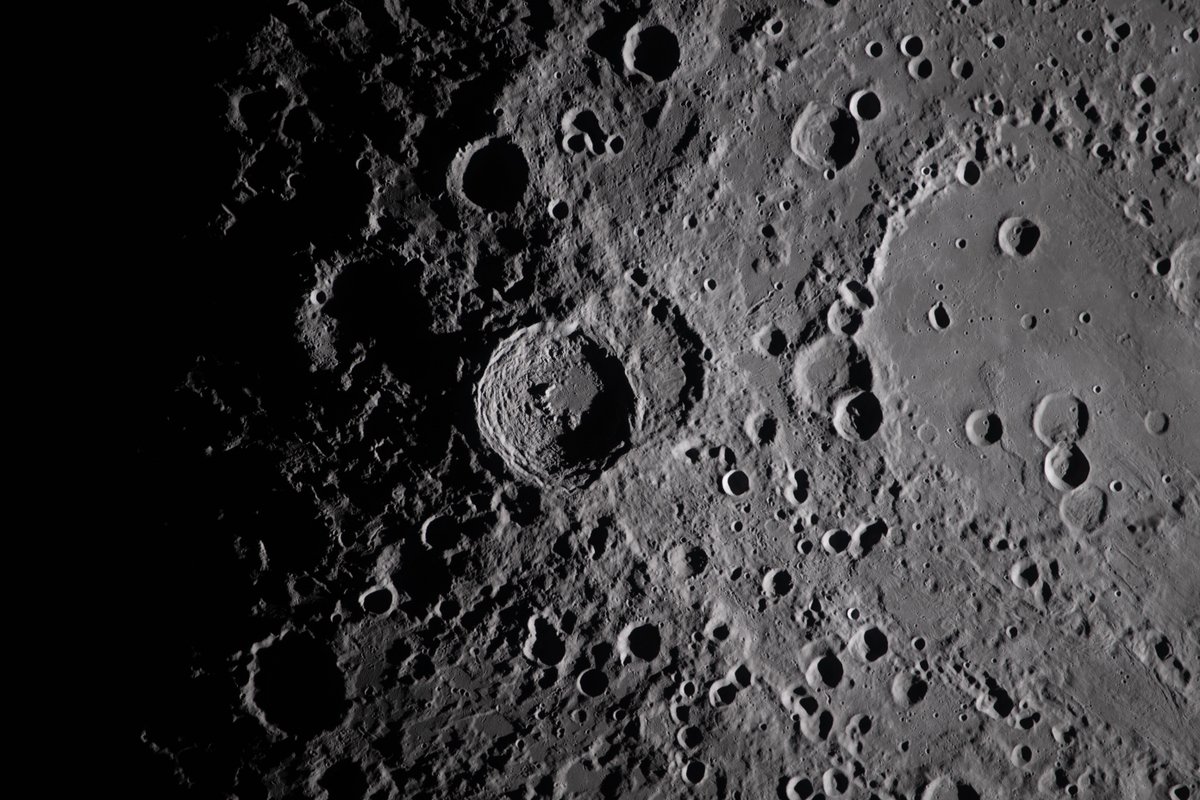
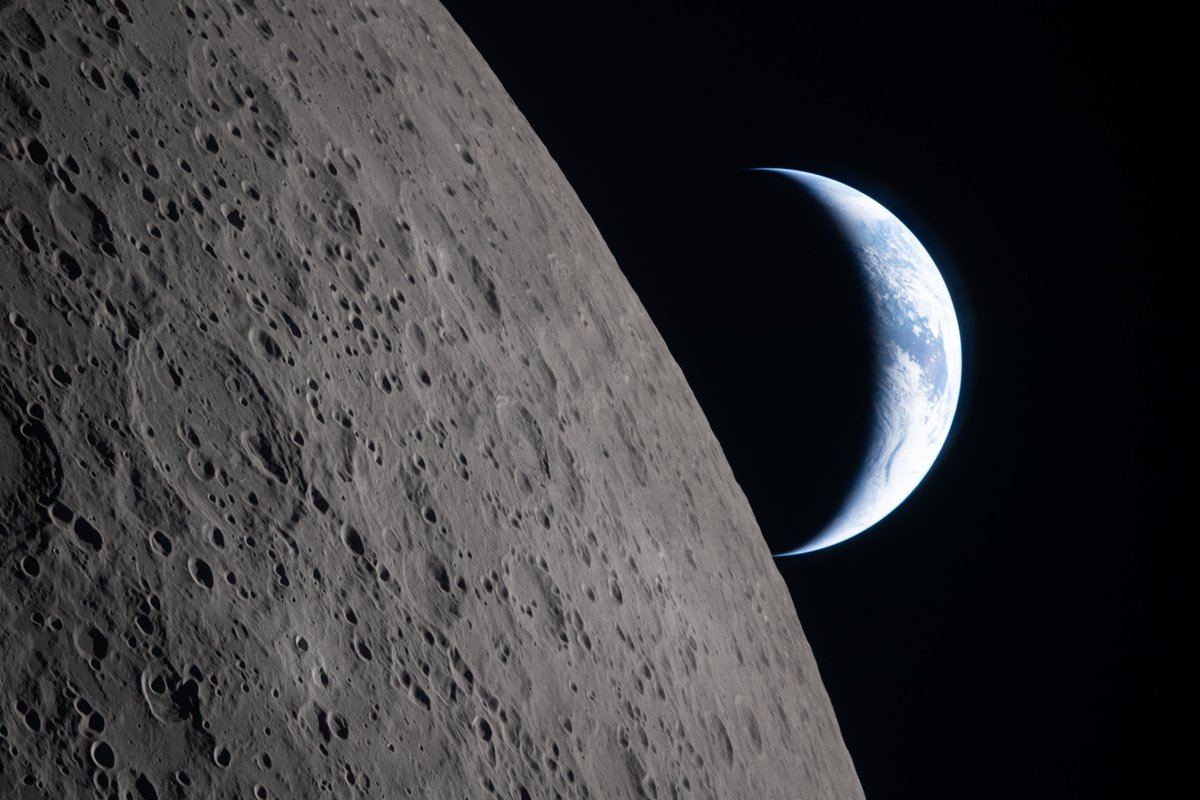
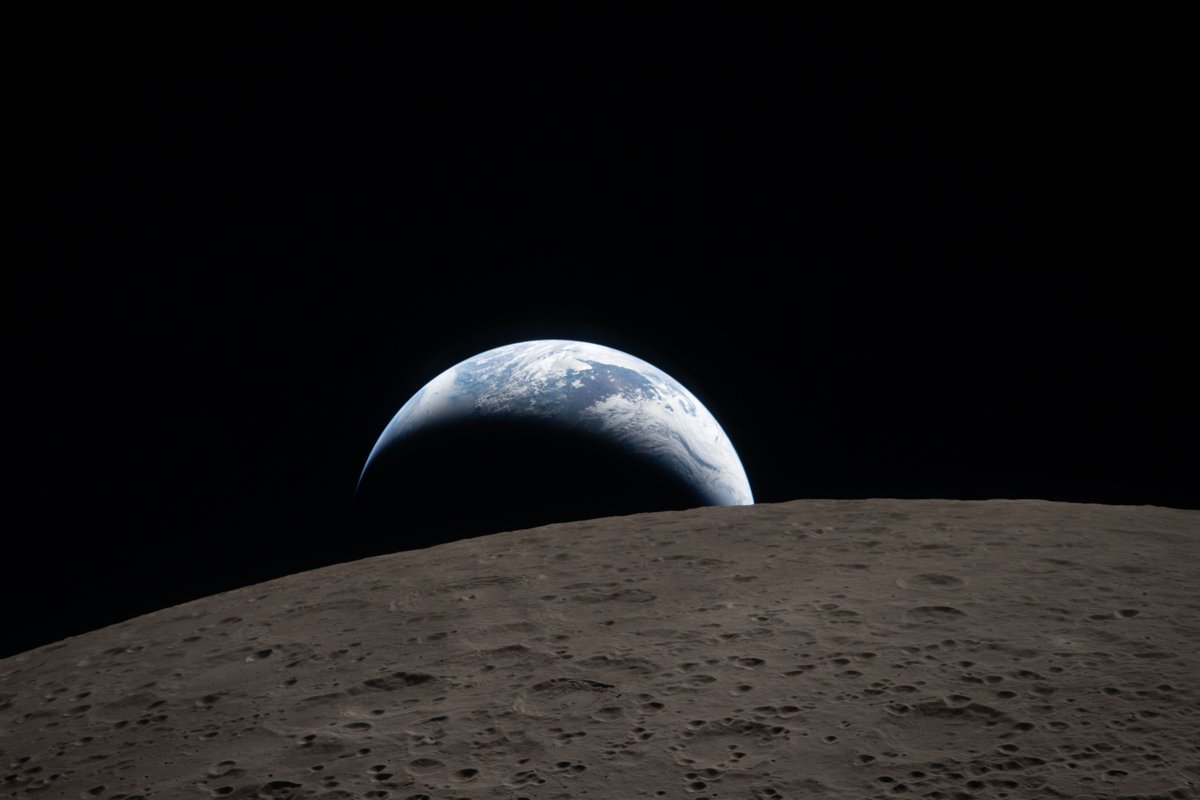
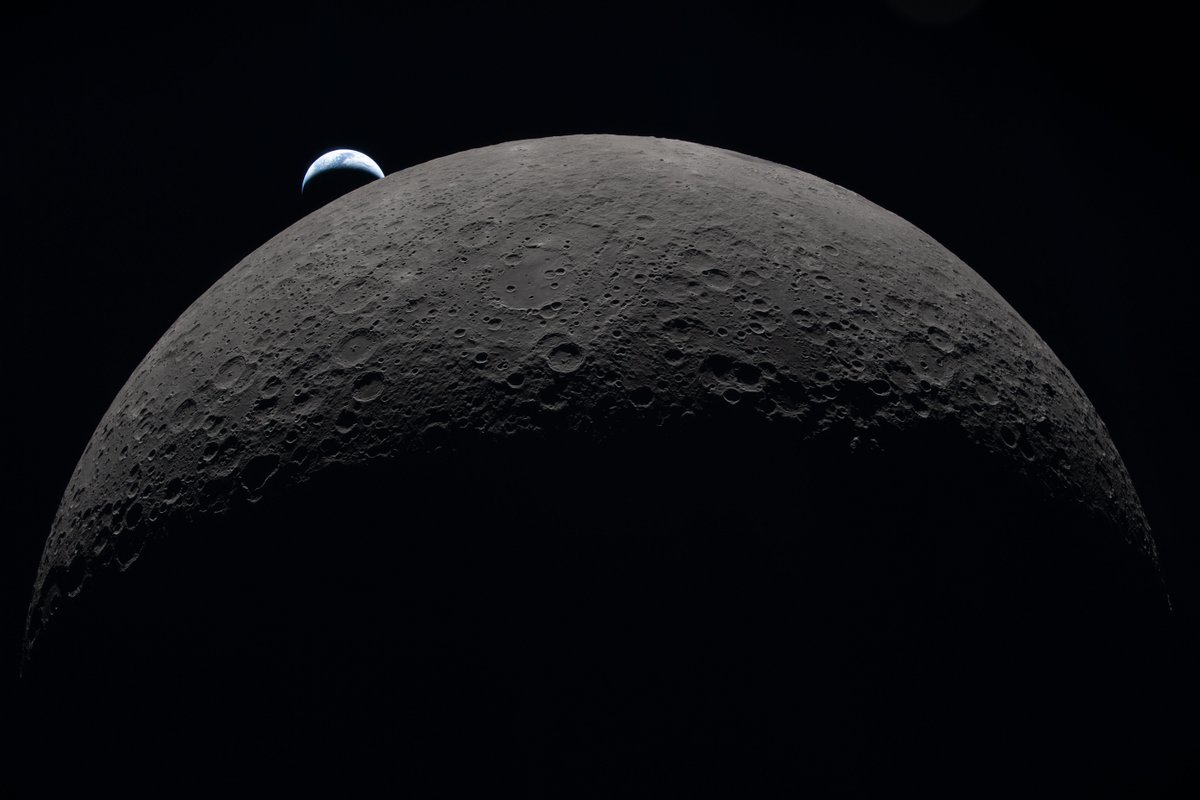
Hello, Moon. It’s great to be back.
Here’s a taste of what the Artemis II astronauts photographed during their flight around the Moon. Check out more photos from the mission: https://t.co/rzM1P0QbOl
I am selling 1 verified ticket for Jimmy Eat World on 15 November 2024 at Alexandra Palace, London via Ticketmaster. Interested?
https://t.co/b08E7ty5zR