How do speakers decide how often to lie and what lies to say? And how do listeners detect lies? These questions can be explained by a unified recursive social reasoning framework. Our new article (with @EdVul & @adenaschachner) is out now in #JEPGen
https://t.co/g8BW3OSccs
Our fearless inaugural lab manager @BellaFascendini is going to grad school (🥳🎉), so the CoLab is hiring a lab manager!! Please share with anyone who wants to deepen their experience in cog sci before grad school. Review starts on 3/15!
https://t.co/I8xDtVR5nd
Chaz out-Tweeted me to be the first to post about my new paper about detecting the ground truth from lies (that was just published in @CompBrainBeh!) More details to come soon!
Apply by Dec 1 to the UCSD Cognitive Science PhD program: https://t.co/3VAyDzrW5v. We have an incredible community working on language + cognition + development - if that's up your alley, check us out! I'll also be considering applications to join my new lab opening in Fall 2024.
New research suggests that lying is a difficult mental process, because it requires paying attention to what other people know as well as the costs of being caught in a lie. My latest for @PsychToday.
https://t.co/l53y7vhNY2
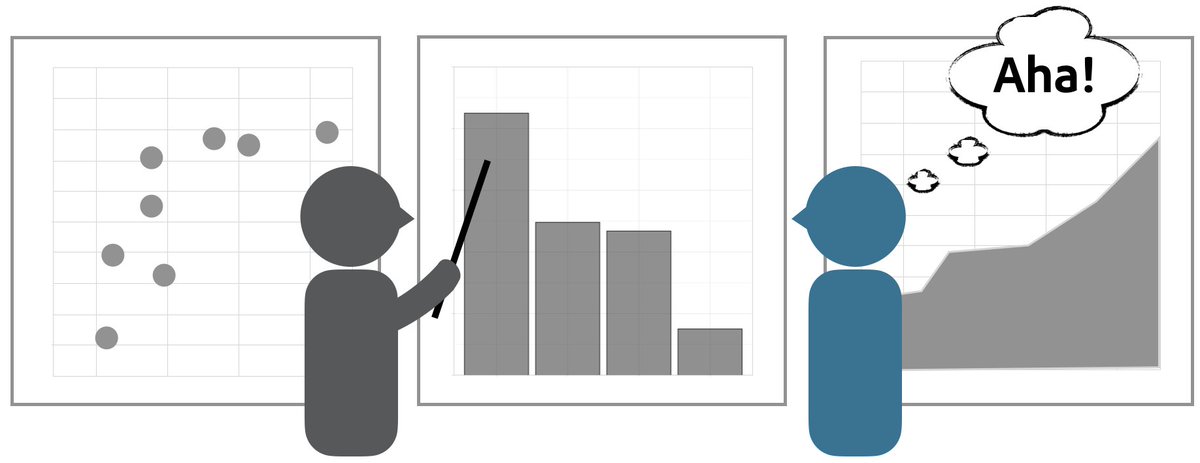
Graphs are incredible tools for communicating key patterns in data! But it’s not always obvious which graph to use. Our @cogsci_soc#CogSci2023 paper w/ @judyefan@la_oey@hlloydtweets explores how people select graphs that make things easier for *viewers*!
Job alert!🚨🧠🛠️ We @cogtoolslab@Stanford@StanfordPsych are recruiting a full-time lab manager to join our team Summer/Fall 2023. More information available here: https://t.co/Fewky1FJ3N. Please share widely! 🙏
📢 I'm hiring a lab manager to help launch and run my lab @ Princeton! Please share with anyone who wants to deepen their experience in cog sci, developmental psychology, or cognitive neuroscience before grad school. Review starts 3/31, start date 8/1!
https://t.co/R7JvazE9Fc
New job posting from my dept.: UC San Diego invites applications for a tenure-track Assistant Professor position from candidates who take a computational approach to study psychology/neuroscience. https://t.co/zgZB1wbSR6 Beautiful place & great colleagues!
📢 I'm accepting graduate students this year! Here's a list of my favorite resources for PhD applicants, and an FAQ for anyone who's interested in joining my lab:
https://t.co/42yL0b1R4l
Feel free to reach out with questions!
Fresh off of Peekbank's 5th (??) hackathon, we found out that our paper introducing the Peekbank database & tools (https://t.co/g5Nls50UDc) is officially out in Behavior Research Methods! https://t.co/r1pZkQndHJ Follow the thread below for more info on the project from our team!
More broadly, this work is the first in our exploration of how communication might operate when we replace classical assumptions of cooperative motives with adversarial ones.
Open access preprint available here: https://t.co/Lsj53UMAyX
How do speakers decide how often to lie and what lies to say? And how do listeners detect lies? These questions can be explained by a unified recursive social reasoning framework. Our new article (with @EdVul & @adenaschachner) is out now in #JEPGen
https://t.co/g8BW3OSccs
(4) When detecting lies, people are sensitive to plausibility and payoffs. So, not only do speakers reason about listeners as rational detectors, but listeners also reason about speakers as rational lie designers.
How do children’s drawings change across development? My new @cogsci_soc#CogSci2022 paper w/ @judyefan@brialong@justintheyang@krgeorge introduces a new dataset with every part labeled from >2K drawings of 16 visual concepts produced by 4-8 y.o. children!
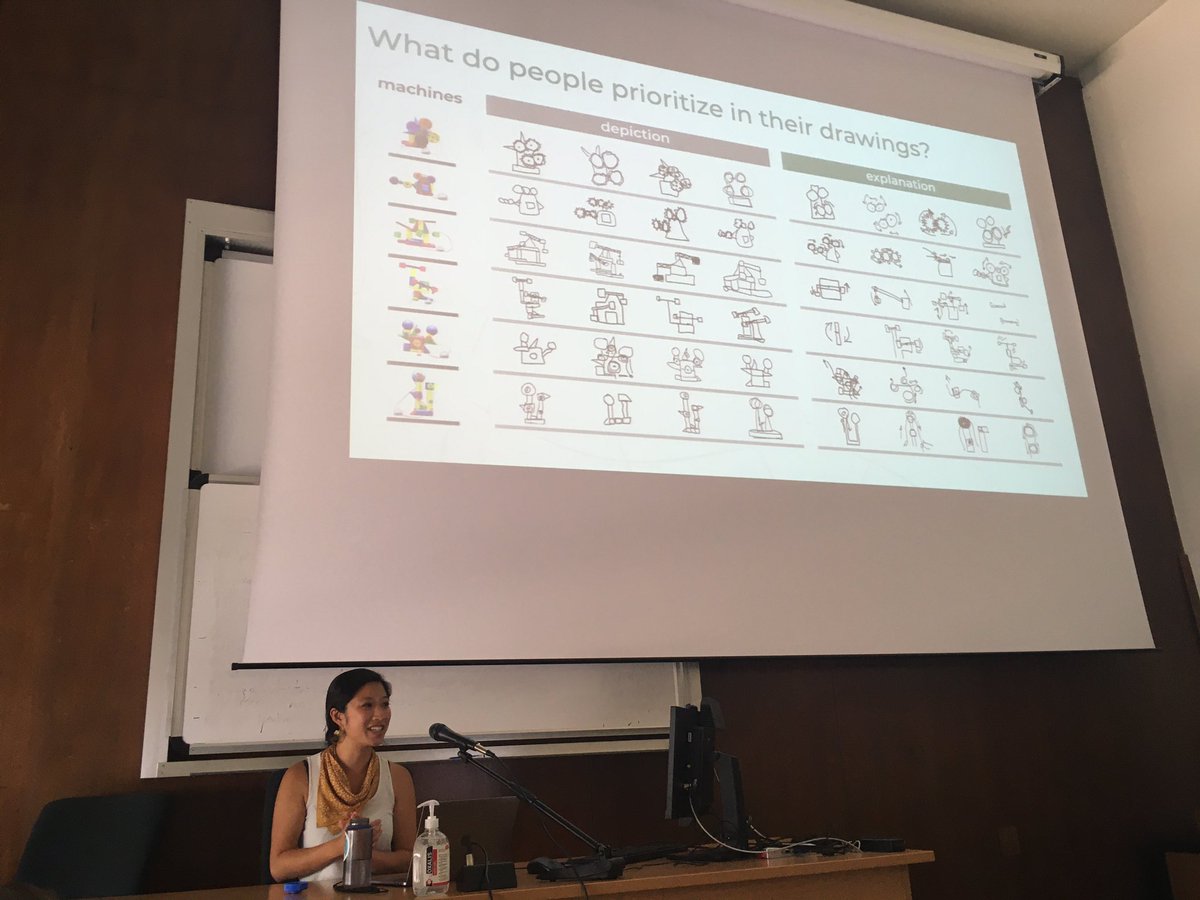
When people are asked to draw devices, they include more causal parts, more symbols, less structural information, and more spatial distortions if their goal is to explain the device rather than depict it. Research by @hollyahuey et al. at #SPP2022