💡 What if photocatalysts were more than just light absorbers ?
Discover how their environment can reshape their identity and reactivity in our latest perspective in ACS Catalysis !
https://t.co/EoIEftw5ra
Congrats to all the authors 👏🎊
#Photochemistry#Photocatalysis
Defying textbook chemistry, photocatalyzed ATRA proceeds via a Cu(II)/Cu(III) cycle rather than the Cu(I)/Cu(II) cycle. An anionic ligand for Cu(II) is the key to triggering oxidation rather than reduction. Great collaboration with the Nuernberger group. https://t.co/92JYTeMZMq
We are excited to share that we have developed a sustainable leap towards safer food preservation! 📷Our IoT-enabled portable PDI platform integrates biocompatible riboflavin-based photosensitizers with blue LED technology to combat microbial spoilage, reduce post-harvest losses, and extend the shelf life of fresh produce. Supported by shotgun metagenomic analysis, this innovative approach offers an energy-efficient, eco-friendly alternative to conventional cold storage, with a special focus on empowering small and marginal farmers in India.
The article is just accepted in NATURE -NPJ Science of Food. Congratulations to Niladri, Dr. Majid and Dr. Sangita for the Massive work. @IITIOfficial@CRDTiiTIndore@ANRFIndia@IndiaDST@ugc_india@Majid95987287
When ACS shut down its mobile app, a lot of us lost the easiest way to keep up with some of the literature. Generic RSS readers are flaky, strip out images, and force you to bounce between publishers — while new chemistry papers are coming out at a firehose pace.
All most of us want is to open one app, scroll the latest ASAPs, and actually see the graphical abstracts first — because chemists read in structures, not walls of text.
So we built ChemASAP 🧪⚡
Open one app and see the newest ASAP and early-view papers (publisher agnostic), with their graphical abstracts front and center.
• Pulls crisp TOC / graphical abstracts automatically – even when a publisher's RSS feed breaks or leaves them out
• Works across publishers in one clean feed (ACS, Nature, Wiley, RSC, Cell Press/Chem, Science, and more — not locked to one house)
• Treats @ChemRxiv as a first-class journal right alongside peer-reviewed ASAPs
• Toggle only the journals you care about, tap straight to full text, or share a paper in one tap
• No account, no sign-up
100% Free for everyone.
So far, its been our go-to app for keeping track of the literature in real-time.
📱 iPhone/iPad: https://t.co/tYKpjAuKJn
💻 Web: https://t.co/dtIpSyVm43
Reply here with ideas for how to make it better!
Shout out to @knight_chem for sponsorship and @bot for development.
Water can do it: a nickel-catalyzed carboxylation with CO2 in a devided electrochemical cell @chem
Electrochemical reductive carboxylation with carbon dioxide using water as the reductant: Chem https://t.co/CHBLeiGmT8
🪜Hetero-[2]-Ladderanes: Our work on the first diastereoselective synthesis of oxa-aza-[2]-ladderanes, a potential 3D mimic of 2,3-disubstituted pyridines, is now on @ChemRxiv.
Thank you, @ANRFIndia and @iiscbangalore, for financial support.
https://t.co/RfR8Phj46C
🕸️Synergistic Skeletal-Peripheral Editing: Our work on the ring-expansion of ketones with concurrent peripheral functionalization via radical sorting is now published @ACSCatalysis! Thanks to @ANRFIndia and @iiscbangalore for financial support.
https://t.co/eeFpEytajj
We merged cobalt catalysis with the photochemistry of arylazo sulfones bearing dyedauxiliary groups for carbonylation processes @AdvSynthCatal
Congrats to @komaljaiswal_96 for this collaboration!
https://t.co/YgLSlmorQ1
Happy to share our latest work out now in @NatureChemistry. We show the cross coupling of alkyl carboxylic acids and boronic acids.
Congrats to Jessica, @ortho_maxb, and the team! @NUChemistry
Link: https://t.co/no6OXPJNCk
The last work of Stefano Nicolai, Daphne Lucidarme and Matthew Wodrich on the formal cycloaddition of azadienes and bicyclobutanes is now accepted in Chemical Science!
https://t.co/uca2YSXKDI
Happy to share our latest work on the use of the acridone anion as a highly reducing visible-light photocatalyst, just published in Chemical Communications (ChemComm).
https://t.co/lhVwkZestK
with @ChemistryKoenig
Enzymes can distinguish between enantiomers with remarkable precision. How did they evolve this?
@NatureComms
Deciphering the evolutionary origin of the enantioselectivity of short-chain dehydrogenases from plants toward 1-borneol
https://t.co/AL11w30Nap
Congratulations to Henri B. Kagan and Kenso Soai for the 2026 Nobel Prize in Chemistry, "for the discovery of non-linear effects and autocatalysis in asymmetric organic synthesis."
And this story has a boy from Pune in it....
Kagan's half began in 1986. He showed that a catalyst carrying only a small excess of one handedness can produce a product with a much larger excess. The small imbalance does not stay small.
Soai's half came in 1995: a reaction that makes more of itself, and prefers its own mirror image. By 2003 he reported a version that produced only one hand.
A tiny imbalance, amplified until one mirror image dominates. Extraordinary, and for about 25 years the machinery behind it resisted explanation. Many models were proposed. None stuck.
Then a boy from Pune decided the unexplained part was the only part worth doing.
Soumitra Athavale grew up in Pune, studied chemistry and biology at IISER Pune, and went to the University of Illinois in 2014 for a PhD in molecular and cell biology.
But he could not let the Soai mystery go. So he started cold emailing organic chemistry profs, asking to work on this one puzzle. Professor Scott Denmark met him, said yes, and found the money.
In 2020, Athavale was 1st author of the Nature Chemistry paper with Adam Simon, Kendall Houk and Denmark that gave the reaction the structural picture that stuck: a homochiral tetrameric catalyst, working almost like an enzyme, explaining the amplification the field had chased for a quarter century.
Denmark says students like Soumitra come along once or twice in an academic career.
The man who found the reaction is Japanese. The man who helped explain it was born in Pune.
Congratulations again to Kagan and Soai. And here is to Soumitra Athavale, the Indian who went looking for the mystery everyone else had learned to live with.
Our article "Green-light Cerium Photocatalysis enabled by Pyridine N-oxide Ligands" https://t.co/EoWdEBfmJi has been highlighted in the "OrgHighlights" newsletter by Douglas Taber @EurJOC
https://t.co/ppSCEHgIvV
Functional Group Protection: The Oger Synthesis of Ectocarpin A
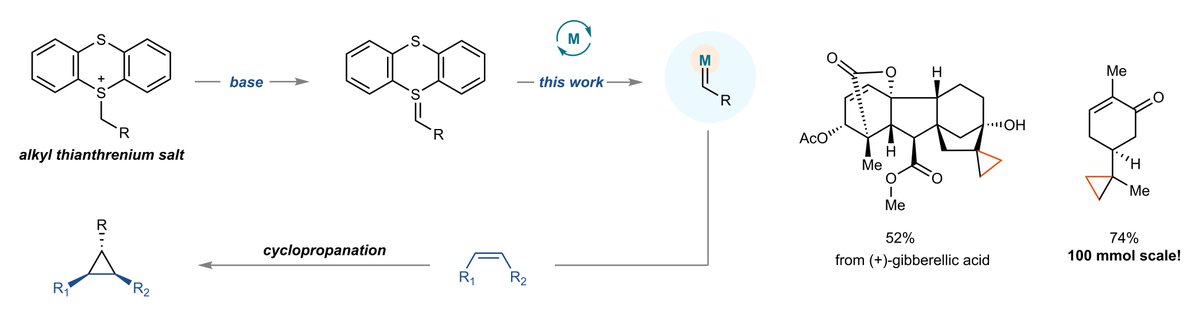
In @Nature, we show that alkyl thianthrenium salts can be used as metal carbene precursors with a great safety profile! Iron- and copper-catalysed cyclopropanations (even on 100 mmol scale!), bond insertions, rearrangements — alkyl–TT salts do them all!
https://t.co/9K19ESb29M
Four in one blow: b-Alkylimides are stiched together by light from carboxylic acids, alkenes, nitriles and NPHIs. Great collaboration with Prof. Cabrera, Pontifica Universitad Catolica de Chile, congrats to Camilo, Marco, and Prithwa. https://t.co/lX9uf1ig2f
Our recent work on the Aza-Büchner–Curtius–Schlotterbeck Reaction (ABCS) shows an interesting trend in reactivity. By employing electron poor aldimines instead of aldehydes, C–C insertion is now favored over the otherwise observed C–H insertion @angew_chem
https://t.co/hCdNAXRKCK
Proud PI moment!
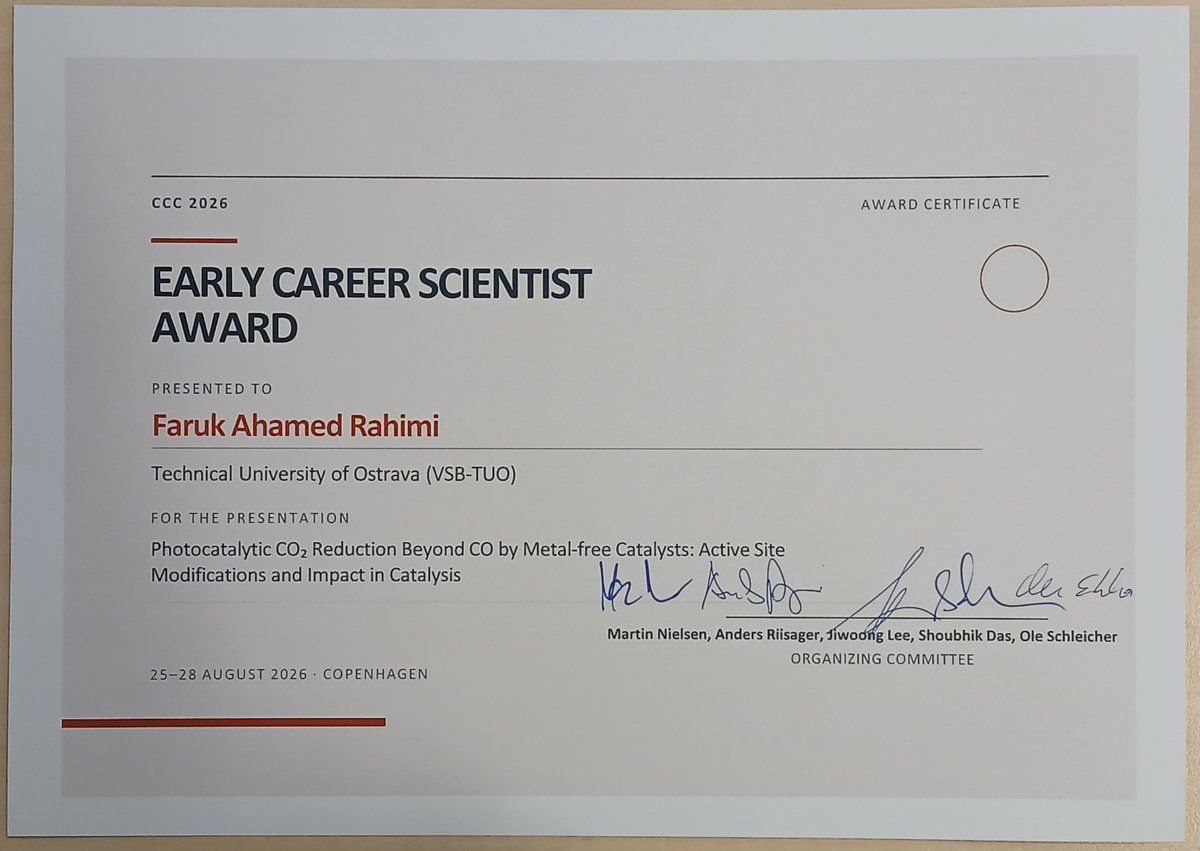
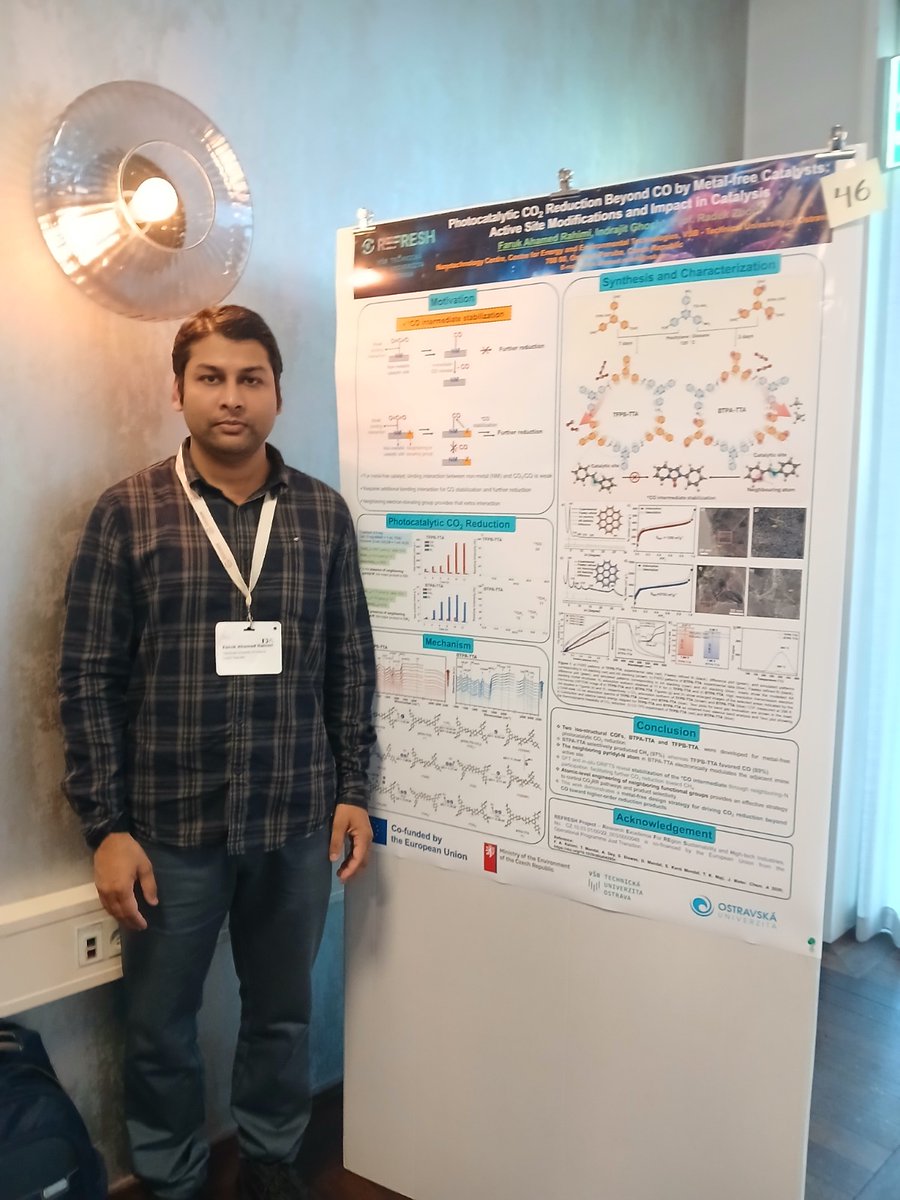
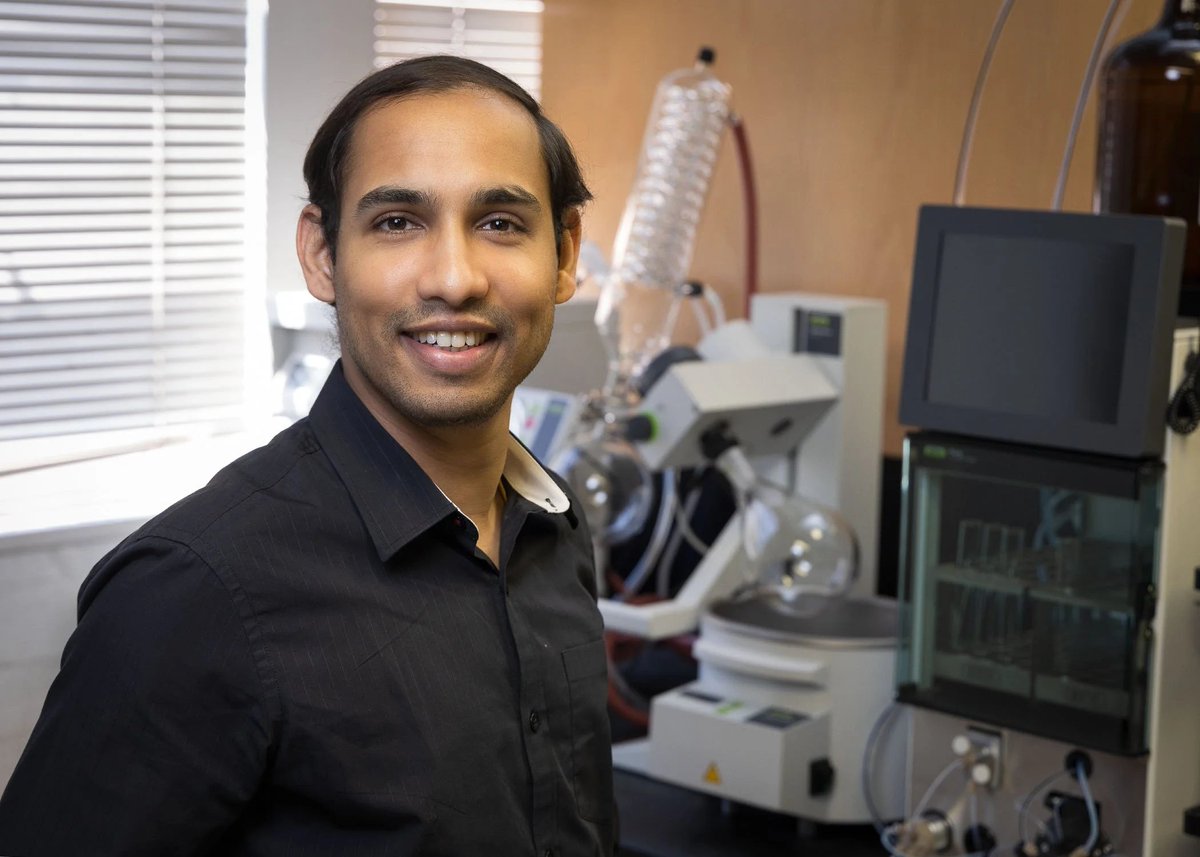
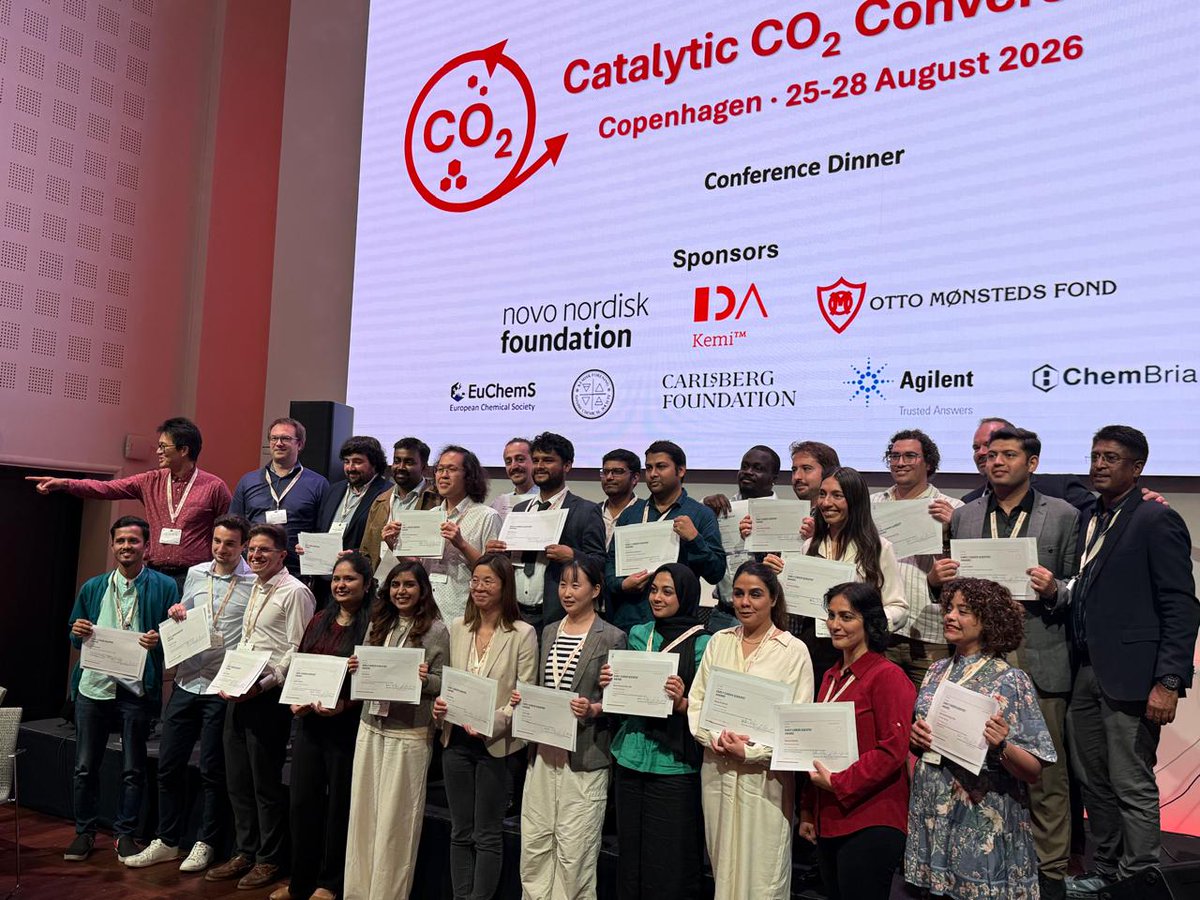
Our group's first international recognition: Faruk Ahamed Rahimi, one of my first postdocs, receives the ''Early Career Scientist Award'' at the International Catalytic CO₂ Conversions Conference (CCC2026) in Copenhagen!
Excellent news for our group. 🎉