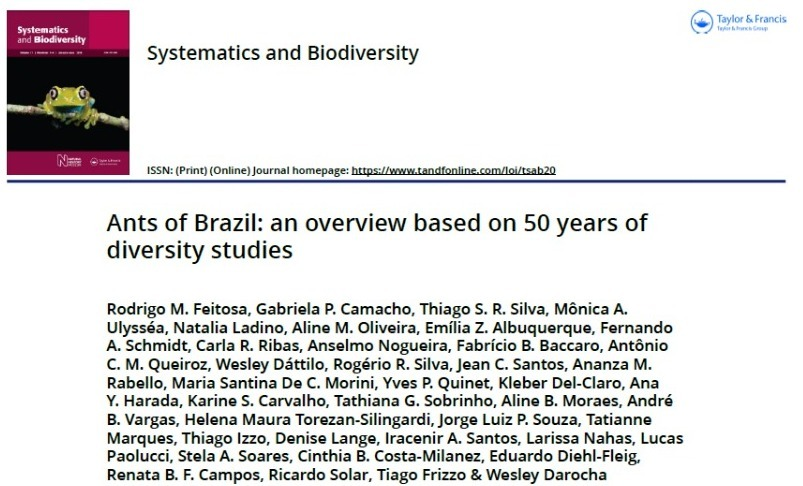
We proudly share results of a huge effort led by our lab and the Laboratório de Sistemática, Evolução e Biologia de Hymenoptera, @mzusp within the scope of the Formigas do Brasil project 🧵... 1/n
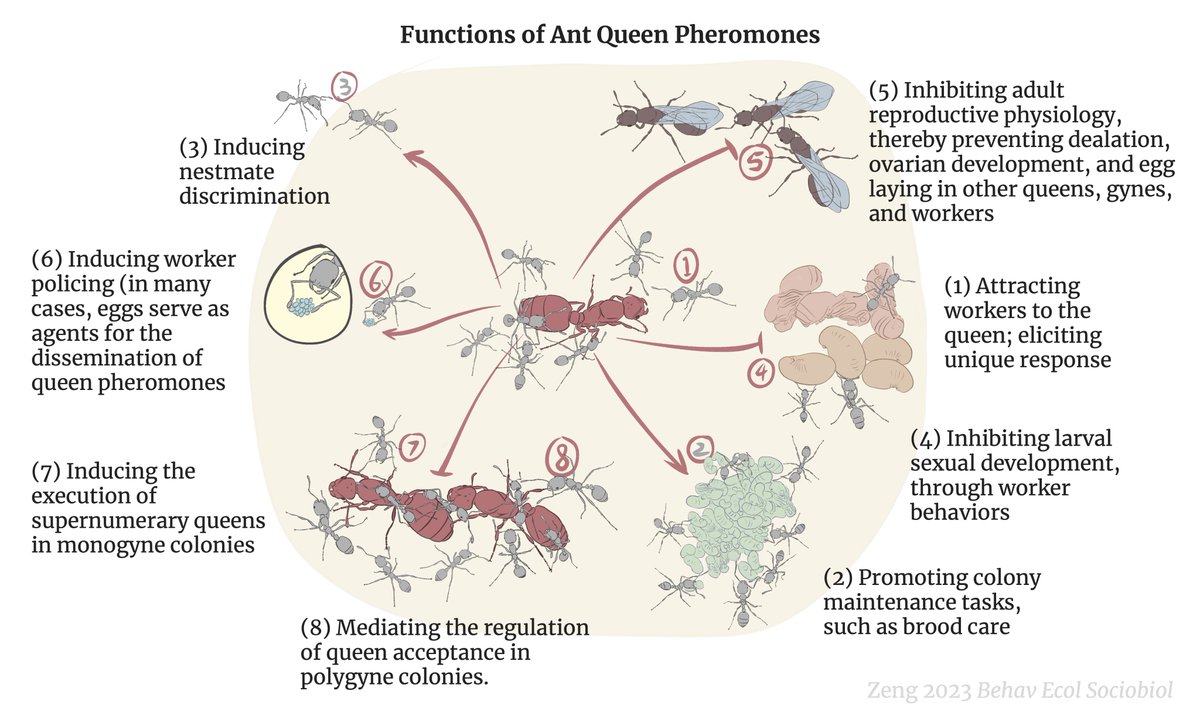
I wrote a review on the functions of 🐜 queen pheromones shown explicitly with behavioral experiments, with a strong focus on the natural histories. >> https://t.co/0QLg3aOWmF Here is a summary figure-
Estamos trabalhando no diagnóstico das espécies de formigas invasoras no Brasil. Caso possa nos enviar amostras de formigas exóticas (ver foto), por favor entre em contato!
Está indo pro Mirmeco esse ano? Ótimo, estaremos lá! Ficaremos gratos se puderem nos levar espécimes!
As formigas do Parque Estadual São Camilo e a história de resiliência de um fragmento de Mata Atlântica • SciELO em Perspectiva | Press Releases https://t.co/1GRDS5b0PC
In this paper https://t.co/CnydZm9x2z we suggest that variation in Pheidole cuticular melanization is strongly correlated with climate variables for majors, but not so for minors.
@DaniPerezBio@FratoniRafael@laschaedler@borlettir
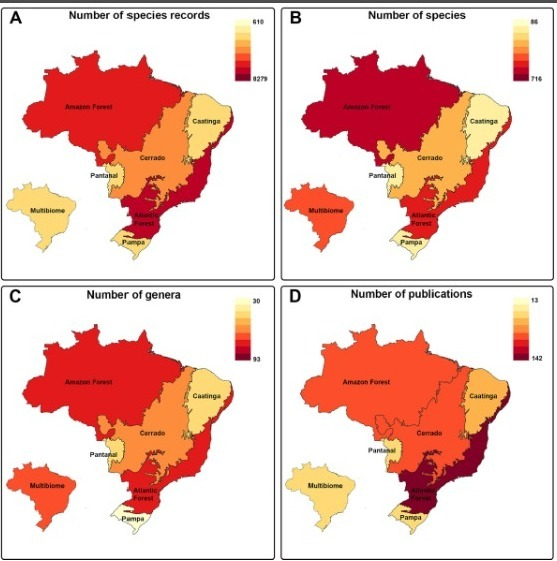
@mzusp This paper is an updated overview of the ant diversity in Brazil, based on about 5000 publications in all Brazilian biomes 2/n
Link here 🐜🥳🌎: https://t.co/HlTcDWvqlO
We proudly share results of a huge effort led by our lab and the Laboratório de Sistemática, Evolução e Biologia de Hymenoptera, @mzusp within the scope of the Formigas do Brasil project 🧵... 1/n
The Technomyrmex ant genus was recorded for the first time in Brazil, in urban areas of Oiapoque, state of Amapá, Amazonia!
The authors also provide an updated key to the workers of the Dolichoderinae genera recorded in Brazil.
Link to the full article: https://t.co/FopWbnTeP5
Big news!!! We proudly present another work resulting from the doctoral project of Dr @ale_cferreira. Here, the authors characterize the morphological diversity in Pheidole's head by comparing differences in size and shape 🤩🐜
Link: https://t.co/D6pzInZ8AM
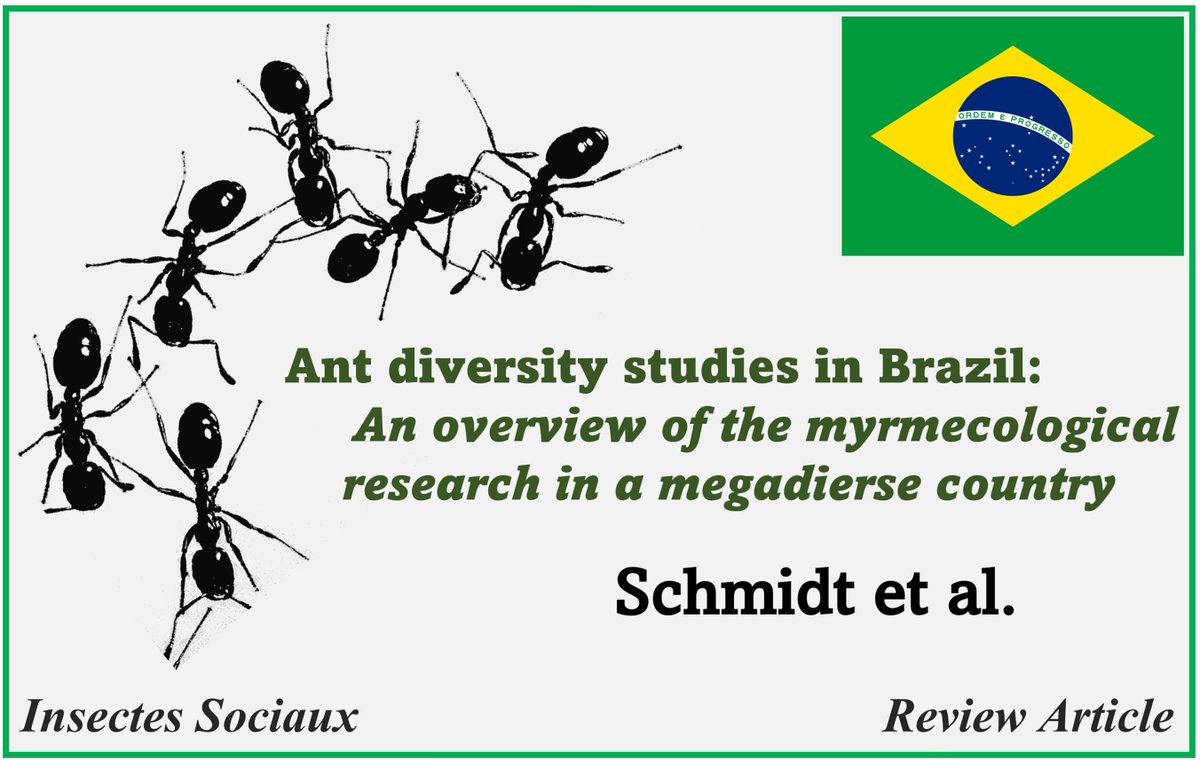
New Review out in Insectes Sociaux: Fernando Schmidt and colleagues compiled a comprehensive #database on 468 #ant#diversity papers carried out in the Brazilian territory.
Read the Review Article here: https://t.co/30IIGDjPjN
#Brazil#research#scicomm
Happy to share our recent contribution to the evolution and classification of ectaheteromorph ants! Say goodbye to the Heteroponerinae and welcome the new genus Boltonia, in honor of the great Barry Bolton! @GabiCamacho@marciopie@bramic21@LonginoJack@TedShultz@entsocamerica
I'm thrilled and honored to announce that I'm the new editor for Formicidae of @Zootaxa. I really appreciate the continued support of all my myrmecologist friends. Special thanks to @LonginoJack and Zhi-Qiang Zhang for the trust.
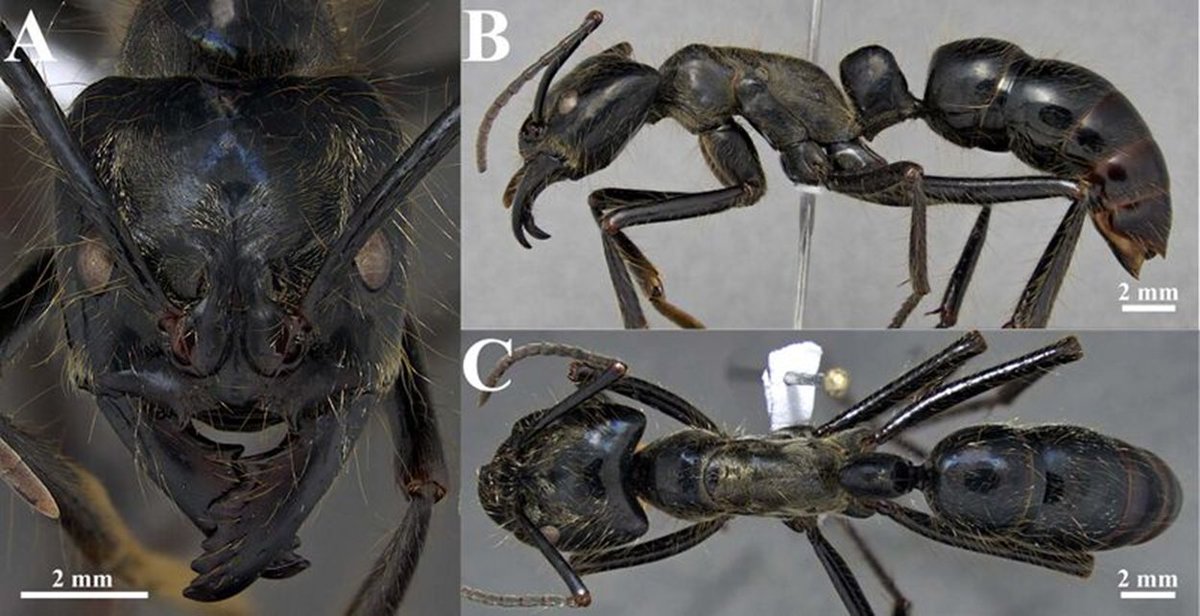
The gift of New Year's Eve came in the hands of @MDiasAmanda and J. Lattke. An exceptional work on Dinoponera taxonomy, as the main result of her MSc. project was recently published: https://t.co/4FKPXlsGtl
May the new year bring all of us health and many ants to look up to!🥳🎇
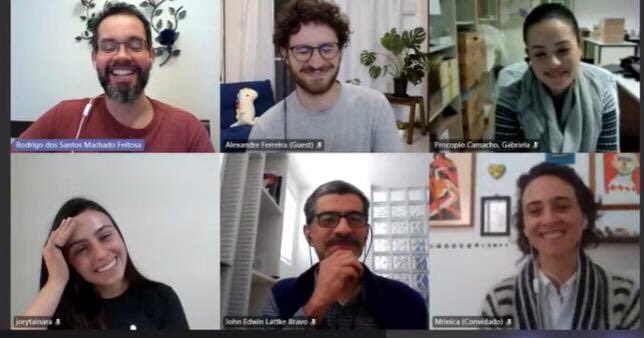
I am very happy to announce that this week I defended my Masters 🎉 I have immense gratitude to the scientists that composed my examination board
@ale_cferreira@GabiCamacho John Lattke and Monica Ulysséa.
I am very happy to announce that this week I defended my Masters 🎉 I have immense gratitude to the scientists that composed my examination board
@ale_cferreira@GabiCamacho John Lattke and Monica Ulysséa.
Monograph Taxonomic revision of the Neotropical ant genus Hylomyrma Forel, 1912 (#Hymenoptera: Formicidae: Myrmicinae), with the description of fourteen #newspecies was published today.
https://t.co/RmwlAC6z7p
#Taxonomy
We proudly share with you one of the most awaited products from our lab. @alineoptera, @Scott_Powell_, and @rsmfeitosa just published a taxonomic study on Brazilian Cephalotes. Please take a look at this great work and share it with your colleagues! 🤩🐜📢https://t.co/keBTzI02hJ
Ever find yourself pondering why ant eyes are so different? If so- you should check out our new paper in Insect Systematics and Diversity 🐜@Haidomyrmex@EntsocAmerica Vision-Linked Traits Associated With Antenna Size and Foraging Ecology Across Ants https://t.co/zVn3qmfS88







![ejtaxonomy's tweet photo. [#Hymenopterist] 🐜 Igaponera curiosa, a new ponerine genus (Hymenoptera: Formicidae) from the Amazon
🔗 DOI: https://t.co/fnXUVAMnOc
✒️ Adrian Troya, @FSRMarcineiro & John E. Lattke (@UFPR), John Longino (@UofUBiology)
#ants #Formicidae #Hymenoptera #Entomology #entomologist https://t.co/o1FWwZYAeZ](https://pbs.twimg.com/media/FVchg5SWYAAhoT7.jpg)