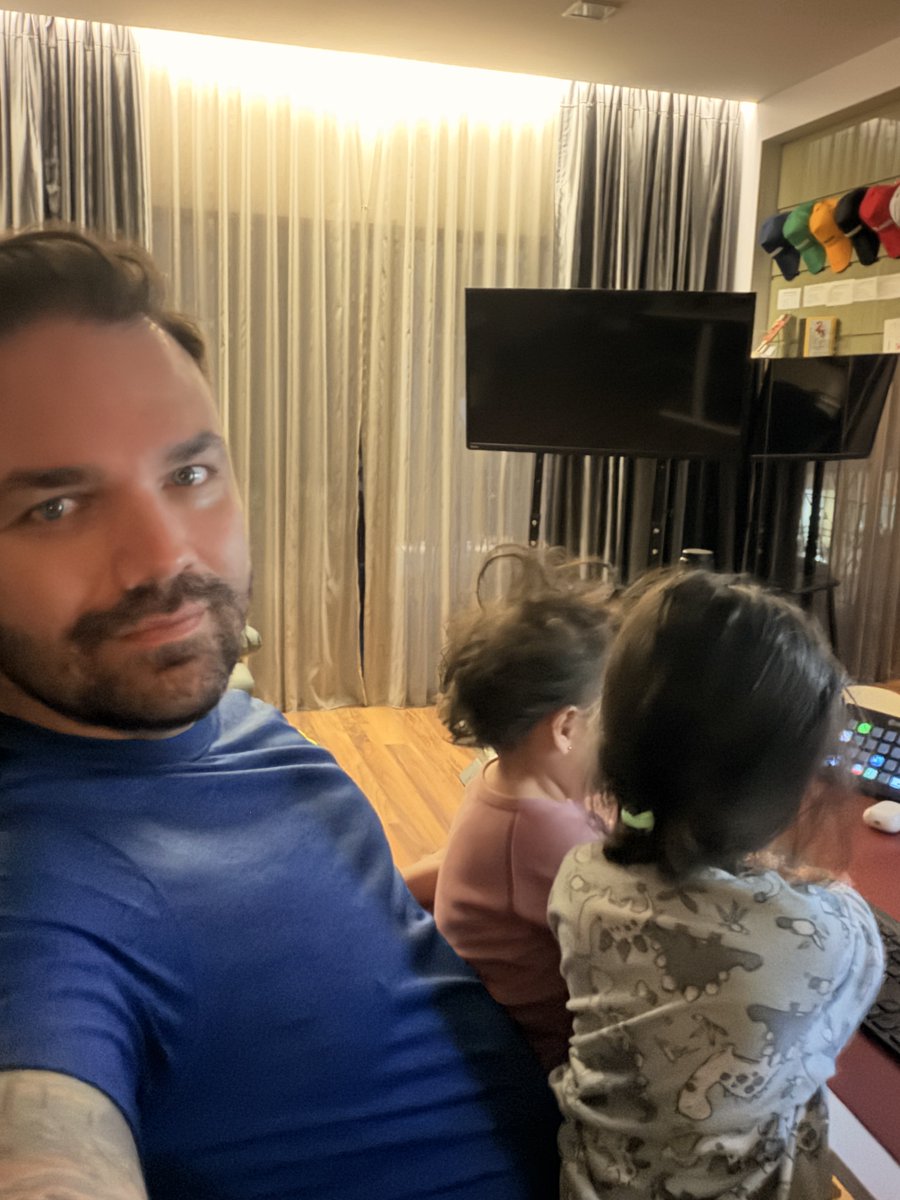
I'm Cip, a Romanian dad of 2 living in Kuala Lumpur.
I'm a Chartered MCSI adviser. I write about money for people who left home.
Tax, pensions, currency and school fees. The rules that cost expat families real money when nobody explains them.
@contliving Fair, it does change how you see the seat. With two kids my maths is different. The ticket is rarely the problem. Bags, seats and airport food are what eat the family travel budget.
School fees were my biggest cost surprise after moving abroad.
And the fee keeps climbing as the kids move up the school.
One British international school in KL lists RM72,370 a year for Year 1 in 2026/27. Year 7 is RM106,790.
That's tuition only, per child, before 6% SST.
After over a decade abroad, I know exactly when I feel furthest from home.
Paperwork and visas.
Forms, queues, stamps, and documents from a country you no longer live in.
Expats, when do you feel furthest from home?
@contliving@iRadhikaGupta Copy the discipline, not the percentage. That line is the keeper. Living abroad, school fees were my biggest cost surprise. Any savings rate has to survive that bill first.
@PeterMallouk Being an owner is harder to start when you live abroad. The question expats ask me most is about moving money across currencies. Often the bigger step is getting it invested at all.
The question expats ask me most is about moving money across currencies.
The gap between rates is easy to miss.
£10,000 into ringgit today is RM54,515 at Bank Negara's midday rate of 5.4515.
One big Malaysian bank's posted rate of 5.3510 gives RM53,510.
That's RM1,005 less.
Old bank accounts are easy to leave for later. In Malaysia, later has a deadline.
Paperwork is when I feel furthest from home. Closing accounts before a move is exactly that kind of paperwork.
A savings or current account left untouched for 7 years becomes unclaimed money. The bank hands it over to the Accountant General.
By the end of January, Malaysia's unclaimed money pile had passed RM13 billion.
It can still be claimed back. But that means forms, from wherever you live by then.
Expat money trap #3: the account you left behind.
Same KL pump, two prices.
Eligible Malaysians pay RM1.99 a litre for RON95, up to 300 litres a month. As a foreigner here, my price this week is RM4.32.
A 50-litre fill is RM99.50 at one price and RM216 at the other.
My price is reset every week. Last week it was RM4.62.
@StockMKTNewz Worth knowing which correction he means. The S&P 500 closed Friday just 2.5% below its 6 October record. Wilson is talking about the average stock, which has had a nasty fall since June. An index fund can look calm while many of its stocks are not.
@business Positioning moved far more than the price. Asset managers went from roughly flat in June to 128,739 contracts net short. Yet the Aussie dollar sat at 70.04 US cents on 20 October, close to its late September level. For Australians abroad, the rate matters more than the headline.
@zerohedge The IIF put global debt at a record $365.5 trillion in the first half of 2026. Rich countries paid over $3.3 trillion in bond interest last year. That is more than the world spent on AI. The flip side is that savers in cash and bonds finally get paid.
@StockMKTNewz Most people in an S&P 500 tracker own this race without picking it. The 10 biggest stocks are about 39% of the index. So $1,000 in the fund puts about $390 into those 10 names. That is a big tilt for a fund most people call diversified.
@business For anyone in Thailand living on a dollar income, these swings are real money. The baht closed at 33.72 per dollar on 22 October, a three-month low. A week earlier it was 33.50. On a $3,000 monthly pension, that is 660 baht more a month. A rebound takes it back just as fast.
@unusual_whales The Fed's own table shows what drives this. In 2025, median net worth was $458,900 for homeowners and $10,600 for renters. The Fed says the under-35 drop came mainly from business equity gains reversing. Owning assets that grow is most of the story.
@WatcherGuru The chart hides the hard part. Bitcoin fell about 84% in 2018 and about 77% in 2022. A $10 habit only pays if you keep buying through drops like that. Most people stop near the bottom, which is when the habit matters most.
Morningstar tracks what fund investors actually earn after their own buying and selling. Over the 10 years to 2025, sector equity funds returned 10.6% a year. The average dollar invested in them earned 9.4%. Money tends to pour into a theme after the run and leave after the drop. Broad US stock funds lost only 0.4 points a year that way.
@TheEconomist For Indians earning abroad, these moves are real money. The rupee closed at 94.94 per dollar on Friday. On 9 October it was 96.73. So US$1,000 sent home now buys 1,790 fewer rupees than two weeks ago. Splitting a big transfer over several months smooths out swings like that.