Amyotrophic lateral sclerosis (#ALS) is an adult-onset neurodegenerative disorder characterized by progressive muscle weakness due to degeneration of upper motor neurons in the brain and lower motor neurons in the brainstem and spinal cord.
Diagnosis relies on clinical criteria with mixed upper and lower motor neuron features, and is often supported by electromyography and genetic testing, which may direct treatment.
📌 Learn more in this JAMA Review: https://t.co/2gvxr8EQUA
To call it or not to call it? That is the question!
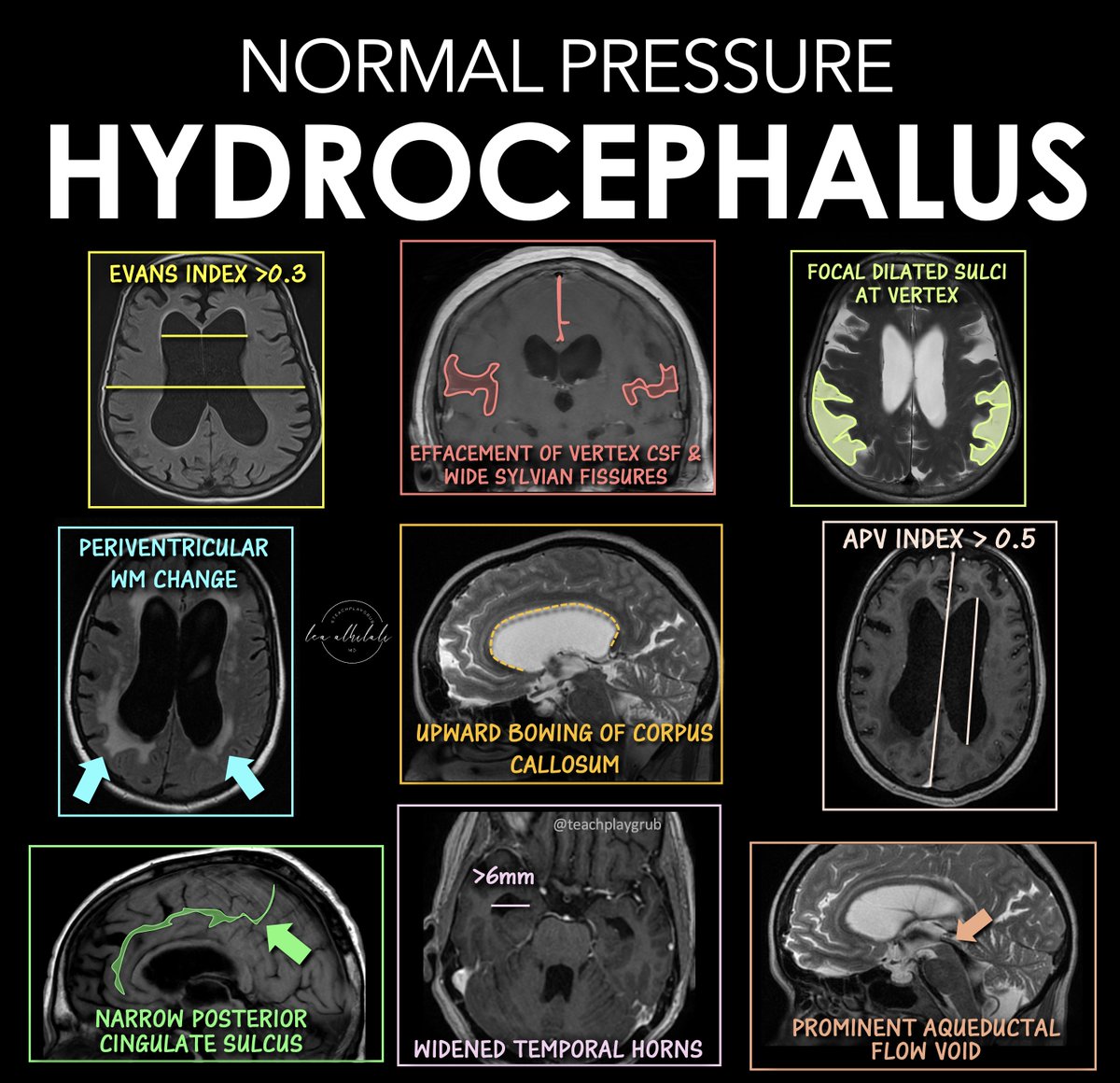
Do you feel a bit wacky & wobbly when it comes to calling normal pressure hydrocephalus on imaging?
You don’t want to overcall it, but you don’t want to miss it either!
Here are the signs of NPH
🔹 Evans Index > 0.3
--Enlarged frontal horns relative to skull width → ventriculomegaly.
Remember it: “One out of three is too big for me!”
🔹 Periventricular White Matter Change
--T2/FLAIR hyperintensity from transependymal CSF flow.
Remember it: “Leaking pressure leaves a glow.”
🔹 Narrowing of the Posterior Cingulate Sulcus
--Tight high-convexity sulci from crowding at the vertex.
Remember it: “The top gets squeezed shut.”
🔹 Effaced Vertex CSF + Wide Sylvian Fissures
--Tight sulci up top but enlarged fissures laterally (DESH pattern).
Remember it: “Dry on top, wet on the sides.”
🔹 Upward Bowing of the Corpus Callosum
--Ventricular expansion pushes the corpus callosum upward.
Remember it: “If the corpus callosum is arched, the patient can’t march (wobbly)”
🔹 Temporal Horns > 6 mm
--Early temporal horn dilation from hydrocephalus.
Remember it: “Big horns before big vents.”
🔹 Focally Dilated Sulci at the Vertex
--Patchy enlarged sulci despite surrounding crowding.
Remember it: “Holes in a leaky roof = too much water on the brain!”
🔹 APV Index > 0.5
--Increased ventricular-to-parenchymal proportion suggesting hydrocephalus.
Remember it: “Glass half full is too much!”
🔹 Prominent Aqueductal Flow Void
--Increased CSF flow through the aqueduct on MRI.
Remember it: “If the aqueductal flow is super black, the ventricles are out of whack.”
Classic NPH imaging theme: enlarged ventricles + tight high convexities + disproportionate CSF redistribution.
Hopefully now you won't wobble on the diagnosis of NPH!!
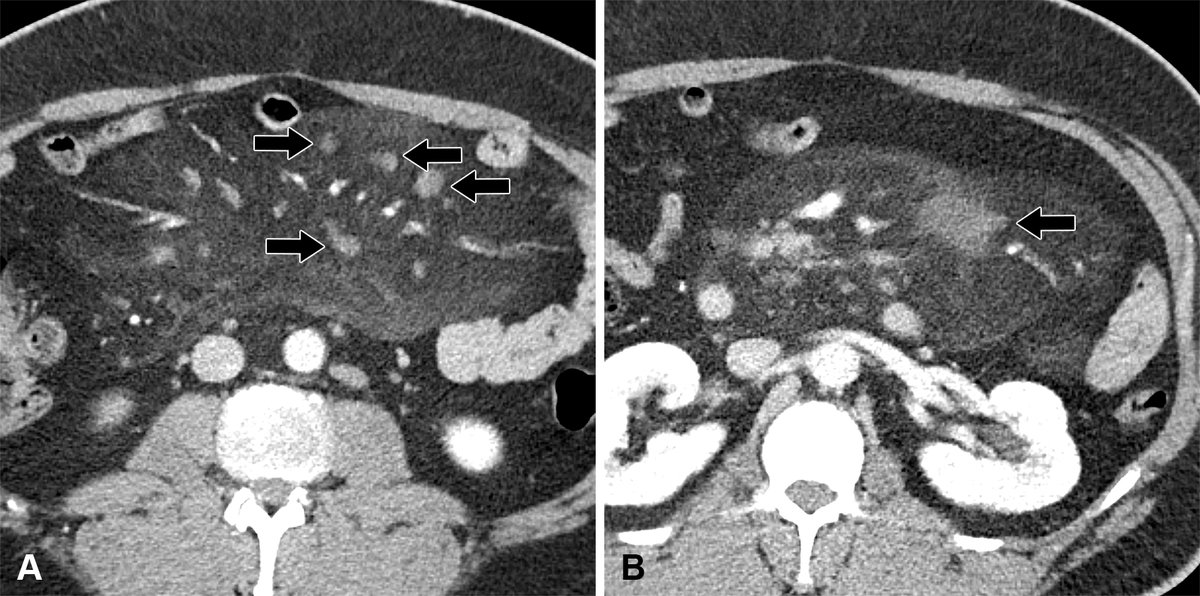
Incidental findings: common, often benign--but not always. This review updates ACR guidance, highlights gaps, and challenges prior recommendations across organs. A must-read to refine management and avoid unnecessary workup. @UCDRadiology https://t.co/SFsxFZA1LA
Happy to share our new review article published in
@EJR_official_
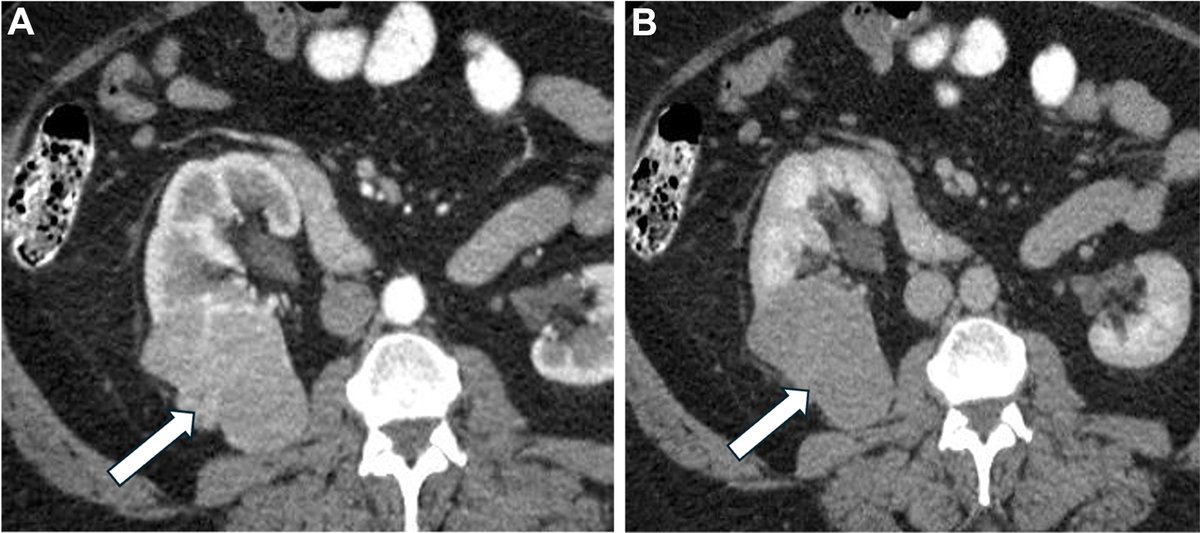
📌 CT and MR evaluation of main pancreatic duct dilation: A radiologist’s guide to differentiating benign from malignant causes
📷 MPD dilation requires careful imaging differentiation
🔗https://t.co/3NVJhkPFH0
🥉3rd place - by 0.5 points
Dr. Christina Karamarkou
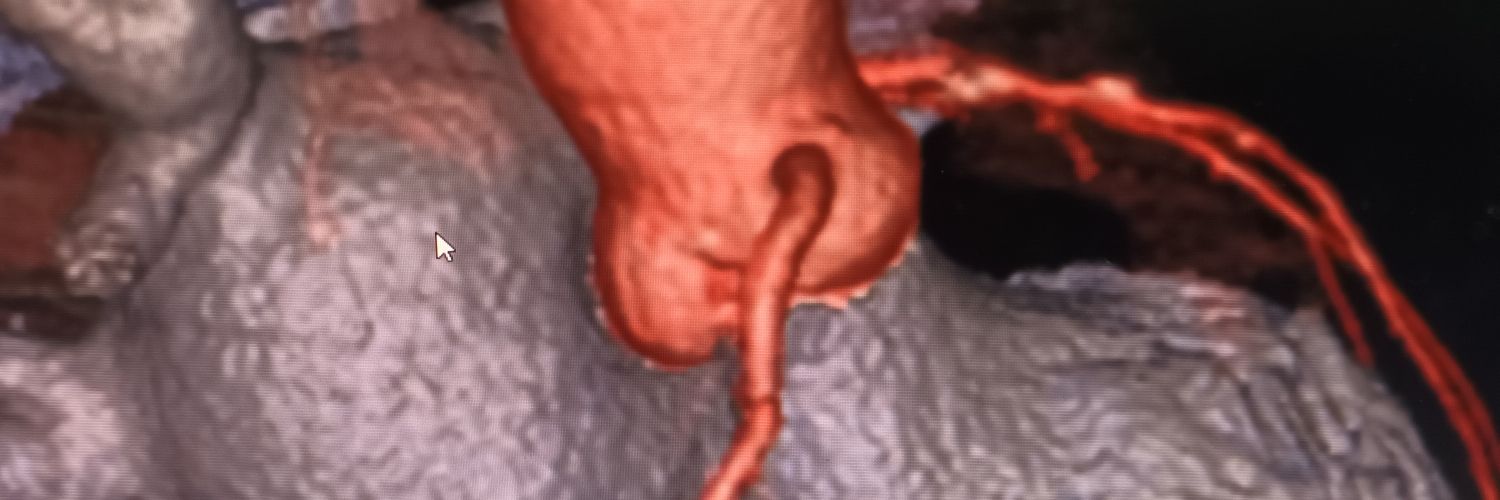
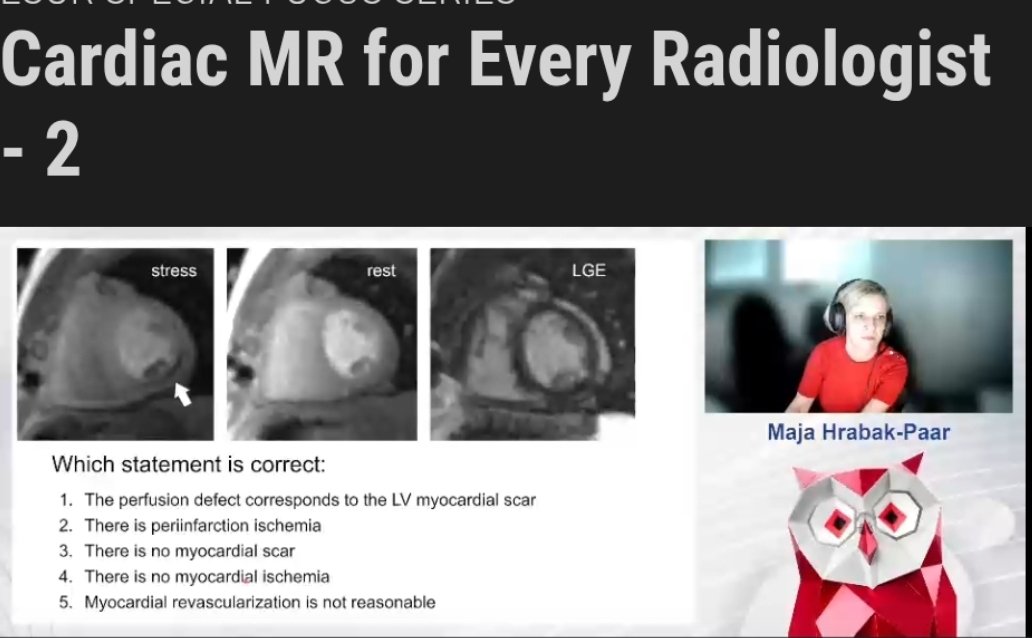
Noninvasive Dx of PHTN by #whyCMR in a Young Male
Review the case here👇
https://t.co/tLFUiZgWlU
@JStojanovskaMD@MansiV1991@RayRcnita
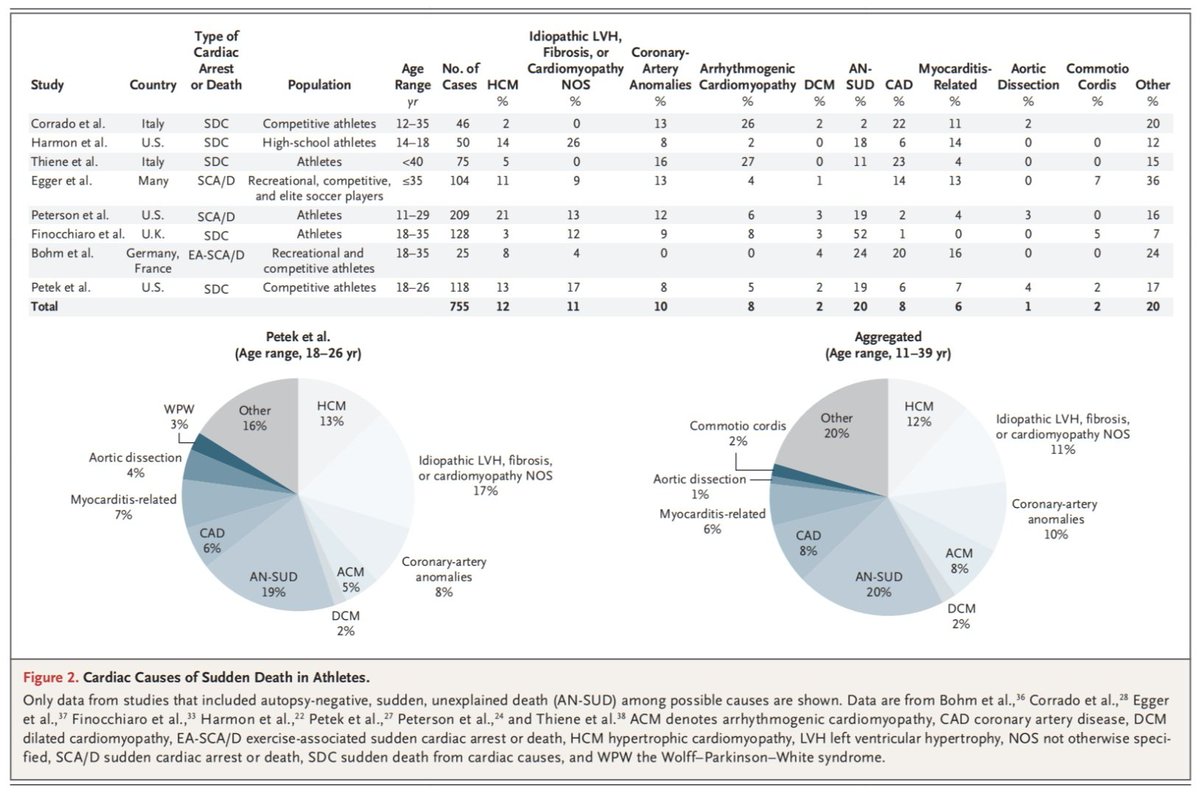
Muerte Súbita Cardíaca en Atletas. 🫀☠️⚡️
✨️Review 2026 @NEJM 💯
🔶️La incidencia de MSC en atletas varía según edad, sexo, raza, tipo de deporte y determinantes sociales.
🔶️Es más frecuente en hombres, especialmente en basquetbol, fútbol, fútbol americano y hockey. 🏀⚽️🏈
🔶️En atletas <25 años predominan miocardiopatías, canalopatías y anomalías coronarias; ≥25 años, la causa principal es enfermedad coronaria. 💥🫀
🔶️La muerte súbita con corazón estructuralmente normal es hoy una de las causas más comunes➡️ Pbe origen arrítmico (canalopatías).⚡️
🔶️La prevención primaria se basa en tamizaje CV (historia clínica + EKG).
🔶️La prevención secundaria depende de planes de acción de emergencia y disponibilidad de DEA, con supervivencia actual de hasta 80–90% cuando la desfibrilación es temprana.
🔶️La evidencia actual demuestra que muchos atletas pueden regresar al deporte tras tratamiento específico, incluso con DAI, mediante toma de decisiones compartida. 🧐🔎
📄🆓️⤵️
https://t.co/wWtff5MtED
https://t.co/CdWGmQrHEy
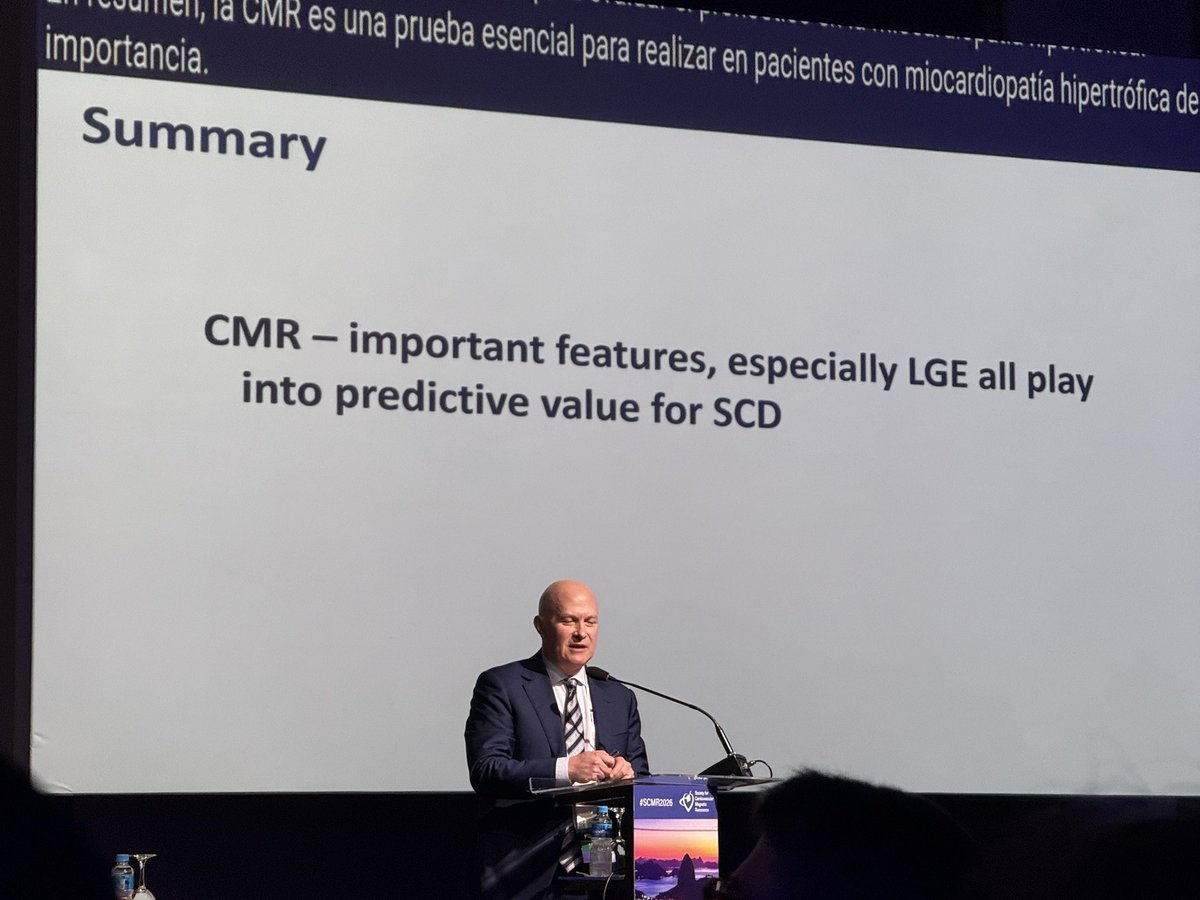
La RMC ha transformado el manejo: reduce la necesidad de biopsia (reservada para casos graves/refractarios) y permite decisiones más seguras sobre retorno a ejercicio/deporte (restricción remisión clínica + imagen). https://t.co/FMGKAtEpoK