Are you interested in #SpatialOmics? Are you developing a method or a pipeline for your data? Or are you just curious how well foundation models really work in SCG?
🧬 Join us Dec 7-11 for the next #OpenProblems hackathon joint with SPACEHACK 5.0.
https://t.co/63HdLnGykJ
1/n We're very excited to announce the release of #DeepRVAT, a deep neural network approach to learn burden scores from rare variants by integrating dozens of annotations in a data-driven manner.
1/7 How do 1000s of small genetic changes cause complex diseases? The core gene model helps to explain and we developed a novel method base on graph neural networks to identify core genes for 5 groups of complex diseases. https://t.co/EWmHyrpclF
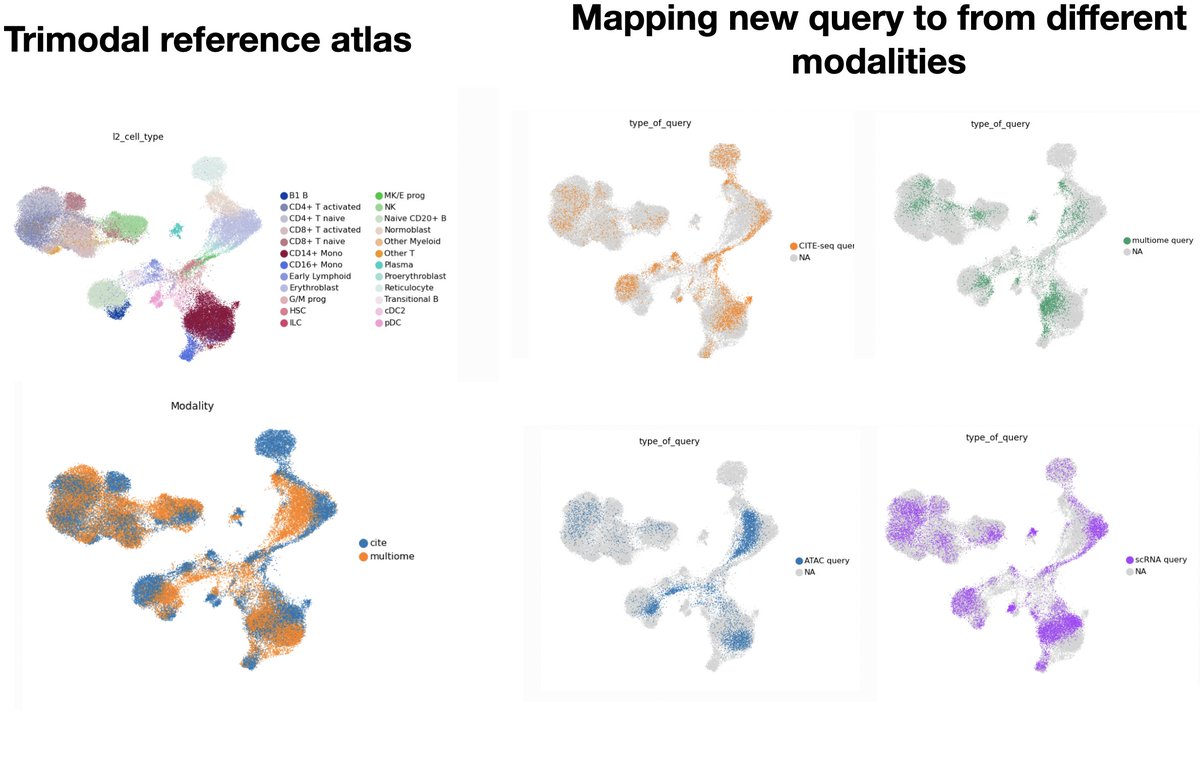
Are you wondering how to integrate scRNAseq and scATAC-seq or combine it with a CITE-seq to have tiromodal single-cell reference atlas? How about mapping a new query data (e.g., a new scATAC or scRNA)? Check out our new Multigrate vignette: https://t.co/L7bp29nCM5
1/n Single-cell data analysis is complex with many tools to choose from - but which ones work best and should be used when? Led by @lukasheumos and @AnnaCSchaar, we wrote a free online book that aims to guide single-cell data analysts: https://t.co/UMU5c7S6pF
Can't wait to dive into this extraordinary pool of models and discussions filled up by all the incredible participants! Big thanks to all supporters and competitors!
And that's a wrap! The 2022 Open Problems Competitions is closed 🎉
It's been astounding seeing such participation, with >1,700 competitors making >30,000 entries. This was the biggest single-cell competition ever!
A great overview of the current state of benchmarking in single-cell data analysis. This review really captures the heart of what we're trying to work for in #OpenProblems in Single-cell analysis.
🎓 It's #PhD application season again! 🎓 🥳
Don’t miss your chance to be trained as a next generation #DataScientist in an interdisciplinary environment with great training opportunities!
APPLY NOW at our Munich School for #DataScience
👉 https://t.co/vgQ6TK8XHr
Thanks to all MUDS PhD students, PIs, guests & keynote speakers for making this such an amazing retreat packed with great science at beautiful Spitzingsee, Bavaria! 🙂 🤩
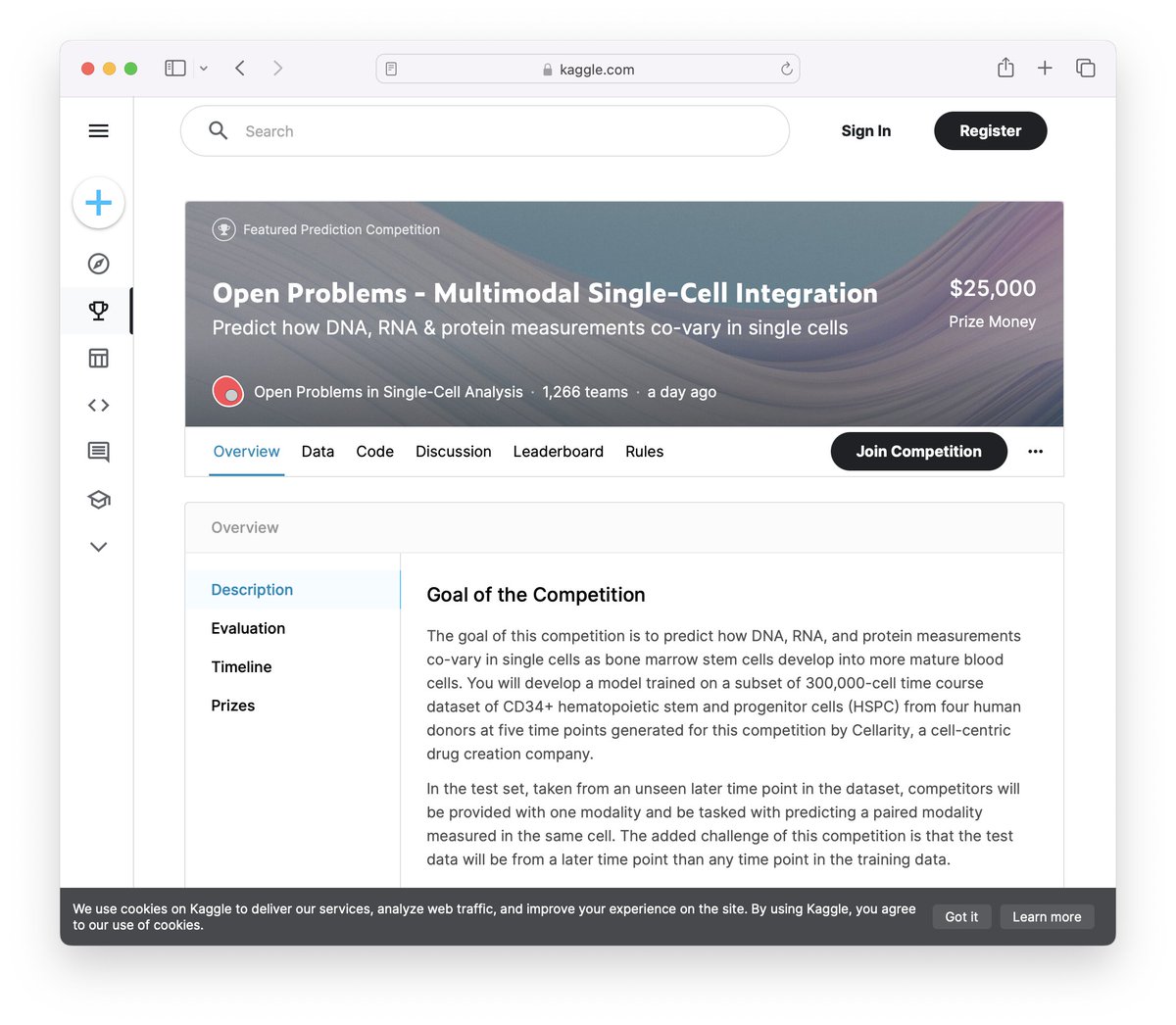
Our current #OpenProblems competition for NeurIPS 2022 is 1 month old, and already >500 teams have submitted. Predict multimodal cellular profiles in time series data to get involved! Featuring a simplified submission system, a new dataset, and $25k in prizes!
Grateful to the https://t.co/XoP3oA0fTc team for taking me on board and very happy to see the results and lessons learned from last year's NeurIPS competition now published in #ICML2022 proceedings! Excited to see where round two will bring us this year!
Conclusions and learnings from the https://t.co/upxA8GAS0r competition at NeurIPS 2021 is now live in the #ICML2022 proceedings 🎉
Read more about challenges and lessons learned adapting the Common Task Framework to single-cell biology 👇
https://t.co/BPoAXgGDRd
Any Munich-based master students interested in trying out single-cell and machine learning? We have a TUM Data-innovation lab project with a great mentorship team who has been driving the state-of-the-art in atlassing! If interested, check: https://t.co/Ze3pKRa3iS @TU_Muenchen
We are very excited to announce scverse (https://t.co/B4lDGfWDPQ), a new consortium around the core Python packages for single-cell omics data analysis. scverse is a cross-lab effort to ensure the longevity and interoperability of the single-cell analysis ecosystem in Python.
Our work “Single-cell eQTL mapping identifies cell type-specific genetic control of autoimmune disease” just published in @ScienceMagazine. The work started with the creation of the OneK1K cohort, consisting of scRNA-seq data on PBMCs from ~1000 donors https://t.co/Uzskay7TeM 🧵
Metabolic modeling based on single cells transcriptome is no longer black magic! - Glad to share the amazing cover of our review article at @MolMetab …
@fabian_theis@davidsebfischer
https://t.co/ZSEAwXcw2w
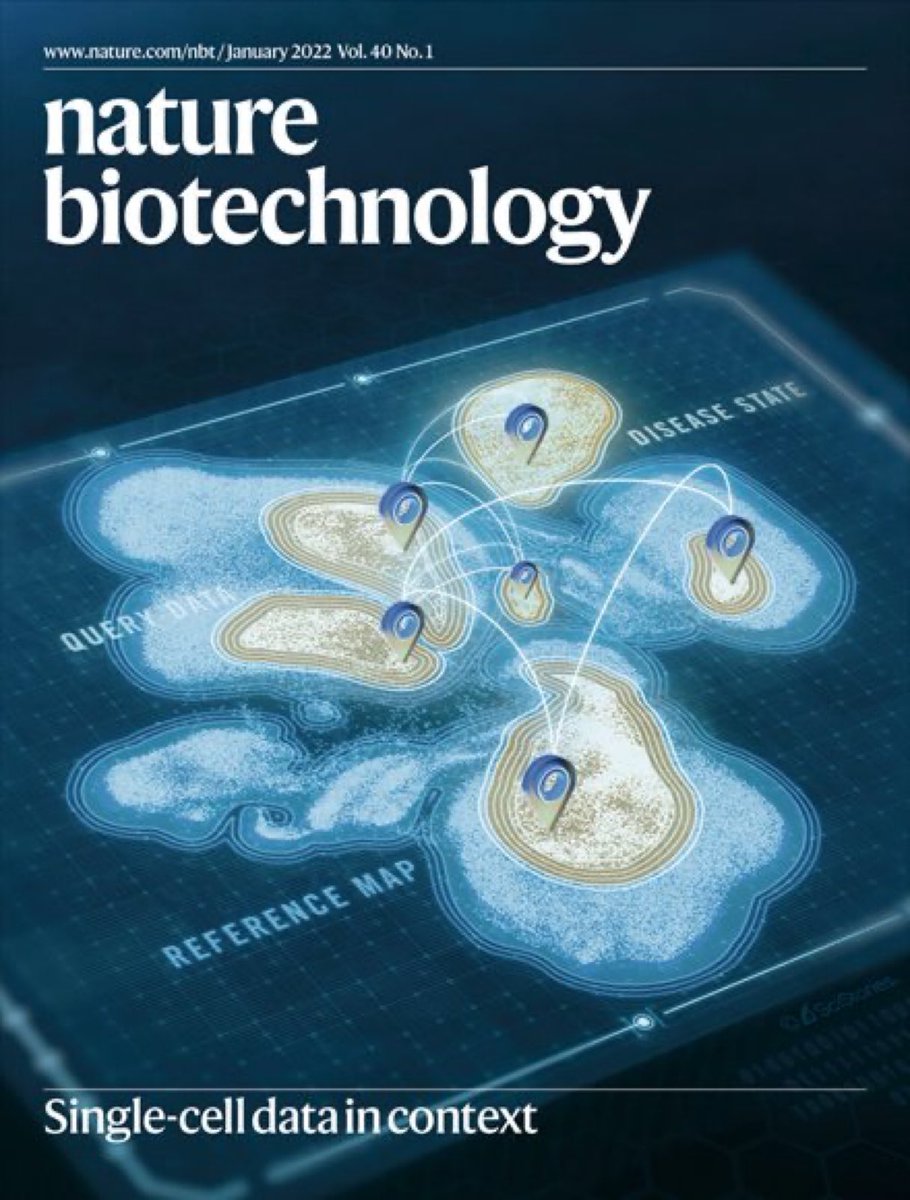
Honored that our scArches paper made cover @NatureBiotech! It allows you to project (or query) single cell expression data onto existing reference atlases without need for full data integration by leveraging transfer learning.
https://t.co/S2ZMqjqOYF
https://t.co/HEO2RPikJT
Finally published in @naturemethods: CellRank for directed #SingleCell fate mapping, our take on studying cellular dynamics using RNA velocity. Fantastic collab between labs of @dana_peer @sloan_kettering and @fabian_theis@HelmholtzMunich, read at https://t.co/AlgyUvI1PP. 1/17
What a great surprise to come back to after Christmas holidays to find our paper on benchmarking atlas-level single-cell data integration methods has finally been published. https://t.co/qAbFF8j7Fi . A Tweetorial:
1/N
Nice way to start 2021 seeing this published! 🎉
Easily the biggest project I have ever contributed to. @MDLuecken did a great job leading us but wouldn't have been possible without input from everyone involved.
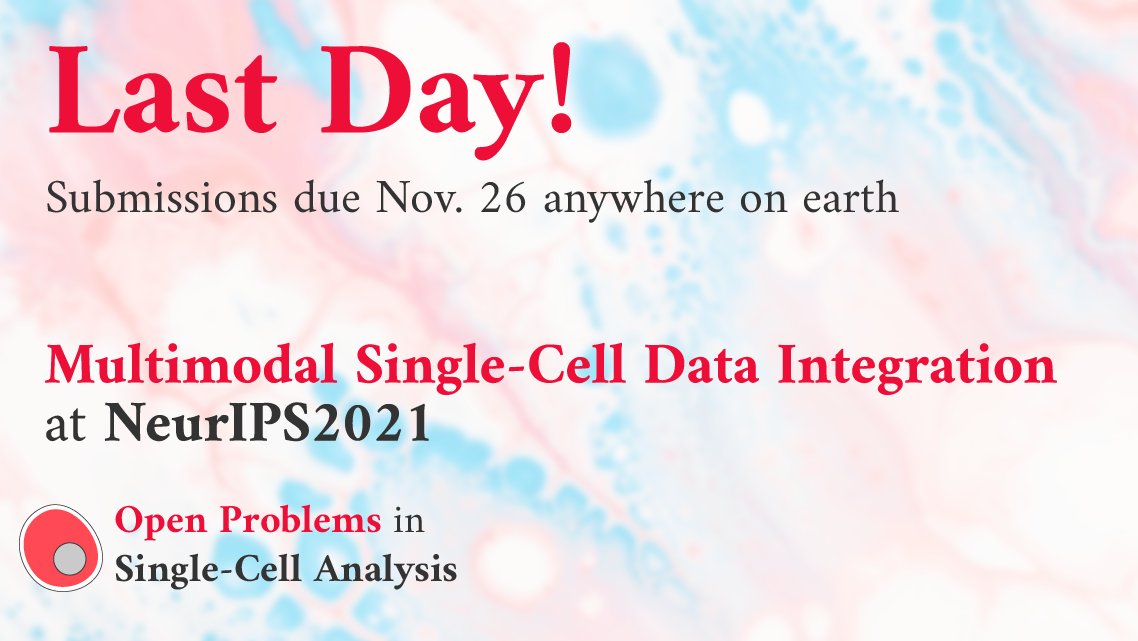
I can't believe it's the last day of our #NeurIPS2021 competition on multimodal single-cell data! Thanks to the dozens of folks who helped make this possible 👏🎉🙏
Get your submissions in by 11:59pm Nov 26 anywhere-on-earth!
Learn more: https://t.co/zk40bunP9j