Introducing Higgsfield API.
50+ frontier models in one API, at lower prices than a subscription.
> Get up to 50% OFF discount on your 3 favorite models
> Lock in your max-discount within 7 days
> Pay per use with no commitment
Build your own Higgsfield with the best prices in GenAI industry.
Available at https://t.co/Ow8CcuTQ1s
المستقبل وصل رسمياً لمهندسي البرمجيات..! 🚨🚀💥
مهندس في SpaceXAI يكشف تفاصيل مرعبة عن آلية العمل الداخلية
في ورشة عمل مدتها 20 دقيقة، شرح المهندسون كيف تبني فريقاً كاملاً من الـ Agents لبرمجة مشاريعك وتوفير مئات الساعات، في محتوى أثمن من دورات تدريبية بآلاف الدولارات! ⚡️🤖
El día de hoy Microsoft hizo público un proyecto nuevo llamado tgrep que permite buscar en monorepos enormes sin tener que escanear todo el código en cada query.
En vez de funcionar como grep o ripgrep (que leen archivo por archivo), tgrep construye un índice de trigramas, levanta un server local y solo toca los archivos que pueden coincidir. Resultado: búsquedas casi instantáneas y, según sus benches, hasta 7x–52x más rápido que ripgrep en repos tipo Chromium o gecko-dev.
Está en Rust, es MIT, respeta .gitignore y ya lo metieron en GitHub Copilot CLI.
Repo 👉 https://t.co/tbrLS4l7lj
Una joya de repositorio. Te da todos los pasos para proteger y asegurar tu servidor Linux.
Si tienes un VPS, esto es la clave:
→ https://t.co/yJD2GnXFPj
Bibliotecas de JS sin las que no puedo vivir:
🛡️ zod → validaciones
📅 Temporal → fechas
📊 tanstack-table → tablas
🔐 better-auth → auth
🎞️ motion → animaciones
🔤 fontsource → tipografías
📈 chart.js → gráficas
🐻 zustand → estado global
🖱️ pragmatic-drag-and-drop → drag & drop
🧭 nuqs → estado en la URL
Hoy se cruzó un umbral raro en IA:
Ya puedes generar video más rápido de lo que lo ves.
Usando Minimax H3 Max, un usuario en X armó un livestream infinito, bajo la tematica de Rick y Morty cambiando de canal y la tele generando shows interdimensionales en vivo.
Y es que ahora puedes generar 15 segundos de video en 9 segundos. Antes tardaba 2–5 minutos.
Eso habilita livestreams que no se acaban nunca.
Y otro usuario (@levelsio ) también ha creado su livestream donde pueden probarlo por ustedes mismos, usando este enlace: https://t.co/Hq7addbBbk
NVIDIA just made paying for AI feel optional.
They dropped an open model with a 1M token context.
You can feed it an entire codebase, a full data room, or months of chat logs in one prompt.
Run it on your own hardware, and the per-token bill disappears.
Bookmark this and come back.
Open beat closed. Again.
He creado el siguiente drive con los logos en png de las 48 Selecciones del Mundial 2026 para su uso en gráficas, vídeos, etc. Si le sirve así sea a uno, ya cuenta como gol.
📂 https://t.co/uO6CTlJA9d
Vaya locura lo que se puede hacer hoy en día con Opus 4.8. 🔥
Un chico ha hecho un tutorial buenísimo en el que, en solo 12 minutos, te enseña a crear sitios web en 3D en un abrir y cerrar de ojos gracias a la IA.
Olvídate de pasarte horas diseñando o picando código; aquí la tecnología lo resuelve todo desde cero.
Guardatelo🔖
Anthropic engineer showed how one person can run 5 AI agents, that code, test, review, and deploy at the same time.
In 30 minutes they built the whole thing live in one session.
Here's what they cover:
> when to use one agent vs a full team
> how to split work so agents don't step on each other > the exact framework for deciding what each agent handles
that's exactly why, I put together a guide on building agent teams that actually work.
full guide in the article below 👇
En lugar de perder una hora viendo una película, mira esto.
En solo 14 minutos, un ingeniero de Anthropic, autor de Building Effective Agents, te enseñará más sobre cómo construir agentes de IA correctamente que lo que muchos desarrolladores descubren por su cuenta en meses.
Posiblemente la parte más compleja de toda la IA.
(Guárdalo, te será muy útil)
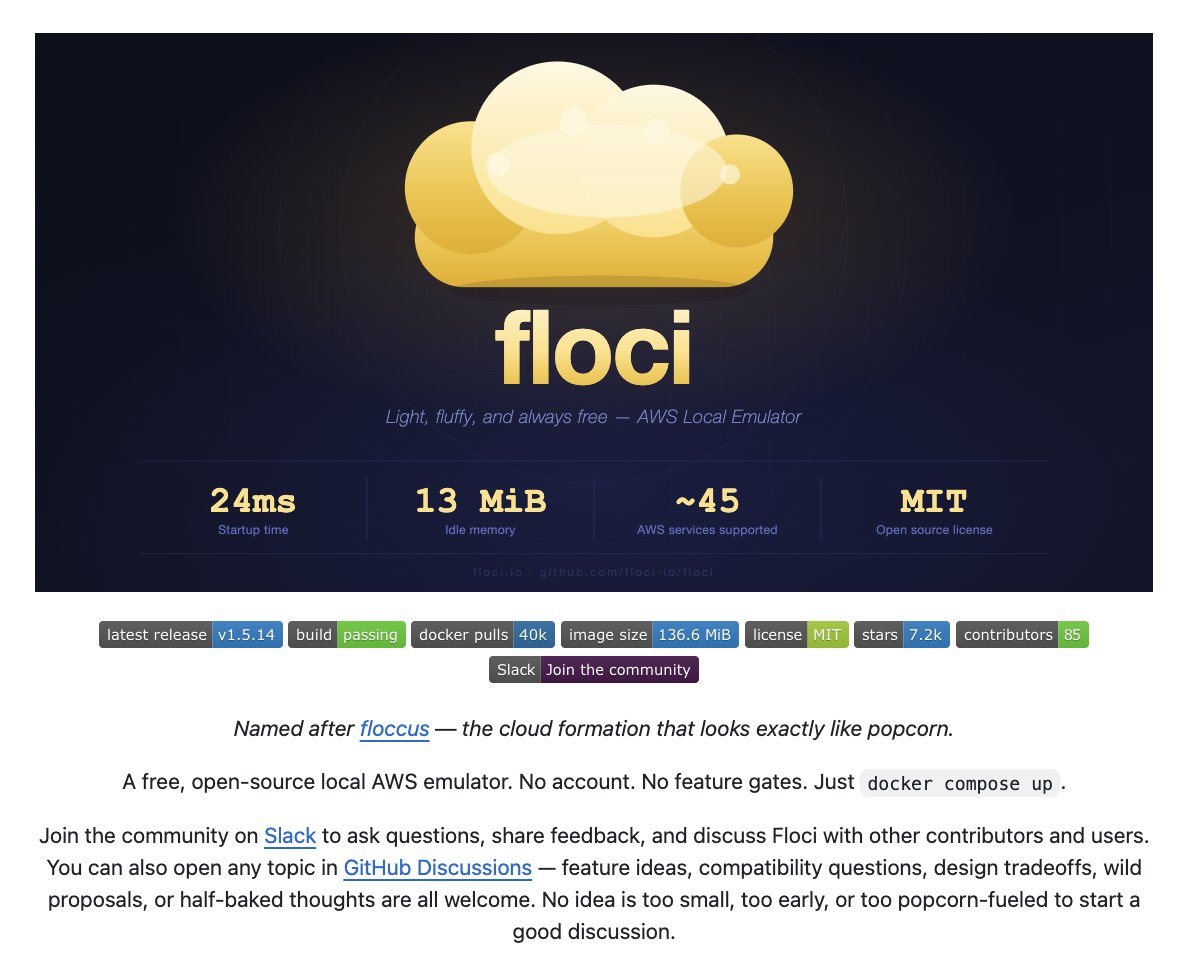
Someone has open-sourced the entire AWS cloud in 13 MB.
It's called Floci. A single Go binary that runs S3, Lambda, DynamoDB, SQS, IAM, API Gateway and 39 other services entirely in memory.
→ Boots 45 services in under a second
→ Uses 200x less RAM than a single Chrome tab
→ Existing SDK scripts work untouched
→ No Docker. No Python. No Java VM.
100% Open Source.
🚨 Anthropic just showed a 24-minute workshop on how to actually do prompts for Claude.
Taught by the people who built it.
Free. No registration. No paywall.
I've seen $300 courses that don't cover what they teach in the first 8 minutes.
Watch it and bookmark it now.
Your website went down at 3 AM last Tuesday.
You didn't know. Your monitoring tool didn't catch it. Or worse, you don't have a monitoring tool because Pingdom wanted $15 to $85 a month and you thought "I'll set one up later."
Your customers found out before you did. Someone tweeted about it. Someone emailed support. Someone left. You woke up to the damage already done.
Pingdom: $15/month for 10 checks. $85/month for 50 checks.
UptimeRobot: free tier is now non-commercial only. Business use starts at $7/month.
Datadog Synthetics: $5 per 10,000 API runs. $12 per 1,000 browser runs.
Better Uptime: $29/month for 100 monitors.
There is a self-hosted monitoring tool that watches everything for you. Every website. Every server. Every API. Every database. Every port. 24/7. For $0.
It is called Uptime Kuma. 85,600+ stars on GitHub.
Here's what it monitors:
→ HTTP and HTTPS websites. Check every 20 seconds.
→ TCP ports. SSH, FTP, SMTP, database connections.
→ Ping any IP address or domain.
→ DNS records. Know immediately if someone hijacks your domain.
→ SSL certificates. Warned before they expire and your site shows the red warning.
→ Docker containers. Monitor services inside your stack.
→ Steam game servers. Yes, even game servers.
→ Keyword monitoring. Alert if a specific word appears or disappears from a page.
→ JSON query monitoring. Check API responses for specific values.
→ Push monitoring. Track cron jobs and scheduled tasks.
Here's how it tells you:
→ 90+ notification channels. Not a typo. Ninety.
→ Telegram, Discord, Slack, Email, Pushover, Gotify, PagerDuty, Teams, Webhooks.
→ And 80 more.
Here's what else it does:
→ Beautiful status pages. Share a public page so your users can check uptime themselves.
→ 75+ language dashboard.
→ Ping charts. Real-time. For every monitor.
→ 2FA login. SSL certificate expiry tracking. Response time history.
→ Proxy support. Reverse proxy compatible.
→ Dark mode. Because you're checking server status at 3 AM.
Here's the wildest part:
Pingdom pings your site from their servers. If Pingdom goes down, you get a false alert. If AWS us-east-1 goes down, both go down together.
Uptime Kuma runs on your own machine. Put it on a $4 VPS in a different region than your app. Put it on a Raspberry Pi in your closet. Put it on a free Oracle Cloud instance. When your app goes down, your monitor is still up.
20-second check intervals. Most paid tools charge extra for that.
Multiple status pages. Point statusdotyourcompanydotcom at Uptime Kuma and your customers see the incident in real time. No extra fee.
Pingdom for the same coverage: $85/month. $1,020/year.
UptimeRobot Team: $29/month. $348/year.
Datadog for a small startup: $500+/month easy.
Uptime Kuma: $0. Unlimited monitors. Unlimited status pages. Unlimited users. Your data. Your server.
Runs on a Raspberry Pi. Runs on a $5 VPS. Runs on the old laptop in your closet.
85,600+ stars. 7,670+ forks. 400+ contributors. 30 releases. MIT license. Active since 2021.
The most beautiful monitoring dashboard you have ever seen. On your own server. For free.
100% Open Source.
(Link in the comments)
Why is no one talking about this?
@nvidia is offering around 80 AI models via hosted APIs absolutely for free.
You get access to MiniMax M2.7, GLM 5.1, Kimi 2.5, DeepSeek 3.2, GPT-OSS-120B, Sarvam-M etc.
This plugs straight into OpenClaude, OpenCode, Zed IDE, Hermes agent and even with Cursor IDE.
Setup:
– Grab API key: https://t.co/Wfdclm0hY2
– base_url = "https://t.co/VOGC10LmGP"
– api_key = "$NVIDIA_API_KEY"
– select model (e.g. minimaxai/minimax-m2.7)
If you’re building or experimenting, this is basically free inference.
Lock in and start building today anon.
Thank me later.
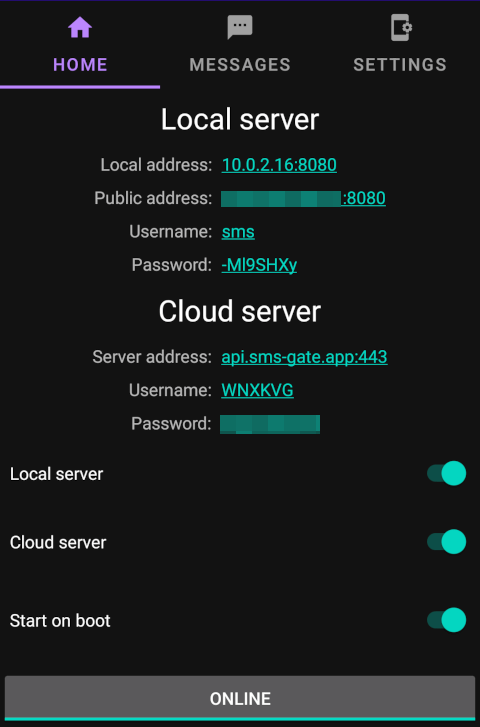
🚨 Twilio charges $0.0079 per SMS. Someone just turned any old Android phone into a free SMS gateway. Unlimited messages. $0.
It's called SMS Gateway for Android.
Install it on any Android phone. It becomes a full SMS sending and receiving server with an API.
No Twilio. No MessageBird. No per-message pricing. No contracts. Just an old phone and a SIM card.
Here's what's inside this thing:
→ Send and receive SMS through a REST API from any app or service
→ Works with any Android phone running 5.0 or newer
→ End-to-end encryption. Messages are encrypted before they leave the device.
→ Multi-SIM support. Use multiple SIM cards on one phone.
→ Multi-device support. Connect multiple phones to the same account.
→ Real-time webhooks for incoming messages
→ Multipart messages with auto-splitting for long texts
→ Track delivery status of every message in real time
→ No registration required. No email. No account in local mode.
Here's the wildest part:
That old Android phone in your drawer that you haven't touched in 2 years? Install this app. Insert a SIM card. You now have your own private SMS infrastructure.
Two-factor authentication. Order confirmations. Appointment reminders. Notification alerts. All the things startups pay Twilio thousands a month for.
Free. Running on a phone you already own.
Startups spend $500 to $5,000/month on SMS APIs. This costs the price of a SIM card.
875 GitHub stars. 359 commits. Apache 2.0 License.
100% Open Source.
🚨 Screen Studio charges $89 for this. Someone open sourced the entire thing for free.
It's called OpenScreen. 8,400+ GitHub stars.
You record your screen. It automatically transforms it into a polished, professional demo video.
Auto-zoom into clicks. Smooth cursor animations. Motion blur. Custom backgrounds with wallpapers, gradients, and shadows. Webcam overlays. Annotations. Timeline editing. Export in any aspect ratio.
The exact workflow that Screen Studio sells for $89 and Loom sells as a subscription. Free. No watermarks. No accounts. No subscriptions.
Here's what you get out of the box:
→ Full screen or window capture with system audio and mic
→ Automatic zoom that follows your cursor and clicks
→ Manual zoom with customizable depth and timing
→ Smooth motion blur on pan and zoom transitions
→ Animated cursor rendering with motion effects
→ Webcam bubble overlay with drag-and-drop positioning
→ Wallpapers, solid colors, gradients, or custom backgrounds
→ Text and arrow annotations layered over recordings
→ Timeline trimming and variable speed segments
→ Crop, resize, and export in any resolution or aspect ratio
→ Save and reopen projects anytime
Here's the wildest part:
A developer forked it and built an even more advanced version called Recordly. Full cursor animation pipeline. Native macOS and Windows recording. Zoom behavior that mirrors Screen Studio frame-for-frame. Audio tracks. Webcam overlays with zoom-reactive scaling.
Both are free. Both are MIT licensed. Both work on Windows, macOS, and Linux.
Download. Record. Export. Done.
100% Open Source. MIT License.
(Link in the comments)
Supabase ha sacado un curso para aprender Base de Datos PostgreSQL desde cero y paso a paso
✓ +5 horas en 39 vídeos
✓ Consultas, joins, JSON, índices y creación de tablas
✓ Todo explicado de forma práctica y progresiva
Es gratis → https://t.co/rpJ3lZ7OXe