Väldigt intressant. Kulturprofiler med tydlig högerlutning släpper en komedi om Vänsterpartiet lagom till valet i september. Givetvis utan en tanke på att filmen ska påverka väljarna. Allt betalt av dig, förstås.
Källa: https://t.co/0xKvgZ0RQq https://t.co/SprlLL0pxi
••• Chat Control 2, datalagring, bakdörrar till kryptering, åldersgränser för sociala medier, ny lagstiftning om hat och hot och en byråkratisk »demokratisköld« är några av frågorna EU driver 2026. •••
Här följer några frågor som rör internet som är på gång i EU under 2026. Första halvåret är Cypern ordförandeland i ministerrådet och andra halvåret Irland.
• Chat Control 2
EU:s ministerråd tvingades dra tillbaka idén om obligatorisk client-side-scanning med spionprogram i alla telefoner och datorer.
Istället vill man i huvudsak fortsätta den frivilliga skanning efter olagligt innehåll som många meddelandetjänster ägnar sig åt redan idag (Chat Conrol 1).
Detta är inte heller oproblematiskt – då det rör sig om urskiljningslös övervakning av alla användares meddelanden (om än med samtycke i användarvillkoren) utan misstanke om brott.
Ministerrådet vill även ha en åldersgräns för meddelande-appar.
Nu vidtar trilogförhandlingar mellan EU:s ministerråd, Europaparlamentet (som säger nej till Chat Control 2 i dess centrala delar) och EU-kommissionen. De är planerade till 26 februari, 4 maj och 29 juni.
• Datalagring
Datalagring kan bli en av årets stora frågor. 2014 upphävdes EU:s dåvarande datalagringsdirektiv av EU-domstolen som – enkelt uttryckt – slog fast principen: Övervaka dem som misstänks för brott – inte alla andra, hela tiden.
Nu gör man ett försök att lansera ett nytt direktiv. Kommissionen har redan flaggat för att ett förslag är på gång. Och medlemsstaterna i ministerrådet är pådrivande.
Enligt rådets arbetsdokument vill man utöka datalagringen från att »bara« gälla telefonsamtal, SMS, e-postmeddelanden, uppkopplingar och mobilpositioner till bland annat följande:
Alla meddelanden på alla meddelandetjänster och i alla meddelande-appar. IP-telefoni, molntjänster och VPN-uppkopplingar. Dina aktiviteter på sociala media, Spotify, Youtube och Netflix. Dina beställningar i tjänsteappar som Fodora och Uber. Med mera.
Man vill helt enkelt hålla koll på dig.
• Krypterade meddelanden
Närbesläktat med datalagringen är EU:s ständiga kamp mot totalsträckskrypterad (E2EE) kommunikation, inom ramen för projekten Going Dark och Protect EU. Ur EU-kommissionens färdplan:
»Under 2026 kommer kommissionen att lägga fram en teknisk färdplan för kryptering för att identifiera och utvärdera lösningar som möjliggör laglig åtkomst till krypterade data för brottsbekämpande myndigheter, samtidigt som cybersäkerheten och de grundläggande rättigheterna skyddas. Kommissionen kommer också att stödja utvecklingen av ny dekrypteringsteknik för att förse Europol med nästa generations dekrypteringskapacitet (från och med 2030).«
Detta innebär i praktiken ett politiskt krav på bakdörrar – även om ordet aldrig används.
(Den svenska regeringen har valt att avvakta med egen lagstiftning i ämnet – som föreslagits av en utredning – i väntan på EU-kommissionens förslag.)
• Åldersgränser för sociala medier
Irland har låtit meddela att man ser åldersgränser för sociala medier som en prioriterad fråga för sitt ordförandeskap i EU:s ministerråd under andra halvåret 2026.
Även Europaparlamentet har uttalat sig för åldersgränser. Detta kan bli en stor och omstridd fråga, då det tycks ha gått politiskt mode i den.
Och åldersgränser kräver åldersverifiering, av alla.
Därför rullas en »mini-plånbok« (app) för åldersverifiering ut i EU i väntan på unionens riktiga digitala ID/wallet. Vilken alla kan komma att behöva ladda ner och använda för att bekräfta sin ålder på sociala medier. (Den tycks dock inte vara kompatibel med alla operativsystem.)
• Hat & hot blir EU-brott
Långsamt mals frågan om att göra hat och hot till ett »EU-brott« med gemensam definition och gemensamt lägsta straff genom EU:s beslutsapparat. Vilket är knepigt, då hat är en subjektiv känsla medan hot är en reell handling.
Vi har tidigare rapporterat:
»Europaparlamentet menar att vad som i sammanhanget skall anses utgöra hat ”must not be limited only to certain grounds or motivations”. Vilket låter som ett väldigt brett mandat.Parlamentet efterlyser även en ”holistisk respons” och en ”multidimensionell approach”. Samt att kommissionen rekommenderas ha en ”open ended approach” till vad som skall listas som hat och hot.«
Vilket känns som att man öppnar dörren för nya inskränkningar av yttrandefriheten.
EU-brott kräver normalt hög grad av precision enligt legalitetsprincipen. Vilket än så länge saknas.
Förslaget lär stå i strid med vad Europakonventionen om de mänskliga rättigheterna och EU:s människorättsstadga har att säga om yttrandefriheten:
»Var och en har rätt till yttrandefrihet. Denna rätt innefattar åsiktsfrihet samt frihet att ta emot och sprida uppgifter och tankar utan offentlig myndighets inblandning och oberoende av territoriella gränser.«
Med tanke på hur många politiker, samhällsdebattörer och surkart som vill hindra olika former av yttranden är EU:s planer oroväckande.
• EU:s Demokratisköld
Om EU:s Digital Services Act öppnade för utomrättslig censur online genom diffusa formuleringar slår EU:s nya »demokratisköld« upp porten på vid gavel.
Vi har tidigare beskrivit denna som ett försök att försvara demokratin med byråkrati.
Man kommer att skapa en helt ny administrativ apparat för att kontrollera det fria ordet i EU – European Centre for Democratic Resilience.
Den skall samarbeta med civilsamhällets organisationer, researchers, akademien, fact checkers och media – för att »säkerställa integriteten i informationsmiljön«.
Men det är långt ifrån allt. Utifrån förarbetena har vi tidigare noterat…
»För koordination vill man förstärka EU:s »Rapid Alert System (RAS)«. Man efterlyser även en ny oberoende EU-struktur för detta syfte. Denna skall bygga på det arbete som utförs av EU:s utrikestjänst, European External Action Service (EEAS) och Europaparlamentet.
En minimistandard för att bekämpa otillbörlig påverkan skall fastslås. Detta i samarbete med EU:s Intelligence and Situation Centre (EU INTCEN).
Ett verktyg i sammanhanget är EU:s Digital Services Act (DSA) och unionens Regulation on the Transparency and Targeting of Political Advertising. Man aviserar även en kommande Digital Fairness Act och ett nytt större digitalt lagstiftningspaket.
Rapporten pekar även på EU:s European Media Freedom Act (EMFA) och dess Audiovisual Media Services Directive (AVMSD).
Man vill lyfta fram civilsamhällets olika organisationer för faktagranskning som European Fact-Checking Standards Network (EFCSN) och EU:s eget European Digital Media Observatory (EDMO). Rapporten vill ge dessa större resurser.
Man aviserar även ett nytt European Network of Fact-Checkers samt en European Civil Society Strategy. Rapporten lyfter fram unionens European Internal Security Strategy och European Union Agency for Cybersecurity (ENISA).«
Men det räcker inte…
»Man välkomnar EU:s »ambitious binding ICT supply chain security legislation« och »stronger regulatory framework to the FDI Screening Regulation« kopplad till dess Cyber Resilience Act och Foreign Direct Investment (FDI) screening regulation.
Det reviderade NIS2-direktivet ställer bindande krav på cybersäkerhet för samhällsviktig och digital infrastruktur. Man uppmanar medlemsstaterna att följa det bättre, liksom EU:s Cyber Resilience Act och Cyber Solidarity Act inom ramen för dess ProtectEU Strategy.
Europol ges en viktig roll och man vill utöka dess mandat (igen). Även European Union Agency for Criminal Justice Cooperation (Eurojust) ses som en viktig aktör. European Border and Coast Guard Agency (Frontex) och European Union Agency for Asylum (EUAA) likaså.
Även G7, NATO, FN, Europarådet och OECD nämns som viktiga aktörer. Man anser att EU:s ständigt utvidgade regler mot penningtvätt kan komma till nytta i sammanhanget.«
Detta känns mer som en arbetsmarknadspolitisk stimulansåtgärd för byråkrater.
Allt detta kommer garanterat att göra debatten om yttrandefrihet i EU – både i och utanför EU – än mer intensiv, då syftet med allt det ovanstående är att begränsa det fria ordet.
Detta är några exempel på frågor som rör internets frihet, yttrandefriheten och rätten till privatliv som är på gång under 2026. Du följer utvecklingen här.
(Bloggpost med relevanta länkar i kommentarerna.)
🚨ETHEREUM HAS SOLVED A BLOCKCHAIN TRILEMMA
Vitalik Buterin says Ethereum has finally cracked the blockchain trilemma after a decade of work.
Through zero-knowledge EVMs & PeerDAS, Ethereum can now achieve decentralization, consensus, and high bandwidth all together.
Now that ZKEVMs are at alpha stage (production-quality performance, remaining work is safety) and PeerDAS is live on mainnet, it's time to talk more about what this combination means for Ethereum.
These are not minor improvements; they are shifting Ethereum into being a fundamentally new and more powerful kind of decentralized network.
To see why, let's look at the two major types of p2p network so far:
BitTorrent (2000): huge total bandwidth, highly decentralized, no consensus
Bitcoin (2009): highly decentralized, consensus, but low bandwidth - because it’s not “distributed” in the sense of work being split up, it’s *replicated*
Now, Ethereum with PeerDAS (2025) and ZK-EVMs (expect small portions of the network using it in 2026), we get: decentralized, consensus and high bandwidth
The trilemma has been solved - not on paper, but with live running code, of which one half (data availability sampling) is *on mainnet today*, and the other half (ZK-EVMs) is *production-quality on performance today* - safety is what remains.
This was a 10-year journey (see the first commit of my original post on DAS here: https://t.co/Fa0jKFgObW , and ZK-EVM attempts started in ~2020), but it's finally here.
Over the next ~4 years, expect to see the full extent of this vision roll out:
* In 2026, large non-ZKEVM-dependent gas limit increases due to BALs and ePBS, and we'll see the first opportunities to run a ZKEVM node
* In 2026-28, gas repricings, changes to state structure, exec payload going into blobs, and other adjustments to make higher gas limits safe
* In 2027-30, large further gas limit increases, as ZKEVM becomes the primary way to validate blocks on the network
A third piece of this is distributed block building.
A long-term ideal holy grail is to get to a future where the full block is *never* constituted in one single place. This will not be necessary for a long time, but IMO it is worth striving for us at least have the capability to do that.
Even before that point, we want the meaningful authority in block building to be as distributed as possible. This can be done either in-protocol (eg. maybe we figure out how to expand FOCIL to make it a primary channel for txs), or out-of-protocol with distributed builder marketplaces. This reduces risk of centralized interference with real-time transaction inclusion, AND it creates a better environment for geographical fairness.
Onward.
Europe's largest insect farm goes bankrupt despite receiving almost €200 million in public money.
The French company Ÿnsect has declared bankruptcy and entered judicial liquidation. The project had been presented as a key piece in the transformation of the European food system.
Samtidig finns det inget som det svenska politiska etablissemanget är så rädd för som en befolkning som har förmåga och kapacitet att ta saker i egna händer, att agera autonomt. Makthavarna litar helt enkelt inte få sitt eget folk. De ser snarare folket som ett problem och misstror civilsamhälle och folklig autonomi.
Välskriven och i mina ögen balanserad artikel av @amuse om de somaliska misstänkta bedrägerierna och korruptionen i Minnesota, och den kulturella bakgrunden i det somaliska klansystemet.
Everyone should listen to this keynote by @ErikVoorhees. Even though you're not interested in crypto, or finance in general, you should be interested in the technology that will change our lives and societies for good, and for the better.
Take the time to understand what philosophy, policies and thinking is driving crypto technology and what's behind its development.
Labeling Nazism “right-wing” while ignoring its socialist core is a deliberate communist tactic to shield Marxism from its totalitarian parallels.
Key evidence:
• Party name: National Socialist German Workers’ Party (NSDAP).
• Hitler: “We are socialists, we are enemies of today’s capitalistic economic system.”
• Policies matched Communist Manifesto planks:
◦#2: Heavy progressive income tax (Nazi rates up to 50–95%).
◦#5: State centralization of credit (Reichsbank fully subordinated to Hitler).
◦#6: State control of communication/transport (railways, radio, press, post centralized).
◦#7: State-owned factories and directed production (Reichswerke Göring, Four-Year Plan).
◦#8: Mandatory labor (Reich Labor Service; millions in forced labor).
◦#10: Free compulsory state education tied to industrial/vocational needs.
Nazism was collectivist and interventionist—far closer to Marxism than libertarianism.
This reframing uses three communist strategies:
1. Accusatory Inversion (Stalin-era): Project your own authoritarian traits onto the “right.”
2. Ideological Subversion (Bezmenov): Distort language/history to blur facts.
3. Cultural Hegemony (Gramsci): Dominate academia/media to redefine the spectrum.
Result: Leftist totalitarianism gets sanitized.
Reject the rewrite.
Reject the EU’s modern version of the same playbook. 🇪🇺💀
Freedom of speech means no state control over words.
Exactly - I’m actually impressed the banks can lobby for this with a straight face and not get kicked out of senator’s offices. It takes some serious mental gymnastics.
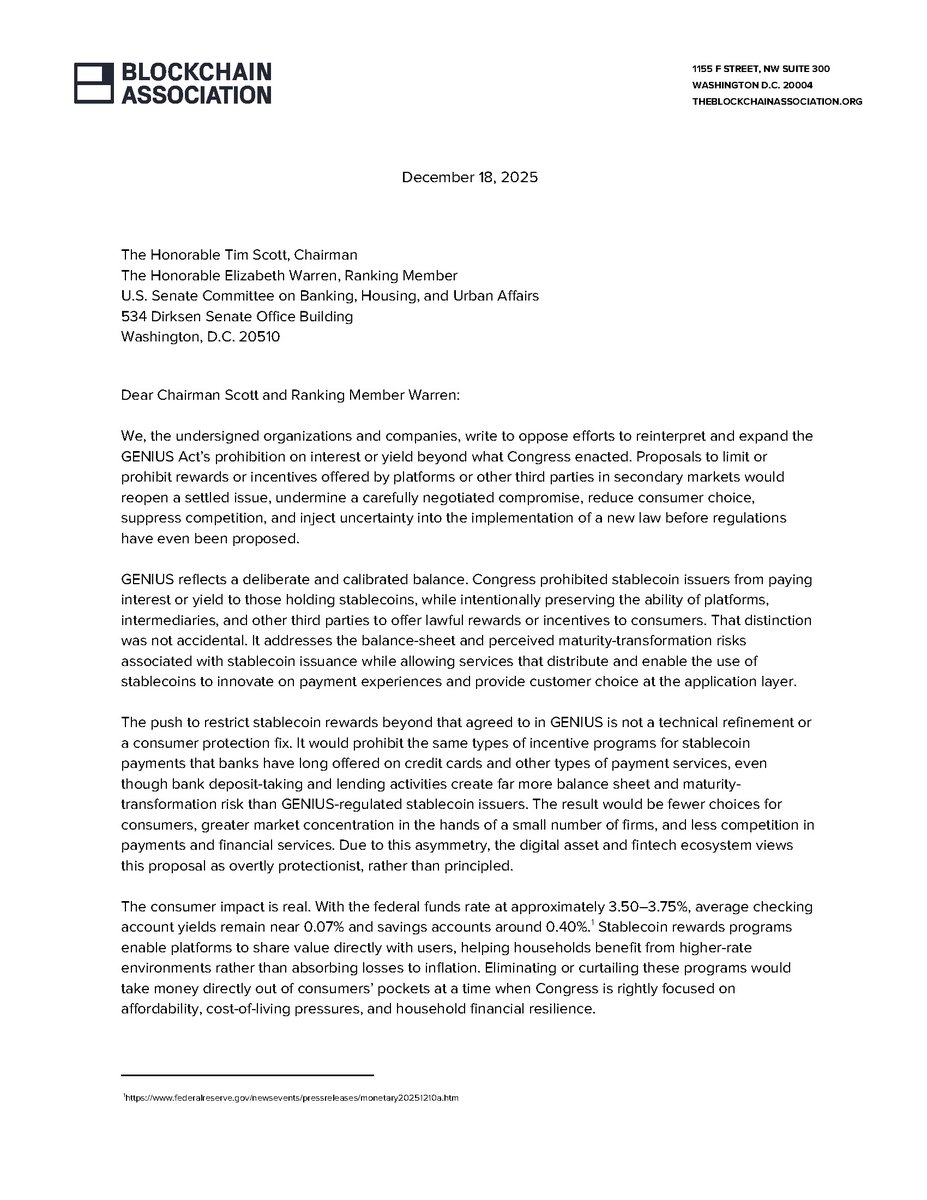
We won’t let anyone reopen GENIUS. Red line issue for us. And will keep advocating for our customers and the crypto industry.
My prediction is the banks will actually flip and be lobbying FOR the ability to pay interest and yield on stablecoins in a few years, once they realize how big the opportunity is for them. So it’s 100% wasted effort on their part (in addition to being unethical).
The innovators dilemma is undefeated.
Banks earn 4.4% on reserves parked at the Fed...
They pay you 0.01% on your savings account.
And now they're lobbying Congress to make sure stablecoins can't offer you anything better.
The GENIUS Act already settled this. Congress spent months hashing out a compromise. Stablecoin issuers can't pay interest directly, but platforms and third parties can offer rewards. Done. Finished. Everyone shook hands.
That was a few months ago.
Now the banking lobby wants to reopen it. They're calling it a "safety concern." They're worried about "community bank deposits."
Independent research shows zero evidence of disproportionate deposit outflows from community banks. Meanwhile, the big banks are sitting on trillions in reserves, collecting interest from the Fed, passing almost none of it to customers.
How this plays out for the most part is that your bank takes your deposit, parks it at the Federal Reserve, earns 4%+ on it, gives you basically nothing. A stablecoin platform wants to share some yield with you and suddenly that's a threat to financial stability?
We saw three different lobbying pushes on this bill in the last year & every single time, the framing is consumer protection, but in reality, every single time, the actual effect would be protecting big banks and incumbent margins.
What you should actually watch for:
-Any amendment that bans "rewards" broadly rather than just direct interest payments from issuers.
-Whether the same legislators worried about stablecoin yields have ever questioned why bank savings rates haven't moved in fifteen years.
-Who's funding the "community bank protection" messaging (Usually not community banks lol)
If Congress caves on this, it sets a (not good) pattern. Pass a framework, let the incumbents lobby it back open, chip away until the new entrants can't compete, and crypto companies aren't the only ones watching. Every fintech considering U.S. markets is taking notes on whether legislation here actually sticks.
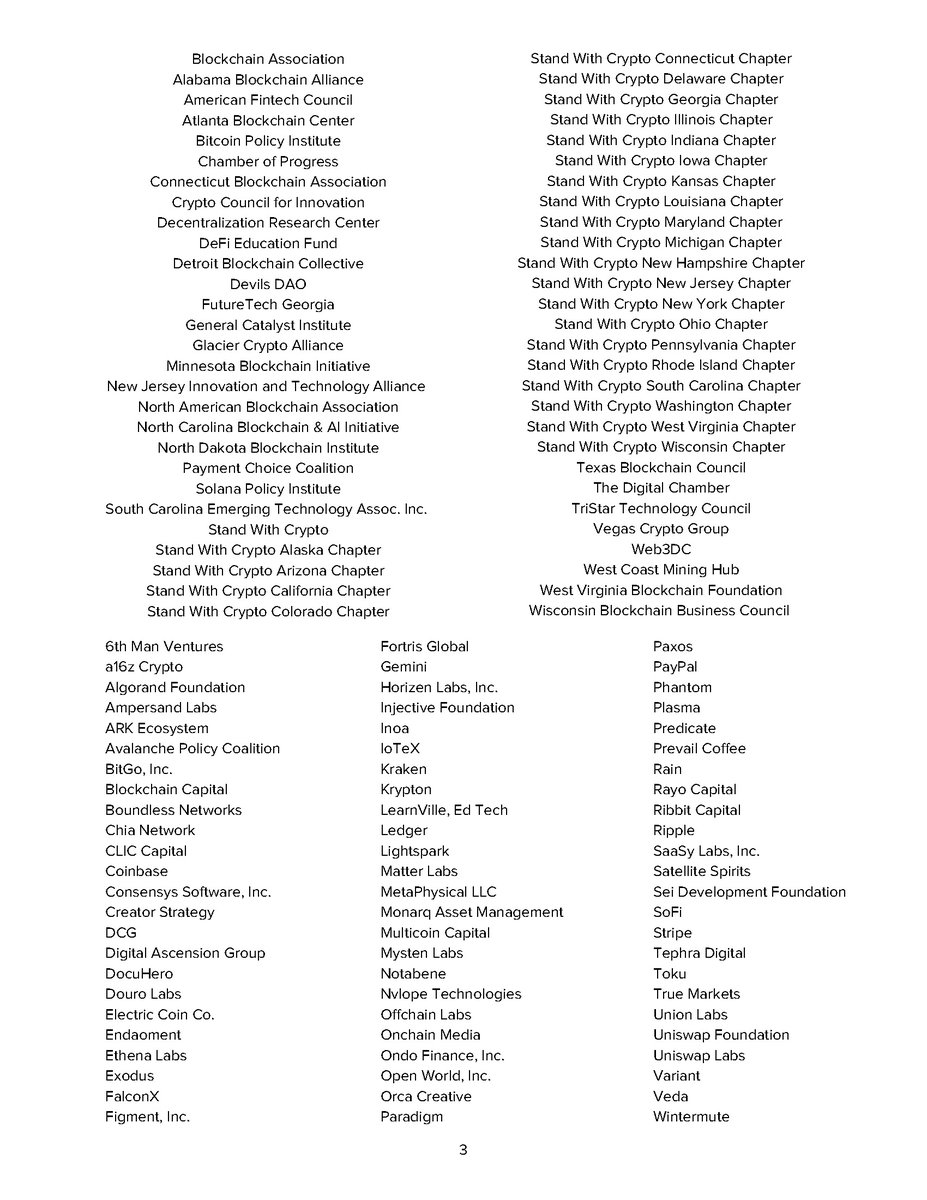
We signed on to this letter to show our support and conviction in moving the industry forward in the United States. The next six months will show whether the U.S. wants competitive payments infrastructure or protected banking margins under the guise of "stability"
as always, thanks to @BlockchainAssn for their hard work in the industry alongside @standwithcrypto & @na_blockchain
special shoutout to @TBC_Jessi@512mace & @wadepreston for pushing this along as well