Proteorhodopsin lets abundant marine microbes use sunlight for energy—yet we’re only beginning to understand what this means for plankton ecology and the ocean carbon cycle.
25 years of discoveries, and still so many questions open
@CSIC@IMEDEA_UIB_CSIC
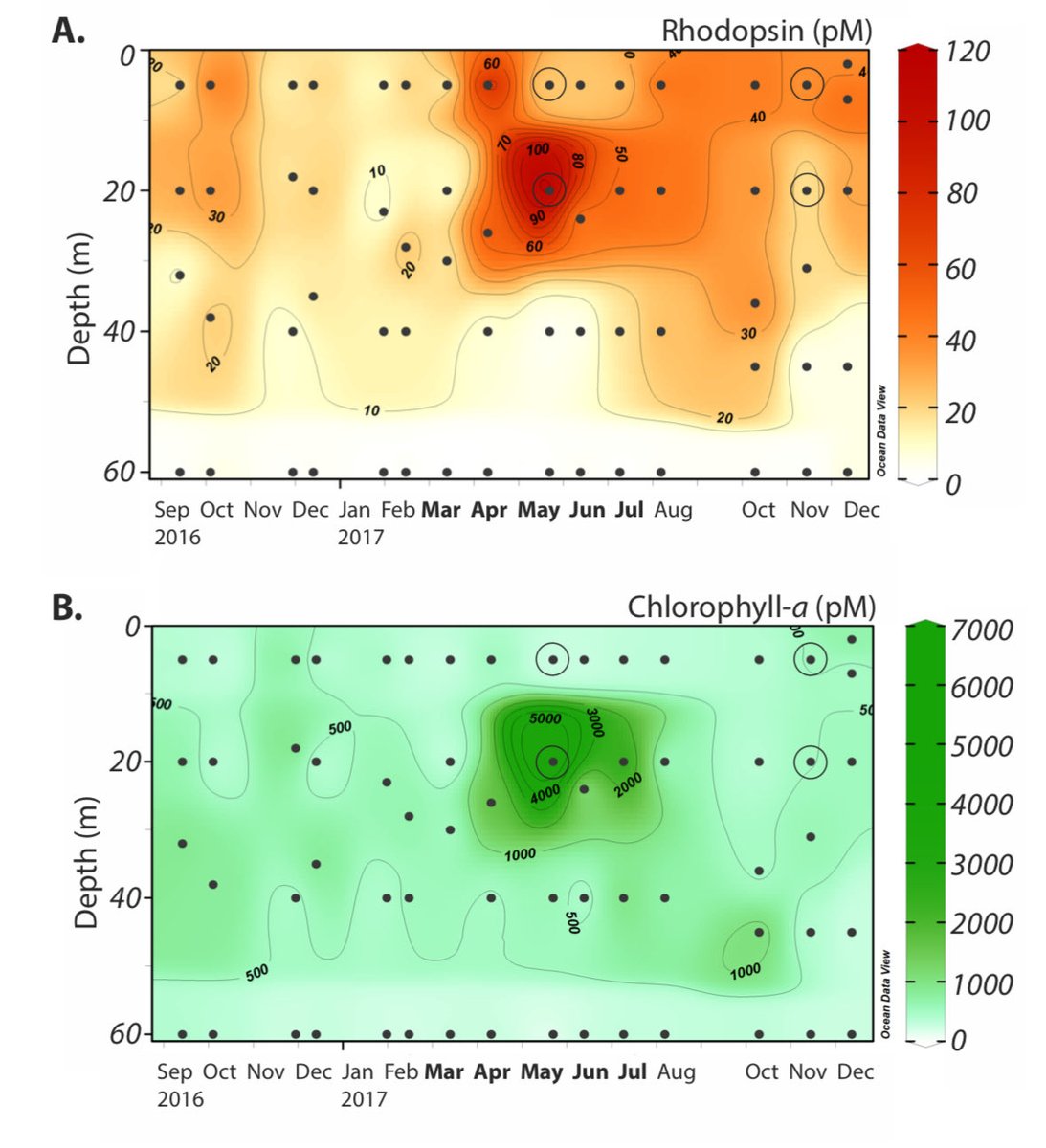
Microbial rhodopsins are everywhere in the surface ocean, but were assumed to play a role mainly when nutrients are scarce. Our new study reveals unexpected rhodopsin dynamics tightly linked to phytoplankton blooms. https://t.co/Oi8BZoXMwy
Thrilled to have been part of this fantastic piece of work! When we thought we knew something about the use of light in the ocean, PRs continue to surprise us. What will be next?! Stay tuned...
@marchetti_lab Thrilled to have been part of this fantastic piece of work! When we thought we knew something about the use of light in the ocean, PRs continue to surprise us. What will be next?! Stay tuned...
New preprint from our lab:
Microbial rhodopsins are increasingly favored over chlorophyll in HNLC waters https://t.co/Z5KAGxpH18
What's interesting here: Rhodopsin relative content can more than double in microbial communities of the #HNLC
Nice job Babak!
Hot off the press!!!
Marine heterotrophic bacteria are important synthesizers of ozone-depleting halomethanes. If bacterial activities increase in a future warmer ocean, halomethane synthesis could also increase up to 84% by 2100. https://t.co/WT3uNuDeYw
Have you ever wondered about #rhodopsin natural distributions in #HNLC environments? Come by to see Babak Hassanzadeh’s poster (#329) this afternoon at #OSM20