TWiN 72: What cesarean babies miss 〰️ TWiN explains the finding that vaginal microbiota transfer ameliorates cesarean-associated neurodevelopmental deficits in mice via synthesis of a sphingosine derivative on neonatal skin. 📺 https://t.co/6hIiY6ZR6S
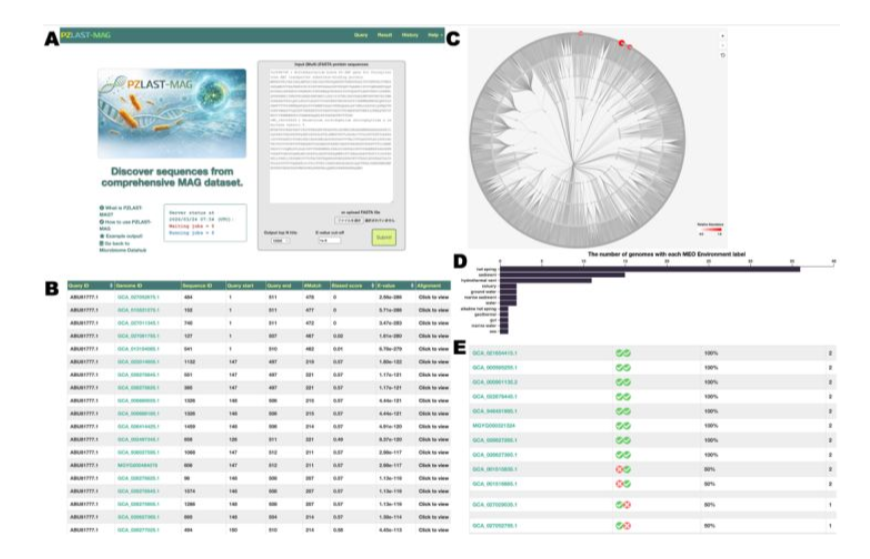
🔍 New in Bioinformatics Advances: "PZLAST-MAG: Full length protein sequence similarity search server of large-scale MAG proteins"
Read it here: https://t.co/8zBMHZFqth
Struggling with clusters that aren’t well-separated, round, or evenly sized? DBSCAN could be the solution. Unlike many clustering methods, it doesn't force your data into rigid shapes and can uncover meaningful patterns even in messy, irregular structures.
Here’s what DBSCAN does well and where it can fall short:
✔️ Handles irregular cluster shapes and varying densities
✔️ Automatically detects outliers as noise without extra steps
❌ Needs careful tuning of eps (neighborhood size) and min_samples (minimum points per cluster)
❌ May not perform well on high-dimensional data or when clusters differ greatly in density
When used correctly, DBSCAN can reveal structure in data that other methods often miss. A common way to choose eps is by inspecting the k-distance graph and finding the point where the curve bends sharply. For more complex density variations, HDBSCAN is a useful alternative that builds on the same principles.
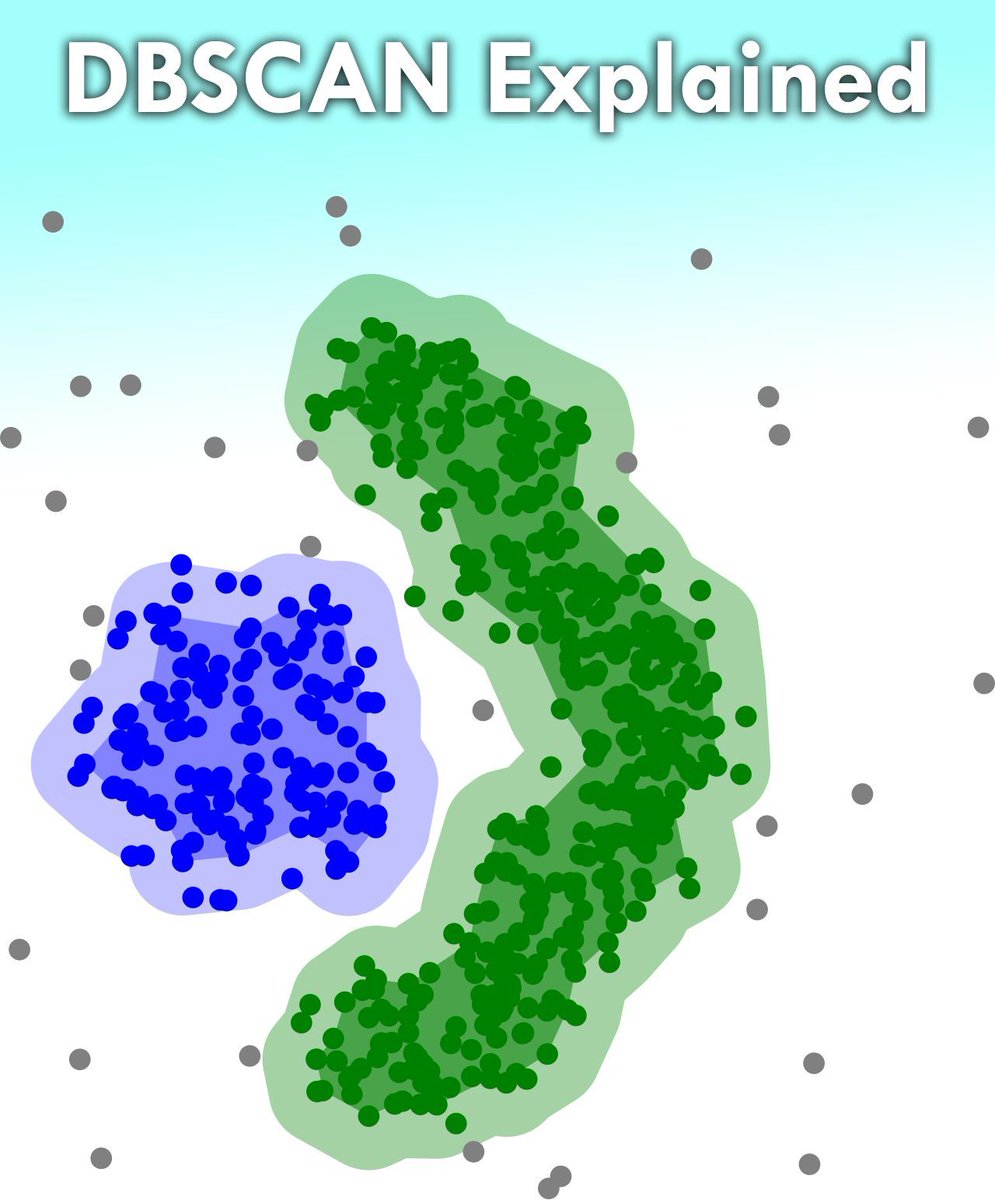
The image shows how DBSCAN successfully identifies two irregularly shaped clusters (blue and green), while marking outliers (gray) that don’t belong to any cluster. K-means or Gaussian Mixture Models would struggle to capture this structure. Credit for the visualization: https://t.co/3vcq9fRVin
🔹 In R, use the dbscan package and tools like kNNdistplot() to guide parameter selection based on the data.
🔹 In Python, apply DBSCAN from scikit-learn and use NearestNeighbors to generate a k-distance plot for tuning eps.
For regular insights on practical statistics, data analysis, and how to apply them in R and Python, join my newsletter. For more information, visit this link: https://t.co/ktUcWo9XpO
#programming #RStats #RStudio #database #VisualAnalytics #Rpackage #DataVisualization #DataScientist
Acaban de secuenciar al virus que ha causado el brote de Hanta en el crucero. https://t.co/VZvQfzoMck
Resulta que es prácticamente idéntico al virus que causó la epidemia que duró 4 meses en Argentina en 2018.
https://t.co/P8AwBNaxru
No es un virus nuevo ni su transmisión de
🧵
Hantavirus on board with Prof. Vincent Racaniello ⚓️ A review of the hantavirus outbreak on the MV Hondius, as of 6 May 2026, including what we know so far, background on hantaviruses in general, and analysis of the previous Andes virus outbreak. 📺 https://t.co/BhaQe1URWs
Don’t shy away from AI, instead arm yourself with tools and use it responsibly!
Here’s a starter AI for Biosciences toolkit that ALL trainees should know!
1) Building your literature map tailored to your work : Research Rabbit https://t.co/IZfZfmCWg4
2) Making visually engaging presentation graphics : https://t.co/nvhxQ54uFJ https://t.co/t9e7IetQEn
3) Sunmary of research papers - https://t.co/WmuWE6O17g
4) finding the best Abs for your research based on published work - https://t.co/XRnnCrcyC0
5) Learning new and complex topics - https://t.co/it2pZNqsJS
⚕️Si eres farmacéutico, esto te interesa
Los envases de algunos antibióticos se han adecuado a las pautas recomendadas en Guía Terapéutica del SNS
⬇️Resistencia antibacteriana
⬇️Dosis no necesarias
⬇️Automedicación
Te lo explicamos en esta infografía ➡️ https://t.co/EnkHjCjdqM
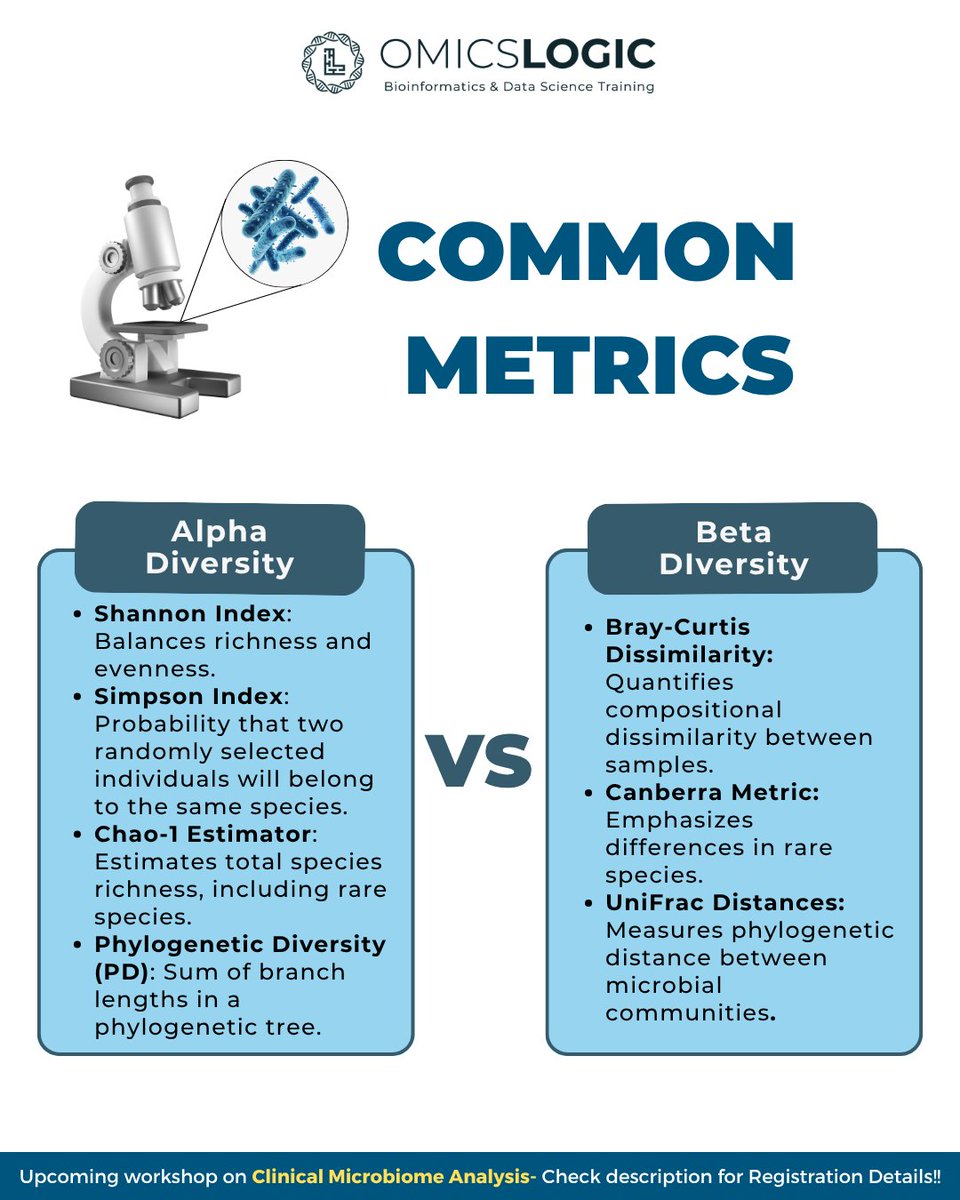
Master the gut microbiome and 16S rRNA analysis! 🧬📊
Join our 2-Day Hands-On Workshop: Clinical Microbiome Analysis. Move from raw FASTQ files to clinical insights using datasets on the gut-brain axis.
📅 May 18–19
🔗 https://t.co/FXVH8BFmZ6
#Microbiome#16SrRNA
Markov chains are a fundamental concept in probability theory, modeling systems that undergo transitions from one state to another in a random process. They rely on the memoryless property, where the future state depends only on the current state, not the past. When properly utilized, Markov chains can unlock powerful insights across various fields, from finance to genetics.
However, improper handling of Markov chains can lead to significant drawbacks.
Challenges of Markov Chains:
❌ Misinterpretation: Without a thorough understanding, results derived from Markov chains might be misleading, particularly if the memoryless property is overlooked.
❌ Data Dependency: Markov chains rely heavily on accurate and representative data. If the data set is not sufficiently robust, the chain’s predictions could be inaccurate.
❌ Complexity: For large systems, constructing a Markov chain becomes increasingly complex, often requiring sophisticated computational tools and techniques.
Benefits of Markov Chains:
✔️ Predictive Modeling: When correctly applied, Markov chains can help forecast future states in a system based on its current state, leading to more accurate predictive models.
✔️ Simplified Analysis: They break down complex systems into manageable parts, allowing for a clearer understanding of each component and its behavior.
✔️ Versatile Applications: Markov chains are highly adaptable, with applications in queueing theory, economics, and machine learning, making them a versatile tool in a data scientist's arsenal.
To implement Markov chains in practice:
🔹 R: Use the markovchain package to create and analyze discrete-time Markov chains, which simplifies transitions, state spaces, and probabilities.
🔹 Python: Utilize the pymc or hmmlearn libraries to model and infer the hidden states in sequential data.
The following visualization, based on a Wikipedia image (link: https://t.co/14n49FraJI), shows a simple two-state Markov process. The numbers represent the probabilities of transitioning from one state to another, illustrating the flow within the system.
To explain this topic in further detail, I collaborated with Micha Gengenbach to create a comprehensive tutorial: https://t.co/bpqZXmvZgp
Want to dive deeper? Enroll in my online course, "Statistical Methods in R." Learn more: https://t.co/7YQCRDKSPO
#DataScientist #StatisticalAnalysis #datastructure #DataAnalytics #RStats #Rpackage
A couple of months ago, I announced that I was partway through implementing a simple, readable AlphaFold2 in pure PyTorch, inspired by @karpathy's minGPT.
Today, I'm happy to share minAlphaFold2 - the completion of that project.
Repo link: https://t.co/bU59VUm5sB
Extracellular Electron Transfer: From Early Life to Modern Biogeochemistry and Applications
https://t.co/NUSxI7ETWs
Review of the growing field of electromicrobiology with over 600 references
#electromicrobiology@ISMETsociety@CEMAarhus@ISME_microbes