I’m in complete shock. Pat was the single most influential person on my career. He hired me and took me under his wing on my very first job out of grad school.
Even with his completely booked out schedule, he would stay after normal work hours with me, multiple times a week, for hours on end, to personally check my math and my code, to iterate on the model with me, to coach me how to be an effective econometrician in a business setting.
I was an L4 (lowest level at Amazon), he was the Chief Economist of Amazon. To say he was generous with his time would be a massive understatement.
The world has lost a truly great mind and the kindest, most generous human being. I can’t believe he’s gone.
We are sad to announce that former faculty member and Minnesota Econ Ph.D. alum Patrick Bajari passed away on Monday. He will be deeply missed by all of his friends and colleagues.
https://t.co/RJzQ8YWPJ0
Here's the conversation with ChatGPT that resulted in the model. In the last prompt I asked it to present the model as if it's writing a textbook chapter. That's probably the easiest way to get the full specification of the model!
https://t.co/pDqUYc0Fkw
With the help of ChatGPT (o3-mini-high), I developed a mathematical model of @balajis's Helical View of History.
This model captures the Cyclical View of History with the following two state variables:
x(t): "Goodness of times"
y(t): "Strength of men"
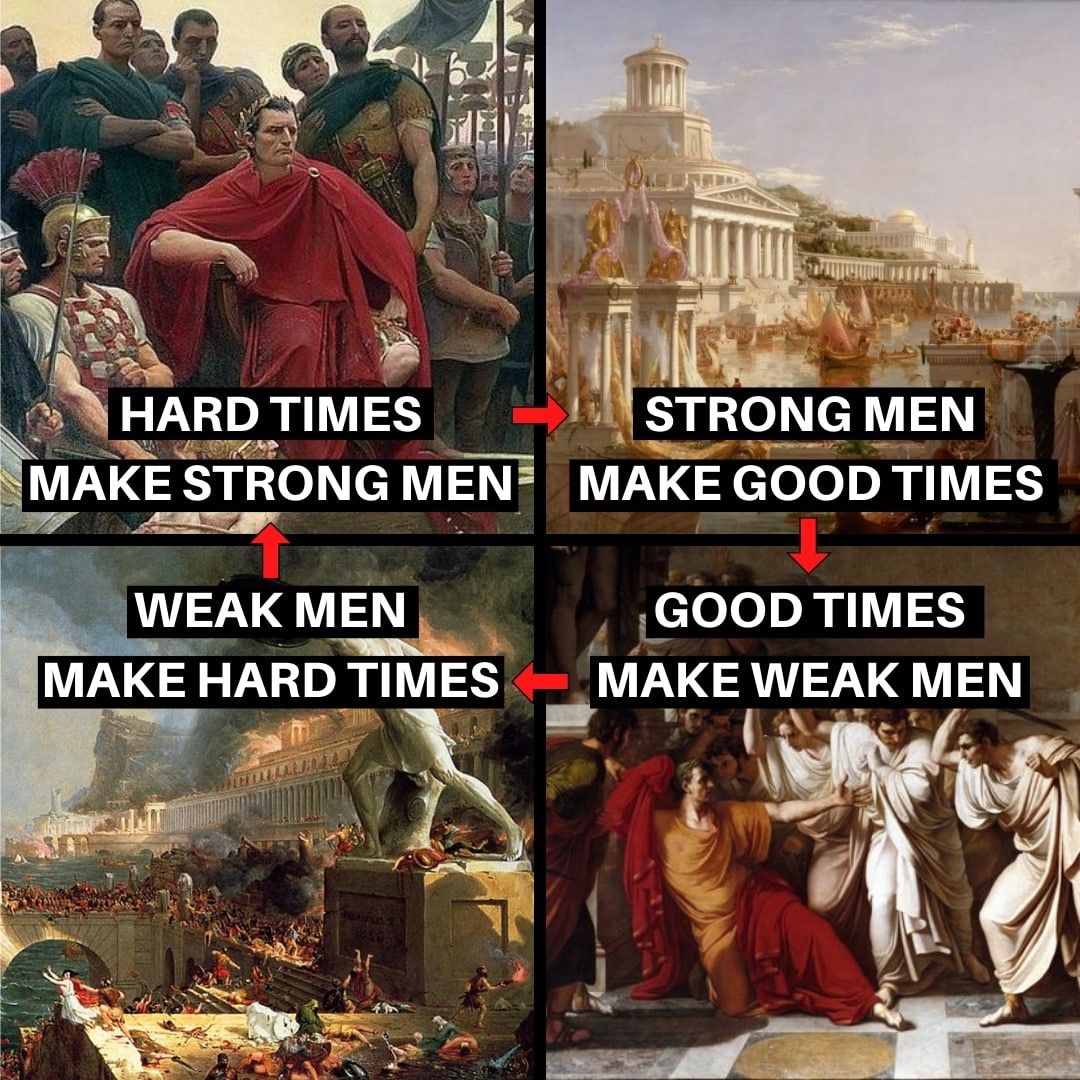
When plotted on the 2D plane, they trace out a circle cycling through the four quadrants of the hard-times-make-strong-men meme.
The model also captures the Progressive View of History with the state variable:
z(t): Output per worker
When plotted, this resembles the exponential world GDP per capita graph that we've all seen.
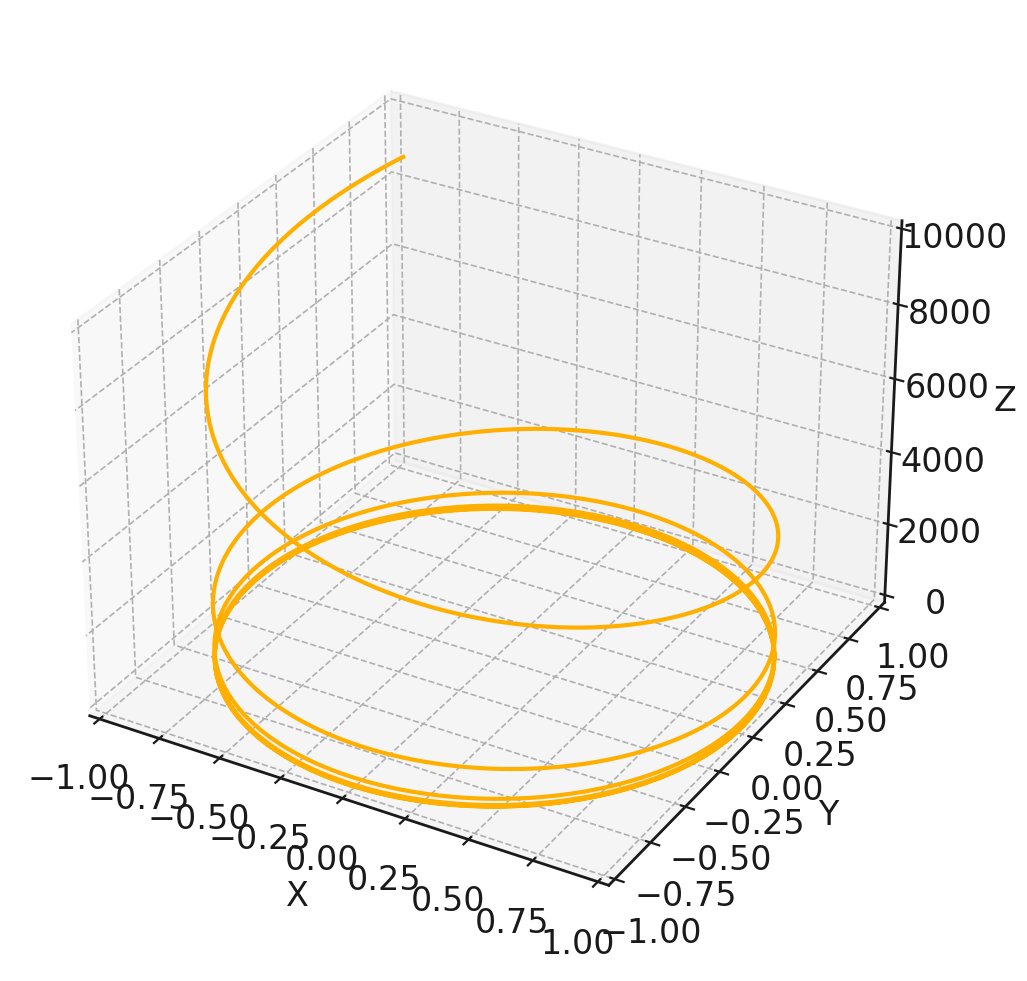
When (x(t), y(t), z(t)) is plotted, you get a helix that "explodes" upwards. Hence the name Helical View of History.
This Helical Growth Model reconciles the Cyclical and Progress Views of History in one coherent model.
Note that the model isn't just me postulating that x(t) = sin(t), y(t) = cos(t), z(t) = exp(t) or something like that and calling it a day.
It is an actual economic model based on Romer's endogeneous growth model in which labor gets allocated between producing output and generating ideas.
Instead of treating that allocation as exogenous like in Romer's vanilla model, here we model labor allocation through the hard-times-make-strong-men meme. 🤣