@gabepereyra “History Doesn't Repeat Itself, but It Often Rhymes”. When I worked at RAVN (sold to iManage) during the last AI cycle, we found exactly the same: the AI tooling we were selling to lawyers had as much, and often bigger, value potential for “legal adjacent” functions / industries
@TheGRMGroup Great that you like the piece, and many thanks for the share! Hoping the article can help others with their career decisions and research 😀
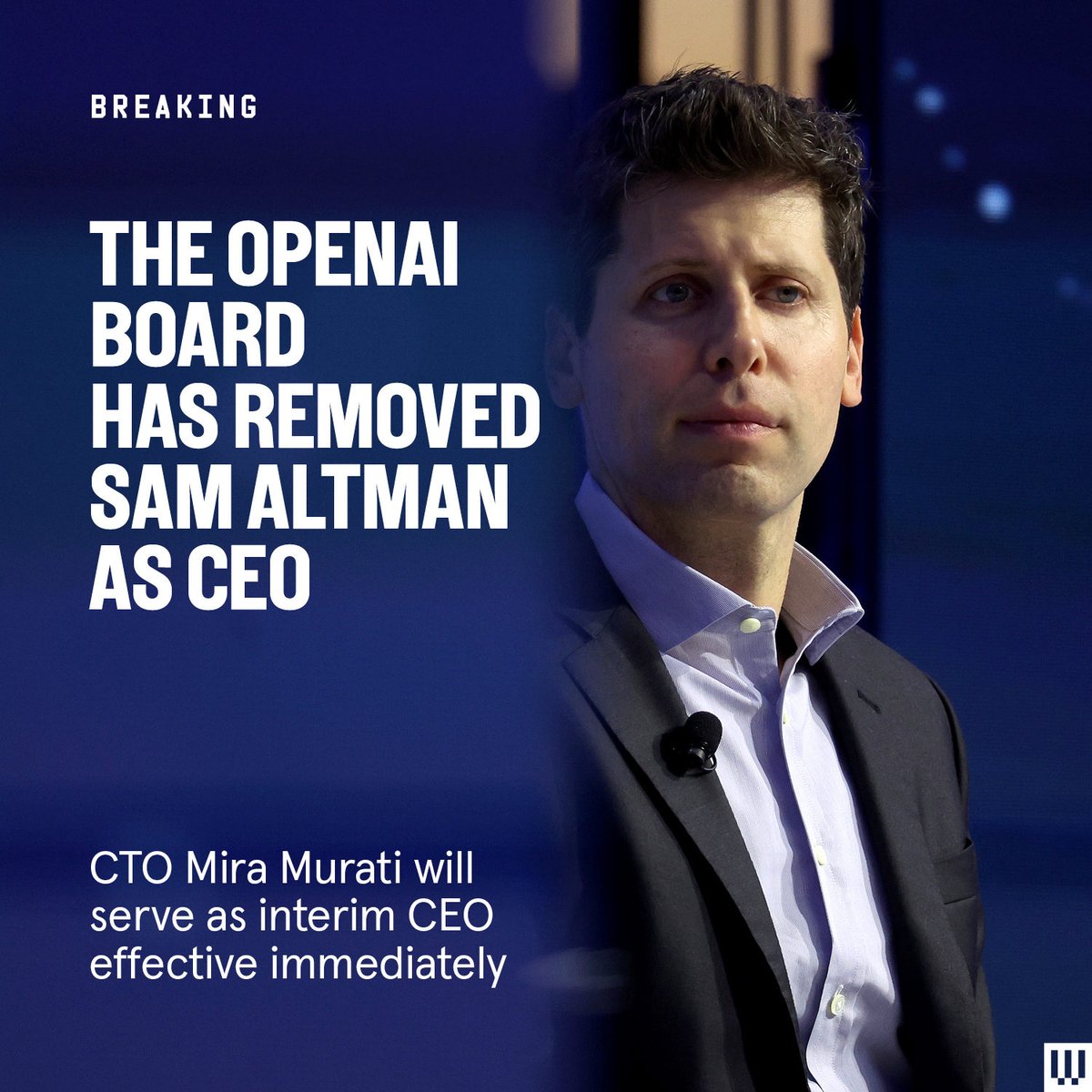
BREAKING: Stating that they had "lost confidence" in his ability to lead the board of OpenAI has removed Sam Altman as CEO, effective immediately.
Check back for the full story to follow:
@alexgsmith Indeed. It's a shame; I increasingly see additive uses of LLMs for various tasks and work product, but a continuing lack of understanding and/or magical thinking persists that is diverting a lot of otherwise valuable engagement towards the wrong ideas/execution.
Encountering lots of "LLM" use cases that are solvable or better/necessarily solved via search, yet stakeholders convinced they need an LLM. E.g. find our best precedent X or Y doc or clause that fits A, B and, C parameters. Not the same as generate random one that has A, B, C.
@lawheroezV2 I tend to agree. They also miss, and can't easily understand (absent of user provided information) context. Not a deal-breaker, but can become a barrier to adoption, e.g. senior lawyers worrying juniors will miss a learning opportunity by blindly following generic app suggestions
@Drew_Morris@heyitsalexsu Will be tricky to hire the best without: (1) market compensation, (2) internal respect for those non-lawyers, (3) unblocking the myriad systemic blockers to innovation in law firms (bureaucracy, risk-aversion, etc), (4) progression opportunities/skin in the game re upside etc.
@jackwshepherd A lot of commentary/press releases re gen AI in legal are akin to tradespeople touting they *have* the most advanced power tools. It says nothing about *how* they are used or *why* it matters or what value is created. In reality the means aren't relevant, whereas the ends are.
@lawheroezV2 Unpopular truth: "easy hours", i.e. drudge work legaltech automates or streamlines, is often more appealing than lawyers would like to admit, esp in transactional practices where there's lots of it and v. little "lawyering" at the jnr levels. All the more so in quiet markets.
As usual @AlexHamiltonRad is spot on here. In-house lawyers are the ones with the greatest incentive to complicate, because it makes what they do special, and beyond the ken of legal ops folk, who are muggles and can't second-guess wizardry.
@PlaybookLegal@ZachAbramowitz Agreed. Ask a firm the actual and meaningful usage metrics (ie installs or accounts without biz useful activity don't count) for X legaltech and it will be vastly below what the PR would lead the wider world to believe.