🧮 2026 के रामानुजन पुरस्कार ...
भारतीय गणितज्ञ श्रीनिवास रामानुजन की विरासत से जुड़े वर्ष 2026 के दो प्रतिष्ठित पुरस्कारों के विजेताओं की घोषणा हो चुकी है।
🏆 1. 2026 रामानुजन पुरस्कार
महेश काकड़े को वर्ष 2026 का रामानुजन पुरस्कार दिया गया है। वे भारतीय विज्ञान संस्थान, बेंगलुरु में गणित के प्रोफेसर हैं।
उन्हें यह सम्मान बीजगणितीय संख्या सिद्धांत में उनके महत्वपूर्ण योगदान के लिए दिया गया है। उनके शोध में गैर-सम्मिश्र इवासावा सिद्धांत, ग्रॉस-स्टार्क और ब्रूमर-स्टार्क अनुमानों से जुड़े महत्वपूर्ण परिणाम शामिल हैं।
👉 यह पुरस्कार विकासशील देशों में कठिन परिस्थितियों में उत्कृष्ट गणितीय शोध करने वाले 45 वर्ष से कम आयु के युवा गणितज्ञों को दिया जाता है और इसमें 10,000 अमेरिकी डॉलर की पुरस्कार राशि शामिल है।
🏆 2. 2026 एसएएसटीआरए-रामानुजन पुरस्कार
सारा पेल्यूज़ को वर्ष 2026 का एसएएसटीआरए-रामानुजन पुरस्कार प्रदान किया गया है। वह स्टैनफोर्ड विश्वविद्यालय में गणित की एसोसिएट प्रोफेसर हैं।
उन्हें विश्लेषणात्मक संख्या सिद्धांत, योगात्मक संयोजनशास्त्र, संयोजनात्मक ज्यामिति और समूह सिद्धांत में उनके उल्लेखनीय योगदान के लिए चुना गया है।
👉 यह पुरस्कार 2005 में शुरू किया गया था और रामानुजन से प्रभावित गणितीय क्षेत्रों में उत्कृष्ट योगदान देने वाले 32 वर्ष या उससे कम आयु के गणितज्ञों को दिया जाता है। इसमें 10,000 अमेरिकी डॉलर और प्रशस्ति-पत्र दिया जाता है।
📌 परीक्षा के लिए महत्वपूर्ण तथ्य
• 2026 रामानुजन पुरस्कार — महेश काकड़े
• संस्थान — भारतीय विज्ञान संस्थान, बेंगलुरु
• क्षेत्र — बीजगणितीय संख्या सिद्धांत
• 2026 एसएएसटीआरए-रामानुजन पुरस्कार — सारा पेल्यूज़
• संस्थान — स्टैनफोर्ड विश्वविद्यालय
• प्रमुख क्षेत्र — योगात्मक संयोजनशास्त्र एवं संख्या सिद्धांत
• दोनों पुरस्कारों का संबंध — श्रीनिवास रामानुजन की गणितीय विरासत
• एसएएसटीआरए-रामानुजन पुरस्कार की शुरुआत — 2005
• रामानुजन जयंती — 22 दिसंबर
#ramanujan
Yesterday @GoogleDeepMind made a toxin-degrading enzyme from scratch. Today @OpenAI solved 370 of the most difficult mathematical problems.
AI has removed intelligence as a differentiator between humans. We are back to living in (modern) caves gazing at stars with nothing to do.
BREAKING NEWS
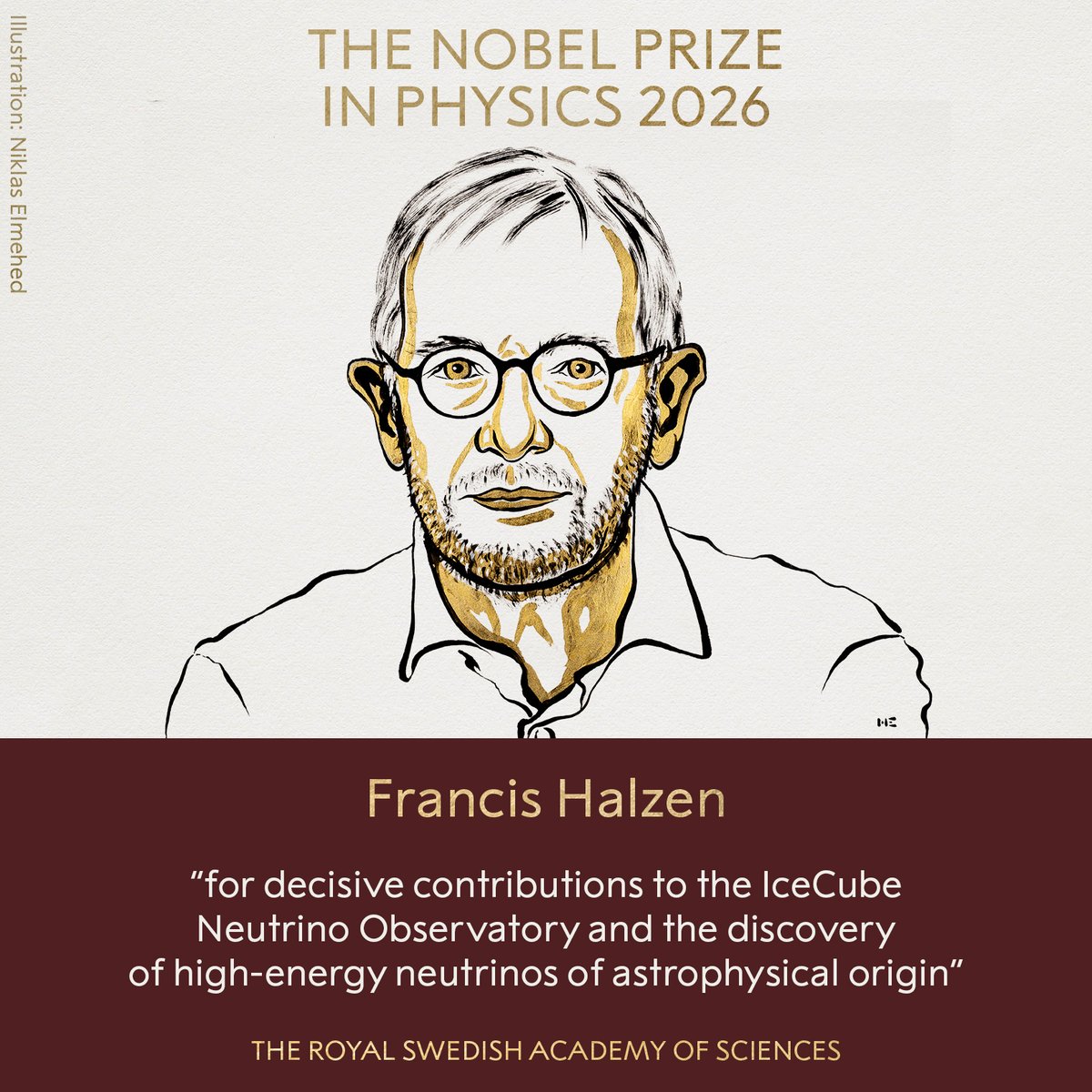
The Royal Swedish Academy of Sciences has decided to award the 2026 #NobelPrize in Physics to Francis Halzen “for decisive contributions to the IceCube Neutrino Observatory and the discovery of high-energy neutrinos of astrophysical origin.”
ISRO is set to launch GSLV-F17 carrying the EOS-05 satellite on 4 September 2026 at 02:55 AM IST.EOS-05 will be India’s first-ever imaging satellite operating from a Geosynchronous orbit. The vehicle was moved to the Umbilical Tower on 28 August as final preparations continue at the Satish Dhawan Space Centre, Sriharikota.
Livestream will begin at 02:25 AM IST.
https://t.co/0dFxDIMryv
#GSLVF17 #EOS05 #ISRO
@isro
31st May 2026
PIB Today
1. NFHS-6
2. Deep Ocean Mission
3. National Mission on Natural Farming
4. Gyan Bharatam
5. UNESCO Memory of the World Programme
6. ICCR & Cultural Diplomacy
7. Land Governance & Water Resource Management
8. PM e-Bus Sewa & Urban Mobility
9. Metrology Ecosystem
10. Critical Minerals Strategy
11. National Fisheries Digital Platform
12. India’s Arctic Research Programme
13. National Water Informatics Centre (NWIC)
https://t.co/qmuwnZC3cp
#upsc #prelims #PIB #civilservices #currentaffairs #srijanindiaone #PIBupdates #PIBToday #PressInformationBureau
SpaceX has almost finished writing V1.0 of an in-house AI training stack in C that exact-maps to 220k GB300s with 800G NICs, making heavy use of pipeline parallelism and getting as close to bare metal as possible.
The potential speed improvement vs JAX for large training runs is over an order of magnitude.
Even racing at the absolute cosmic speed limit of 299,792 kilometres per second, light from our nearest stellar neighbour still takes 4.24 years to reach us. That’s Proxima Centauri — the closest star beyond our Sun — and the sheer scale of that journey is enough to leave you breathless. At roughly 4.25 light-years away (about 40.2 trillion kilometres), Proxima sits in the Alpha Centauri system. This distance has been precisely measured using data from the European Southern Observatory in Chile and NASA’s Hubble Space Telescope. One light-year equals roughly 9.46 trillion kilometres — the staggering distance a photon travels in a single year at the fastest speed allowed by physics. Imagine launching a beam of light today. It won’t arrive here until 2030. Zoom out further, and the loneliness of space becomes even more profound. Among the 50 closest star systems to our own, the average distance exceeds 10 light-years. Habitable worlds — if any exist — are separated by unimaginable gulfs, turning the idea of interstellar travel or casual contact into a monumental challenge. In the end, Proxima Centauri isn’t just a nearby star. It’s a quiet, humbling reminder of our place in the cosmos: connected by light that has journeyed for years, yet forever out of reach in any human lifetime. The universe feels both intimately near and endlessly, achingly vast.
The Planck constant (h) is central to quantum mechanics. Its value is approximately 6.62607015 × 10⁻³⁴ J.s.
Interestingly, since May 2019, the Planck constant has been used to define the kilogram in the International System of Units (SI).
Caught in a web 🕷️
3,000 light-years away is the Red Spider Nebula. Powerful stellar winds generate waves 62.4 billion miles high. The waves develop when gas is compressed and heated in front of the nebula, then emit radiation, seen here by the Hubble Space Telescope.