@clawrence@theactualrob NG pipeline capacity is absolutely a major limiting constraint right now. Both for high quantities required to power a DC, and even often for smaller quantities as a firming solution too
There’s a lot of cognitive dissonance in the power debate right now.
On one side: data centers are framed as the source of all evil, driving electricity bills higher and consuming every incremental megawatt.
On the other: people still haven’t fully internalized what broad-based electrification and decarbonization actually require. Electric vehicles, heat pumps, industrial electrification, reshoring, transmission upgrades, battery manufacturing, air conditioning growth, etc. This was always going to be an enormous power demand story.
That’s why I keep coming back to the same point: AI/data centers may be one of the best things to happen to grid investment in decades.
For the first time in a long time, you have:
-governments prioritizing infrastructure
-corporates willing to sign long-duration power contracts at above market prices
-capital markets willing to fund generation/transmission
-customers that can actually support the returns needed for massive buildouts
Does it solve everything perfectly? Of course not. There will be bottlenecks, local stress, permitting fights, bad projects, longer thermal runoff period,and periods of volatility.
But absent another generational supercycle where incentives align across utilities, policymakers, infrastructure developers, and private capital, this may be one of the strongest opportunities we get to materially modernize and expand the grid, ever!
Also a little convenient how some of the loudest proponents of gas stove bans, EV mandates, and broad electrification are suddenly treating data centers as the sole culprit behind higher power prices.
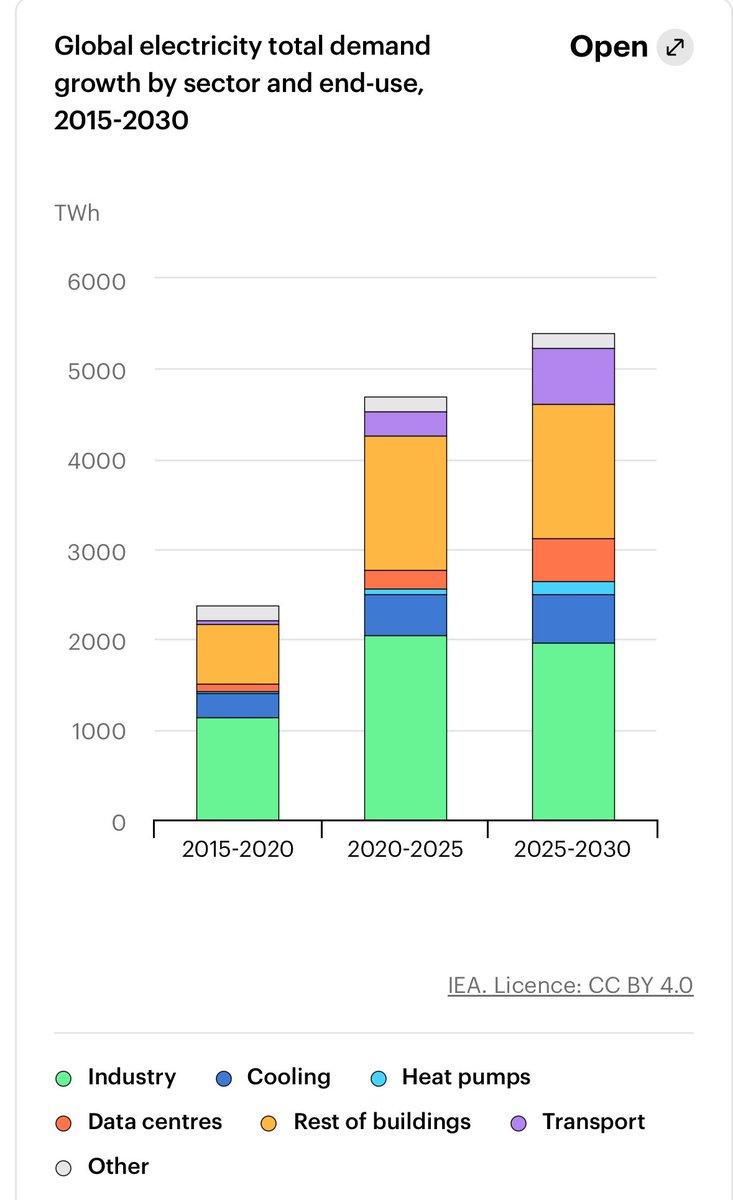
When it comes to rising electricity demand everyone talks about AI and data centres.
But their contribution to rising electricity demand is only 8% between 2025 and 2030.
The rest is largely electrification of transport, buildings and industry.
@IEA Electricity 2026 report.
@ShanuMathew93@LBNL@TheBrattleGroup This is fantastic, thanks for sharing. Can’t address hostilities stemming from rising retail rates without understanding the magnitude of the problem and acknowledgement that there’s not a single easy boogeyman here
"Energy dominance" agenda:
-50% copper tariff
-Steel & aluminum tariff
-Restrictive FEOC for new power plants
-$15bn of US gas turbines to Saudis
-Punitive tax treatment for solar/wind
-Offshore wind moratorium
-New coal subsidy
DOGE has nothing to do 'efficiency' or exposing 'fraud', and serious journalists should stop pretending otherwise.
DOGE is an ideological purge, plain and simple.
Another ship-jump. We’re obviously closer to figuring out how to build smarter-than-human AI than to figuring out how to control it, yet we keep racing toward the cliff:
New UNEP emissions gap report highlights a "massive gap between rhetoric and reality" and calls for a "quantum leap" in ambition to deliver Paris goals, as the world is way off-track today.
I cover the details over at @CarbonBrief: https://t.co/PKae14c066
Climate change made the extreme rainfall from hurricane Helene more severe.
Over at The Climate Brink I explore the links between heavy rainfall and warming (particularly for hurricanes) and review two preliminary attribution studies: https://t.co/59ZVupjXcl
Generative AI is accruing technical debt and is rife with moral hazards as the benefits of AI are enjoyed by its designers and the risks of AI are passed on to consumers. I wrote about it here: https://t.co/OwqNKgIvOf open access for a limited time!
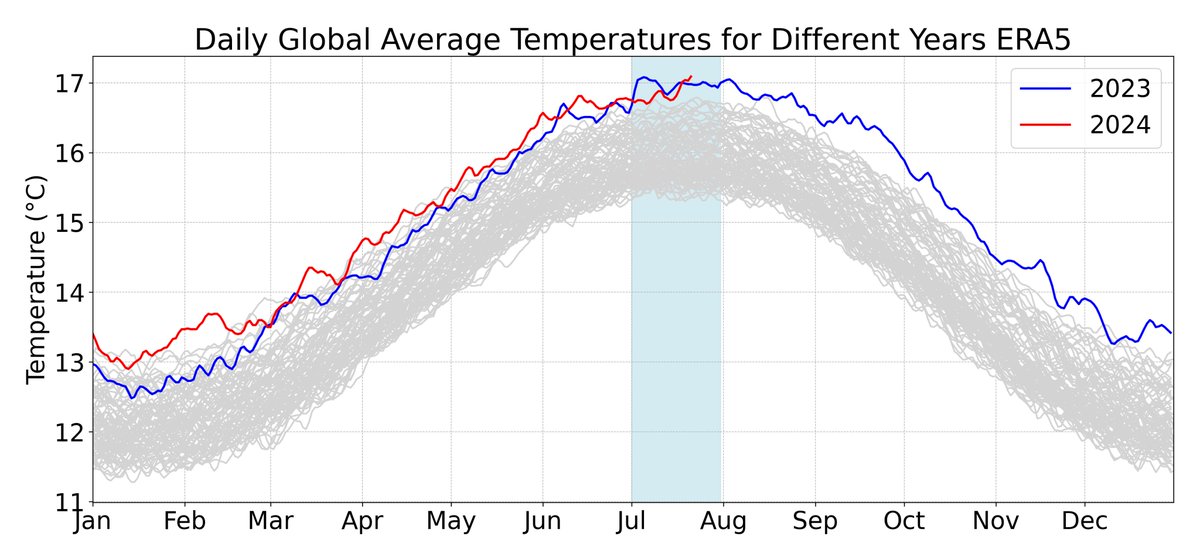
There is a lot happening in the news these days, but it seems like we should be paying a bit more attention to the fact that the world just saw its hottest day on record (in absolute terms), coming on the back of 13 straight record setting months: