Ever wonder how some critters adapt to subzero temperatures?❄️☃️❄️ Find out in the latest Periodic Graphics by @ndbrning of @compoundchem.
See more infographics at https://t.co/jS32pF77YI
Just published ‼️
A @uOttawaCHM collaborative and (extremely) interdisciplinary work on the mechanism of action of small molecule ice recrystallization inhibitors is out in @JPhysChem Letters!
https://t.co/L2hUELUJf2
This project was WAY outside of my comfort zone when we started it. Super lucky to have gotten to work with the Bordenave lab and get to learn some very cool NMR techniques for probing interactions between water molecules !!💧🧊
June 21st is #NationalIndigenousPeoplesDay. Today is a great day to celebrate Indigenous cultures, and take the time to learn more about Indigenous history. Across the country Indigenous groups are hosting events to mark the day, so get out and go learn something new!
Proud to be a part of some of the incredible work being done by @CWIC_uOttawa and the students of the @uOttawaCHM community to raise awareness, advocate for diversity, and ensure everyone is included throughout the chemistry space 🎉
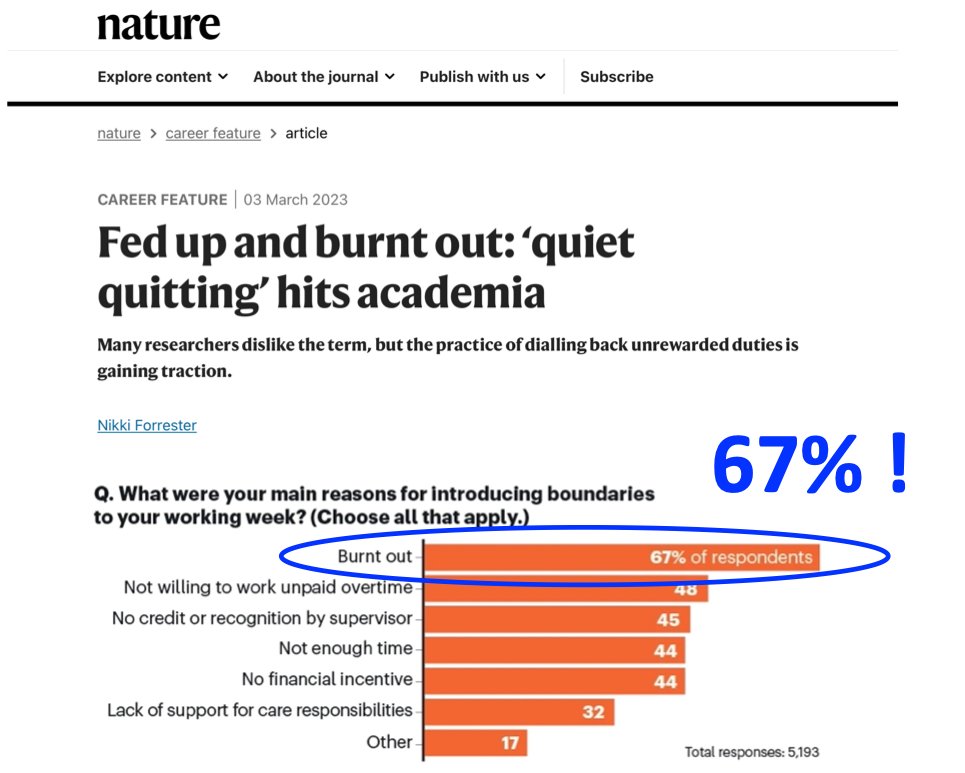
No reward - no duties. 75% of respondents have reduced the hours spent on academic duties since 2020 (Nature polls).
Mostly due to burnout and unwillingness to work for free.
This included attending conferences, peer reviewing manuscripts and grant proposals, committees, mentoring and even teaching.
Why?
Because scientists are tired of not being able to do #science.
- Students are tired of being unappreciated and overloaded
- Faculties are tired of “community duties” that become overwhelming (conferences, committees, reviewing, outreach, etc)
And everyone is tired of small salaries, zero empathy and little credit.
The problem is greatly summarized by Isabel Müller (in the article):
“There’s so little acknowledgement that people have difficult, complicated lives outside of work.”
A year ago, Nature described how PhD students don’t want to be postdocs and faculties are leaving academia. Now, we see that those who stayed are trying to resist the system from the inside.
But the problem is - the system is too rigid, too traditional and too elitist.
So, as a community, we can change it only by raising our voices and expressing distaste with the status quo. I applaud Nature for writing about these issues so regularly. The academic world has too many interdependent parts which should be addressed concurrently.
This is why we should stay united and strong as a community.
Regarding the academic environment we all hope to have, I loved how Isabel Müller put it in the article:
- I hope it becomes the new normal to say: “My life matters. My work is an important part, but I decide what my life looks like, not my employer”.
#AcademicTwitter #education
@JGAMartin @NSERC_CRSNG@SupportOurSci@uOttawaCHM This is a huge give and take but the reality is that our highly qualified personnel deserve to be paid a stipend that allows them to cover their minimum expenses
https://t.co/CQJQRAQEKi
Recently, @uOttawaCHM agreed to a min. stipend increase of $3K by May '24 for its grad students.
This is a HUGE step in the right direction but is not the end of the road! So, we are sharing the data we collected during the process! #sharingiscaring 👇
a (very long) 🧵 1/21
@JGAMartin @NSERC_CRSNG@SupportOurSci Increased grants for PIs is a huge part of this conversation. Recently, @uOttawaCHM decided on an increase to the min stipend with the understanding that it was not sustainable w/o systemic, federal, change - or smaller labs at a consequence of decreased research output.
Increasing scholarship amounts is great, but to improve funding for ALL grad students, we need increases to Discovery Grants, which fund a much larger proportion of students #supportourscience 🇨🇦
Average DG in Chemistry
2002: $53,230
2022: $52,600
@MeredithAAllen@NSERC_CRSNG@SupportOurSci Totally true. Inequity is a huge issue here too. The funding that does exist is not equally available to students from underrepresented groups (racially, culturally, financially, first generation students, etc). Funding must come with changes to the award conditions
@NSERC_CRSNG support Canadian 🇨🇦 graduate students better or those that can will take their talent elsewhere. Current funding is exacerbates inequalities for Canadian researchers, and we certainly don’t need more of that. It’s time to show scientists you care @SupportOurSci
Support Our Science supports the #BouchardReport & is asking the government to:
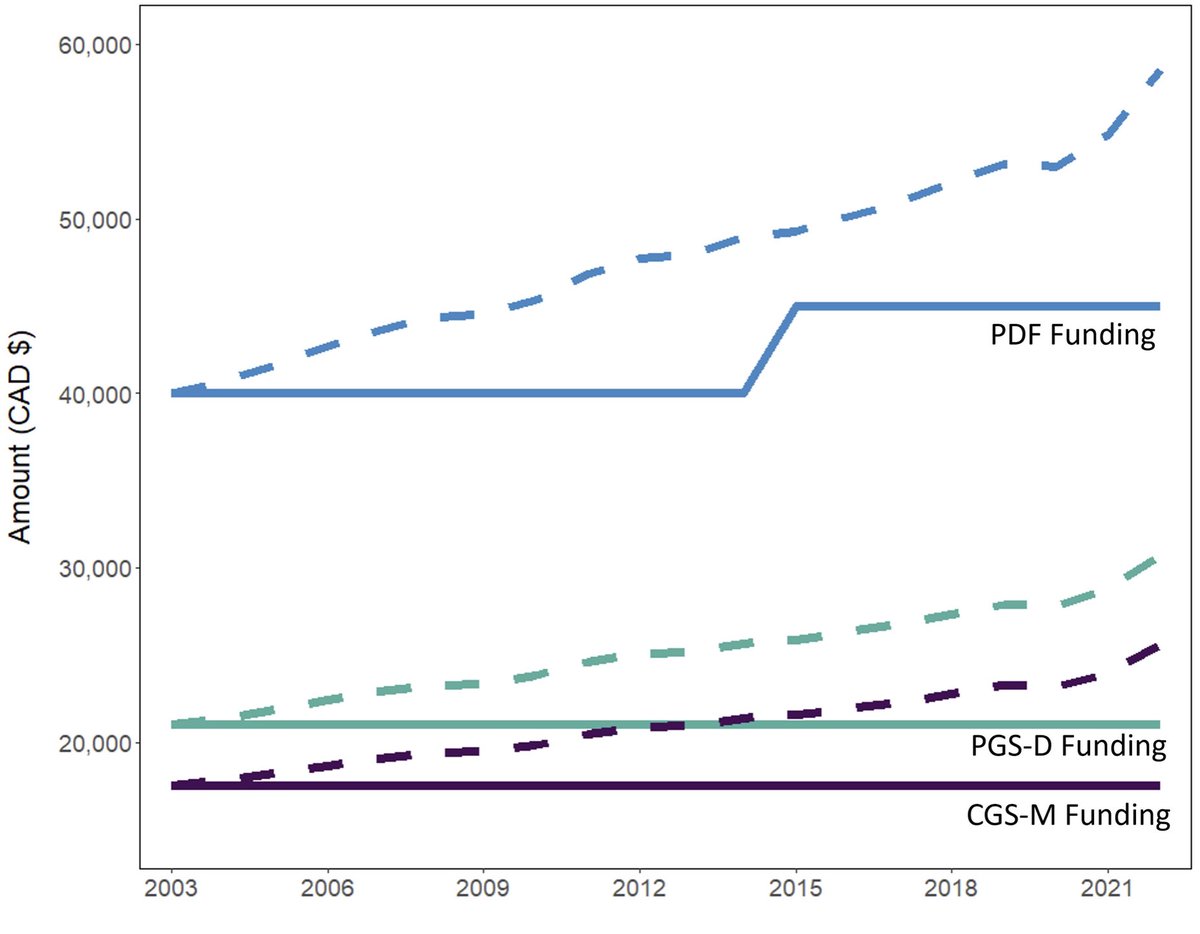
1) Increase the value of grad scholarships & postdoctoral fellowships to reflect inflation since 2003 (when they were last increased)
2) Index scholarships/fellowships to inflation going forward
3/5