1/💡 Kan #nicotine geheugenverlies vertragen?
Met steun van de NIH onderzoekt de MIND-studie of nicotinepleisters veilig geheugen en functioneren kunnen verbeteren bij mensen met milde geheugenproblemen. 🤔 Veel mensen twijfelen vanwege de associatie met roken, maar:
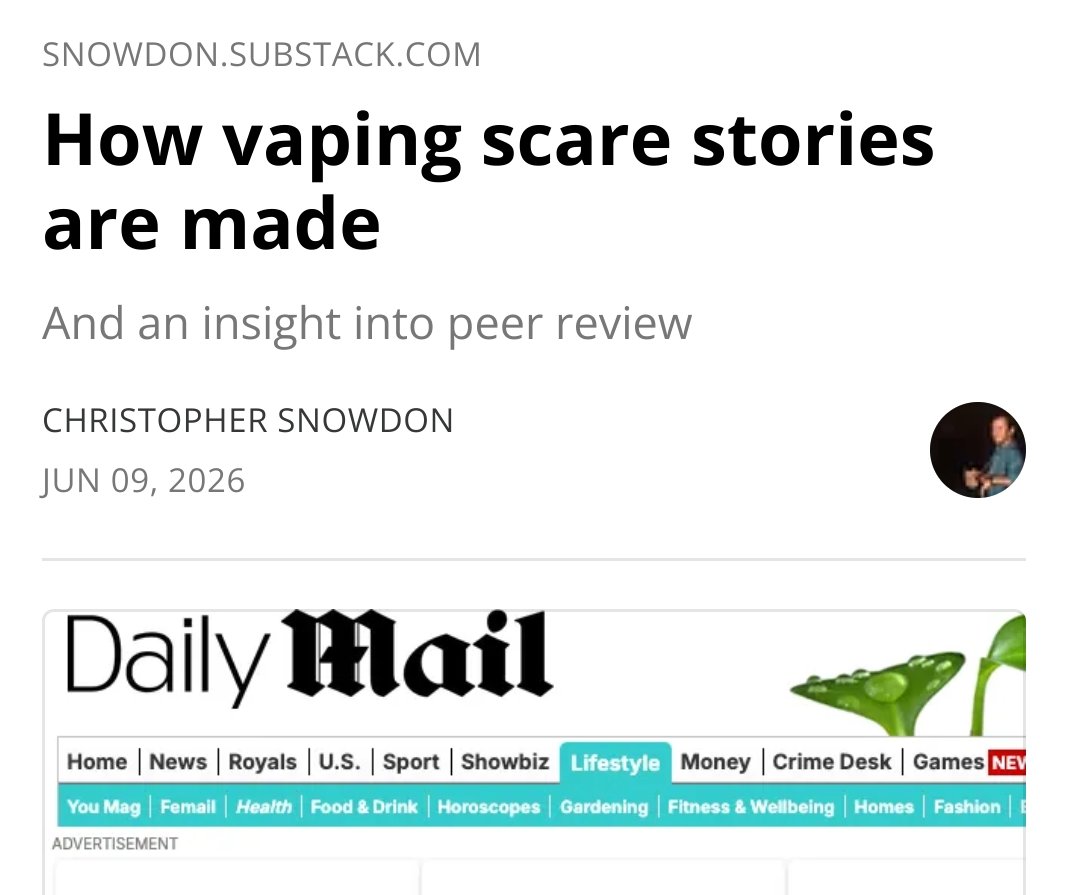
"A researcher might spend years conducting a controlled study demonstrating reduced exposure to carcinogens in users who switch away from combustion, but that paper can be neutralised in public perception by a single headline, “Vaping could be worse than smoking,” which travels faster than the research ever could, requires no context to be believed, and requires no nuance to be shared."
Ik was dit weekend op een heel gezellig feestje waar opvallend veel mensen rookten. Ik vroeg er een aantal of ze ooit een e-sigaret hadden geprobeerd. Hun reactie: “maar dat is toch veel schadelijker dan roken..” 😱
@ParentsvsVape Being allowed to tell people the truth about Zyn being less harmful than cigarettes is "devastating"?
What's devastating is someone dying or getting a smoking-related disease because they were never allowed to hear the truth about pouches being way less harmful than cigarettes.
IMF researchers represent the relative risks of different tobacco and nicotine products in their paper Taxing Harmful Habits (see graphic). If smoking = 100, pouches = ~1, so not harmless, but far less harmful.
It would be ‘crazy’ or worse to deny consumers that insight.
CC @alemannoEU
https://t.co/90jMEURetU
Great news! Congrats to Swedish Match! 👏
Now they can tell the truth in their labeling: "Using ZYN instead of cigarettes puts you at a lower risk of mouth cancer, heart disease, lung cancer, stroke, emphysema, and chronic bronchitis."
Excited to share @drmichaellevin ‘s newly modified version of his fascinating Platonic Space paper for exploring minds beyond genetics and selection. By taking Platonist frameworks seriously in developmental and synthetic biology, Levin posits that we can erase artificial boundaries between machine and organism, framing both as points along a highly variable “spectrum of agency.”
More to come on this soon. Dive into the preprint here: https://t.co/7GOcRCb1Bn
#DiverseIntelligence #PhilosophyOfScience #SyntheticMorphology #TheoreticalBiology #AgencyContinuum #AgencySpectrum
Flavor safety: important issue that MUST be tested on the actual devices people use (pods & disposables). Instead, authors of https://t.co/6rXZe5KlKN test it with sub-ohm devices no one uses. Their aim is not testing safety, just to be able to show harms from flavored #vapes
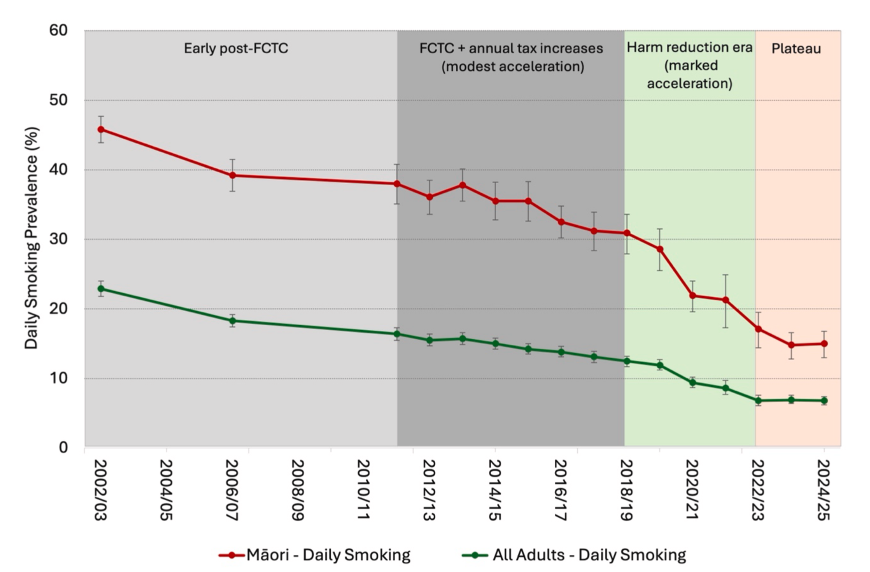
Resurrecting my Substack below in light of new confirmatory evidence from Robert Beaglehole et al.:
Adult smoking prevalence declined significantly faster (from -4% per year to -18% per year) after e-cigarette uptake.
https://t.co/6CH2dm1EBq
(And cool that my Substack is cited in this article!)
It's here! 🎉 Our @MITPress Open Access volume "Embodied Intelligence: Multidisciplinary Perspectives on Natural, Artificial, and Hybrid Systems" dropped today! This volume moves beyond the traditional focus on brains and code to explore embodied intelligence across various disciplines!
Co-edited with Jennifer M. B. Fugate, Arsen Abdulali, and Josie Hughes. A major transdisciplinary effort rethinking cognition and agency—featuring contributors like Karl Friston, Andy Clark, Josh Bongard, Michael Levin, Shaun Gallagher, Tom Froese, & many more.
Free Open Access thanks to MIT Press Direct to Open → Preview/download the full volume now!
https://t.co/Ef3LOV7Wig
#EmbodiedIntelligence #CognitiveScience #ArtificialIntelligence #OpenAccess #MITPress #ActiveInference #InferenceActive #DiverseIntelligence #Robotics @DoctorJosh@DrMichaelLevin@CogsAndy@KarlFristonNews@MITPress@PhilipLaughlin@DrTomFroese
Results of the latest model run on "Tobacco Products And Tobacco Advertising Revision Of Eu Rules 18 May 2026 – 15 June 2026"
Total set:
94.5% against, 1.7% for and 3.8% unclear.
Citizens:
94.6% against, 1.6% for and 3.8% unclear.
Academic/research, NGO and public authority
76.9% against, 19.6% for and 3.5% unclear.
Spend 20 years studying Chemistry.
Collect data. Publish papers. Pass peer review.
Earn a PhD. Go online. Get told you're wrong - by an electric screwdriver salesman.
That's the internet.
Expertise vs confidence.
Science isn't broken.
Our respect for it is.
Is categorization something the brain does after perceiving the world, or is it how perception happens in the first place?
A groundbreaking Perspective by Lisa Feldman Barrett and Earl K. Miller in Nature Reviews Neuroscienceargues that categorization is completely "baked" into our neural infrastructure.
Rather than a final-stage sorting process, categorization occurs from the very moment a sensory signal enters the brain. Driven by predictive feedback loops that start at the limbic core, the brain continuously constructs functional context to optimize energy and anticipate metabolic needs (allostasis).
In short: meaning and metabolism are deeply intertwined, and your brain is constantly grouping the world to keep your body running efficiently. @MillerLabMIT https://t.co/S3e5ag5nlI
#Neuroscience #CognitiveScience #BrainResearch #Categorization #Allostasis #PredictiveProcessing #Neuroanatomy
This may be the most INSANE tobacco-control proposal yet.
A country where tobacco kills 26 people a year is being manipulated to lobby the UN to classify nicotine like meth, while its obesity rate is among the highest in the world.
Failed Australian prohibitionists and shady Brussels lobbyists are behind it.
https://t.co/F5HrXJ2vLy
For decades, IARC has played a powerful role in shaping public perceptions of cancer risk.
The problem?
IARC identifies hazards.
Regulators assess risk.
Those are not the same thing.
A shark is a hazard.
A shark in your swimming pool is a risk.
Yet much of the public discussion treated IARC classifications as if they were predictions of real-world harm.
That distinction matters.
Because modern toxicology is not just about whether something can cause harm.
It’s about whether people are actually exposed to enough of it to matter.
This confusion helped fuel some of the largest product-liability lawsuits in history.
Glyphosate. Talc. And potentially many more to come.
Now, some policymakers are beginning to push back.
Not because cancer prevention is unimportant.
But because hazard alone is a poor guide for public policy.
Almost everything is hazardous under the wrong conditions.
Sunlight.
Alcohol.
Hot coffee.
Even oxygen.
The question that matters is not:
“Can it cause harm?”
The question is:
“At real-world exposure levels, does it cause harm?”
That is the difference between toxicology and fear.
Between risk assessment and headline generation.
And perhaps between science and litigation.
Hoe angst voor de e-sigaret wordt aangewakkerd door slechte research 👇🏼
Waar blijven de kritische pers en - wetenschappers in Nederland?
#vaping#schadebeperking#research
Users who interact with a misleading post that is subsequently corrected by @CommunityNotes will receive an 𝕏 Chat message of the CN to correct any misperception
Óscar Balderas talks about the disturbing increase in organized crime in Mexico following the e-cigarette ban.
$1 billion went to organized crime #GFN26
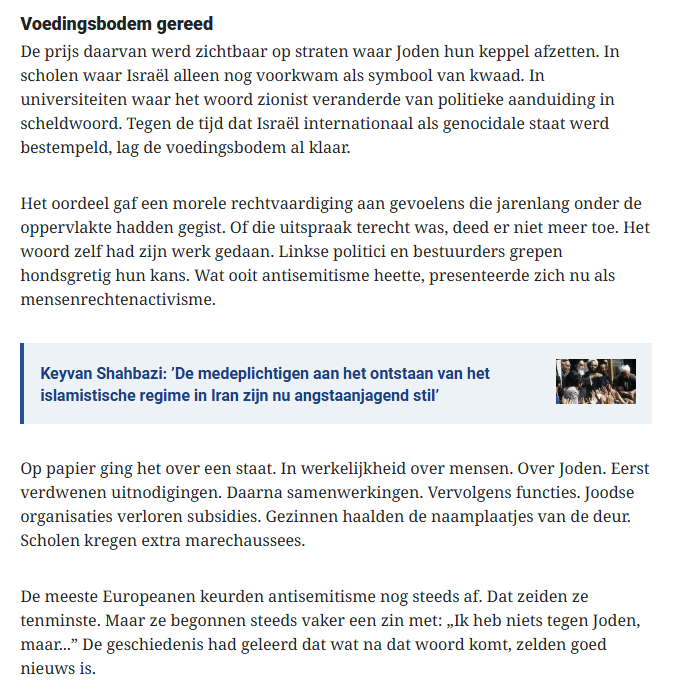
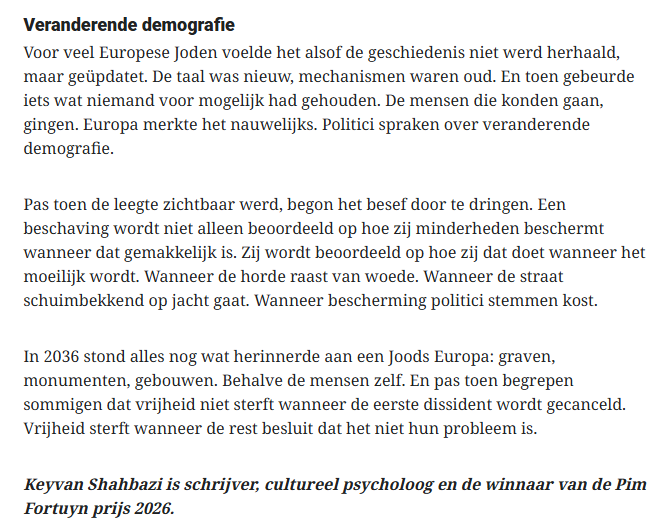
Keyvan Shahbazi:
"Vrijheid sterft niet wanneer de eerste dissident wordt gecanceld. Vrijheid sterft wanneer de rest besluit dat het niet hun probleem is."
https://t.co/QJSG8WF0oB
Overigens raad ik iedereen een betaald abonnement op de Telegraaf aan.
Versterk dissidente stemmen.
A Health Commissioner who misleads the public on nicotine, ignores quitting evidence and pushes prohibitionist policy is not fit to lead EU health policy.
Oliver Várhelyi should go.
Europe deserves a Commissioner guided by evidence, not ideology. https://t.co/ROfnmrYfMK