this is intriguing: "most human genomes contain repeat elements that expand as we age". If it holds up, it has implications for multiple aging-related conditions
We recently added Neanderthal and Denisova variant tracks for GRCh38/hg38. Thanks to the Archaic Sequence Hub (https://t.co/WDO1gYQyAh) for compiling the data and making it available. View the data on the Genome Browser: https://t.co/aYwhV7C7Lg.
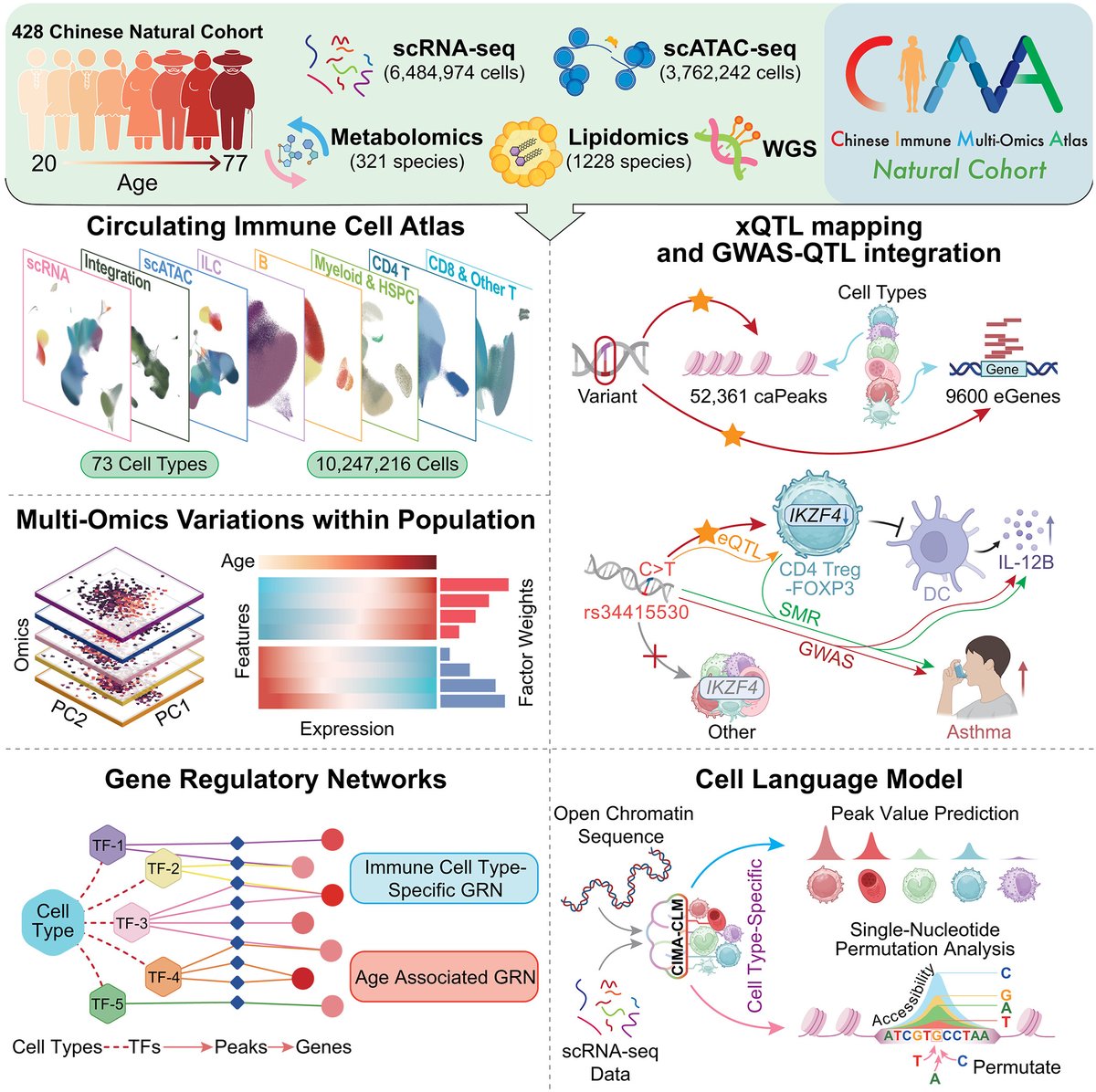
We're learning more about our immune system from a new, comprehensive, multi-omic atlas in @ScienceMagazine today, such as the stronger immune system in women and the age-related features of immunosenescence
https://t.co/4B85BwohBb
My lab is looking to recruit postdoctoral scholars over multiple projects including combinatorial expression perturbations for cell state engineering, and modeling and perturbing human tissue development with tractable human organoid systems (primarily heart and brain)
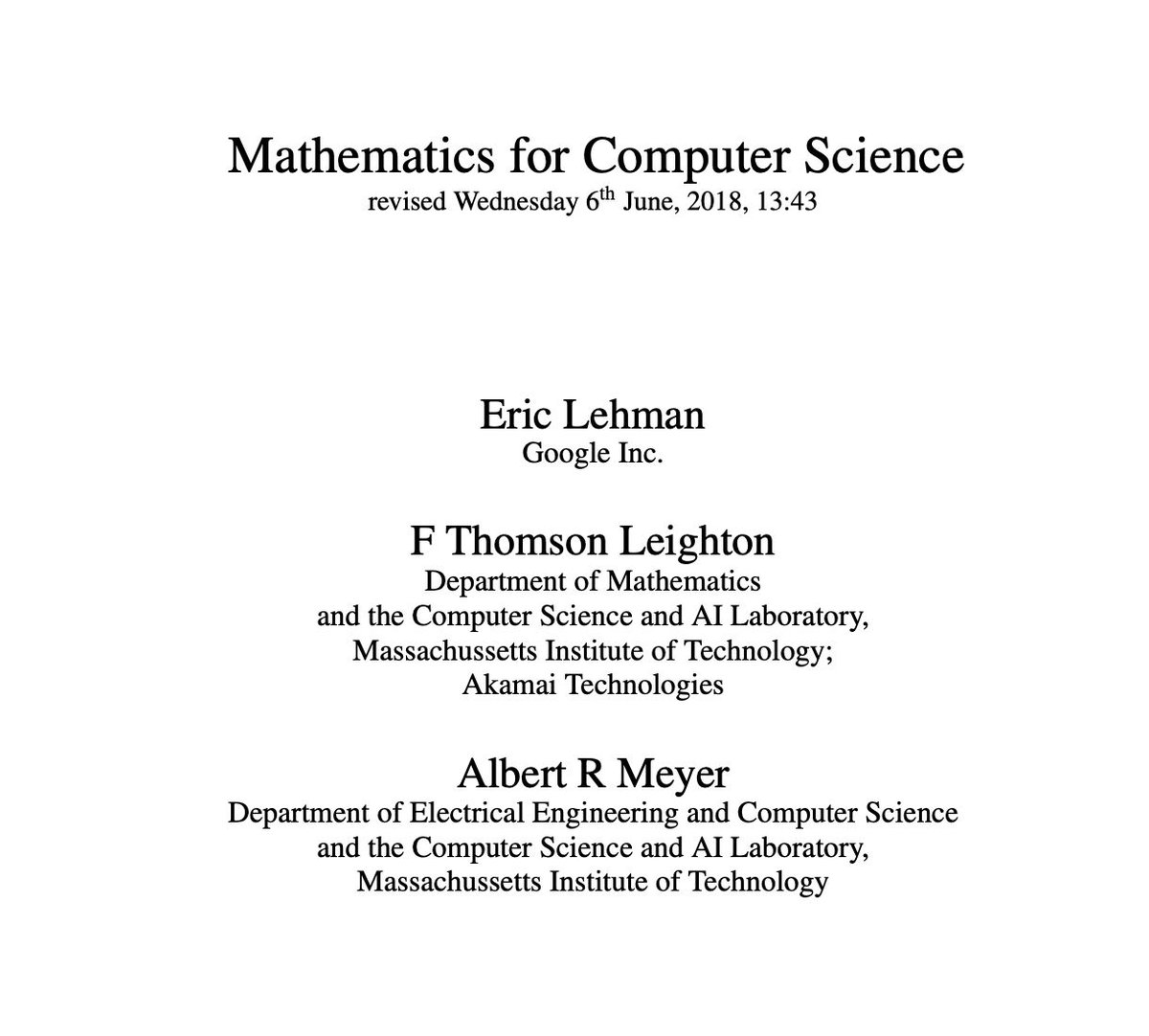
One of the best math books I've ever read:
MIT's "Mathematics for Computer Science"
Its writing style is brilliant, and it covers everything:
- Linear algebra
- Series
- Logic
- Probability
- Number theory
- Graphs
You can find the PDF here:
https://t.co/iQvaflkDPD
The @ENCODE_NIH Phase 4 Registry of candidate cis regulatory elements (ccREs) (2.37 million human and 967,000 mouse cCREs) is officially out
https://t.co/uuJAsO334Z
https://t.co/wtCW3beYlv
Congrats to @MooreJillE@ZhipingWeng & everyone else.
Lots more incoming ...
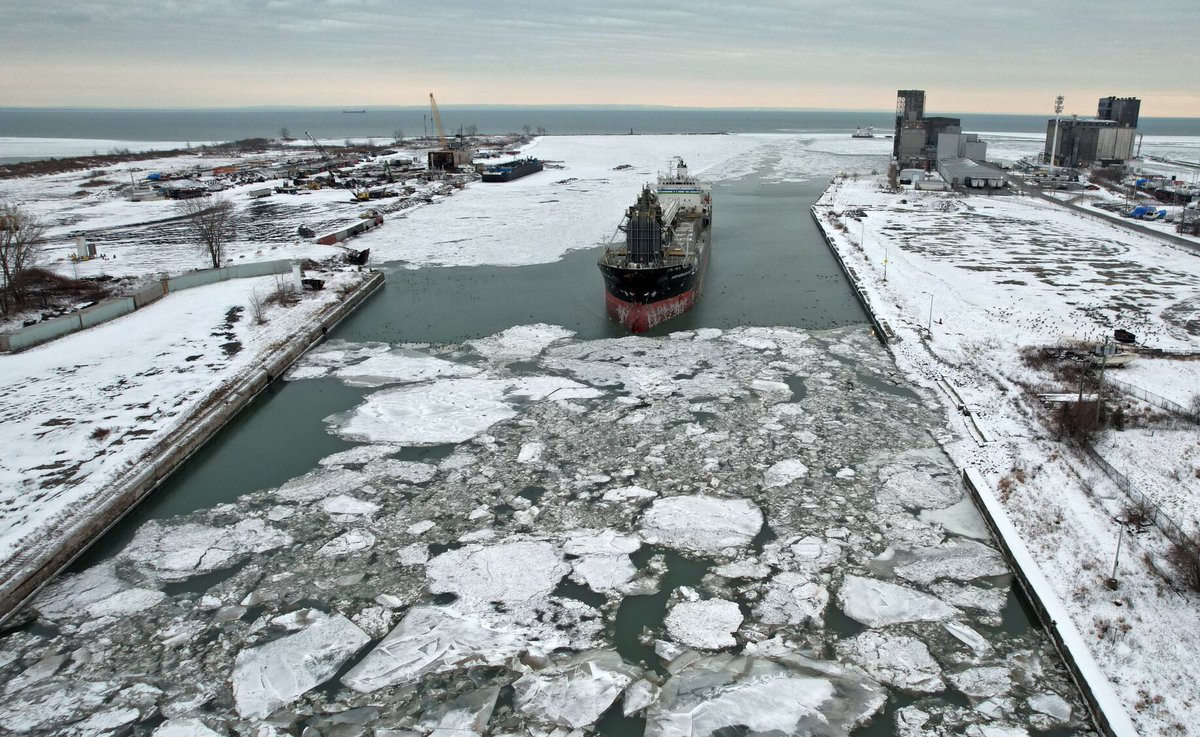
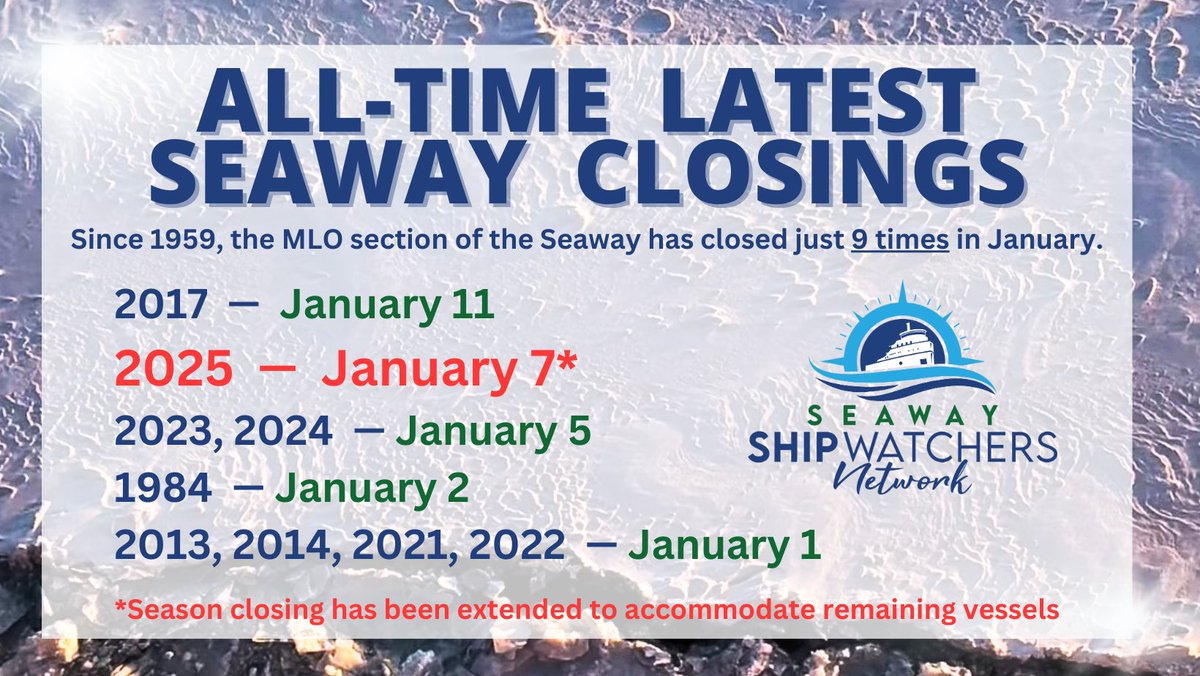
Tonight’s anchored vessel totals. This does not include ships in transit or ice-locked in South Shore Canal. Also does not include ships waiting in Montreal to enter the Seaway.
Another day closer to the record. The MTL-Lk Ontario section is still at minimum two days from closing, if not more. As many as 4 ships are still expected to enter upbound while 15 remain downbound. 11 of those are ocean-going vessels.
Our paper is now out in Genome Biology! We used AlphaFold2 to identify how alternative splicing in human cells changes protein structure--specifically protein compactness, PTM site accessibility, surface charge, IDRs, and predicted functions.
https://t.co/ERQly14rAc
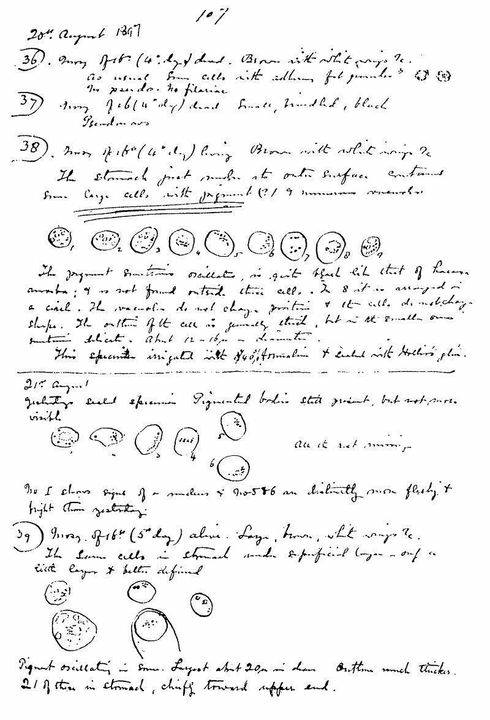
Ronald Ross discovered the link between mosquitos and malaria transmission on 20 August 1897:
"The work, which was continued from 8 a.m. to 3 or 4 p.m. with a short interval for breakfast, was most exhausting, and so blinding that I could scarcely see afterwards; and the difficulty was increased by the fact that my microscope was almost worn out, the screws being rusted with sweat from my hands and forehead, and my only remaining eye-piece being cracked, while swarms of flies persecuted me at their pleasure as I sat with both hands engaged at the instrument.
/ ... /
The seventh dappled-winged mosquito was then successfully dissected. Every cell was searched, and to my intense disappointment nothing whatever was found, until I came to the insect’s stomach. Here, however, just as I was about to abandon the examination, I saw a very delicate circular cell apparently lying amongst the ordinary cells of the organ, and scarcely distinguishable from them. Almost instinctively I felt that here was something new.”
From the 1902 Nobel Prize lecture by Ronald Ross. We can highly recommend reading his lecture even though it's 90 pages long: https://t.co/dpDEtAh6Gt
Image: The page in Ross' notebook where he recorded the "pigmented bodies" in mosquitoes that he later identified as malaria parasites.
This a really exciting leap forward for genomic sequence to activity gene regulation models. It is a genuine improvement over pretty much all SOTA models spanning a wide range of regulatory, transcriptional and post-transcriptional processes. 1/
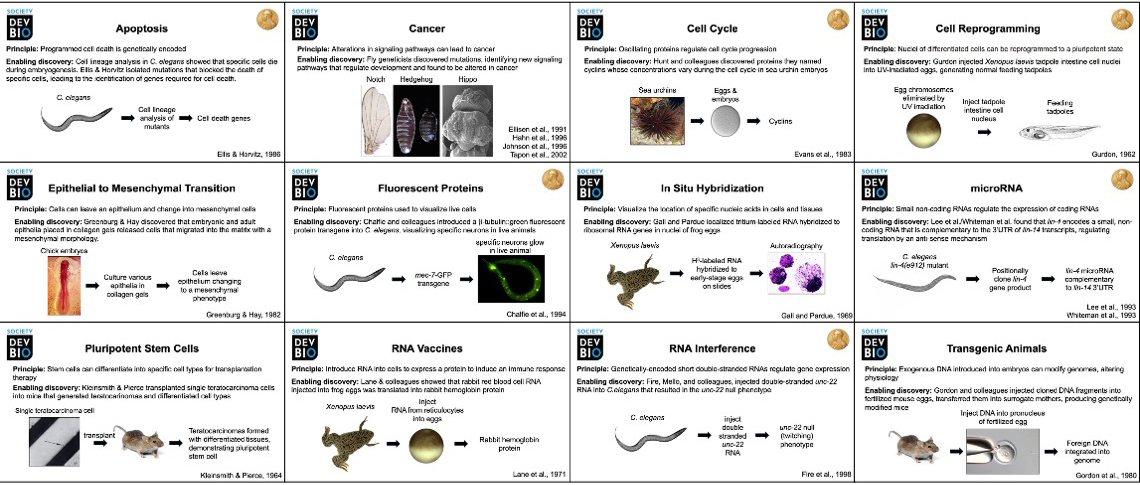
12 examples of how developmental biology research led to fundamental discoveries for biomedical research. There are many more! Download ppt & jpg versions on @SocDevBio website. Use & modify as needed. Poster formats are also posted to print & hang in your lab!
New preprint: The first whole-body map of both DNA methylation and 3D genome organization at single-cell resolution across 16 human tissues, with in-depth analyses of cell type diversity of these epigenome modalities at unprecedented resolutions. (1/5)