@MrKevinRothrock@kirlant Sorta mental accounting is happening my father in law very eager to count money and hate local oligarchs, but when I brought numbers spent on SVO he treats it as a kind of calamity with no attribute or he simply fears to say what he thinks even to relatives.
@MrKevinRothrock@kirlant Probably the MV Factor for people here was and still is "fridge" as long as it is full along with the gas tank other unpleasant stuff can be tolerated and mentally ignored. My relatives in the mood - nothing can be done we can't influence anything.
@avidseries New devotees to any cause always extra zealous at the beginning. Musk's case interesting because he extremity good at technical aspects and management and this probably at the expense of all other aspects.
Today's article is an absurdly deep dive into what life was like in America 100 years ago, in 1926, on America's 150th
Some favorite factoids about life in 1926:
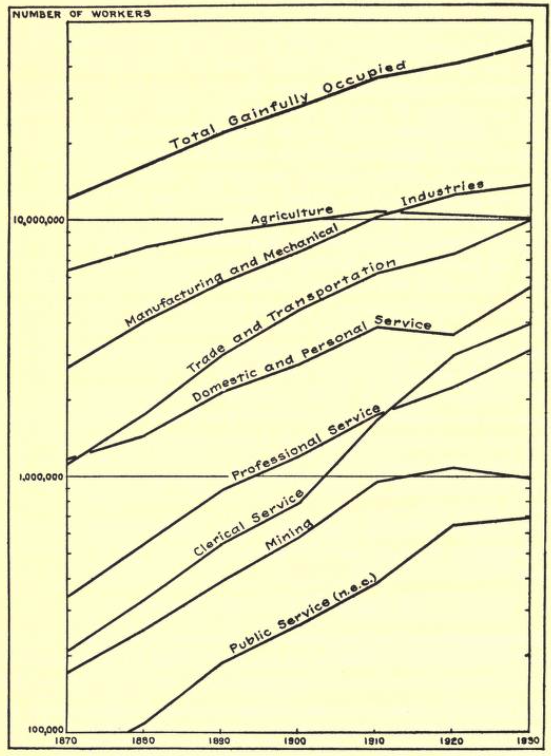
- Farming is collapsing: Agriculture’s employment share fell from 50% in 1870 to <25% in 1926. The price of cotton & corn fell 50% after WWI. percent.
- Manufacturing productivity growth is insane: In 1910, it took ~15 hours to put together a Model T; by 1926, a new car rolls off an assembly line every 10 seconds. A vehicle that cost the avg worker two years’ wages before World War I cost 3 months’ earnings in 1926
- Americans are obsessed, obsessed, obsessed with cars: 1920s Kansas had more vehicles than France
- The influence of flappers on fashion is quantifiable: The amount of fabric in the avg dress fell from 20 yards in 1910 to 7 yards in 1926
- Prohibition killed a lot of people: 12k people died in 1927 from drinking industrial alcohol that the feds had poisoned on purpose to discourage consumption—adjusted for population, that'd be the mortality equivalent of 36k people dying in 2026, which is roughly the number of car deaths
- Sports were very different: No TV means no commercial breaks, and players were in a rush. In one doubleheader against the New York Yankees on September 26, 1926, the St. Louis Browns won 6–1 in 72 minutes and then won 6–2 in 55 minutes with a one-hour break in between
- 1926 might have been the high-water mark for literacy in US history: The number of books published annually had doubled since the 1910s; magazine advertising revenues grew by 500%
- All this change was driving ppl crazy: In Germany, where medical records were better, the number of patients registered in mental hospitals grew from 40,375 in 1870 to 220,881 in 1910. Over the same period, the share of patients admitted to general hospitals for illnesses of the nervous system rose from 44 to 60%.
https://t.co/ThhKO5YWm1
@pmarca I wonder why is all bent on subscription, Enterprises should be able to buy weights assuming they have hardware to run it on. Anyway those weights would be irrelevant already in span of 1 year. They can buy then updated weights of newer model versions too.
@NateSilver538 I wonder if jet lag is a factor. I wonder how long body adapts to a significantly different time zone. Probably physical performance of west hemisphere teams has a slight edge over eastern hemisphere teams
@paulg I wonder what was the ratio of the blue to red part in 94 and later doesn't seem to change much thus approximately the same amount of people moved left and right