The reconciliation law sets Medicaid HCBS cuts in motion by slashing funding & flexibilities. For those it helps—everyone from older adults to kids—it is often the difference b/w living in an institution & living at home with loved ones, dignity, & choice. https://t.co/PwFs2sy0g6
The Republican megabill has many parts and was never framed for the public as a health care bill. But, it is the biggest cutback in federal support for health coverage ever.
The devastating cuts passed by Republicans in Congress threaten the health, well-being, and economic security of millions of older adults, people with disabilities, caregivers, working families, and children. https://t.co/iFh9Rrtqfr
CBO has indicated 900,000 low-income adults aged 55 through 64 will lose food assistance under the expansion of SNAP's harsh work requirement to older adults.
Older workers face employment discrimination & half of low-income adults in this age range face health barriers to work.
More bureaucracy, more paperwork, and a less efficient government.
No more coverage lifeline for people between jobs.
That's what prior attempts with Medicaid work requirements have delivered, all without even increasing employment.
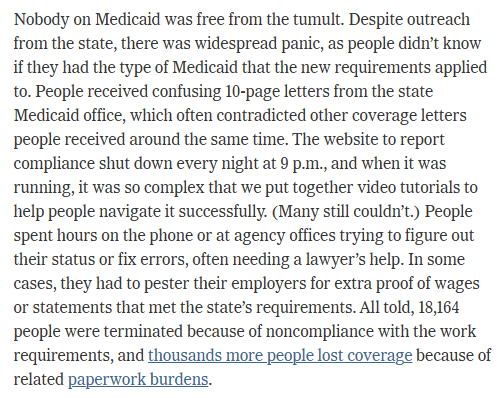
an excellent explanation of how eligible people still end up losing Medicaid coverage under work requirements, from @sangerkatz and @sarahkliff
https://t.co/1rc8UokkVs
It "is particularly absurd" bc most gov't debt is sold to those who will disproportionately benefit from the bill's tax cuts: wealthy Americans. By borrowing the same $ from the same ppl, the gov't is effectively paying them interest instead of taxing them https://t.co/dQmeMbCwJZ
How much could certain Medicaid expansion enrollees have to pay under the new requirement included in the “One Big Beautiful Bill” if all states imposed the maximum cost sharing amounts?
Our analysis shares some estimates: https://t.co/Oeu2P9gQ4A
"It sounds stark when you put it that way, but death is a stark thing. It’s also what can be reasonably expected from the GOP legislation...When people can’t pay for medical care they frequently don’t get it. And when people don’t get medical care, they’re more likely to die..."
New: During a meeting with Mods in the WH, Trump told members that if they want to win elections, they shouldn’t touch: Medicaid, Medicare and Social Security
“But we’re touching Medicaid in this bill,” one member responded to Trump, per 3 sources.
https://t.co/rr17YwxSly
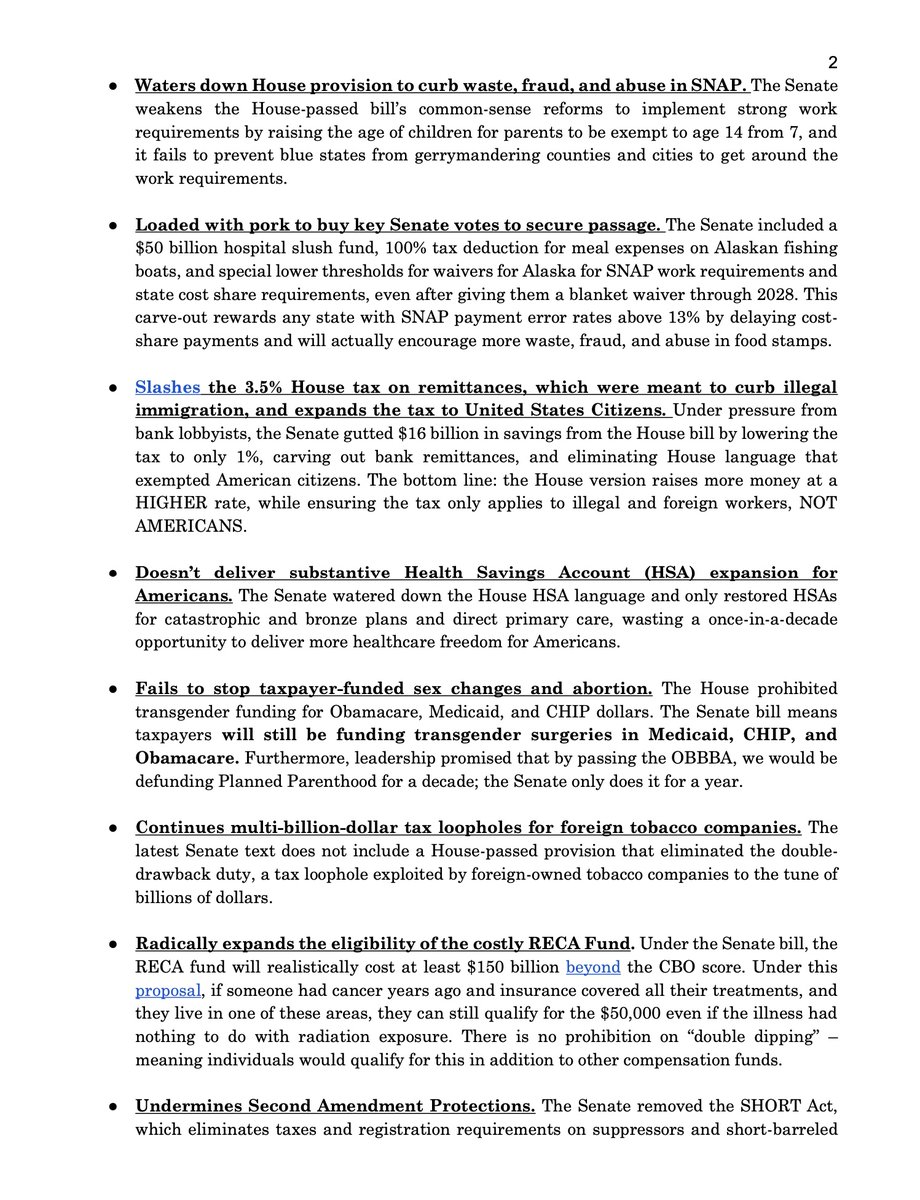
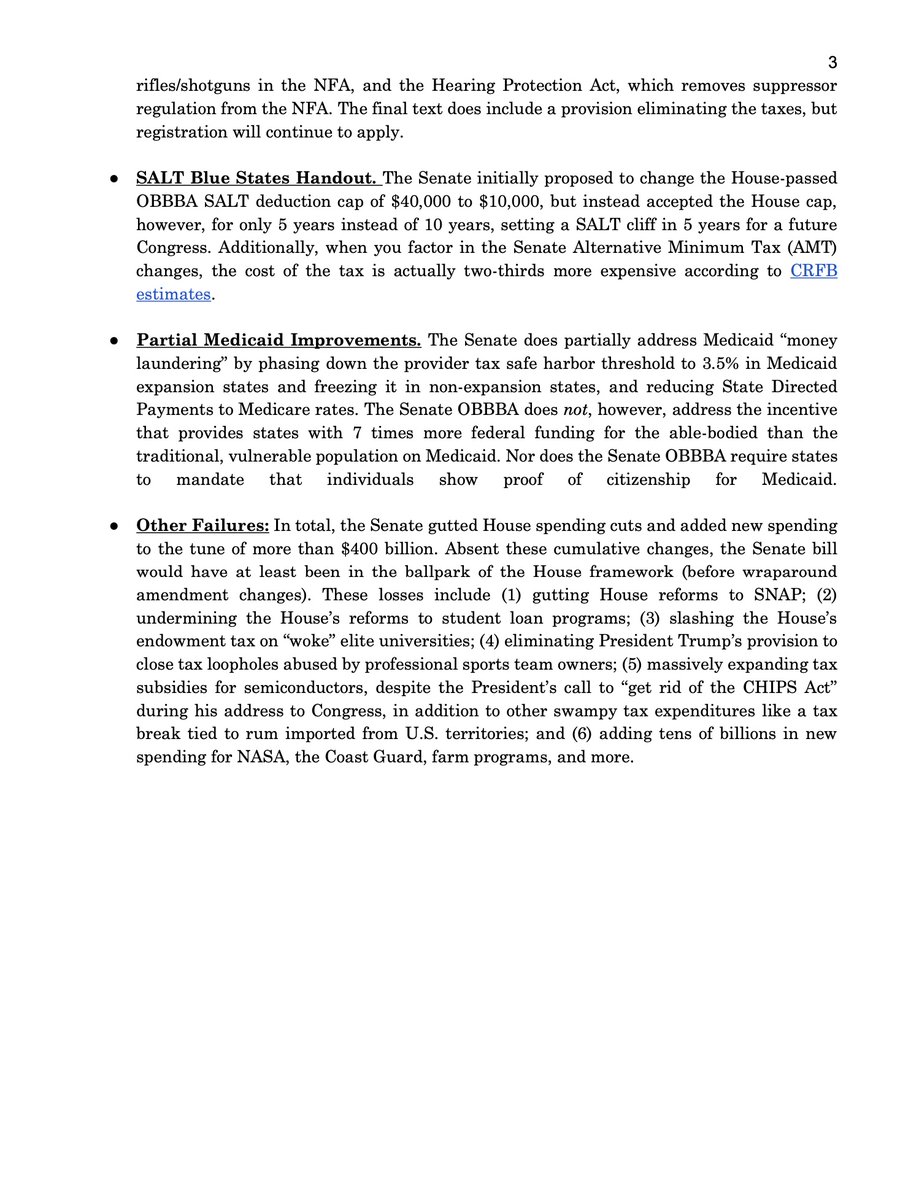
MEANWHILE: House Freedom Caucus leaders are circulating this doc torching the Senate-passed "big beautiful bill." They say it increases deficits and contains insufficient clean energy cuts, inadequate Medicaid rules, "excessive port for Alaska and Hawaii," among other grievances.
Another 5 percent of the U.S. population could lose health insurance coverage -- that's roughly a 50% increase in the uninsured rate https://t.co/YJ3mnKtUmb
Under the Senate-passed reconciliation bill, federal Medicaid spending in rural areas is estimated to decline by $155 billion.
That is more than the House-passed bill — and far more than the $50 billion appropriated for the rural health fund. https://t.co/uwPwG7n0f4
Under the bill, "Americans who comprise the bottom fifth of all earners would see their annual after-tax incomes fall on average by 2.3 percent within the next decade, while those at the top would see about a 2.3 percent boost" https://t.co/81kfbTsDUK
Should the ‘One Big Beautiful Bill’ reach President Trump’s desk, “it would represent the biggest rollback in federal support for health coverage ever,” writes KFF's @larry_levitt.
For @nytopinion, Larry writes about the potential impact of the bill: https://t.co/7F5G1w0L3x
The colossal tax giveaway proves that Republicans are willing to sacrifice Medicaid and Medicare to pay for tax cuts. The bill now goes back to the House, where it started. We call upon all House members to embrace this second chance to do the right thing. https://t.co/qS71FQMWxz
"The bill is likely to cut billions of dollars in #Medicare funding, though Trump swore he would not touch the program." It also undermines "Medicare’s savings programs, which help poor seniors afford care. An older couple earning $21,000/year could spend $8,340 more" as a result