When you feel sad, remember that tiny proteins called kinesins are working inside you 24/7 just to keep you alive.
Be kind to yourself, your body is doing everything it can to keep you alive.
[🎞️ thequantara]
📡 Types of Antennas & Their Applications Antennas are one of the most fundamental components of every wireless communication system. From smartphones and Wi-Fi networks to satellites, radar, GPS, defense systems, and space communication, the right antenna plays a crucial role in transmitting and receiving electromagnetic energy effectively. I created this infographic as a simple visual guide to help ECE students, RF enthusiasts, and aspiring antenna engineers understand the major types of antennas and where they are used. The poster covers: 🔹 Wire Antennas – Dipole, Monopole, Loop, Helical 🔹 Aperture Antennas – Horn, Conical Horn, Lens 🔹 Microstrip/Patch Antennas – Rectangular, Circular, Stacked Patch 🔹 Array Antennas – Yagi-Uda, Log-Periodic, Phased Array, Massive MIMO 🔹 Reflector Antennas – Parabolic, Cassegrain, Offset Dish 🔹 Traveling-Wave Antennas – Helical, Beverage, Rhombic 🔹 Frequency-Independent Antennas – Spiral, Log-Periodic, Vivaldi 🔹 Slot Antennas – Rectangular, Circular, H-Slot 🔹 Horn Antennas – Pyramidal, Conical, Sectoral 🔹 Special-Purpose Antennas – RFID, NFC, Wearable, Bow-Tie 🔹 Modern Antennas – MIMO, Metamaterial, Reconfigurable, Implantable 🔹 Applications by Industry – Mobile, Wi-Fi, GNSS, Satellite, Radar, Automotive, IoT, Aerospace, Medical, and more. 💡 One important lesson: Antenna selection depends on factors such as frequency, bandwidth, gain, radiation pattern, polarization, size, efficiency, and application requirements. As I continue learning and working in RF Design, Antenna Engineering, Wireless Communication, and Satellite Communication, understanding these antenna families provides an important foundation for practical antenna design and simulation. If you want to add any of your opinion to this post.. Please comment it.. 📚 Learn → Design → Simulate → Optimize → Build #Antenna #AntennaDesign #RFEngineering #RFDesign #HFSS #MicrowaveEngineering #WirelessCommunication #SatelliteCommunication #Radar #GNSS #5G #MIMO #IoT #ECE #EngineeringStudents #CareerGuidance #LearningJourney #ElectronicsEngineering
Phase noise is one of those RF topics that can get confusing fast.
Last year, I wrote a short article about it for the "Hardware Thrashers of X" zine. I’m publishing it here now for anyone who might find it useful.
Link in the comments.
Chinese factories are buying RTX 5090s in bulk, desoldering the chips, and rebuilding them as 128GB server cards. Roughly $4,000 each.
Same money as a DGX Spark. Same 128GB. Six times the bandwidth.
The reason this exists: export controls block Chinese labs from buying dedicated AI chips, so consumer gaming cards became the workaround. Rip the GPU and memory off the board, solder onto a custom server PCB, add a blower cooler so it fits a rack instead of a gaming case. Automated soldering lines, robotic arms. Started with the 5090, now spreading to the 5080, 5070 Ti, 5060 Ti.
NVIDIA gets paid either way. They just lost control of what happens after the sale.
Two things follow from this:
Gamers are the collateral. Consumer cards are being bought in volume and stripped for AI, which is part of why you can't get one at a sane price.
And the "$4,000 for 128GB" pitch that DGX and Strix Halo are built on now has a grey-market competitor with dramatically better bandwidth — assuming you can get one, trust the soldering, and live without support.
The most interesting AI hardware of 2026 isn't being announced at keynotes. It's being reflowed in a workshop.
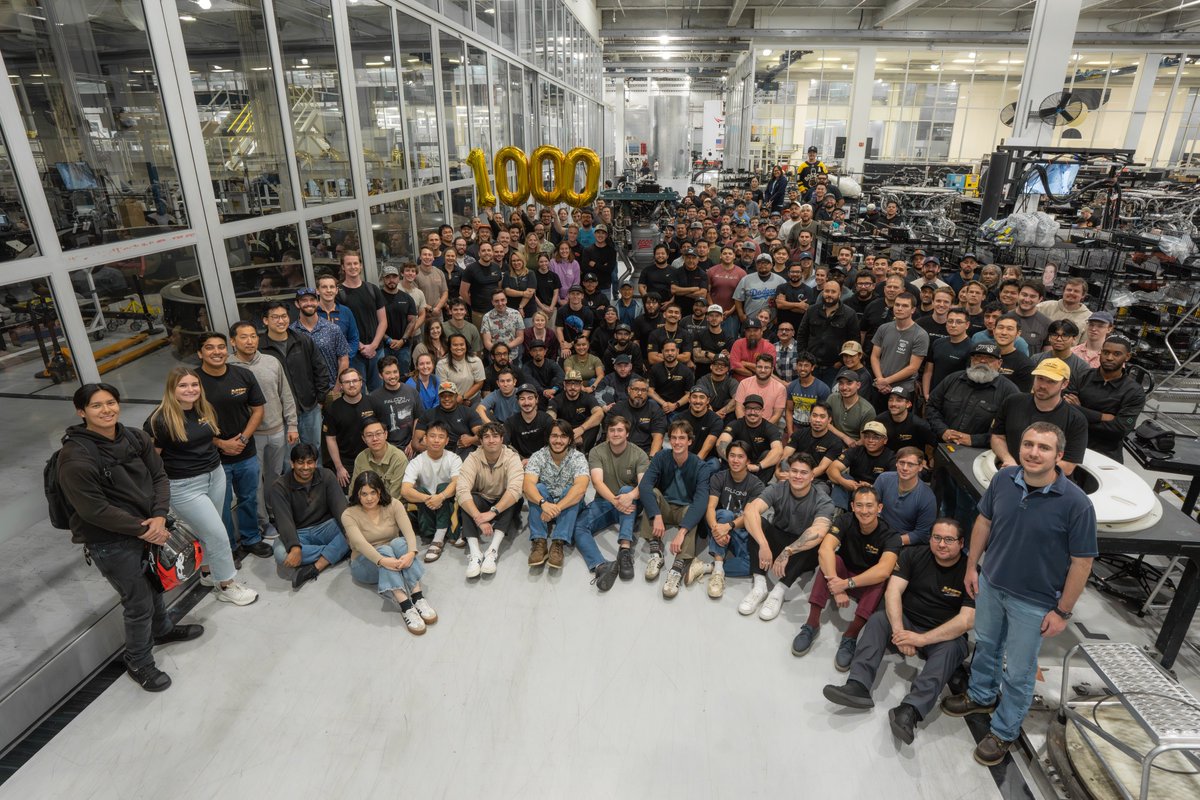
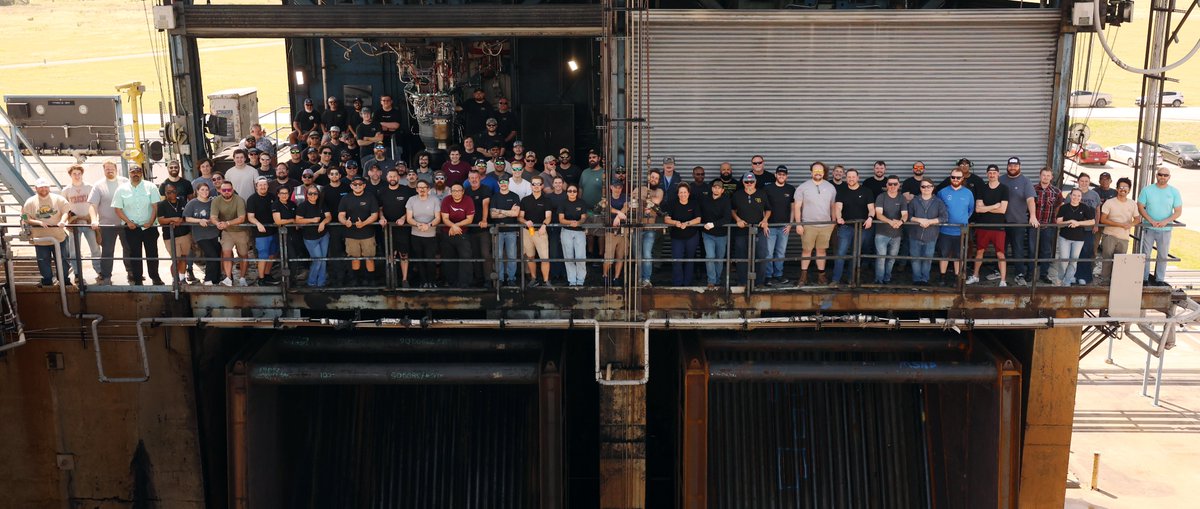
Teams recently completed build and acceptance testing of our 1,000th Merlin 1D engine for Falcon’s first stage! With Falcon’s reusability, recovering these engines has enabled continued reliability enhancements, making Merlin one of the most reliable rocket engines ever manufactured
New: Joe Rogan leaves NASA astrophysicist Michelle Thaller completely stuck after asking her a deep question about the reality of time:
ROGAN: “The weirdest thing that I’ve ever heard anybody say is that all time exists currently.”
THALLER: “That’s Albert Einstein.”
ROGAN: “When we measure time what exactly are we measuring? When we create a clock that runs 24 hours per day what is it measuring?”
THALLER: “That’s a deep question. That question caused everything in physics to fall apart.”
ROGAN: “I still don’t understand what we’re measuring.”
THALLER: “I don’t think I have an answer for you. I don’t think anybody does.”