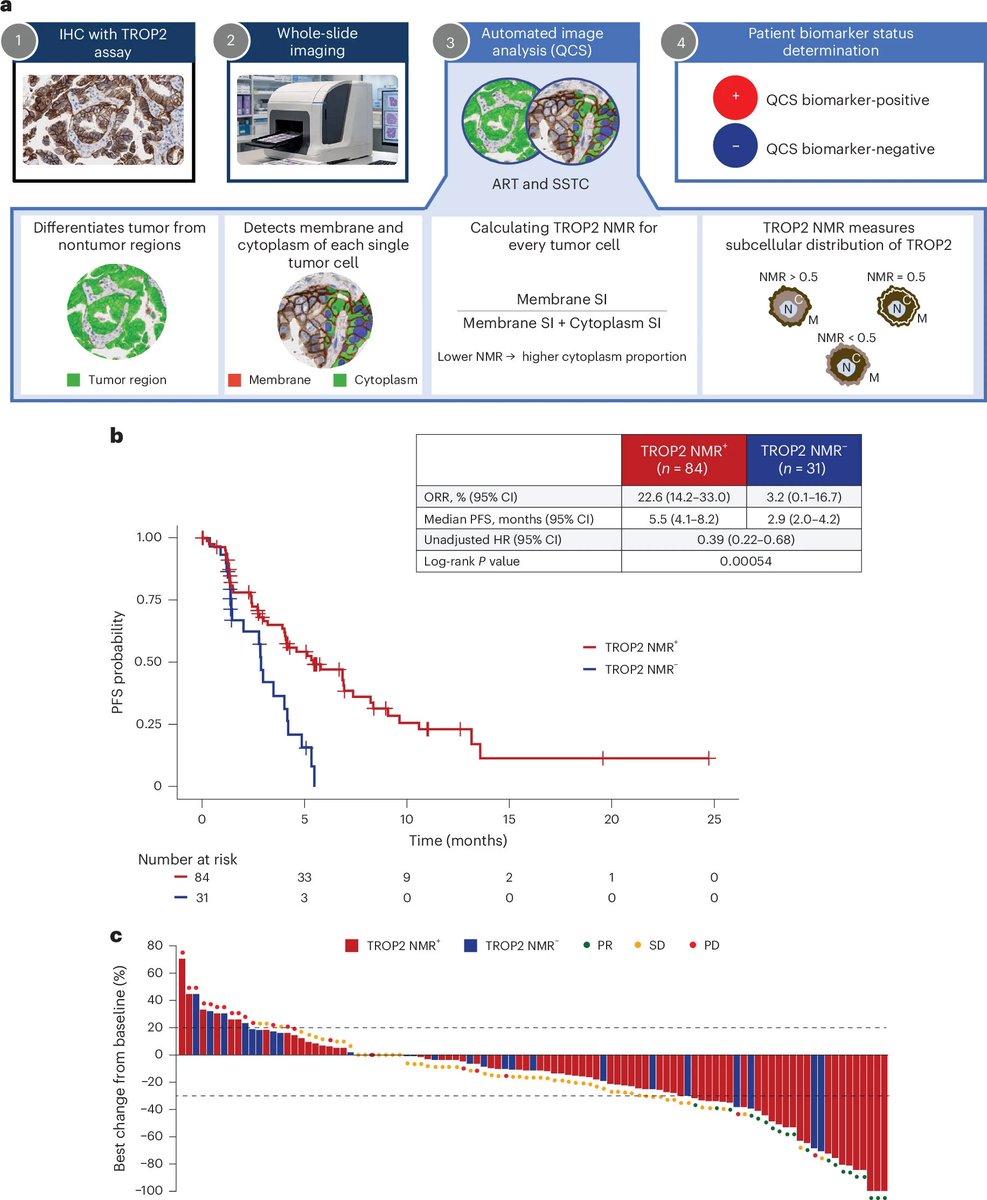
The TROP2/NMR/QCS/ paper is out @NatureMedicine 👉Normalized membrane ratio of TROP2 as a predictor of clinical outcomes with datopotamab deruxtecan in non-small-cell lung cancer
👉Scoring TROP2 IHC by eye doesn’t predict who benefits from TROP2 ADCs. Computational pathology does.
✅TROP2 QCS-NMR in TROPION-Lung01, NMR+ vs NMR–
👉Dato-DXd PFS 7.2 vs 4.0 mo (HR 0.40)
👉Docetaxel 4.1 vs 4.4 mo (HR 0.94)
👉An emerging predictive biomarker for Dato-DXd. #LCSM @OncoAlert@oncodaily https://t.co/PafVN9uBWw
Excited to share our first-in-human #SITC2026 data combining pasritamig (KLK2×CD3) with JNJ-9401 (PSMA×CD28) in #mCRPC!
At the recommended regimen (n=15):
73% PSA50
47% PSA90
27% undetectable PSA
Promising early evidence for dual-antigen targeting with CD28 costimulation
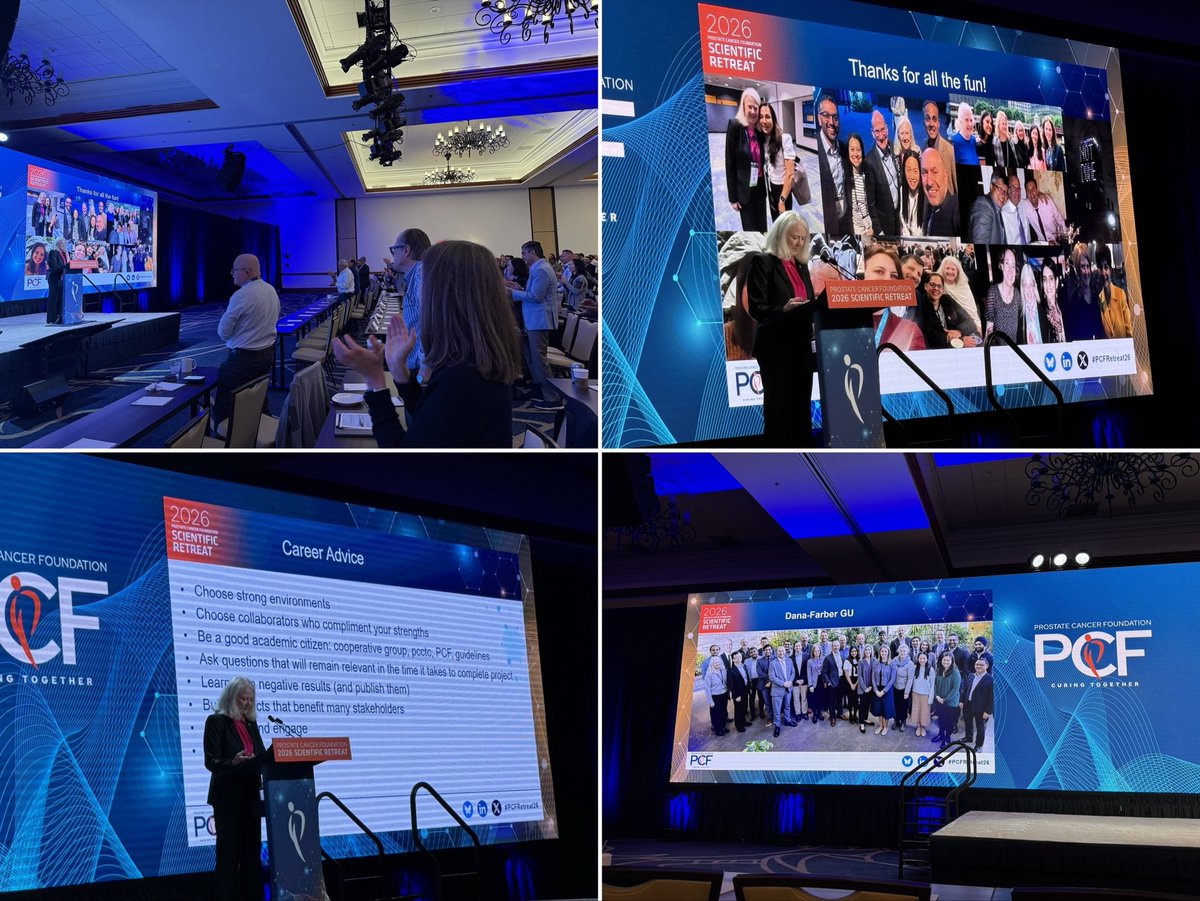
Great meeting in Bermuda with some of the most brilliant and inspiring oncologists and scientists focused on GU cancers.
I’ve never been more hopeful. We’re seeing real glimpses of a future where cures for advanced disease feel fathomable. The pace of progress is staggering. AI is only speeding it up.
Bispecifics, novel ADCs, T-cell engagers, RIPTACs… they’re all coming.
And we’re just starting to set sail (pun intended)…
@glovedoc@HHammersMD@EJonasch@RohitBoseMDPhD@ChadTangMD@DAVAOnc
Thrilled to share updated results from JNJ-6143, the AR-BRD4 RIPTAC therapy, presented by @BGarmezy. Totally novel MOA was well tolerated, oral pill and produced significant benefit for pts (PSA90 50%, ORR 68%). P2 trial active now and more coming. Lots of potential!
I’ve spent years watching T cells kill cancer cells through the microscope. The failed attacks are just as fascinating as the successes.
Can you spot the failed attack halfway through this video? 👀🔬🦠
✂️🌊Why DO1 Cas9 is special:
cold-adapted structural flexibility, thermal susceptibility and salt-dependent stability — plus higher specificity than SpCas9.
At 7.6 °C DO1 Cas9 keeps digesting its target while SpCas9 barely gets going.
🧵2/4
Huge congrats to Drs. @EHeath4100 & @EAntonarakis on the new Mayo/UMN #ProstateCancer SPORE grant from @NCIDCTD! 🎉 A well-deserved recognition of your leadership & a major step forward for mCRPC/APMR precision Rx research Link👉https://t.co/vMSQrzn6Jt @PCFnews@urotoday
Your doctor cuts you off about 11 seconds after you start talking. Researchers literally timed it in a 2018 study. That number is why Google's new Lancet result is bigger than it looks.
In the study, 98 real urgent care patients texted with Google's AI days before their appointment. No scans, no exam, no bloodwork, just an unhurried conversation about what was wrong. That alone put the correct final diagnosis on the AI's list 90% of the time.
Sounds like magic until you learn what medicine has known for 50 years.
Back in 1975, a British team published a study in the BMJ tracking which part of a visit actually produced the right diagnosis. The physical exam? The labs? Nope. In 82% of cases, the patient's story alone got the doctor there. Everything else mostly confirmed what listening had already found.
So the playbook for accurate diagnosis has existed since 1975. Let the patient talk. Medicine just built a system where nobody has time to run it, and an 18-minute appointment with 11 seconds of uninterrupted patient talk was the result.
Google didn't build a superhuman doctor. It built the first clinician in 50 years with enough time to use the method we already proved works.
And my favorite detail buried in the study... physicians who read the AI's pre-visit summary said it changed how they treated the patient in over half of cases. Hand a doctor the full story before you walk in the room and you get different medicine.
Turns out the most advanced medical instrument Google ever shipped is a conversation that doesn't get interrupted.
Richard Pazdur, MD, Former Director, FDA Oncology Center of Excellence, Washington, DC, USA, Pazdur Direct, LLC, USA, holds a Fireside Chat about “Regulatory Innovation and the Future of Precision Oncology” In conversation with Drs. Wafik El-Deiry and Razelle Kurzrock at the 2026 WIN Symposium in Rhode Island on October 2nd, 2026.
Dr. Richard Pazdur is a leading figure in oncology drug regulation and the former Director of both the FDA’s Oncology Center of Excellence and the Center for Drug Evaluation and Research. Over his 26-year FDA career, he played a transformative role in modern cancer drug development, working closely with academic oncologists, industry partners, and regulatory scientists to streamline and strengthen the approval of innovative therapies.
At the FDA, Dr. Pazdur built one of the most effective and nationally respected oncology regulatory centers. He championed an integrated review model that improved cross-center coordination and accelerated the evaluation of novel cancer treatments. His leadership not only advanced scientific rigor but also created clearer, more predictable pathways for oncology drug development. A mentor to generations of regulators, he significantly influenced how cancer therapies are reviewed and how regulatory science evolves to meet emerging medical needs.
Before joining the FDA in 1999, Dr. Pazdur was a professor of medicine at The University of Texas M.D. Anderson Cancer Center. His academic career included leadership roles on major hospital committees, service on national and international advisory groups, and contributions to several editorial boards.
Dr. Pazdur received his bachelor’s degree from Northwestern University and his M.D. from Loyola Stritch School of Medicine, followed by clinical training at Rush-Presbyterian-St. Luke’s Medical Center and the University of Chicago.
A highly published physician, he is the author of more than 800 articles, book chapters, and
abstracts, as well as two oncology textbooks. His contributions have earned him recognition on Fortune’s ‘50 World’s Greatest Leaders,’ The Bloomberg 50, OncLive’s ‘Giants of Cancer Care,’ and numerous awards from major professional societies.
https://t.co/5ZGfPzQGCa
Said this before but love to highlight this again: if we have a drug/procedure with similar benefit, this service would be covered yesterday and everyone would be offering it with strong $ incentive
A few years ago, a woman named Melissa wrote to me after I shared my own breast cancer story. She made an appointment after she heard what happened to me. They found a lump. She was diagnosed with Stage 2 breast cancer — caught early, because she went in. Today, she’s cancer-free.
That’s what early detection does. So this Breast Cancer Awareness Month, please get screened. I will fight to make sure Minnesotans can actually afford the care they need.
Patient with history of stroke presents with an episode of lightheadedness followed by loss of consciousness x20 min. Seizure en route to ED.
Brain attack team activated. Take a look at this CTA head and neck here and see if anything pops out.
#ScienceSaturday What if #cancer starts weakening T cells before they even reach the tumor?
A new study published in @Nature suggests that an important part of cancer’s immune suppression may happen outside the #tumor itself, in nearby lymph nodes where cancer-fighting T cells are activated and prepared to respond.
🔬 Researchers studied tumor-draining #lymph nodes from patients with melanoma and identified a population of immune cells, mainly macrophages, producing high levels of an enzyme called PLA2G2D. These cells were found close to activated CD8+ T cells and were associated with poorer outcomes.
In laboratory and mouse studies, PLA2G2D acted like an immune brake, limiting the early expansion of tumor-specific T cells. When researchers blocked it, more cancer-fighting T cells expanded in the lymph nodes, entered the bloodstream and ultimately reached the tumor.
Even more interesting, blocking PLA2G2D alongside PD-1 checkpoint inhibition produced additive or synergistic antitumor effects in preclinical models, suggesting the two pathways may suppress #Tcells in different ways.
💡 Why does this matter? We often focus on overcoming immune suppression inside the tumor. This study suggests there may also be important immune “checkpoints” in the lymph nodes where antitumor responses begin.
There is still more work to do before this approach can be tested as a treatment in patients, but understanding these early barriers could reveal new ways to help more tumor-specific T cells make it into the fight. @AvanKrimpen_@R_Stadhouders@bart_lambrecht@ErasmusMC@tmu2010@UTokyo_News_en@NatureComms@NatureMedicine
Read the study: https://t.co/qRABB2nQpo